
In the years since the most recent elections, concerns about political extremism, radicalization, and violence have intensified. While public attention often moves on once ballots are counted, lawmakers, intelligence agencies, and researchers warn that the informal systems surrounding American politics remain powerful, yet opaque. Much influence operates far from campaign podiums and voting booths. Lobbyists, donors, advisors and political intermediaries often shape outcomes and sustain political sway long after the votes are cast. The Iowa-based writer, campaign strategist, and consultant Todd Blodgett has spent decades inside that intriguing world.
Sponsored Content
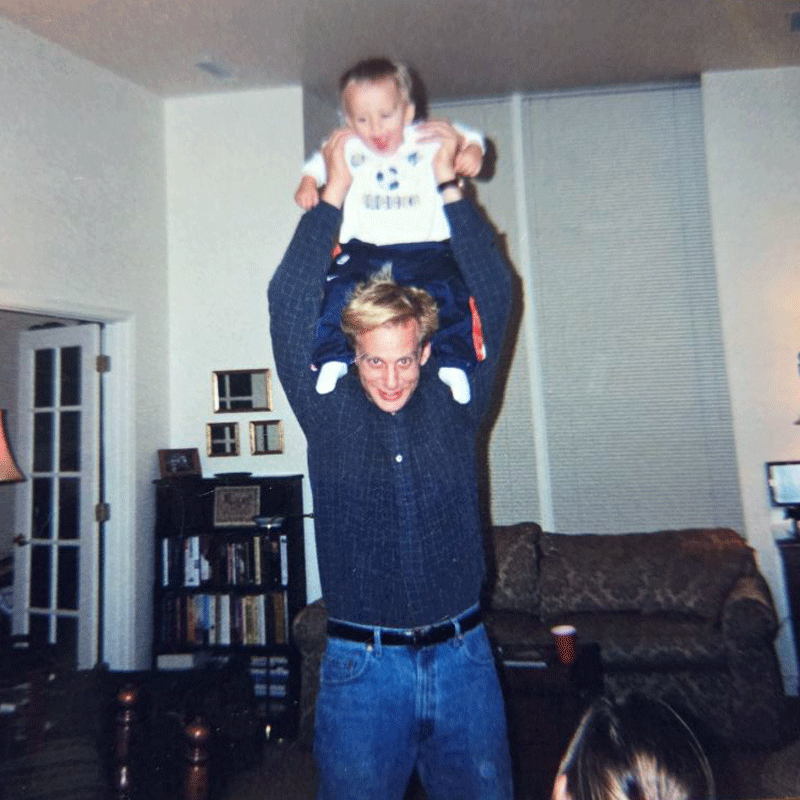

His political life didn’t begin on the margins. He grew up inside Republican power as the son of a respected Midwestern lawmaker, and came of age alongside the modern conservative movement. Blodgett first met Ronald Reagan when he was 15 years old. By his early twenties, he was working in Reagan’s White House. By his early thirties, he was earning six figures as a political consultant with deep Washington, DC ties.
Over time, the same professional networks that propelled his rise drew him into far more dangerous territory. Blodgett moved between elite political institutions and extremist organizations, worked as a paid FBI informant, and eventually confronted the personal costs of proximity to power that extended beyond politics into addiction and isolation.
This account traces how early exposure to political authority shaped Todd Blodgett’s trajectory, and how access, once conferred, can become difficult to relinquish. His story is not a campaign memoir or partisan argument, but rather a cautionary examination of how power functions behind the scenes and what can happen when the boundaries meant to navigate it erode.
Long before he attained political influence himself, Blodgett grew up within its reach. He was raised in north Iowa, where politics was not an abstraction but a constant presence woven into his family life, community reputation, and daily conversation.
His prominent late father was a University of Iowa Dental School graduate with an advanced degree in Orthodontics. Dr. Gary B. Blodgett built an enormously successful private orthodontic practice before making the unlikely transition into public office. “He fell in with business owners, doctors, bankers, farmers and lawyers, who all were supporting Richard M. Nixon,” Blodgett says. “That’s how it all started.”
By the late 1960s, his father was raising money for Nixon’s campaign in Iowa. When Nixon ran again in 1972, the Blodgett household became fully immersed. “Our family volunteered for the Nixon–Agnew campaign,” Blodgett says. What followed was a steady ascent. His father entered the Iowa legislature and ultimately served four terms, including eight years as deputy majority leader—an achievement made more striking by the political terrain that the elder Blodgett navigated.
Though colleagues urged his father to take on the role of majority leader, he declined the top position, opting instead to serve as deputy—a choice Blodgett remembers as characteristic of his father. Rather than seeking a safe seat, his father ran in a heavily unionized, Democratic district. Gary Blodgett earned loyalty by treating people fairly, regardless of party affiliation, personal status, or their station in life.
“600+ people attended his celebration of life in July of 2021,” Blodgett recalls. One story, in particular, stayed with him. “A guy came up to me and said that when he was in junior high school in Mason City, my dad was his orthodontist,” Blodgett says. “His father had been laid off, and he no longer could afford to pay for his son’s braces, or for his sister’s.”
Instead of cutting off care, Gary Blodgett finished the treatment.
“My dad told them, ‘If your dad ever gets back on his feet, he can pay me. If not, don’t worry about it. I’ll treat you both like everyone else. They still had straight teeth 40 years later. They told me they always voted for my dad. Every time his name was on the ballot, that entire family voted for him—and they’re Democrats.”
For Todd Blodgett, those early lessons mattered. Politics wasn’t only about policy or party; it was about trust, access, and the quiet power of ethical personal conduct.
That reputation followed his father well beyond Iowa. By the late 1990s, he had become deeply involved in George W. Bush’s presidential campaign, traveling to Texas to meet with Bush while he was still governor. After Bush’s election, he asked Dr. Blodgett to join his administration. Blodgett remembers the moment vividly—not for its prestige, but for the way his father handled it.
“My dad had a really dry, even sardonic, sense of humor,” he says. While meeting in the Oval Office, Bush asked, tongue-in-cheek, if there was anything else he “should know” about him. “My dad said, ‘Well, since you were the governor of Texas, you should know that I did two years in a Texas prison,'” Blodgett recalls.
The room went silent until his father clarified the punchline.
“My Dad was the dentist at La Tuna Correctional Facility in El Paso from 1963 to ‘65. My mother was like, ‘Gary, why would you say that?!!’ President Bush cracked up!”
For Blodgett, those moments reinforced a lesson he’d been absorbing since childhood. Access to power didn’t require reverence. It required confidence, credibility, aptitude, and the ability to remain yourself, even in the Oval Office. For Blodgett, the moment when politics shifted from background noise to personal ambition came early, well before he could articulate what he wanted from it.
“I can trace it to the summer of 1972,” he says. “I was eleven.” That was the year his father bought a place on Clear Lake, Iowa.
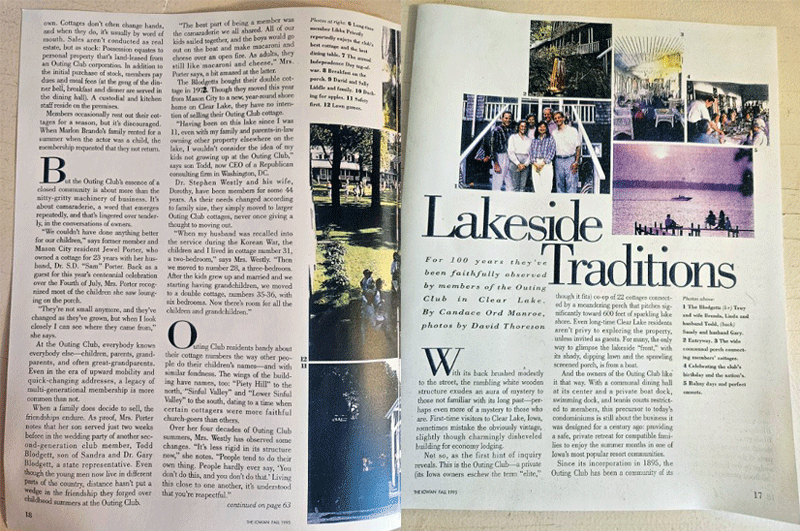
There, they spent their summers at a private establishment known as the Outing Club. The place was founded in 1895, and it was there, largely by accident, that he befriended a man named Neil ‘Moon’ Reagan without initially realizing who he was. “I’d be fishing on the dock, or you know, getting ready to go out to race. My younger brother and I raced a sailboat, and I got to know the man.”
The revelation came through television.
“I was watching the news one night and saw Ronald Reagan speaking at the 1972 Republican National Convention. The next day at the Outing Club, I said to Neil, ‘You’ve got the same last name as the governor of California.’ Neil Reagan smiled and said, ‘Yeah—that’s my little brother.'”
At eleven, Blodgett was struck by Reagan’s presence. Even then, he noticed something different about Ronald Reagan’s ability to pull a crowd. “I could see that people were much more interested in what Reagan was talking about than what Vice President Agnew was saying.”
Through Neil, Blodgett was eventually introduced to Ronald Reagan himself in 1975. The connection didn’t fade with time. If anything, it deepened. While Blodgett was attending Shattuck-St. Mary’s, a boarding school in Faribault, Minnesota, Reagan announced he would challenge President Gerald Ford for the Republican nomination.
Determined to attend an event at which Reagan was scheduled to speak, Blodgett, then 15 years old, appealed to his housemaster, a liberal Democrat, who agreed to drive him 45 minutes to downtown Minneapolis. “I waited backstage at the hotel where Reagan was speaking. When he finished, he came back and introduced himself. We each sat on a folding metal chair, and we talked for a good fifteen or twenty minutes.”
The encounter was brief but lasting. “He gave me his address and phone number,” Blodgett says. “And we stayed in touch. I made sure of that!”
After Reagan lost the 1976 nomination to Ford, who then lost the presidency to Jimmy Carter, many assumed that Reagan’s political future was over. Blodgett didn’t. “Reagan decided right then and there he’d run in 1980, which many people thought preposterous because, after all, he’d lost to Ford—and in 1980, he’d be nearly 70 years old.”
By the time Reagan launched that campaign, Blodgett was a freshman at Drake University in Des Moines—a coincidence that felt almost scripted. Reagan returned to the state frequently that fall, and each visit reinforced the sense of inevitability Blodgett had begun to feel years earlier. “Reagan’s career actually began in Des Moines at a radio station where he was a popular sportscaster. Neil Reagan also worked for that same station—WHO—and he married a gal, Bessie Hoffman, from Des Moines. By 1979, Iowa sponsored the first-in-the-nation presidential caucuses. So, Ronald Reagan was regularly in Iowa.”
“After he was nominated, Reagan flew to Des Moines three times in the fall of 1980. Sometimes I’d talk to him for two minutes, sometimes ten. He remembered me well, knew me by name. That really impressed my fraternity brothers!”
After Reagan’s election, Blodgett reached out directly. He didn’t speak to Reagan himself, but he made his interest clear, then reinforced it through Neil Reagan, who was preparing to see his brother over Thanksgiving. “I told him I wanted an internship,” Blodgett says. “Anything.” The following summer, Blodgett split his time between two worlds: half with Iowa’s senior senator, Roger W. Jepsen, and half inside the Reagan White House. “I was the youngest intern there,” he says.
Before returning to college, Blodgett was invited to meet Reagan in the Oval Office. The moment left a lasting imprint—not only because of its grandeur, but because of how personal it felt. “He gave me a set of gold-plated, cobalt cufflinks, embossed with the presidential seal. He told me that those were usually for ambassadors, governors, and major donors.
He said, ‘You’re not in those categories—yet. But you deserve them, so enjoy them. Then, he asked what I was going to do next. When I told him I had two years of college left, he said, ‘Well, if you need a job when you graduate, you know where to find me.’ As he spoke, he grinned and winked!”
When Blodgett graduated from Drake University in 1983, Reagan was cruising toward reelection, while Iowa’s senior senator faced a competitive race. “I thought I could learn more working on a tough campaign,” Blodgett says. “Reagan was going to win no matter what.” He joined the senator’s reelection effort. When the senator lost unexpectedly, Blodgett called Neil Reagan the very next day. “He laughed,” Blodgett says. “He said, ‘I told Bessie you’d be calling!'”
Within a week, Blodgett received a call from a senior aide in the Reagan administration. He was offered a position on the Presidential Inaugural Committee. At twenty-four, Blodgett returned to the White House—not as an intern, but as a paid staffer in the press office. “I was the youngest staffer at the time,” he says.” Lee Atwater liked me, and I became sort of his protégé.”
Atwater, the combative strategist who would later run George H.W. Bush’s campaign and chair the Republican National Committee, embodied a different kind of political power—less idealistic, more surgical. “He was a real live wire,” Blodgett says. “Brilliant. Intense. Weird, but in a cool way. Highly perceptive. He was just one-of-a-kind.”
Blodgett found himself drawn to the machinery behind the scenes rather than the spotlight itself. “I didn’t want to be a candidate,” he says. “I liked how things actually worked.” Still, there were moments when the speed of it all gave him pause. Blodgett recalls being in the Oval Office with Reagan, one-on-one. “President Reagan really liked jokes, as do I. He once asked me the details of two jokes I’d previously told him. So, there I was, seated across from the most powerful man in the world. He grinned and said, ‘Well, what do you think?'” Blodgett hesitated, then answered honestly.
“I said, ‘I guess it’s just hard to believe this is happening.’ Reagan goes, ‘Well, what do you mean?’ I said, ‘Mr. President, I’m from a little town in the Midwest, and here I am in the White House, sitting in the Oval Office, with the President of the United States.'”
Reagan smiled, then turned the question back on him. “He said, ‘Well, I, too, am from a little town in the Midwest. I, too, am in the White House, sitting here in the Oval Office, and I am the President of the United States! How do you think I feel?'” Reagan went further, reflecting on surviving his assassination attempt. “He said, ‘I just figure that with what time I’ve left, I need to do all the good I can. This is God’s time, not mine.'”
Blodgett, who describes himself as far less religious, nonetheless carried the moment with him.

“He had a way of making you feel like you belonged there, like we were in it together.”

By the late 1980s, Blodgett’s access to Reagan remained intact, but his daily work was no longer symbolic. It was strategic, forward-looking, and increasingly shaped by those who operated just outside public view.
He didn’t return to the White House as a paid staffer until Reagan’s second term, a distinction Blodgett makes carefully. “That’s when things really picked up,” he says. The figure who mattered most during this transition was Harvey Lee Atwater, who had a way of collapsing uncertainty into certainty—of making the future sound like a foregone conclusion. “He told me, ‘The next president will be the current vice president,'” Blodgett recalls. “And when Lee said something like that, you believed him.”
At Atwater’s urging, Blodgett joined the Campaign for America’s Future, the organization quietly laying the groundwork for George H. W. Bush’s presidential run. What began as part-time work quickly became a full-time role, carrying him through the 1988 election and into the Republican National Convention in New Orleans, where Bush selected U.S. Senator Dan Quayle as his running mate.
After the election, Bush named Atwater as chairman of the Republican National Committee. He called Blodgett. “He said, ‘I want you to work for me,'” Blodgett says.
At the RNC, Blodgett was assigned to opposition research, focusing on what Atwater called “wedge issues,” or narrow, emotionally charged topics designed to fracture Democratic coalitions rather than convert them outright. Blodgett describes the work as precise rather than ideological, an exercise in understanding how voters moved rather than why. The mentorship felt stabilizing, directional even. Then it stopped.
Atwater was diagnosed with brain cancer. At the time, Blodgett had just begun dating a young lady who worked as an oncology nurse at the INOVA Fairfax Hospital, across the Potomac River from D.C., in Virginia. The contrast between Atwater’s optimism and her realism was immediate. This was at the George Washington University Hospital in downtown D.C.
“In March of 1990, we went to see him, and after we left his hospital room, I took Linda to dinner. I said, ‘It’s great to know he’ll be back on the job in less than two weeks, and Lee will be okay.’ She looked at me and said, ‘Todd, your boss will be dead within a year.'” Eleven months later, Atwater was gone. He was forty years old.
After Atwater died, Blodgett says he grew disillusioned with the Republican National Committee’s leadership. Temporary chairmen cycled through, none of whom inspired confidence, and the sense of direction he had relied on evaporated. “I wasn’t happy with what was going on at the RNC. They had a couple of temporary chairmen in there that didn’t know what they were doing.”
Rather than wait for the structure to stabilize, Blodgett left. He launched his own advertising agency and began taking on lobbying work, including contracts in Texas and political consulting for Iowa Republicans. But it was an advertising client from California that quietly altered the trajectory of his career.
The publication, Slick Times, was a satirical, anti-Clinton magazine. Blodgett handled advertising—no editorial control, no political messaging. Through routine ad trades, he exchanged ad space with other publications, including The Spotlight. The newspaper was owned by Liberty Lobby, a far-right tax-exempt organization led by Willis Carto. Blodgett had encountered Carto years earlier, during his years on the White House staff, but hadn’t worked with him directly.
When Carto contacted Blodgett and invited him to lunch, Blodgett declined. Instead, he stopped by Carto’s office on Capitol Hill. “He told me he had a lot of regard for my abilities,” Blodgett says. “As a salesman. As a writer. As a well-connected operative.”
Carto offered him a consulting gig. Blodgett refused but countered with an offer he assumed would end the conversation. “I decided to make him an offer that I was so convinced he’d never accept. The idea was that I could walk away and not make an enemy out of him,” Blodgett says. The terms were steep: a monthly retainer, office space, a full-time assistant and a secretary, plus a 20 percent commission on all advertising sales and mailing list rentals.
A week later, Carto agreed. “I was shocked,” Blodgett says. Within months, Blodgett’s income skyrocketed. He was barely thirty years old and earning tens of thousands of dollars a month, largely through residual advertising and direct mail list renewals. The work required little oversight. The money arrived reliably. And for a time, Blodgett says, he didn’t ask many questions.
That changed around 1995, when a close friend—himself Jewish—urged him to look more closely at Liberty Lobby’s operations. “He said, ‘You need to look further into this situation, who you’re really working for,'” Blodgett recalls.
What Blodgett discovered disturbed him. Liberty Lobby had been funding the Institute for Historical Review, a California-based organization dedicated to Holocaust denial. “I didn’t like that,” Blodgett says. “I really didn’t.” He decided to walk away.
When he went to see Carto, the atmosphere shifted immediately. Carto called his lawyer, Mark Lane, and told Blodgett he’d be hearing from him.
Later that day, Blodgett received the call while riding in a taxi back to his office. Lane invited him to dinner and arrived with documents, clippings and records detailing Blodgett’s father’s political prominence and involvement in national campaigns. Then he made the stakes explicit.
“He told me, ‘We’ll decide when you quit. If you don’t do what we want, your dad can kiss his political career goodbye.’” The unexpected threat stunned Blodgett.
“He said my advertising work had been ‘conducive’ to major money flowing into Liberty Lobby, and that if I walked away, they’d make sure everyone knew that Dr. Blodgett’s son was raising money for some neo-Nazis.” Blodgett understood immediately what was being leveraged: not his reputation, but his father’s.
“So I stayed for a couple more years,” he says. Eventually, the relationship collapsed anyway. Carto refused to pay $80,000+ in owed commissions. Blodgett hired a lawyer. Carto—and Liberty Lobby—filed for bankruptcy.
In lieu of cash, Blodgett was handed shares in a corporation he had never wanted to be associated with—Resistance Records, a white-power music label. He received 34 Class A shares, which were the controlling shares. That’s when things really got out of hand.
The company wasn’t merely extremist in ideology; it was dominant, as the largest and most profitable white supremacist music producers and distributors in the world. And now, through a failed attempt to collect unpaid commissions, Blodgett found himself holding controlling shares.
“I didn’t know what the hell I wanted, but I knew I didn’t want anything to do with that.”
His lawyer was blunt. With Willis Carto’s organization heading toward bankruptcy, this was likely the closest Blodgett would ever come to recovering what he was owed. The shares were unsellable on any conventional market. They were radioactive. “I couldn’t call my broker and say, ‘Put this on NASDAQ,’” Blodgett jokes, referring to the bind he faced.
The uncertainty followed him into the routines of his life. One evening, while playing pool at the University Club of Washington, D.C., a private institution where he’d been a member for many years, his phone rang. Cell phones weren’t allowed then in the Men’s Grille, but Blodgett answered anyway. The caller identified himself as Dr. William Pierce.
Blodgett knew the name instantly. Pierce was the author of “The Turner Diaries,” a novel later linked to Timothy McVeigh, and a central figure in modern white supremacist organizing. Blodgett had never met him, nor did he know how Pierce had obtained his number. “He came right to the point and said, ‘I understand you own the controlling shares of Resistance Records,’” Blodgett recalls.
Pierce offered to buy them. The price, $250,000, was more than Blodgett expected, and more than he thought he would ever recover. Pierce insisted on delivering the cash himself. Three days later, Pierce arrived at Blodgett’s Connecticut Avenue office with a large briefcase containing 70 packets of hundred-dollar bills. The deal expanded quickly.
“He basically said, ‘Here’s your money for the shares. I’ll throw in an extra hundred grand if you’ll be a consultant to us for two years.’ I said, ‘I don’t need that, I’ll forego that.’ And that’s when he said, ‘Well, if that’s the case, then no deal on the shares.’ So I said, ‘Okay, whatever.’ So it was 350 grand I ended up getting.”
Only after Pierce left did Blodgett notice the bills themselves. “All were uncirculated,” he says. “Series 1981. Every single one.” The bills bore the signature of Donald T. Regan, who had served as Reagan’s Treasury Secretary before becoming his chief of staff. To Blodgett, the implications were unsettling.
“How many people have 3,500 hundred-dollar bills, all of them uncirculated, from 1981, as of November of 1998? And remember, the bills that had Regan’s signature on them, the series of 1981, were printed until January of 85, when Regan became White House Chief of Staff. He was Chief of Staff when I first got there; James A. Baker then became Treasury Secretary. That told me that the odds were very high that all of my 3,500 C-notes, ‘Benjamins’ as drug dealers called them, were probably from the Bob Matthews robberies of the early 80s. I later shared that with the FBI when I went to work for them.”
With the transaction complete, Blodgett did something that, in retrospect, he recognizes as naïve. He offered to take Pierce to lunch. “He’d just put $350,000 in my pocket,” Blodgett says. “I figured the least I could do was offer to buy him lunch down the street.”
Pierce chose the University Club. Blodgett hadn’t realized Pierce knew he was a member, but Pierce insisted. A jacket and tie were procured for Pierce. Inside the dining room, Supreme Court Justices Clarence Thomas and Antonin Scalia sat a few tables away. Pierce spoke loudly, occasionally using language that drew attention. Blodgett asked him to lower his voice. A week later, a reporter from The Washington Post called.
“He asked if I’d had lunch with William Pierce at the University Club about ten days ago. I said, ‘You can ask, but I’m not going to tell you. It’s such a private matter.’” When the reporter asked whether Blodgett shared Pierce’s views, Blodgett said no. “I told him it was a business lunch,” he says. “Nothing more.” The story ran anyway.
The article described how the sale of the world’s most profitable white supremacist music company was conducted in downtown Washington, at an elite private club. The backlash was immediate. The club’s board gave him a choice: resign quietly or be expelled. Blodgett refused and was expelled. He sued.
The case dragged on for years, through appeals and finally an en banc hearing, where the full panel of judges ruled against him.
Between legal fees paid by Blodgett and his father, the cost reached roughly $600,000. By then, the damage was irreversible. His name had become publicly tethered to extremist figures. The insulation that had once protected his family’s reputation and institutional trust was gone. And this time, no mentor was left to intervene.
Blodgett is careful not to describe what followed as a sudden collapse. In his telling, the unraveling was already underway long before it became visible. The period that mattered most was not the moment of exposure, but the long stretch before it—when consequences were deferred, and habits quietly hardened.
The fateful sale of his shares in Resistance Records took place in early November of 1998. The Washington Post would not publish its story until January 2000. Between those two moments lay more than a year of drift, during which Blodgett’s professional life remained intact even as his personal routines began to erode.
He spent most nights at the University Club. At first, it was a refuge, somewhere familiar, insulated, and anonymous. Gradually, it became an anchor that kept him away from home. He drank too much. He lingered longer than he should have. He filled the time. “I was doing a lot of things I shouldn’t have been doing when I should’ve been at home with my wife,” he says. Not all at once. Just over time.
The night that would later harden into memory did not feel dramatic as it unfolded. It felt ordinary, even logistical. Too drunk to drive, Blodgett tried to get a room upstairs at the club. None were available. The American Bar Association was in town. The nearby Jefferson Hotel was also full. He returned to the club and wandered into the library, where he stumbled and fell. A man helped him up.
The man was Greg Stevens, a Republican consultant whose connections overlapped neatly with Blodgett’s own. Stevens worked for Haley Barbour. He recognized Blodgett immediately. The familiarity mattered. “He said I wasn’t in any shape to drive,” Blodgett recalls. Stevens offered him a spare bedroom at his ritzy co-op six blocks away. The building was well known, politically connected, and familiar enough to feel safe.
Inside Stevens’s apartment, Blodgett declined another drink. What followed did not register as a decision so much as an absence of one. Stevens produced a mirror, a razor blade, and several small white rocks. He explained that he was freebasing.
Blodgett tried it.
That single act would later assume outsized importance, but at the time it felt unremarkable, something that happened because nothing intervened. He repeats the language he would later hear in treatment and at Narcotics Anonymous meetings.
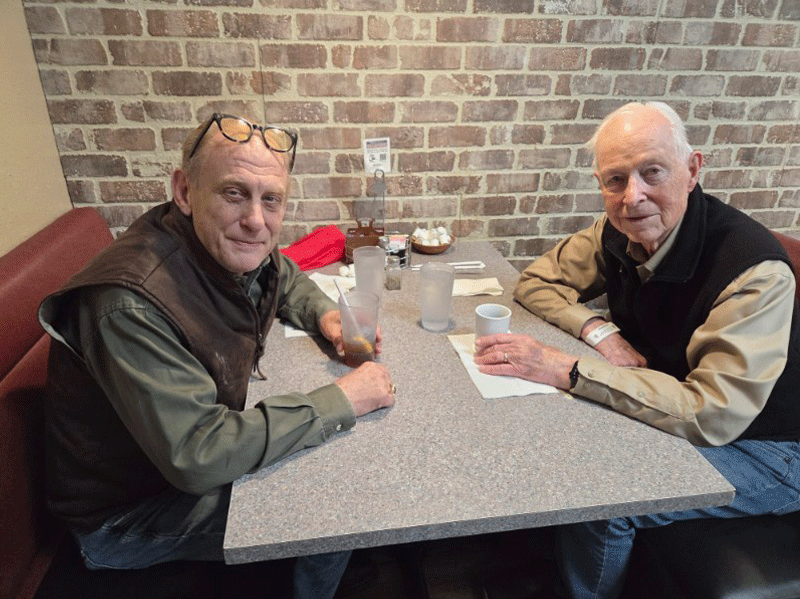
“One hit is too many, and a thousand hits are not enough.”
Sponsored Content

The use escalated quickly, though it remained carefully contained. Blodgett did not bring it home. He did not use around his wife or friends. He chose locations and people that felt removable from the rest of his life. He told himself this meant control. He met a dealer who gave him his phone number. The calls began. The routine settled in.
In retrospect, the signs were visible. Years later, when Blodgett ran into Stevens again, the change was unmistakable. His deterioration was physical, immediate. “You could tell what crack had done to him,” Blodgett says. Not long after, Stevens O.D’d and died.
By the time The Washington Post article ran in January of 2000, Blodgett’s private life had already begun to fracture. The exposure did not initiate the collapse; it accelerated it. What had been contained was about to collide with something external. That collision arrived quietly, in the form of two men waiting in the lobby of his office building.
One was from the IRS. The other was with the FBI. “They wanted to talk,” Blodgett says.
Their visit came days after the article appeared. It marked the moment when the separation between Blodgett’s public consequences and private behavior finally disappeared. The men who arrived at Blodgett’s office didn’t waste time with pleasantries. They introduced themselves, handed over their cards, and made clear that they were not there by accident.
Blodgett noticed their bearing immediately. He asked to see their weapons. They obliged. “That’s when I knew I was dealing with the real thing,” he says.
The conversation that followed was direct. The agents explained that they had reviewed extensive records, including financial records, phone records, and other communications. They did not accuse Blodgett of committing a crime, nor did they suggest that he was under investigation.
Instead, they framed the issue as one of shared circles.
“They said, ‘You’ve worked with a lot of people and made a lot of money from people who’ve done illegal things.’” Blodgett did not dispute the premise. He drew a distinction. “I told them I hadn’t done illegal work on their behalf,” he says.
The agents agreed. That, they said, was precisely why they were there.
“They told me, ‘We’re not after you,’” Blodgett says. “And then they said they wanted me to work for the bureau.”
The proposal was explicit; Blodgett would become a paid informant, tasked with infiltrating and monitoring what the agents described as the racist far right in the United States, as well as its European counterparts. It was not an occasional request. It was a full-time role.
At the time, Blodgett’s personal life was already unstable. His drug use, though still intermittent, had begun to establish a rhythm. “About once a week,” he shares. The agents didn’t ask him to get sober first. They did not ask him to step away from his existing circles. Instead, they were formalizing the very access that had begun to undo him.
Looking back, Blodgett describes the period as one of mounting volatility rather than chaos. Things were bad, he says, but not yet “nearly as bad as they later became.”
What the agents offered was not a reset. It was an acceleration. The same networks that had entangled him financially and publicly would now be entered deliberately, with government sanction. The boundaries he had relied on, between work and personal life, between legality and exposure, continued to dissolve.
This time, however, there would be no plausible deniability. The scale of what he was involved in was widening, and the margin for error was narrowing.
Blodgett accepted.
Once Blodgett agreed to cooperate, the work expanded quickly and far beyond what he had initially imagined. The networks he was asked to monitor were not confined to the United States. They were international, fluid, and increasingly interconnected.
Some of the figures he encountered operated under multiple names, moving across borders with ease. One man he knew as George Burdi, who also went by George Eric Hawthorne. Others were founders or early organizers of extremist groups that had grown far beyond their original scale.
“I had to go up to Canada a few times,” Blodgett says. By the spring of 2000, the work had moved overseas. One of the figures Blodgett had been dealing with was barred from entering the United Kingdom. When he was asked to travel in that person’s place, Blodgett informed his handlers. They approved the trip and insisted on accompanying him.
Three FBI agents and an IRS agent flew to London ahead of him. Blodgett entered separately. For four days, he conducted meetings on their behalf while under constant surveillance. “We worked with MI5,” Blodgett says. “I was wearing a wire.”
The coordination was seamless. British intelligence monitored European-based figures while U.S. agents focused on Americans operating abroad. Blodgett’s role was narrow but risky: facilitate meetings, gather names, document connections, and monitor transactions. During the entire period, he traveled constantly, moving through dozens of states and several countries on bureau-directed assignments, attending conferences and gatherings tied to the far-right ecosystem.
“The FBI sent me to 24, 26 different states, and to England, Germany, Switzerland, Grand Cayman, Liechtenstein, Austria and Canada. On every trip, I had an assignment with them. I’d attend these conferences, confabs, conventions, or whatever you want to call them—plus lots of smaller meet-ups, including dinners and receptions, lectures and visits to private homes. I went skeet-shooting with several very wealthy anti-Semites. Their skeet shells featured the faces of Hillary Clinton, Jesse Jackson, Al Sharpton, Rob Reiner, and other celebrities who were either black or Jewish.”
“There were all these different groups, like the Knights of the Ku Klux Klan, the Templars of the KKK or the Aryan Nations or Liberty Lobby, or the Jubilation or the National Alliance or Comrades of our Racial Struggle—known as COORS. Then there was a group called WAR: White Aryan Resistance, and numerous others. It was insane, but it was real.”
The bureau, he explains, didn’t recruit him because he blended in. They recruited him because he didn’t have to try: his years of representing Liberty Lobby and his public association with Willis Carto, William Pierce and others gave him undisputed and well-known standing in those circles. “They thought, ‘He’s one of us,’” Blodgett says.
His role was not to provoke or entrap, but to listen—to let others talk, boast, and explain themselves. He operated under the cover of legitimate business work, reviving an advertising operation and fundraising network which allowed him to interact naturally with people investigators wanted to understand.
“I was instructed by the legal counsel to never entrap anyone, let the people come to me, try to instigate a conversation, initiate meetings, and then kind of steer it in a way to do some business.”
At one meeting, he was instructed to collect a sign-in sheet. He did. He photographed it with his cell phone and passed it on. Years later, one of the names on that list would resurface in a way Blodgett still struggles to reconcile. A man who attended one of the meetings he hosted, Thomas Mair, went on to murder a sitting member of Parliament.
That’s when it really hit him, the distances these ideologies can travel.
At the time, none of it felt abstract. The people he encountered weren’t hiding or cautious. They didn’t care who knew what they believed. That’s what made them so dangerous. Unlike criminal organizations built on secrecy, these groups operated in the open, fueled by their shared ideas rather than discretion.
Years later, after the murder, Blodgett would speak publicly about the encounter, describing how actions taken in obscurity can reverberate long after they seem to end. The interview drew renewed attention, but by then the work itself was long over.
What remained was the cumulative weight of it—the travel, surveillance, the constant interacting with people capable of violence, and the knowledge that some consequences unfold on timelines no one can predict. Friends, he notes, often asked how he survived it.
“They used to say I was just lucky as could be, or God was looking out for me. I would take some of the credit myself. I decided to get out of it. I thought, I don’t want this.” For years now, Blodgett has tried to help people who remind him of an earlier version of himself. Often addicts. He describes it less as charity than as an obligation.
“Being a recovering addict myself, in recent years, I’d say the last 15, I’ve tried to help and sort of mentor some different people, usually young men but sometimes young ladies.” One young man Blodgett helped is named Dominick Black.
Blodgett met Black in 2021. At the time, Black was struggling with cocaine addiction and living in Kenosha, Wisconsin. Blodgett helped him get clean and, just as important, get out. What followed, for several years, looked like a success story.
Blodgett brought Black east, flying him to Annapolis, Maryland, to work on some properties he was managing. Black proved reliable. He had found steady employment, got married, and started a family. “Dom is very smart and resourceful, and he was doing a great job. He’d really turned things around. I was so proud of him.”
But in 2025, Black moved back to Kenosha, against Blodgett’s advice. On a Friday in mid-December, 2025, Black’s young wife called Blodgett, who was staying at a hotel in Annapolis, Maryland. Her husband had been arrested for armed robbery. The location made it worse. “It happened on the grounds of a public high school,” Blodgett says.
Black fled the scene with two others, violating probation by leaving both the county and the state. Though he wasn’t carrying the gun (he can’t legally possess one), and he was not the driver, the firearm’s presence triggered mandatory sentencing guidelines.
“Now, he’s probably looking at fifteen to twenty years. Dom is twenty-four. So young,” Blodgett says. “So young.” When Black called—from jail—asking for even more help, Blodgett refused. Blodgett told him what he had warned him of before—that recovery isn’t just about staying off of the drugs. Other factors can bring you down.
“I said, ‘I told you not to go back there. But you did. I told you if you went back there, stay away from bad people.’ It’s like they say in Narcotics Anonymous: people, places, and things. You should’ve avoided these people, places, and things. Now you’re facing 15, 20 years.’ He’s only 24. He won’t be able to watch his kids grow up or be with his wife. I told him, ‘By the time you get out, if you’re in for 20 years, if I’m alive, I’ll be 85 years old.’ What a damned shame. So that’s kind of been on my mind of late.”
Over the years, Blodgett had poured time and money into trying to help him. He doesn’t frame that support as a sacrifice, and he resists the idea that it was ever conditional.
What motivated him, he explains, was not politics or charity, but a persistent question he has carried since his own recovery: where would he have ended up without the family he had? “All those years of smoking crack,” Blodgett said, “involved lots of time in what sociologists call the ‘Hood,’ in my case, in Washington, DC, and Baltimore. On many occasions, I’d be the only white guy in the crack house, or even the entire building.”
As a highly addicted junkie, Blodgett, over the years, got to know hundreds of fellow crackheads, as well as dozens of drug dealers. “I also got to know their families, their kids, and in some cases, their parents. I realized that the overwhelming majority of these people had never had a chance, and most never would. That bums me out.”
Blodgett describes himself as firmly conservative, but he draws a line between political party and responsibility. Helping people, he says, isn’t about changing one’s politics; it’s about leaving something intact.

“I believe if you can help people and make their lives better, you know, it’s one way to kind of leave the world a little better than when you arrived.”
Sponsored Content
This situation with Dominick Black felt different, though. Not because the help went unrecognized, as Blodgett says that never mattered, but because it failed in the one way he feared most. “I’m deeply frustrated and bummed,” he says. “Even angry.”
Despite the disappointment, Blodgett hasn’t stopped mentoring others. He says most of the people he’s tried to help have done better—sometimes much better.
“I try to help a few of them at a time, and they’re grateful for my having been there and done that—meaning A, drug addiction, B, wrecked my life over drug addiction, and C, been locked up a few times. Believe me, we relate to one another! The overwhelming majority are not from very favorable backgrounds, whether economically, sociologically, or whatever. To me, it’s unfair to judge someone for something they can’t help.”
But experience has taught him that even the best intentions can come with limits. Years ago, Blodgett helped another young man he cared about: Alex Kuhn, a city councilman in Iowa and the son of one of his father’s political friends, a state Legislator named Mark Kuhn. Alex Kuhn was a Democrat; Blodgett is not. The difference never mattered.
When Kuhn faced backlash over a controversial vote on a proposed pork processing plant, he came to Blodgett shaken and angry. Blodgett told him the truth as he saw it. “He came to see me one night at my lake house, in July of 2016. He was very upset. I said, ‘Listen, Alex, you haven’t lost any friends. That’s because the kind of people that treat you this way, that used to be nice to you and have you to their house for dinner and donate to your campaigns, buy you drinks and all that, they were never your friends to start with. They used you. And you voted your conscience. So, you’ve lost nothing.’”
Blodgett believed he had helped to steady him. A few nights later, Kuhn killed himself. The memory resurfaces now, unbidden, as Blodgett tries to make sense of his most recent loss. “You can’t win them all, no matter what you try to do,” he says, “but what happened to Alex will always remain with me. He truly was a very good man.” The details of Alex Kuhn’s death are public now, searchable with a few keystrokes.
An article ran in 2017, written by columnist Rekha Basu. At first, Blodgett refused to participate. The story felt too personal, too raw, but Kuhn’s father called him directly.
“He said, ‘Todd, you were closer to my son than almost anybody. You know what really happened. I know you may catch some flak from some Republicans if you spill the beans, so I’m sure not telling you what to do or say, but please at least talk to her.’
So I agreed to be interviewed. She drove about 2.5 hours from Des Moines, the capital of our state, and we sat down for, like, three hours. I spoke my mind, and I’m glad I did.” The request carried weight. Blodgett understood that speaking openly would come at a cost. “I knew I’d take some heat from some Republicans”, he said.
He agreed anyway. When the piece ran, it appeared on the front page and was later picked up nationally through USA Today. What lingers for Blodgett isn’t the controversy, but the unanswered question that followed Kuhn’s death—how someone who seemed so stable could disappear so completely.
“He had everything going for him,” Blodgett says. “Great job. Money. Good-looking. Six-four; sharp dresser, very charismatic. Two little boys and a beautiful girlfriend. Probably the brightest political future of anyone within 350 miles of Mason City, in all directions.”
Kuhn was struggling quietly. He was depressed after a divorce. He worried about what seeking help would mean for his political future. “He was afraid it would end his career,” Blodgett says. Blodgett tried to reassure him. He told Kuhn that the rules had changed, that seeking help no longer carried the stigma it once did.
“I told him, ‘This isn’t 1972.’ These days, people understand. You break your leg, you get a cast. Your hair is too long, so you go to a barber. You get depressed, you see a counselor. But he was too old school for that, even though he was a Democrat, and couldn’t really register that in his thinking.”
Kuhn’s parents are still alive. Blodgett keeps in touch. On what would have been Kuhn’s birthday, in December, he texted his father. They spoke for a while.
Listening to Blodgett describe Dominick Black and Alex Kuhn, it becomes clear that his experiences aren’t unique—not in structure, if not in scale. The pattern he describes is familiar to anyone who has tried to pull someone back from addiction or depression.
The dynamic isn’t lost on Blodgett. He recognizes it immediately, even when it’s reflected back at him through someone else’s story. He mentions how easy it is—at first, anyway—to believe that being present is enough, that arranging help, making calls, smoothing logistics, even absorbing some financial or emotional costs might tip the balance in positive ways. For a while, it sometimes does.
But in sobriety, or a break from depression, that external scaffolding rarely holds once the structure is removed. He has lived it from both sides.
“You can lead a horse to water, but you can’t make him drink.”
He describes how people can appear functional and be working, parenting, and showing up, even as the ground underneath them chips away.
From the outside, things look passable. From close up, however, they are anything but.
What complicates matters further is how often concern escalates into self-erasure. Caring becomes consuming. Helpers can organize their own lives around the instability of someone else’s. At some point, the effort itself becomes corrosive.
Blodgett recognizes that line now. He didn’t always.
That dual perspective of addict (or sufferer) can make caregivers sharpen their sense of limitation. It’s what allows Blodgett to say, without bitterness or illusion, that even concerted efforts don’t always guarantee positive outcomes. “You think your efforts are going to pan out,” he says.
“And you really hope that they will. But then something like this happens.” That acknowledgment isn’t defeatist. It’s corrective. It marks the difference between responsibility and ownership, between helping and losing oneself in the attempt.
After The Washington Post article ran, Todd Blodgett’s life narrowed quickly. The consequences were not abstract. They were social, professional, and personal.
In some circles, he became untouchable. In others, an object of pity. Longtime acquaintances distanced themselves. Others scrutinized him more closely, convinced that association implied alignment. The nuance he tried to explain—that proximity did not equal ideology—rarely survived contact with public judgment.
The stigma intensified in the spring of 2000, when a well-known Washington-area radio personality devoted multiple broadcasts to Blodgett’s association with William Pierce. The framing was simple and effective—a respectable political consultant exposed as someone who had quietly profited from extremist networks. The story spread quickly.
By then, Blodgett had already launched the legal challenge against the University Club. The lawsuit consumed years. He lost at trial, won on appeal, and ultimately lost again when the full appellate court ruled against him. The Supreme Court declined to hear the case. By the time it was over, Blodgett and his family had spent $600,000 on legal fees.
The damage extended beyond Washington. In Iowa, where his father remained a prominent public figure, the fallout seeped into family life. Pamphlets recounting the controversy appeared in professional waiting rooms, including in dental and medical offices in north Iowa. Relatives were pulled into a narrative they had not chosen.
At home, the strain took a quieter but deeper toll. Blodgett’s marriage began to unravel. His drug use escalated, shifting from intermittent to habitual. When confronted by his wife, he admitted he was addicted to cocaine.
They attempted counseling. It didn’t hold. At the same time, another chapter of his life was quietly closing. Blodgett had begun working with the FBI in early 2000, shortly after the Washington Post article brought him to the attention of federal authorities. For nearly three years, he had cooperated as an informant, operating under a code of silence. He remained married, outwardly functional, yet inwardly unraveling.
However, by late 2002, his priorities had shifted entirely. “I was still married when that ended. I was getting lackadaisical. My priority wasn’t the work. It was getting high.”
When it came time to renew his cooperation agreement, Blodgett felt no urgency to continue.“I just didn’t care,” he says. An agent finally addressed it plainly. Blodgett didn’t offer excuses or bargaining. “I said I didn’t give a shit,” he says.
That was the end of his formal cooperation.
What followed was not immediate recovery, but distance from the work, from the chaos, from the illusion that he could sustain multiple lives at once. The federal chapter closed without drama. The addiction did not.
By the time his cooperation ended, the rest of his life was already falling apart. He and his wife separated. They sold their house. She remained in Virginia for work. Blodgett moved into a luxury apartment in northwest Washington, where his cocaine use escalated. He drifted into a period he describes as “just surviving,” moving from structure into isolation, particularly after he and his wife divorced in late 2004.
Blodgett has since said that recovery can’t be coerced. Readiness matters more than consequence. Freedom from addiction would come later, enforced first by circumstance, then maintained by choice.
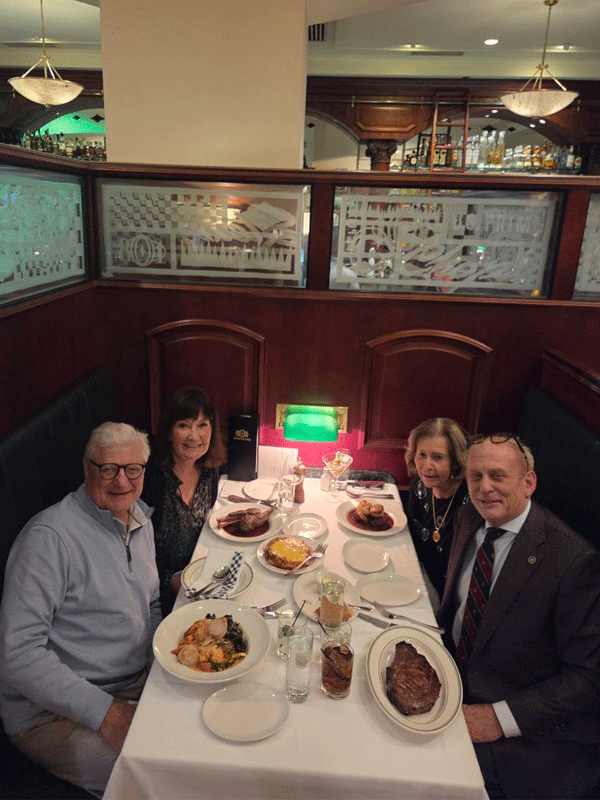
“It was a bad time, and I jacked up my use of cocaine. Things got worse. I confessed to my wife when she put me on the spot that I was addicted. We had been trying to start a family. We went into a trial separation after some marriage counseling because I was unwilling and not ready to quit drugs. You’ve got to be ready to quit, whether it’s drinking or drugs. If the addict isn’t ready, it doesn’t matter what you do or who died.”
Sponsored Content
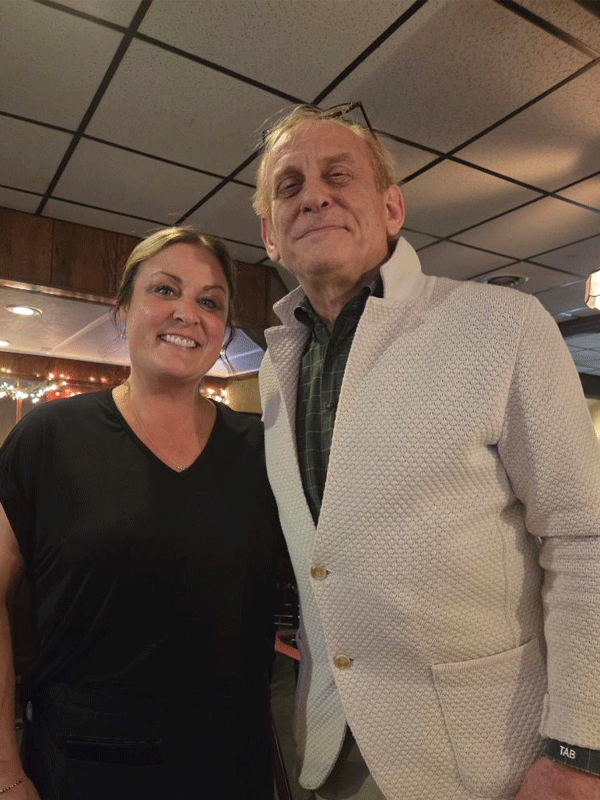
By early 2006, his parents intervened. His father, then working in Washington, insisted that Blodgett move into their apartment. Not as a suggestion. As a condition.
Weeks later, Blodgett was busted by the D.C. police and arrested for possession of illegal narcotics. After spending the weekend locked up, he was placed on probation. His father’s terms were strict but humane. Todd was required to attend treatment meetings, submit documentation, and report regularly. His probation officer, Carla Reeder-Mason, took an active interest in his recovery throughout the entire one-year process. “She was fully involved and truly helpful”, Blodgett said.
At the same time, his father imposed a rigid structure. Daily exercise. A strict diet. No sugar. Routine. Accountability. Narcotics Anonymous meetings every day, weekly hour-long sessions with a psychologist in downtown D.C., and a job that required him to show up, no matter how he felt. Sobriety didn’t arrive as a revelation, but as discipline.
Blodgett took a part-time job as a landscaper in the district. The work was physical, anonymous, and humbling. In affluent neighborhoods, he sometimes encountered former colleagues—people from the White House, the Republican National Committee, from the current (Bush) administration, and even from federal law enforcement, who at first didn’t always recognize him.
But the double-takes were unmistakable.
For Blodgett, the work wasn’t symbolic. It was practical. It kept him moving. It kept him occupied. It kept him alive. Looking back, he does not describe this time as a period of redemption. He describes it as containment. The collapse had run its course. What followed was not clarity, but structure, imposed first, chosen later.
The landscaping job, modest as it was, gave Blodgett a reason to get up every morning. It introduced routine where there had been none, obligation where there had been drift.
He describes it not as a career pivot, but as part of a larger containment strategy—something that made recovery possible before it felt desirable.
“That was one of the best things because it gave me something to have to get up for, that I had to do. It was a job to go to, and part of my whole program.”
Blodgett’s employment with the FBI lasted nearly three years, which overlapped almost exactly with the height of his drug use.
At the time, he believed the agents he worked with were unaware of how deep his addiction had become. In the summer of 2021, he learned otherwise.
When he crossed paths with a former supervising agent at an anti-terrorism conference in Annapolis, Maryland, two decades later, the FBI agent told him bluntly that the bureau had known all along. “We knew,” the agent said. “We knew the whole time.”
Blodgett was stunned. He had assumed his drug use was something he had hidden poorly but successfully. Instead, it had been factored in. “Basically, he said I was valuable to the bureau whether I was high or sober,” Blodgett said.
That knowledge reframed everything; what he thought was invisibility had been surveillance; what he believed was chaos had been monitored and tolerated. The risk, he realized, had always been his, as were the consequences.
Blodgett has been drug-free since May 6, 2006. He marks the date without flourish.
The milestone speaks for itself. What followed was not a return to the life he had before, but something quieter and more grounded—work done in pieces, with time split between Iowa and Texas, caregiving for aging parents, and later, the responsibility of settling the estates of some close friends following their deaths.
He still consults. He still writes occasionally. He stays busy. He stays connected. When asked what he wants readers to take from his story, he doesn’t frame it as a redemption or cautionary tale.
“I guess if I can help even one person kick addiction, or not become a drug addict or become involved in white supremacist or anti-Semitic circles, or not allow depression to do them in, then I’ll consider myself to have succeeded.”
There is one line he repeats that he allows himself to laugh at now, a phrase given to him years ago by another recovering addict trying to make sense of the arc.
“He knew I was from Iowa, but falsely assumed I was a farm boy, which I’m not. He said, ‘Dude, you went from the farmhouse to the White House to the crack house to the Big House.’ Except for the farmhouse part, he was exactly right.“

Moumita Basuroychowdhury is a Contributing Reporter at The National Digest. After earning an economics degree at Cornell University, she moved to NYC to pursue her MFA in creative writing. She enjoys reporting on science, business and culture news. You can reach her at moumita.b@thenationaldigest.com.

