AI Toys Are On The Rise, Experts Want Them More Strictly Regulated
Developmental psychologists from the University of Cambridge have recently performed a study in which they analyzed the impact of toys that use artificial intelligence on children. The researchers concluded that these products need to be more tightly regulated as they struggle with social and pretend play, misunderstand kids, and react inappropriately to certain emotions.
AI toys that have the ability to “talk” to kids need to be “more tightly regulated to ensure psychological safety by limiting toys’ ability to affirm friendship and other sensitive relational areas with young children,” according to Dr. Emily Goodacre, a developmental psychologist at the University’s faculty of education.
“Because these toys can misread emotions or respond inappropriately, children may be left without comfort from the toy, and without emotional support from an adult, either,” said Dr. Goodacre.
“A recurring theme during focus groups was that people do not trust tech companies to do the right thing. Clear, robust, regulated standards would significantly improve consumer confidence,” Professor Jenny Gibson, the study’s co-author, said.
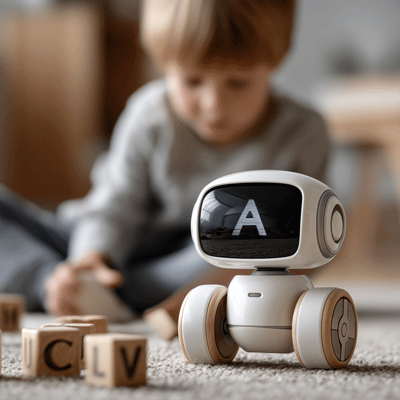
One of the toys they looked at is known as Gabbo, a soft plushie with a computer screen face. The Guardian reported that during the research, a three-year-old boy named Josh kept asking the toy “Are you sad?” until it replied it was “feeling great. What’s on your mind?” Josh said: “I’m sad,” to which the toy replied: “Don’t worry! I’m a happy little bot. Let’s keep the fun going. What shall we talk about next?”
Gabbo is made by Curio, a US company which also helped with the study. The toy was tested with 14 three to five-year-olds.
“[There’s] wide uncertainty and fear about unknown implications or impacts on children.” Specifically, the team was concerned over how the kids may not be able to fully engage in imaginary play with the toy, as well as where the data from the conversations with the children end up.
“[The toy] couldn’t quite figure out when the kid was doing something pretend,” said Goodacre.
“A child would say: ‘Hey, look, I’ve got you a present’. And it would say: ‘I can’t see the present. I don’t have any eyes.’ As an adult, it’s really obvious that even if I had my eyes closed, I would know that that was pretend play initiation.”
“Playing with AI toys could weaken children’s imaginative muscle,” she said.
“Something both the early years practitioners and the parents we spoke to were quite concerned about was that children don’t have to imagine any more, and that the toy might get them out of the habit of imagining.”
“I would hope that these AI toys could help children to engage in imaginary play … That doesn’t seem to be what we’ve observed so far,” she said.
“Child safety guides every aspect of our product development, and we welcome independent research that helps improve how technology is designed for young children,” Curio stated.
“[We] believe research like this helps advance understanding of both the opportunities and current limitations of early AI-powered play experiences”.
“Applying AI in products for children carries a heightened responsibility, which is why our toys are built around parental permission, transparency and control,” they added.
“Observations such as conversational misunderstandings or limits in imaginative play reflect areas the technology continues to improve through an iterative development process, and further research into how children interact with AI-powered toys is a top priority for Curio this year and in the future.”

Eric Mastrota is a Contributing Editor at The National Digest based in New York. A graduate of SUNY New Paltz, he reports on world news, culture, and lifestyle. You can reach him at eric.mastrota@thenationaldigest.com.