
In the world of music instruction, Dr. Billie Raye Erlings has made a lasting impact as an innovator in piano pedagogy with a career that spans decades. From her early beginnings in a musically inclined household to becoming one of the first women in the nation to hold a Doctor of Musical Arts degree, Dr. Erlings has paved the way for innovative teaching methods that continue to inspire students and educators alike.
Sponsored Content
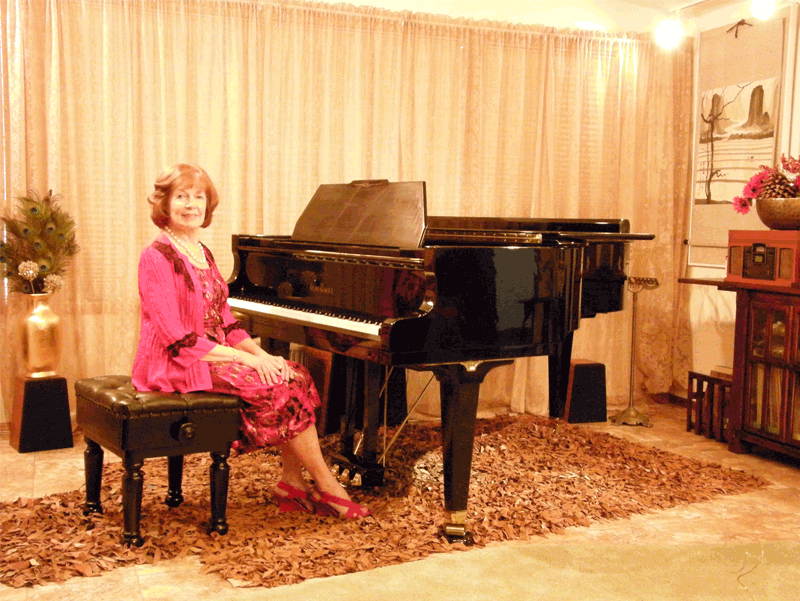

Her contributions include groundbreaking work in televised piano instruction, pioneering the use of electronic piano labs, and creating a “superlearning” approach to teaching music that emphasizes efficiency, creativity, and lifelong learning. In recognition of her achievements, she has lectured around the globe and has been honored with numerous accolades, including “Outstanding Professor” at the University of Arizona.
Given Dr. Erlings’ long-standing influence and expertise in the field, we have honored her request to provide her own written responses and maintain her original edits while crafting this article. The following section is written and edited by Dr. Erlings herself, reflecting her own words, style, and personal insights into her career, her philosophies on teaching, and her legacy in the world of music education.
What role did your family and other early influences play in fostering your love for music?
First of all, my parents had lovely voices. We didn’t have a piano or other musical instruments, not uncommon for that time. But they sang a lot. Later we did have a radio.
We went to church regularly, so I learned to hear and sing traditional hymns. My parents could read the music of hymns, as hymns were notated in those days in the South. When we traveled in the car, we always sang, often part-singing, like hymns. Bear in mind this was during the Depression; gasoline was rationed; so we didn’t use the car often.
We also sang folk music and country western. My parents were native East Texans and knew many country western songs.
Before I started school, I was allowed to visit a neighbor and play her piano. I was no Mozart, just an ordinary little girl; but the experience of simply exploring the piano and music-making without any criticism was, I think, important.
Another important early influence was when I was six years old and in the first grade. Every Friday we had all-school convocation. I was seated on the front row; directly in front of me was a beautiful, large grand piano, with an equally beautiful young teacher playing it. I was fascinated! At home I would go to my small desk in a corner of the room, use some book as my written music, sing and pretend to play piano until called for supper. That was when my parents started asking if I would like to have lessons!
When I finished the fourth grade, my Father’s company moved us to Conway, Arkansas, where the Arkansas State Teachers College happened to be located. My Mother arranged piano lessons for my sister and me with the woman who was Head of the Music Department. She was a wonderful person and teacher; and I can still recall playing our recitals in the college’s large auditorium, on stage with the beautiful 9-foot grand piano! In lovely evening dresses—the thrill of it all!
After the year in Arkansas, my Father’s company returned us to Louisiana, but to the Gulf Coast area, near Lake Charles. For almost two years, my piano was in storage while housing was being created for the employees. Then my Mother made contact with the most highly music educated and respected piano teacher in the region, the late Kathleen Blair Foster. I was about 13 years old, and my studies with Mrs. Foster began my serious concentration in piano and music teaching. That continued through high school and until my decision to attend Louisiana State University School of Music, where I graduated with Bachelor and Master of Music degrees in piano performance. I was a high school and university scholar as well as music student, so I had earned scholarships in both music and academic studies.
You mentioned that your parents made significant sacrifices for you and your sister to have piano lessons. How did those sacrifices impact your commitment and work ethic with your music studies?
This was during the Depression: my Mother went to work in order for us to have a piano and lessons. But my sister and I were not aware of her reasons until decades later: My parents didn’t believe that children should be burdened with adult worries. They made many daily and enduring sacrifices for our education and our interests.
Those sacrifices increased with my serious commitment to music and piano; preparing one for a professional future is very demanding of time, effort and finances! While any sacrifices were always deeply appreciated, it wasn’t those that greatly impacted my commitment and work ethic: rather, it was the way they reared me from childhood that laid a life-time foundation for anything I have achieved or will achieve!
Most important were the unfailing love, guidance, and encouragement of my Mother and Father –and later my husband — that sustained my desire and driving force to acquire the highest level of professional skills and knowledge that I could, especially in order to share the great experiences and joy that music offers for a lifetime.
What do you consider to be your most important legacy?
That one is very easy. I am most proud of the hundreds of students and teachers that I taught through a 30-year, very successful career in higher education. And I would like to add that in addition to teaching college students, I always had projects with children of different ages and, for that matter, adults of different ages also.
I had many graduate teaching assistants through the years and several of those went on to establish courses similar to my general education one in their institutions.
Can you share a few key accomplishments from your illustrious career that you believe best define who you are as a music educator and innovator?
I was one of the first women in the nation to hold the Doctor of Musical Arts degree, awarded by the University of Oregon in 1970. I was a pioneer of televised piano instruction in 1967-68. I was one of the first piano teachers in the nation to incorporate an electronic piano laboratory in university music classes.
My innovative work with teaching music through piano led to my superlearning approach, embodied in my piano texts and video course for adults. At the University of Arizona, I was named “Outstanding Professor of 1990”, especially recognizing the success of my course “Music through Piano for General Students.” I have served on several major university music faculties and lectured throughout the United States and in numerous foreign countries. I designed the piano requirements for the first Music Therapy degrees, initiated by Dr. E. Thayer Gaston at the University of Kansas. In 1998, I retired from the University of Arizona and was named “Professor Emerita of Music.”
You embarked on doctoral studies at the University of Oregon during a national movement to update music teaching for the general public. What role did this growing movement play in your decision to pursue the doctorate?
In the mid-1960s, I was on the music faculty here in Ashland at Southern Oregon College (now a University). The national music journals were describing an important new national initiative entitled the Contemporary Music Project (CMP), which was funded by the Ford Foundation for seventeen years.
One of the goals was to reorient and better prepare current and future music teachers for educating the general public, from kindergarten through retirement. Music study had largely been eliminated as an inessential “frill,” leaving only band, orchestra and choir, which required auditions to enroll. Statistics indicated that only 20 percent of students were generally accepted by audition; 80 percent had no school music instruction. The fact that many school administrators may not have had good music instruction contributed to the attitude that music study is unimportant. Furthermore, the lack of music study for the 80 percent may have contributed to many young people’s lasting, detrimental opinions that they are “unmusical.”
The University of Oregon had been named one of the major West Coast institutions to implement the CMP initiatives, including offering a new advanced degree, the Doctor of Musical Arts. I wanted to be part of the educational innovations. I became acquainted with my colleagues at the University of Oregon and was recruited for the new degree.
You also created the “Superlearning Music Through Piano” approach. What societal needs did you identify there that led you to develop this innovative method?
Another factor that fueled my interest in the new research and performance degree was that many people, through the years, shared with me their regrets about not having studied piano or discontinuing lessons before getting very far. I located research indicating that piano had long been the favorite musical instrument in this country. (Did you know those were even hauled west in covered wagons!) However, piano lessons also had the highest drop-out rate, resulting in the instruments usually being sold after one or two years. My desire to understand and improve that led to my new approach to piano study with superlearning and eventually to my innovative university course “Music through Piano for General Students” at the University of Arizona.
I saw that course as a contribution to a societal need for changing attitudes toward the study of music; young students become the parents and possibly school administrators responsible for curricula. Also, the skills and concepts learned with my superlearning did prepare students to continue later in life when they had more time—hence, as lifelong learners with or without additional instruction!
In my General Education Piano Course (for students in majors other than Music), outside reading, listening and writing were also requirements. Considered by most as the single most important exposure to ideas was a cassette recording of a lecture by Keynote Speaker Dr. Paul F. Brandwein, noted American scientist and educator, for the Music Educators National Conference in Salt Lake City in 1977. His address entitled “The Permanent Agenda of Man: A View From the Arts” discussed the need for education to be about “making a life, not just a living,” and about preserving major human values.
From international research that Dr. Brandwein and Dr. Margaret Mead conducted, the most important shared human values are: truth, justice, love, faith, and beauty. Dr. Brandwein emphasizes that those values are learned through the arts, including music, and that “If we do not teach the arts from the elementary grades to all, not just a few, we will lose our schools to violence.”
How that last statement must reverberate with all of us who have ever read and remember it! For decades, we in this civilized nation have endured the almost weekly reports of new school shootings! It is not too late for action!
What is the concept of “intrinsic motivation,” and how does your approach help develop it?
Intrinsic motivation simply means “self-motivation,” and I think it is critical to lifelong learning. Helping develop that is one of the most important considerations for the teacher; equally important is having the essential teaching strategies and materials. First, our teaching has to inspire joy in the activity, But students must acquire the background knowledge and skills to continue on their own. In the discussion of my superlearning approach, I do point out several of the strategies that aid in developing self-motivation.
Your superlearning approach emphasizes achieving efficient and satisfying results in a shorter time. What specific strategies do you use to ensure this efficiency, and how do they differ from traditional learning methods?
My approach to music study through piano is based on principles developed by the Contemporary Music Project, in which music is first defined as “sound in time,” a definition that can include all “musics,” not just that of traditional Western Culture. This is important for opening the mind to the musics of the world!
Music has structure, like language: letters combine into words, into sentences and so on. I refer to those basic elements as the “Building Blocks” of the musical language. My approach integrates learning the basic elements, the Building Blocks, with their application to all playing activities, i.e., studying pieces, adding chords to melodies, improvising, playing by ear, etc.
A student must acquire a working knowledge of and practical skills with those basic elements to learn efficiently—superlearn—and effectively, that is, to develop creative insight into the aesthetic element. Then one performs a piece with musical sensitivity, and has the opportunity to become self-sufficient and self-motivated. Those factors create the potential for being a life long learner.
Many piano methods have books that separate playing activities from what they term “Music Theory.” The basic elements of music are not theoretical! When those are separated from learning compositions, students rarely connect their importance to efficient, effective and exciting—motivational—learning.
My outline of the Building Blocks is:
In Time Organization: Tempo, Meter and Rhythm, Patterns and Flow.
In Pitch Organization: Intervals, Scales, and Chords
Combined, they produce Form or Structure and the “Expressive Gesture.”
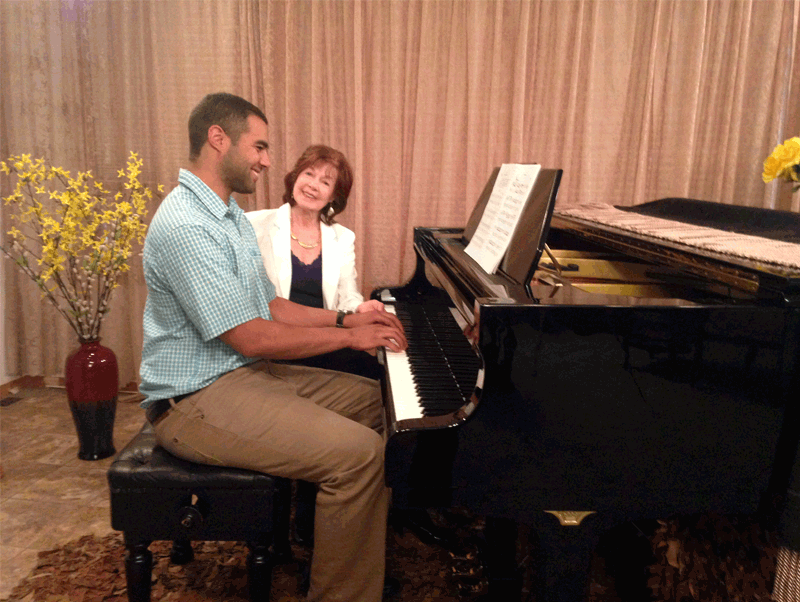
We begin the study of a piece by getting an overview, the Big Picture. Sometimes we hear the piece first, but not always. Then we explore the interaction of the two perimeters—time and pitch–which creates the Expressive Gesture and the aesthetic element of the piece. Exactly what the aesthetic element of any piece is, is learned at first by example from an experienced music teacher.
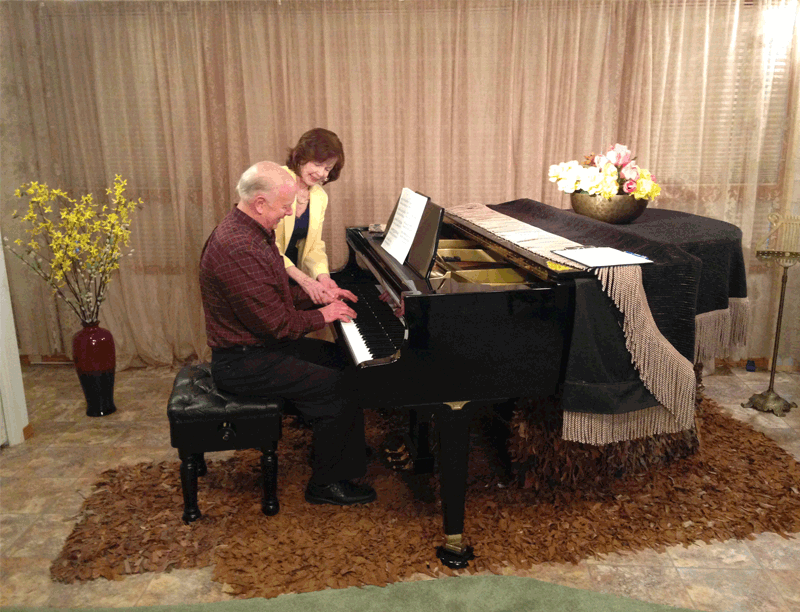
You emphasize the careful sequencing of activities for optimal learning. Can you provide an example of how you sequence activities to benefit both the student and the teacher?
In curriculum design, activity sequencing refers to the order in which activities are introduced and continued. I studied psychomotor and cognitive development, as well as attitude acquisition, so my sequencing of activities is derived from those principles rather than some personal preference or choice. In my book, Instructors do not need a “Teachers Guide” to understand or work toward effective sequencing. It is programmed in my books and study materials.
I also use an overall spiral curriculum design, meaning that concepts and activities recycle from one level of difficulty to another. For example, the first piece my students play is First Blues, Cycle 1 on Day 1. A couple of lessons later, they learn First Blues, Cycle 2, which is slightly more advanced and so on. Thus, psychomotor skills and, in our case, aural skill development are “layered” in easy stages that are “do-able” and understandable.
You indicated that the piano technique you developed for superlearning was influenced by studies in the Whiteside approach and The Alexander Technique. Can you describe that further?
The American piano teacher Abby Whiteside (1881-1956) departed from our European heritage in piano technique, which generally concentrates first on developing hand and finger strength and agility. Whiteside’s approach uses the entire body and large muscle movements first, integrated with the aural and kinesthetic sense modes.
Years after my doctoral degree, I studied with a teacher who had worked several years with a Teaching Associate of Whiteside. I also studied at the Whiteside Foundation in New York City with the late Joseph Prostakoff, Whiteside Teaching Associate and President of the Foundation.
The Alexander Technique teaches natural body posture and movements to promote greater health. For some time, it has been widely employed in all of the performing arts. I took hands-on lessons with a Certified Alexander Technique teacher, then adapting its use for my superlearning approach to piano technique. There is considerable information online about the Whiteside principles and also The Alexander Technique.
You’ve developed a strategy for helping students overcome certain playing challenges and find the elusive “zone.” Without revealing trade secrets, can you discuss the importance of this “zone” in the learning process?
Yes, I help for example with psychomotor challenges, such as playing with both hands together, and it does relate to “finding the elusive zone.” But it is embedded in my superlearning approach. It is not something students are made aware of, and It’s my own “trade secret,” but it does work! I think it is very important: probably anyone who has engaged successfully in psychomotor activities beyond the early stages has experienced being in the Zone. But I don’t know of any other piano approach that even tries for that with early-level students.
You’ve included music from diverse styles and cultures, beginning with American Blues, in your superlearning approach. Why is it important to include such a wide range of cultural influences in music education, even at the beginning stages of learning?
We live in a world community. This nation was always one of immigrants who brought their folk music with them, and our national culture was enriched by that.
We need to continue respecting and sharing the folk music of all cultures; it can even help minimize language barriers. Think of how many foreign words we learned from Spanish, French, and Italian folk songs, to name only a few. My materials also include some from Native American, African and South Korean traditions.
This bears thinking about: Some years ago a music educator from abroad commented to me that the “folk music” of the United States had become TV commercials! How sad that that should be the “music” our children learn from the hours spent as infants and beyond in front of the TV or phones. The world has such beautiful folk music, rich with cultural heritages!
You were among the first women to receive a Doctor of Musical Arts degree. What was that experience like, especially in a field that was male-dominated at the time?
In 1967, the University of Oregon School of Music admitted the first group of applicants for a possible continuance to the new Doctor of Musical Arts degree. We numbered fifteen—fourteen men and I. The men were mostly experienced public school band and choir directors. We became good friends and hard-working fellow students. It was probably not as daunting for me as it might sound; I was well established in my higher education career—which had always been male-dominated—and I had just been hired by the dean of the School of Music as adjunct faculty, to be part of the Contemporary Music Project and also revise his class/group piano and piano pedagogy programs.
However, I can share certain perspectives from working in a male-dominated field for a very long time. Bear in mind that I am from an older generation—one before the sexual revolution and feminist movement, and I grew up with long-instilled codes of dress and conduct in public in general and especially around men. I found those codes right for my professional endeavors, and I still do.
I always wanted to be considered first for the quality and quantity of my work in higher education—requiring not only expert teaching, but also research, publishing, and performing, as well as service to the institution itself and a larger society. I found that if I excelled in those things, I usually commanded respect from my colleagues. However, as a woman, I did have to assert my own rights and needs in order to progress in my professional standing. And I did have to take every opportunity—and create them as needed—to stay on an equal basis with my male colleagues in terms of salary and other faculty concerns.
As in any other field, I guess, I was not always immune from personal and professional jealousy and the challenges that arise from them. I think we have to meet those challenges with honesty and the courage to continue toward our own worthy goals.
Could you tell us more about the televised piano course you developed and presented internationally in Dijon, France, in 1968? What was the significance of this course, and how did the global music education community receive it?
In my doctoral work at the University of Oregon, part of my dissertation was the documentation of my pioneering instructional television course. Produced in their Broadcast studios, it was used in selected piano classes and studied in a research project. At that time, the music profession was largely negative about teaching a musical instrument with television. When I began publishing articles about my work in professional journals, it was viewed with interest and led to my first presentation for the International Society for Music Education in Dijon, France, in the summer of 1968.
When did you begin writing, and what inspired you to publish your first piano book, Comprehensive Keyboard Skills, in 1975? How did your publications, including 24 Karat® Piano and its video companion, reflect your superlearning approach to music?
I was a writer even before I entered high school. My “published” work was a column I wrote for a local newspaper. I also wrote poetry for much of my life and had a poetry critic in New Orleans.
I was inspired to write my first published piano book, Comprehensive Keyboard Skills (1975-76), when I was on the piano faculty at the University of Arizona. Two colleagues who had been observing my teaching and materials had just started a music publishing company and insisted that my innovative work should be published. They were my first piano text publishers. My current piano book and video companion incorporate my superlerning music through piano.
What made you take the leap to start 24 Karat® Music Discovery with your late husband in 1983?
My late husband of 54 years and I founded our company in Arizona in 1983, to assume ownership of my piano books Comprehensive Keyboard Skills (1975-76). Several large national music publishers indicated that the work was too innovative for many piano teachers, even though it included a detailed teacher guide. Later, a prominent publisher in the West declined because my original, local publisher had not attended to copyrights sufficiently. I now own all of my copyrights and our company has been publishing my books and other materials for years. My clientele has largely been colleges and universities.
In year 2000 we moved our company and piano-video studio to Ashland, Oregon, an art center of the nation. I am the current president of the company.
Do you have suggestions about when to begin lessons and finding a good teacher?
When to begin lessons: For children we usually advise age seven, but my experience is that it often depends on the child, the background factors, and the adaptability of the teacher. I successfully taught one four-year old. I do think that in a skill and art such as piano, it’s much better to have in-person lessons—at least included with media ones, both with the same instructor!
As for adults, the best thinking today is “It’s NEVER too late!” With the current interest in brain health and aging, there is considerable research on that topic especially from the field of neurology. Piano has long been of interest to researchers—going back to the 1930s!– as it is regarded as one of the most complex of human psychomotor activities.
Finding a good teacher poses something of a dilemma, especially with so much online. I don’t evaluate online courses, but there may be some guidance from the organizations I’ll mention later. First, I’d like to share a bit of wisdom from the often quoted Greek philosopher Plato in The Republic. This may not be exact, but the essence is this: “The most important part of any new undertaking is the beginning!”
Because piano instruction can be expensive, what I have often heard is the plan to find the least expensive teacher and instrument to begin, “..to see if the child OR adult is interested and shows some ability for piano before investing more heavily.” That seems logical, but it isn’t. Inferior instruction is rarely motivating at any age and often results in drop-outs. Professional credentials are a good way to start and our professional organization usually have state chapters and directories of teachers: the Music Teachers National Association (MTNA), the Music Educators National Conference (MENC), National Piano Pedagogy Association, and College Music Society (CMS). Following up with a personal interview and brief “example” lesson with the student are good.
The beginning instrument in my own opinion is less of an issue. I’ve taught early level students who were using electric keyboards of limited range, but electronic pianos (meaning they have a “weighted-key” action which feels more like an acoustic piano) are preferable and can have a larger keyboard, usually 5-octaves or even 88 keys; a damper pedal is good.
Do you have projects that you still want to accomplish?
Yes, two especially. First, I believe my program of music study through piano could be vastly helpful and rewarding to the millions of our aging population in retirement communities nationwide. A few years ago a civic- minded colleague who owns a Piano Studio and I presented plans for a program to one of the local, upscale retirement communities. There was great interest but the project was ultimately rejected because “it would not make money for the facility.” I need the assistance and backing to facilitate making my program available.
Second: When I retired from my university career, I began adapting my adult superlearning approach to be appropriate for children. I had always taught children in various research projects. We documented my work, teaching a seven year old girl. Recently I chose to teach children again and I continue updating my approach. Again, to accomplish my goal of making my creative, innovative program available through teaching/learning materials, I need the necessary technical and financial backing.
Can you tell us more about the texts, video courses, and other resources you’ve developed for your superlearning approach? How can students and educators access these materials?
The video companion to 24 Karat® Piano: 3rd & 4th editions fulfills a dream of mine from the time I pioneered televised piano instruction 1967-68. One reason is that, with the technical skills and imagination of co-producer Nicholas J. Brandt, it documents some of my creative use of the television medium—not just putting a camera overhead and filming! My video course was produced in our home in Ashland, in our very simple piano-video studio.
It consists of 72 Video Lessons; 36 are learning aids, including practice sessions, skills games, study guides and technique lessons. It is currently sold with the book.
I am working on a 4th edition of my 24 Karat® Piano book and completing materials for an online course based on my superlearning approach. It is for teachers and adult students of all ages, both absolute beginners and “re-starters.”
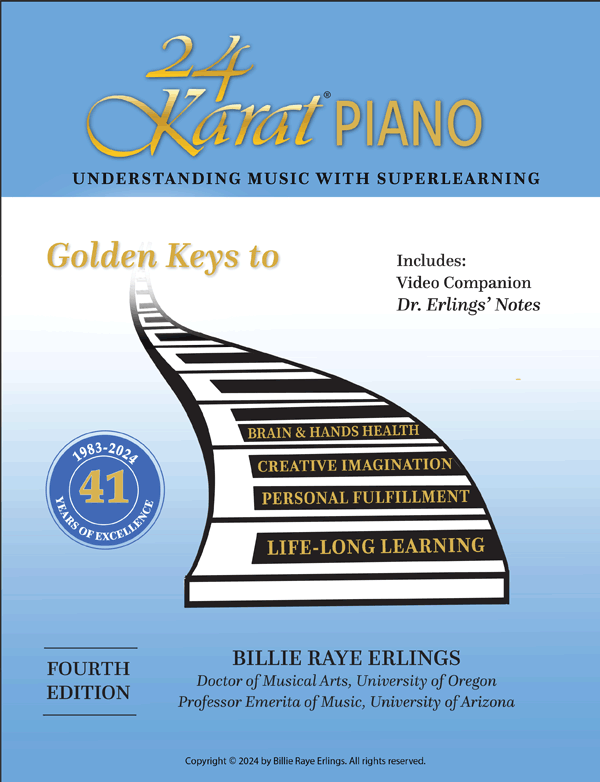
My current book, 24 Karat® Piano: Music Superlearning for Adults 3rd ed., has repertory ranging from First Blues to Moonlight Sonata, First Movement. There are eight units with accompanying worksheets. The book is sold with Dr. Erlings’ Notes: A Video Course Companion to 24 Karat® Piano: 3rd & 4th eds., 72 lessons, including practice sessions, skills games, study guides, and technique lessons are currently on a thumb drive. The price for both items is $95.99.
Order from the Publisher: 24 Karat® Music Discovery 24KaratPiano@97520.net.
Contact information for Dr. Erlings’ availability for lessons, book and video course workshop sessions for teachers, other presentations: drerlingspiano@ashlandoregon.org.
Student Testimonials
Dr. Erlings’ dedication to teaching has left a lasting impact on her students. Here are a few of their reflections:
- Renate D.
“Dr. Erlings has unlocked the world of music and the keyboard for me and given me all the tools I need to continue exploring for a lifetime!” - Michael F.
“John Holt said that a good teacher is one who teaches the student how to better teach themselves. Dr. Erlings has given me this new skill, and my musical learning experience has only just begun.” - Lisa R.
“I never imagined I could learn such a great deal in such a short amount of time. Dr. Erlings not only encouraged me to do my best, but showed me what beautiful music there is out there to learn.” - Tamieka H.
“I was only with Dr. Erlings for four months and learned 300% more than I did during the six months of prior piano instruction.” - Michael G.
“In less than five months, I went from knowing nothing about playing piano to being able to understand why I like the music I like and what creates its rhythms and flows.”
Book Reviews
Dr. Erlings’ 24 Karat Piano has been praised for its unique approach to music education, combining theoretical insight with practical application. Below are a few reviews from professionals in the field:
- Martin Majkut, Music Director, Rogue Valley Symphony, Oregon & Music Director, Queens Symphony Orchestra, New York
“Dr. Erlings’ 24 Karat Piano is an exquisite learning tool for music lovers, who want not only to master the fundamentals of piano playing but also to discover how music is constructed and structured and what makes it all work. The life-long research and practical expertise of Dr. Erlings resulted in a book that seamlessly interweaves the theoretical and psychological aspects of learning the instrument. The author’s broad vision is what truly sets this textbook apart.” - Svitlana S., College Piano Instructor
“I am so grateful to have your method and the book! Really! It is such a relief to follow your book compared to my previous approach of assorted ideas and methods! Thank you cordially!” - Eileen S., College Head of Keyboard Studies
“A rare understanding of adult students!”

The National Digest has been dedicated to providing authoritative and thought-provoking insights into trending topics and the latest happenings. Dr. Billie Raye Erlings was a guest writer for this article on The National Digest.

