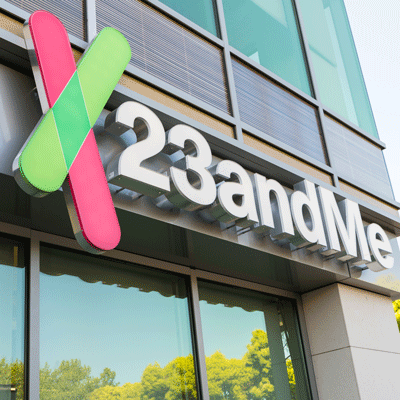
As 23andMe Files for Bankruptcy, Advocates Urge Users to Delete Their Genetic Data
Millions of customers initially joined 23andMe to discover intriguing insights about their ancestries and genetic health profiles. However, amid the company’s recent bankruptcy filing and planned sale, consumer advocates are now encouraging users to delete their accounts and data to protect their genetic information from potential misuse.
San Francisco-based 23andMe announced on Sunday it was seeking Chapter 11 bankruptcy protection and actively pursuing a buyer after failing to achieve a sustainable business model. This move puts the genetic data of its estimated 15 million users in a precarious position, potentially available to the highest bidder.
Although 23andMe claims that it will maintain its current data protection practices throughout the bankruptcy proceedings, board chairman Mark Jensen emphasized in a statement that data privacy would play a large part in any sale. Nonetheless, advocates warn that a change in ownership could drastically alter how user information is managed and shared.
“We want to thank our employees for their dedication to 23andMe’s mission. We are committed to supporting them as we move through the process. In addition, we are committed to continuing to safeguard customer data and being transparent about the management of user data going forward, and data privacy will be an important consideration in any potential transaction.”
“There are health insurance companies that are interested in this data, there are life insurance companies that are interested in this data,” California Attorney General Rob Bonta cautioned in an interview with ABC News7, prompting his office to release a consumer alert advising users to delete their accounts.
Similarly, New York Attorney General Letitia James urged customers to proactively secure their genetic data in light of the company’s financial troubles.
23andMe reassured users by highlighting its current privacy policy, stating that identifiable genetic data will not be sold and user consent is required before sharing data with researchers. However, the policy clearly stipulates that it is subject to change at any time, including during a corporate acquisition or restructuring.
Legal expert Anya Prince from the University of Iowa College of Law explained on CNN’s “Terms of Service” podcast that genetic data could disclose more than ancestry—it could predict future health conditions.
Although the Genetic Information Nondiscrimination Act (GINA) provides some safeguards against genetic discrimination by employers and health insurers, it does not extend protections against life insurers and other entities, leaving significant privacy gaps. Prince emphasized the inherent uncertainty of transitioning user data to a new company.
“Theoretically, the new company could have a similar ethos that the consumer feels good about, but the new company might have a completely different ethos.”
Several customers have already faced challenges attempting to remove their data. Danielle Landriscina, for instance, struggled to access her 23andMe account multiple times starting Tuesday morning, encountering delays with two-factor authentication codes arriving only after their validity had expired. After repeated attempts and receiving advice from the company’s overwhelmed online chat service to “try again later,” she finally managed to delete her account by Tuesday night.
“If anyone has any issues accessing their account or deleting their data, they can go to our customer care site for support,” a 23andMe spokesperson told the BBC. However, the company did not respond to further inquiries regarding additional customer complaints.
Another customer, Pauline Long from Alabama, described her experience as “a nightmare,” expressing frustration after spending two hours waiting for customer service assistance. “I am now going to be more cautious about doing anything online,” she said.
Although she succeeded in deleting her account by Tuesday evening, she remains skeptical about whether the company truly removed her data. “I am concerned that 23andMe will hold onto data,” Long stated.
To safeguard their privacy, users wishing to delete their data should log into their 23andMe account, select “Settings,” then “23andMe Data,” and then “View.” After downloading any personal genetic information, users can choose “Permanently Delete Data.” Those who previously allowed 23andMe to retain saliva samples can request disposal under the “Preferences” tab. Consent previously granted for third-party research can also be revoked.
Attorney General Bonta warned users might encounter technical issues due to high traffic on the website, advising persistence in trying to delete their information. “I was attempting to delete my data today, and the website was down today at times,” Bonta said, adding that the outage may have been caused by many people seeking to delete their data.

Moumita Basuroychowdhury is a Contributing Reporter at The National Digest. After earning an economics degree at Cornell University, she moved to NYC to pursue her MFA in creative writing. She enjoys reporting on science, business and culture news. You can reach her at moumita.b@thenationaldigest.com.