jobs

US Added Only 29,000 Jobs In September While Unemployment Rate Increases 

Only 29,000 jobs were added by US employers in the month of September, marking a sharp decline from the previous month’s gains with unemployment also increasing. 

America’s unemployment rate specifically increased to 4.2%, according to the most recent data from the US Bureau of Labor Statistics. This decline shows just a fraction of what economists were expecting with just under 70,000 new jobs, according to reports.

Initial reports from July and August were also revised down to 60,000. The labor market contracted by 10,000 jobs in July after revisions while August saw 133,000 jobs added. 

While job growth may have “slumped” over the summer, the labor market unexpectedly contracted in July, and figures made in June and May were revised down from their initial reports with 162,000 jobs being added in August, marking the highest amount since March.

The unemployment rate has also remained at its lowest levels since 2025 when it hit 4.5% in November. US jobless claims also remained lower for the fourth week in a row, according to the labor department. 

Embed from Getty Images

Job openings and the number of new hires have remained relatively stagnant since August, data from the labor department shows, citing the “slow-hire, slow-fire” job market continuing. 

The labor market has also remained pretty strong this year, despite concerns over the US-Israel war on Iran increasing inflation and energy prices. In fact, the Federal Reserve raised interest rates last month for the first time in three years, citing higher prices. 

Federal chair Kevin Warsh emphasized the “strength of the US labor market, which is basically running consistent with full employment, but inflation is too high and has been for too long.”

Investors are “hopeful” that the Fed won’t increase rates again later this month after a commerce department report revealed a “softer-than-expected” reading on inflation. 

Higher prices are continuing to be the biggest issue economically for citizens of America. Mortgage rates specifically are rising rapidly and have hit their highest level in three years this week from 7% to 7.28%, the largest weekly jump since 2022. 

The 10-year treasury yield, which underpins mortgages and other loans, also reached a 24-year high as the recent global bond sell-off continued. 

Higher oil prices have also cost Americans an estimated $936 per household.

Six Flags

Six Flags Closes World-Famous Roller Coaster After Brain Injury Lawsuits 

Six Flags announced this week that it will be permanently closing its X2 roller coaster, one of its most famous, after an investigation performed by CNN exposed a long history of life-altering injuries, and even deaths linked to the ride. 

Embed from Getty Images

Six Flags Magic Mountain President Brian Oerding published a blog post this week stating that while the “X2 roller coaster has consistently passed a multitude of safety tests, we have decided to close the ride because we believe it’s the right thing to do.”

“Ride safety is a cornerstone of our business, and when we see guest confidence affected, we take it seriously.”

CNN’s investigation took place last month and found allegations that the roller coaster has been injuring riders for over a decade but has been “kept under wraps.” 

There have been a dozen reports of serious injuries and hospitalizations linked to the ride including at least two deaths. The most recent finding was two women who ended up in the same Santa Clarita emergency room with brain injuries after riding X2 only six days apart this summer. 

The ride itself was temporarily closed after the second woman’s injury. Just last week, attorneys held a news conference reporting that there were over 100 new victims who came forward regarding brain injuries they sustained from allegedly riding X2. 

Those new victims were from the last two years alone. 

Embed from Getty Images

Three lawsuits were filed last week from three riders who suffered life-threatening injuries this year. The three lawsuits all allege that Six Flags officials had plenty of notice of the alleged dangers of the ride and should never have kept it running. 

One of the riders from the three recent suits is 26-year-old Naomi Greer-Wilkinson who is currently in a coma. She boarded the ride just six days after another individual, Pamela Guillen, lost consciousness when she got off the roller coaster and had to get emergency brain surgery. 

“This is long overdue,” Greer-Wilkinson’s parents told CNN. 

“Six Flags knew years ago that X2 was putting people at grave risk and chose to continue gambling with their lives anyway.”

“This should have happened long before Naomi’s brain injury but we’re happy to hear that now finally no one else’s daughter or sister will ever be hurt on this ride again.”

Guillen is luckily out of the hospital, but had to learn how to walk and talk again and still battles awful headaches, brain fog, and needs medication to prevent seizures. 

“I’m relieved that X2 is closing for good. I never should have been hurt, and neither should the others who were. … I also hope Six Flags will put better safety and inspection measures in place across all of its parks and rides,” she told the publication. 

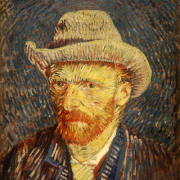
Vincent Van Gogh Painting

Vincent Van Gogh Painting To Go On Display For First Time After 50 Years Before Auction

For over 50 years, ‘Châtaigniers en fleurs’ by Vincent Van Gogh was being held in a private art collection with “almost mythical status” likened to some of the most beautiful museums around the world. 

Embed from Getty Images

‘Châtaigniers en fleurs’ by Van Gogh, which translates to Chestnut Trees in Flower, was created during the artist’s last two months of his life. It will be going on display this month before it’s put up for auction. It’s currently valued to be worth $180 million. 

The painting was created in May 1890 after Van Gogh arrived in the French village of Auvers-sur-Oise, and died just weeks later. 

Most of the works created by Van Gogh during that period are displayed around the world in some of the most famous art museums. 

‘Châtaigniers en fleurs’ is one of 12 impressionist and modern paintings being held in the private collection before this point.

Philip Hook, a former director of impressionist and modern art at the auction house Sotheby’s, said the “opening of the collection to buyers was a historic moment.”

“For decades the Blaquier-Arrieta collection has been the stuff of legend: whispered about, kept from public view, it has attained an almost mythical status in the art world,” he said.

“One of the last great private collections of impressionist and post-impressionist art, it was formed when major examples by the great names were still within reach.”

Embed from Getty Images

The Sotheby’s auction will also include Paul Cézanne’s ‘Harlequin,’ which was painted in the late 19th century and valued at $150 million. 

Camille Pissarro, Pierre-Auguste Renoir, Edgar Degas, Claude Monet, Paul Gauguin, Alfred Sisley, André Derain, Henri de Toulouse-Lautrec and Maurice de Vlaminck are the other artists included in the collection that will be sold. 

The 12 paintings are estimated to bring in over $450 million. The auction will take place on November 18th in New York. Right now, several of the paintings went on display at Sotheby’s in London with a number of them being flown to Taipei, and then Hong Kong and Paris. 

The Van Gogh piece will be on display in Hong Kong from October 13th to the 15th and in Paris from October 19th to the 23rd. 

Van Gogh painted at least four major works that feature chestnut trees in Auvers-sur-Oise during a period of optimism and energy after he was discharged from a psychiatric hospital. 

After his death, the painting was given to his brother, Theo, and the subsequent owner was George Gard DeSylva, a US songwriter and film producer who co-founded Capitol Records. 

Simon Shaw, a senior art adviser at Sotheby’s, said the collection felt “like a small museum – a miniature Musée d’Orsay, now opening its doors for the very first time.”

comedy

Pete Davidson Defends Ariana Grande Amid Body Scrutiny, Calls Commentary ‘F—ed Up’

Pete Davidson says the intense attention paid to celebrities’ personal lives can become difficult to understand — something he has experienced through scrutiny of his dating history and has recently watched happen to former fiancée Ariana Grande.

In a new interview with Variety, the comedian criticized the ongoing discussion about Grande’s appearance, saying he doesn’t understand why so much attention has been directed at her body.

“I don’t like it at all. It’s not cool. She’s a really strong person — I’ve witnessed it — and I don’t understand it,” Davidson, 32, said.

Grande, 33, became the subject of heightened commentary about her frame during the rollout of her Petal album earlier this year, including following the release of music videos and throughout her Eternal Sunshine album tour. The scrutiny intensified after images of Grande circulated widely online in late July, prompting a new wave of speculation and criticism about her appearance.

“She knows how to handle this stuff though. She’s been around. So she’ll be OK, but I think it’s f—ed up.”

His remarks come as Grande takes a previously announced break from public appearances, though the singer has rejected suggestions that negative attention prompted her decision to step away.

During an August performance in Chicago, Grande paused the show to address fans concerned that criticism surrounding her had contributed to the hiatus. At the Aug. 4 concert, she also stressed that the decision had been made well in advance, describing the break as neither “reactive or impulsive” and saying she had planned it “a long time ago.”

Embed from Getty Images

“My fans were worried that negativity was ruining things for me. But, I just have to say, that could not be more the f— opposite. Multiple things can be true at the same time. Boundaries need to be set. Human beings can need a break sometimes.”

Grande has also stepped away from the planned London West End revival of Sunday in the Park With George. The production was subsequently canceled after co-star Jonathan Bailey also exited.

Davidson and Grande were briefly engaged in 2018 after a whirlwind romance that drew considerable public attention. Grande also recorded a song titled “Pete Davidson” for her album Sweetener that year before the pair ultimately called off their engagement. Their relationship lasted about five months, and Davidson told Variety that although the former couple is no longer regularly in contact, there is no apparent animosity between them.

“I think Ariana’s fuckin’ cool and immensely talented and an awesome girl,” he said. “We’re not texting or whatever, but we’re cool.”

Davidson also talked about his own experience with celebrity scrutiny, particularly the longstanding focus on his romantic relationships.

Embed from Getty Images

The former Saturday Night Live cast member said he believes his dating history has often overshadowed his work, despite a career that includes nearly a decade on the sketch comedy series as well as numerous film and television projects. The Variety writer noted that the subject appeared to have “struck a nerve” with him.

“It’s been over a decade. My work and my relevance is super overlooked, and it’s confusing to me. I’m still only 32, but I have really crazy credits: nearly a decade at SNL; I hosted a year after I left; I worked with [directors Craig] Gillespie and [James] Gunn and [Doug] Liman and [David] Leitch and Judd [Apatow] and Edie [Falco] and [Joe] Pesci.”

His credits outside SNL include 2020’s The King of Staten Island, 2021’s The Suicide Squad and the Peacock series Bupkis, which debuted in 2023. His relationships with celebrities including Grande and Kim Kardashian, however, have also generated years of headlines.

“What the f— do I have to do? And look, I get it — I’ve dated a lot of people. But so has everyone else! Everyone is f—ing everyone in this business! Everyone!” he said.

He acknowledged that his own choices contributed to the interest while arguing that his behavior in his 20s was hardly unusual among young people working in Hollywood.

“And for some reason it’s zeroed in on me, and I can’t feel sorry for myself because I put myself in those situations, but everyone else is doing it. I was in my 20s. Am I not supposed to f— around and do drugs and have fun and be in Hollywood like everybody else? Sorry, everyone!”

Davidson is currently promoting his next film, David Leitch’s heist drama How to Rob a Bank. He gained 15 pounds of muscle for the role, in which he plays a military veteran who turns to robbing banks to provide for his family. The film is scheduled to hit theaters Nov. 13.

homes

Homeownership May Have Helped Drive the Baby Boom, Study Finds

A little-known consequence of one of the biggest housing programs in American history may offer a clue about why birthrates rose so dramatically after World War II and why they have become so difficult to lift today.

Economists Melissa S. Kearney of the University of Notre Dame and Lisa J. Dettling of the Federal Reserve Board examined the expansion of government-backed mortgages during the postwar years and found that gaining access to homeownership appeared to influence whether, and when, Americans had children.

Their research suggests that the effect was substantial. For every 1,000 additional mortgages issued through government programs, roughly 300 more babies were born the following year, Dr. Kearney told The New York Times.

“This mortgage program was not meant as a pronatalist policy, but it seems to have had that effect.”

The finding, published in its final version by the National Bureau of Economic Research in September, comes as policymakers worldwide struggle to understand historically low fertility rates. Governments have experimented with tax credits, paid maternity leave, subsidized childcare and other incentives intended to make parenthood more financially manageable. So far, none has produced a major or sustained turnaround.

Dr. Kearney and Dr. Dettling approached the question by looking back at one of the most dramatic fertility increases in modern American history.

The baby boom began in 1946 after World War II ended. Over the following decade, births climbed sharply. By 1957, the total fertility rate had reached about 3.7 children per woman, roughly 30 percent higher than at the beginning of the boom and a modern American high.

Scholars have spent decades trying to explain what drove that surge. Some theories focus on the economic optimism Americans felt after years of depression and war. Others have pointed to falling maternal health risks, shifting marriage patterns or broader improvements in living standards.

Notably, at the same time, another sweeping change was underway; Americans were becoming homeowners in far greater numbers.

The G.I. Bill and related federal programs gave millions of returning veterans access to mortgages with unusually favorable terms, including low or nonexistent down payments. The programs helped reshape American housing and played a major role in the growth of the postwar middle class.

Embed from Getty Images

Young adults were among the biggest beneficiaries. Among Americans of childbearing age, the homeownership rate rose from about 20 percent in 1940 to 50 percent by 1960.

Dr. Kearney and Dr. Dettling set out to determine whether the parallel rise in homeownership and fertility reflected more than coincidence. Answering that question required detailed information about where and when government-backed mortgages had actually been issued, rather than simply comparing national housing and birth trends.

The researchers eventually discovered that the Federal Reserve had preserved thousands of pages of historical mortgage records.

Undergraduate research assistants spent two years digitizing the material. The researchers then matched those records with state-level demographic data to examine whether increases in federally backed lending were followed by changes in births.

“We kept cutting the data and looking at it,” Dr. Kearney said. “It kept lining up.”

The analysis found that places receiving more government-backed mortgages subsequently recorded additional births, suggesting that expanded access to homeownership contributed to the baby boom.

It was not, however, a complete explanation for the era’s fertility surge. Black women also experienced increases in childbearing during the baby-boom years, despite Black families being unfairly excluded from many of the housing benefits made available to white veterans and their families.

The findings may also help explain broader demographic changes at the time. Women married younger, began having children earlier and ultimately tended to have larger families than women in preceding generations.

According to Dr. Kearney, the apparent effect was not simply about making housing cheaper. Instead, the researchers argue that ownership itself may have mattered.

Having a deed in one’s name can provide both financial security and a sense of permanence, potentially making people more confident about starting or expanding a family. Younger adults today also frequently cite financial and housing stability as milestones they hope to reach before having children.

That interpretation complicates a longstanding argument about America’s declining birthrate.

Economists have often been skeptical that financial strain alone can explain the roughly two-decade decline in fertility. Household incomes have generally risen over that period, while lower-income women have historically tended to have more children than higher-income women.

The study suggests the economic connection may instead be tied to whether people feel settled enough to make long-term decisions about family life.

The median age of first-time home buyers reached 40 in 2025, a record high. Mortgage rates also jumped to 7 percent last week, their highest level since January 2025, creating another hurdle for prospective buyers already contending with elevated home prices.

Affordability has consequently become an increasingly prominent political issue during the midterm election cycle, with housing costs occupying a central place in broader debates over the cost of living.

Embed from Getty Images

Still, researchers caution against assuming that a housing policy associated with higher fertility several generations ago would produce an identical result under present-day conditions.

Phillip Levine, an economics professor at Wellesley College who has previously written papers with Dr. Kearney but was not involved in the new research, said the study’s methodology appeared convincing.

“The empirical work seems pretty strong, and they find a pretty good-sized effect,” he said.

But he noted that the social and economic conditions surrounding housing and family formation have changed substantially since the mid-20th century.

“Does that mean that we would get the same result today? We don’t know.”

Dr. Kearney similarly acknowledged that the modern housing market presents challenges that did not exist in the same form during the postwar period.

Making mortgages easier for young families to obtain could encourage some people to have children sooner or ultimately have more children. But the housing market itself is far different from the one that accompanied the baby boom.

The United States of the 1940s and 1950s was rapidly adding homes, particularly as suburbs expanded and large amounts of land around metropolitan areas were developed. Housing supply today is considerably more constrained in many parts of the country.

Expanding access to mortgage credit without also increasing the number of available homes could therefore worsen affordability by pushing prices even higher.

That tension, Dr. Kearney said, is one of the central problems policymakers would have to address if they tried to draw lessons from the postwar experience.

The research does not suggest that government-backed mortgages created the baby boom on their own. But it adds another dimension to the debate over why Americans are delaying or forgoing parenthood, suggesting that the stability associated with homeownership may have historically played a larger role in family formation than economists previously recognized.

running

Even Very Slow Running Can Benefit The Brain, Study Suggests

A 10-minute jog at a pace barely faster than walking may still be enough to give the brain a short-term boost, according to new research examining how very slow running affects mood and cognitive function.

Researchers at the University of Tsukuba in Japan found that even running at extremely low speeds was associated with improved mood, faster performance on a test of attention and self-control, and increased activity in parts of the brain’s prefrontal cortex. The findings were published in Imaging Neuroscience.

The researchers recruited 24 healthy young adults and had each participant spend 10 minutes running on a treadmill at a slow pace of roughly 1.9 to 3.7 miles per hour (3 to 6 kilometers per hour).

During the treadmill sessions, average heart rates among both male and female participants ranged from 104 to 107 beats per minute. The researchers compared those sessions with separate days when participants spent 10 minutes sitting still.

Following the slow-running sessions, participants reported significant improvements in mood, including feeling more alert and more pleasant than they did after sitting.

They also performed better on a cognitive test measuring attention and self-control, responding more quickly after running than after sitting still.

During the tests, participants wore headsets that monitored changes in oxygenated hemoglobin near the surface of the brain.

Although the technique is less precise than an MRI, it can provide a general indication of which areas of the brain become more active during certain tasks.

After participants ran, the headsets detected a stronger oxygen-rich blood signal in two areas of the left prefrontal cortex while they completed the cognitive tests. The region plays an important role in both cognition and mood.

Some of the same researchers had previously found that 10 minutes of moderate-intensity running could increase activation in the prefrontal cortex. The new experiment suggests that those effects may also appear at much lower running intensities.

Embed from Getty Images

There are several limitations to the findings. The study involved only 24 healthy young adults, so the results may not apply to people of different ages or health backgrounds.

It also examined only the immediate effects of a single 10-minute session, rather than the long-term effects of regularly running at a slow pace.

And because the researchers compared running with sitting rather than walking, the experiment cannot determine whether very slow running produces benefits that similarly gentle walking would not.

What causes the observed changes remains uncertain. One possibility is that running activates neural networks that project into the prefrontal cortex. Another involves the rhythmic movement of the head during a run.

Animal experiments have suggested that repeated up-and-down head movement may mechanically stimulate the brain, raising the possibility that head acceleration itself could contribute to some of the effects.

“This is a new and challenging hypothesis, and the exact neural circuitry involved in the positive effect of head acceleration on mood has not been identified and needs further investigation.”

The researchers found that, among participants in the study, greater head acceleration during very slow running was associated with higher levels of exercise-induced pleasure. Head acceleration accounted for about 17 percent of the variation in improved mood scores between participants.

“This discovery of the positive relationship between head acceleration and improved mood may be one of the underlying mechanisms through which very slow running promotes mental health.”

Previous studies examining low-intensity exercise and cognition have often focused on cycling, in part because researchers can more easily control the exercise intensity.

Embed from Getty Images

But cycling may not produce the same degree of rhythmic head movement as jogging, which could matter if head acceleration contributes to the effects observed in the new study.

The findings also raise a broader question about running’s role in human evolution.

Humans evolved to run long distances while upright on two legs, and endurance rather than speed may have helped early humans survive by allowing them to pursue large prey across the savannah.

The researchers suggest that the evolutionary importance of running could also be connected to the development of the human brain.

“It is interesting to hypothesize that human upright bipedal running is also strongly tied to the evolutionary expansion of the Homo sapiens’ frontal lobes and higher cognitive functions. Against this background, running may be viewed not simply as another exercise modality, but as a biologically foundational form of human movement with particular relevance to brain function.”

That evolutionary connection remains speculative, and the current experiment cannot establish that running played a role in the development of human cognition. Nor can the study determine the exact mechanism responsible for the changes researchers observed after exercise.

But the findings suggest that a run does not necessarily have to be fast or demanding to produce measurable short-term changes in mood, cognitive performance, and brain activity.

So on days when a run feels more like an awkward shuffle than a workout, it may still be doing something useful.

realtor

Real Estate Agents Reveal Most Common Home Features That Turn Away Buyers 

In a recent publication, expert real estate agents revealed some of the most common home features that immediately turn buyers away from a property. When thinking about putting your home on the market, a lot of the time the focus can be on the amenities that make the space stand out and allure potential buyers. 

However, the turn offs are arguably the most important features to focus on when selling a property, because in a split second a buyer can decide the investment is no longer worth it if they see some of the following features. 

Jan Ryan, a broker owner of RE/MAX Direct, told The Spruce that neglected yards and outdoor spaces is one of the biggest turn offs for buyers due to the amount of effort that it takes to fix it. 

Embed from Getty Images

“Think a patch of dead grass, an overgrown lawn, unraked leaves, dead plantings, an unmaintained deck, or a cracked walkway. Your property’s outdoor areas in disarray can be as much of a dealbreaker as neglected interior repairs. It’s a game-changer to have curb appeal and an enticing backyard,” Ryan said. 

“Even a small patch of healthy green lawn in the front yard goes a long way in making a house more attractive,” she said.

Sellers should consult with a landscaper before placing their home on the market, or at least get the process of fixing the yard going, however it needs to be done, as they’re selling to ensure buyers that it will be fixed by the time they move in. 

Sellers who have carpet in their homes should also be wary. Old carpeting can not only be unsightly, but unhygienic depending on how long it’s been there. The aesthetic can also impact whether or not a buyer is attracted to the home, and don’t want to think about the process of ripping up the carpeting itself to either refurbish the floors underneath, or spend the money on completely new flooring. 

The Spruce also reported that it’s a good idea for sellers to remove and store potentially “polarizing and distracting decor.” Think sentimental knick-knacks, mounted wall decor, and pieces that are on the more personal side. 

Buyers want to be able to envision themselves in the space, so the more generic staging decor, the better. 

Embed from Getty Images

“This also extends to the outdoor areas. Yard art of any sort is a bad idea,” said Jonathan Self, a real estate broker at Compass.

The same sentiment is said about outdated fixtures and hardware. Ryan specifically wants sellers to “be on the lookout for now out-of-style fixtures such as brass-and-crystal light fixtures, old-fashioned (circa 1980) doorknobs and bath faucets, or cabinet pulls that belong in grandma’s kitchen.”

One of the easiest things that can be fixed is overly bold paint colors, again, the more generic the better. 

“That lime green accent wall might have felt fun at one point, but buyers can’t see past bold and dated colors,” says Ryan.

Neural earth tones are always a solid choice, and gives the seller the chance to see the potential of a space. Also, Self recommends hiring professionals, as the more DIY a space seems, the less appealing it becomes. 

“If I walk into a house and see more than one DIY job, it’s going to trip alarm bells: If the seller is too thrifty, I’m going to assume s/he also hired the cheapest electrician or plumber,” Self said.

“In addition to sagging roofs and mold issues, buyers notice minor maintenance issues, including peeling paint, loose door handles, and dripping faucets,” Ryan said.

“If they see small things ignored, they worry about the big-ticket items.”

Ponzi Scheme

Travis Kelce Named Among Victims Of $35 Million Ponzi Scheme 

Kansas City Chiefs tight end Travis Kelce has been named among the victims of a Ponzi scheme that obtained over $35 million from “unsuspecting investors,” a Missouri prosecutor stated.

Embed from Getty Images

Last week, the prosecutor named Kelce in court with 38-year-old Siddharth Jawahar being sentenced to 11 years in prison. The US attorney’s office of the eastern district of Missouri stated that Jawahar pleaded guilty to three counts of wire fraud in US district court in St Louis in January. 

Jawahar was also ordered to pay $31.35 million in restitution. 

Television station KMOV reported that the prosecutor brought up Kelce’s name without expanding any further, so it is not currently known when Kelce made the investment or how much he spent. 

The US attorney’s office reported that Jawahar was running an investment company based in Texas called Swiftarc Capital LLC. In 2015, the company began taking money from investors which he put into a single investment that dropped in value. 

He then neglected to notify his investors of the decrease and instead told them the opposite, while also taking money from new investors to repay others. 

Embed from Getty Images

Jawahar also used the investment money to fund his own “extravagant lifestyle,” with prosecutors citing his private jet trips, luxury living, elegant dining, and memberships in expensive private clubs. 

The news release stated that Jawahar was given more than $35 million but only invested around $10 million between July 2016 and December 2023. 

Reports also state that Kelce is unlikely to be the only professional athlete involved within the Ponzi scheme. 

For example, a Forbes article published in 2021 reported on the growing financial portfolio of NBA guard Gary Harris. The piece gave several comments from Harris regarding his ventures which included investing in the Swiftard Ventures Labs Fund. 

Jawahar acted as the co-founder and managing partner with Harris speaking about how much he learned from him. The article also mentioned other investor athletes such as NBA players Tim Hardaway Jr and Mason Plumlee. 

Kelce, Hardaway, and Harris all have career earnings over $111 million each, according to reports from Spotrac. 

us aid

US Withdrawal From Foreign Aid Programs Leave Africa’s Healthcare Systems ‘Under Growing Strain’

The United States has withdrawn from key aid programs in Africa and has put their healthcare systems “under growing strain,” according to a new report. 

The report stated that the Trump Administration’s cuts to programs like the US Agency for International Development (USAID) along with the impact of the Covid-19 pandemic and rising cost of living has brought on a “new urgency” for the need to reform healthcare in the global south. 

The report was titled ‘A Sovereign Future For Health’ and was created by global health initiative Accra Reset and led by John Dramani Mahama, president of Ghana. Accra Reset believes that nations in Africa and the wider global south should have more control over their health development as opposed to being dependent on aid from western nations and international institutions. 

Mahama and Accra Reset said that Africa statistically produces less than 1% of its vaccines while carrying about a quarter of the global disease burden. 

Embed from Getty Images

The report also said how abrupt changes to global health financing like the US withdrawal from several global health initiatives, has forced countries within the global south to urgently restrict their finances. 

The Trump administration’s decision to dissolve USAID also pushed Nigeria to absorb the 28,000 health workers who were previously employed by the agency. 

The withdrawal of the US Emergency Plan for Aids Relief funding in South Africa has led to many HIV clinics closing throughout the country. Previously, the funding provided more than $400 million annually, and is credited for saving 26 million lives around the world within the past 23 years. 

These cuts to funding have caused “severe and devastating disruption globally,” according to research that was presented at the 26th International Aids Conference in Brazil this year. 

Mahama attended the World Health Assembly in May, where he stated that Ghana alone lost $78 million after the closure of USAID programs, greatly impacting the treatment of malaria, maternal healthcare, nutrition, and HIV/Aids intervention. 

“The Accra Reset is not an argument for traditional donors to do less on global health. It is an argument for doing it differently and doing it better. As countries take greater ownership of their health futures, donor countries should step up to support that transition – following the lead of countries that set their own priorities, and work alongside them to determine where outside support is most valuable,” said Naveen Rao, senior vice-president of the health initiative at the Rockefeller Foundation. 

Embed from Getty Images

“The Accra Reset shows how we can evolve to back country-led solutions while advancing our shared health and economic interests.”

Mahama stated in the report that the “past few years have shaken global health cooperation to its foundations.”

“The Covid-19 pandemic exposed the risks created by concentrated production and unequal access to essential health products; rising debt and fiscal pressures have constrained national health budgets; and declining development assistance is placing programs and services under growing strain.”

“These shocks have brought new urgency to reform debates that have continued for years with limited progress. It was in this context that we launched the Accra Reset and its Sovereign Health Agenda – to give renewed political force to the reform agenda and place the agency of countries of the Global South at its center.”

The report also noted a recent survey in which many US citizens stated that we should continue to be investing in, and providing, foreign aid. 

The survey polled more than 2,000 US adults and was commissioned by the Rockefeller Foundation. The results showed that about 75% of Americans, including the 52% who support Donald Trump, believe that the US should restore disease prevention aid, specifically to help contain the Ebola virus. 

It also found that 65% of American adults support international cooperation even if it means compromising national interests.

bottlenose dolphins

Dolphin Named Bubbles Filmed Chasing Fish Until They Vomit, Then Eating Their Food

A wild bottlenose dolphin off Australia’s Great Barrier Reef has been caught on camera using an unusual feeding strategy — chasing fish until they vomit, then helping himself to their partially digested meals.

Researchers studying the dolphin, nicknamed Bubbles, documented 20 instances of the behavior, with 11 successful attempts. Their findings, published September 13 in the journal Ecology and Evolution, describe a hunting technique never before documented in bottlenose dolphins.

Study co-author Asia Armstrong first became aware of Bubbles in 2017 after watching footage of his unusual feeding behavior. She later recruited other researchers to investigate the adult male, who locals had nicknamed Bubbles. The team used GoPro cameras to document his feeding activities between June 2021 and October 2025.

Researchers observed the behavior near Lady Elliot Island, a coral cay at the southern end of the Great Barrier Reef, where Bubbles regularly encounters schools of bigeye trevally. Footage shows him approaching a school, singling out a fish and separating it from the group before giving chase. Once the distressed fish regurgitates its stomach contents, Bubbles promptly devours them.

And one meal apparently isn’t always enough. Scientists observed Bubbles repeating the process several times during a single feeding session, sometimes launching as many as 10 pursuits within half an hour.

The behavior represents an unusual variation of kleptoparasitism, a feeding strategy in which an animal steals food another animal has already obtained. Although the practice is well documented among numerous species, particularly birds such as frigatebirds, the findings represent one of the first detailed accounts of food stealing in cetaceans, the marine mammal group that includes dolphins, whales and porpoises.

Embed from Getty Images

One previously documented example involved a dolphin stealing fish from cormorants, as described by Georgetown University marine biologist Janet Mann. Bubbles, however, takes a different approach, extracting another animal’s last meal rather than stealing prey it has captured.

Researchers are particularly interested in how Bubbles identifies his targets and whether sound plays an important role in the technique. Before approaching schools of fish, researchers filmed him producing clicking sounds while moving his head from side to side, suggesting he might use echolocation to identify trevally with fuller stomachs.

“Echolocation does allow dolphins to discriminate small differences in their targets’ shape, size and structure, so the dolphin potentially uses echolocation to decide which fish to target to get the best reward,” Armstrong, a marine scientist at the University of the Sunshine Coast, told Scientific American.

During his pursuits, Bubbles also produced repetitive clicks and low-frequency sounds that researchers suspect might further distress his targets and contribute to their vomiting. Alternatively, the fish may regurgitate as a defensive tactic, using their discarded stomach contents to distract a predator and escape.

However, additional research is needed to establish whether Bubbles deliberately selects fish based on their stomach contents. Outside experts have also cautioned against assuming that the dolphin understands precisely how his actions produce a meal.

“I would be cautious, though, about assigning intention,” Jason Bruck, a dolphin behavioral scientist at Stephen F. Austin State University who was not involved in the research, told Scientific American. “We can’t yet say the dolphin is pursuing the fish because it expects it to regurgitate.”

Another unanswered question is how Bubbles acquired the technique. He may have discovered it independently, learned it by observing other dolphins, or initially pursued trevally with the intention of eating them before discovering that their regurgitated meals provided another food source.

“It’s very possible that other species use this tactic. Dolphins and whales use a variety of unique foraging tactics, which is reflective of their intelligence, adaptability and ability to learn and pass information to one another socially.”

Embed from Getty Images

Researchers also have several theories about why the technique might be advantageous. The bigeye trevally schools Bubbles targets reliably gather in approximately the same location almost every day, providing a recurring opportunity to obtain food.

The size of his targets may offer another incentive. Bigeye trevally can grow up to 33 inches long, making them potentially demanding prey. Vivienne Foroughirad, a Texas A&M University marine biologist who was not involved in the study, suggested to Science that eating regurgitated food could require considerably less time and energy than capturing and consuming the fish themselves.

“I’d speculate that the trevally vomit provides an easy snack on days when Bubbles hasn’t been as successful with hunting,” lead author Romney Edwards-Francis, a Ph.D. candidate at the University of the Sunshine Coast, told Discover Wildlife.

Bubbles has also displayed an intriguing behavior after successfully obtaining a meal. Study co-author Jacinta Shackleton, an independent marine biologist and underwater photographer, told BBC Wildlife Magazine that he sometimes turns directly toward her and produces a prolonged clicking sound after eating, almost as though he is showing off his accomplishment.

Whether Bubbles is the only dolphin employing this strategy remains unclear. Researchers believe unconventional feeding behaviors may be more common among cetaceans than existing scientific observations suggest, but documenting them is difficult because scientists rarely have the opportunity to follow marine mammals underwater for extended periods.

Edwards-Francis suggested that combining drone technology with underwater surveys could help researchers capture a broader range of behaviors and determine how widespread such techniques actually are.