passport

Microsoft, Adobe Barred From Green Card Program as Vance Alleges Immigration Fraud

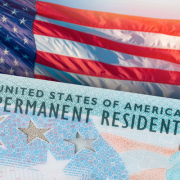
The Trump administration is suspending Microsoft from a federal green card program over allegations that the technology giant exploited immigration rules to replace American employees with lower-paid foreign workers.

Vice President JD Vance announced the decision Thursday at a White House news conference, accusing the company of abusing a system intended to help employers recruit foreign workers when qualified domestic candidates are unavailable.

The announcement came just hours before President Donald Trump was scheduled to award Microsoft CEO Satya Nadella the National Medal of Technology and Innovation, one of the country’s most prestigious technological honors. Nadella was among several prominent figures in the technology industry being recognized at the ceremony, including billionaires who have cultivated ties with the president.

Vance claimed Microsoft laid off 6,000 American employees last year while securing 6,300 H-1B visas and nearly 3,000 green cards for foreign workers. He presented those figures as evidence that the company was relying on overseas labor while cutting domestic jobs.

“If you do the math, for every worker that Microsoft laid off, they replaced that worker with one and a half foreign indentured servants,” Vance said in a White House news conference announcing the decision. “Our message to Microsoft is: You’re a great American company, but you’ve got to hire great American workers.”

The H-1B program allows American employers to hire foreign professionals for specialized positions, particularly in fields where companies report difficulty finding qualified U.S. applicants. Technology companies are among its largest users, with workers from India accounting for nearly three-quarters of visa approvals.

Microsoft sought H-1B visas for about 3,700 employees in 2026, ranking fifth among companies using the program. Amazon ranked first, submitting more than 9,300 petitions that year.

However, the program has faced years of criticism from Trump supporters, who contend that some businesses use it to suppress wages and hire foreign employees at the expense of American workers.

Vance also argued that H-1B visa holders are particularly vulnerable to exploitation because their legal status is tied to their employment. Losing a sponsoring job can jeopardize a worker’s ability to remain in the country, a dependency Vance said allows companies to pay foreign employees less than Americans performing similar work. He claimed that foreign employees hired through the program earn, on average, $20,000 less than their American counterparts in comparable positions.

Embed from Getty Images

Immigration advocacy organizations have also pushed for changes to the H-1B system, though their concerns differ from the administration’s. They argue that workers’ dependence on sponsoring employers can make job changes difficult, even when employees face poor working conditions or have opportunities to earn higher salaries elsewhere.

Some organizations, such as the National Immigration Forum, have also dispute the administration’s broader criticism of foreign labor recruitment.

“The United States has long benefited from its ability to attract talent from around the world, particularly in STEM, higher education, research, and innovation. As countries increasingly compete for highly skilled workers, policies that make the United States less attractive could strengthen global competitors.”

The organization warned that making U.S. employment less accessible to international talent could ultimately benefit competing countries seeking to recruit those same workers.

The allegations against Microsoft specifically concern a labor certification process that employers must complete before sponsoring certain foreign workers for permanent residency.

Companies are required to advertise available positions and demonstrate to the Department of Labor that they have made an effort to recruit qualified American candidates. If they cannot find suitable domestic applicants, they may seek certification to proceed with a foreign worker’s green card application.

According to Vance, some employers circumvent the intent of those requirements by advertising vacancies in obscure publications or locations where prospective employees are unlikely to see them.

“They’ll put an advertisement in a small-town newspaper. They’ll go out there and say that ‘We have advertised for a position with our company, and nobody is responding to it.’ And they will use that lack of response to then go and replace American workers with what is effectively foreign indentured servants. There has been no company in the United States, unfortunately, that has used this system more than Microsoft.”

Embed from Getty Images

Microsoft, which is headquartered in Redmond, Washington, near Seattle, did not immediately respond to a request for comment regarding the suspension or Vance’s accusations.

The administration has also suspended Adobe from the same labor certification program, according to Labor Secretary Keith Sonderling. He said federal officials would neither accept additional permanent labor certification applications nor continue reviewing those already submitted on behalf of either company.

Sonderling said Microsoft and Adobe had collectively obtained roughly 230,000 H-1B visa approvals and 100,000 permanent labor certifications since 2009, illustrating the companies’ extensive participation in employment-based immigration programs over the past 17 years.

The administration’s announcement extended beyond the technology company, with officials also raising concerns about information technology outsourcing firms and universities that bring foreign nationals into the United States through temporary visa programs.

Vance singled out nine universities for further investigation over their use of J-1 exchange visitor visas, alleging that the institutions relied on the program at disproportionately high rates compared with their counterparts.

The J-1 program permits international visitors to enter the country temporarily for approved educational, professional and cultural exchanges, including opportunities to study and work at American institutions.

The universities identified were Harvard; Yale; Stanford; Brown; the University of Pittsburgh; the University of California, Davis; the California Institute of Technology, or Caltech; Arizona State; and the Massachusetts Institute of Technology.

Vance suggested the institutions’ participation rates warranted additional scrutiny for possible visa fraud, though the announcement did not establish that the universities violated immigration regulations.

The criticism follows another immigration-related proposal the Department of Homeland Security unveiled Wednesday, which would impose a $70,000 fee on educational institutions for each international student participating in the Optional Practical Training program.

Known as OPT, the program lets eligible international students work in fields related to their studies, either while enrolled at a U.S. institution or after completing their degrees. It gives graduates a chance to gain professional experience in their fields without immediately securing a different employment visa.

Under the proposed rule, schools, not individual students, would pay the fee, potentially creating a substantial financial burden for institutions with large international student populations.

The proposal and Thursday’s allegations reflect the administration’s increasing scrutiny of employment opportunities available to foreign nationals, extending beyond corporate hiring practices to programs administered through American universities.

amazon

Amazon Lands Six-Year Global Deal To Stream The Emmys

Amazon is set to become the worldwide home of the Emmys under a six-year agreement with the Television Academy, moving the awards show away from its decades-old rotation among the major U.S. broadcast networks.

Prime Video will stream the ceremony globally each September under the new pact, which is understood to be valued at more than $120 million overall. The annual price is reportedly between $20 million and $25 million, with one source putting the figure at roughly $24 million per year.

Despite moving to Amazon, the Emmys will not require viewers to have a paid Prime subscription. Television Academy chair Cris Abrego said making the ceremony free to watch through Prime Video was a “non-negotiable” for the Academy.

“I give Mike credit. From our early conversations, he understood that. It’s not simply just about distributing an award show, they really understood what the Emmys mean to the television community and what we could build around that, and we’re really excited about it,” Abrego added.

Amazon has previously placed major events outside its usual Prime paywall, including several Amazon Music concerts and its Black Friday NFL game. Prime Video and Amazon MGM Studios chief Mike Hopkins pointed to the company’s sizable advertising operation and broader streaming business as reasons the approach can still make financial sense.

“We have a variety of other economic levers we can pull to make it make financial sense for us. We also have nearly all of the streaming services as part of Prime Video in our subscription business, and many of this year’s winners are available to our Prime Video customers via driving to HBO Max or Apple TV. We see it as something that sits as part of our entertainment system with customers where we can celebrate these awards and nominees throughout the year. We can be the home of many of the best shows on television today, not just those that we make ourselves, but our partners are the ones that are always every year going to get the lion’s share of awards,” he said.

The agreement, finalized Tuesday after Amazon and the Academy talked last month, marks a major break from the Emmys’ longstanding distribution model. Since 1995, ABC, CBS, Fox and NBC have taken turns broadcasting the ceremony in the U.S. through what became known as the broadcast wheel.

Embed from Getty Images

The deal also represents a considerable jump from what the traditional networks have paid for domestic Emmy rights. ABC, CBS, Fox and NBC have generally spent between $8 million and $10 million annually to carry the ceremony in the U.S.

How much the Academy has historically earned from separate international rights is less clear. The Emmys have aired live in several markets through outlets including CTV in Canada, Showcase in Australia, Canal+ in France, TNT across Latin America and Sky Italia. In other territories, smaller networks and streaming services have carried the ceremony.

Abrego said he did not want to simply renew the rotating arrangement, arguing that moving between networks each year made it difficult to carry lessons and ideas from one ceremony into the next.

“I felt strongly from the outset that this was an opportunity to rethink the model. Every year with a new partner, trying to find a production partner, a brand partner, trying to bring even the simpleness of learnings from the past event into the next year didn’t matter because of the different institutions… that was very challenging. As television and the industry is evolving, the telecast, much like the Academy, needed to evolve, and so having a singular home was my goal from the outset.”

Hopkins similarly said Amazon sees the long-term arrangement as an opportunity to build the Emmys into a “global event.”

“We thought we could increase the viewership, bring in a younger audience, work with the Academy to put a lot more energy, and maybe look at the production itself to try to innovate,” he said. “I feel that we can put the Emmys on a path to global growth and relevance that was probably harder to do when it was spinning from network to network and then distributed in various ways around the world.”

Amazon has increasingly positioned Prime Video as a central destination for subscriptions to outside streaming services, including through its recent bundle offerings.

The company itself has not been among the biggest Emmy winners in recent years. Amazon took home 10 awards this year, largely helped by Spider-Noir, which also aired on MGM+. It won five awards at the Creative Arts Emmys last year and four in 2024.

Embed from Getty Images

But Hopkins said the company also sees value when shows from its streaming partners succeed.

“We stand up and clap at the Emmys when our partners win.”

Beyond distribution, both Amazon and the Television Academy have stressed reaching younger audiences and potentially changing the ceremony itself.

“We’ve been talking a lot about it. It’s a little premature to get into specifics, but I think it is about the format. I think it’s about the celebration of certain stories and artists that might appeal to younger audiences. I also think it’s finding ways to promote to those audiences so they’re aware that it’s on. Ultimately, we know that younger audiences are more inclined to stream than watch broadcast television.”

Abrego similarly said the Academy did not strike a new deal merely to put the same version of the Emmys on a different platform.

“The amount of categories, the type of categories, the length of the show, the hope is that we have an awards show that’s as relevant and interesting and innovative as the shows that are winning the Emmys,” he said.

The new long-term relationship also means those discussions can begin significantly earlier. Abrego said he wants to start talking about changes “in the next few days,” rather than waiting until closer to the ceremony.

“We wouldn’t normally start having these conversations probably until May,” he said. “We could start those conversations tomorrow, and start to really think about that. That’s what’s exciting.”

One Amazon star who already has considerable pull with younger viewers is Jimmy Donaldson, better known as MrBeast, host of Beast Games. Conan O’Brien joked at this year’s Oscars that Donaldson was going to replace him as host, raising the question of whether MrBeast could eventually turn up in a similar role at the Emmys.

“We hadn’t thought about it yet, but if you know him, please give him a call,” laughed Hopkins.

lab

Russian Plague Lab Death Sparks Quarantines and International Monitoring

A Russian laboratory worker at an institute that studies the plague and other dangerous infectious diseases has died from an unexplained illness, prompting heightened precautions as officials investigate whether the case could be linked to pneumonic plague.

The 28-year-old laboratory technician, identified in local reports as Darya Shipilova, worked at the Irkutsk Research Anti-Plague Institute of Siberia in Shelekhov. Russian health officials said she was diagnosed with pneumonia of “unknown” origin before her death.

Authorities have stressed that testing has not linked her illness to pathogens handled at the institute.

“No microorganisms associated with the employee’s professional duties were detected in samples taken from the patient,” Rospotrebnadzor said, adding that the regional “epidemiological situation” remained stable.

The agency also said it had found no evidence of an accident involving pathogenic microorganisms at the institute.

Even so, dozens of people have reportedly been isolated or placed under medical observation, while hospitals in the region have introduced containment measures. Independent regional outlet Liudi Baikala has reported that nearly 200 people are under observation.

Regional officials said none of the identified contacts had developed symptoms and that laboratory testing conducted on them had so far come back negative.

The World Health Organization told CNN it was in contact with Russian authorities to “verify the event, its circumstances, the laboratory tests underway, and their results.”

“Based on unofficial information available, the public health risk to the general population appears to be low.”

Speculation over plague intensified after Alexei Tsydenov, head of the neighboring republic of Buryatia, said the employee died “possibly from the plague,” while stressing that no outbreak had been detected in his region.

Pneumonic plague is one of three forms of plague caused by the bacterium Yersinia pestis. The CDC says it is the most severe form and can spread between people through infectious respiratory droplets during close contact. It can develop when plague bacteria reach the lungs or when a person inhales infected droplets.

Rospotrebnadzor chief Anna Popova traveled to Irkutsk on Friday for what regional governor Igor Kobzev described as an extraordinary meeting of the anti-epidemic commission.

The meeting concerned a “suspected case of a particularly dangerous infection affecting a resident of the region,” Kobzev said on Telegram.

Embed from Getty Images

Maxim Modin, mayor of the Shelekhovsky district, said authorities had launched a “comprehensive set of anti-epidemic measures.”

The inpatient facility where the technician was treated has been quarantined, and several departments have temporarily stopped admitting or discharging patients, Modin said. Local media have also reported closures at other hospitals.

Modin said no infectious diseases had been reported among institute employees during the previous 10 days.

The institute employs around 95 researchers and serves as a major public-health facility that monitors and prevents outbreaks of high-risk bacterial and viral infections across Siberia and Russia’s Far East.

Residents in Shelekhov said there were few visible signs of disruption, though the uncertainty had caused some concern.

“My acquaintances are slightly panicking,” a resident named Ekaterina told CNN.

Another resident, who asked not to be identified, said he was “shocked” by the news.

The Kremlin has urged the public to rely on official updates rather than unverified reports.

“One should rely on official statements from Rospotrebnadzor rather than listening to various rumors and speculation.”

Former Rospotrebnadzor chief Gennady Onishchenko also downplayed the likelihood of a wider outbreak.

The infection in the Irkutsk region is “most likely not the plague, but even if confirmed, there will be no spread of this disease,” Onishchenko told state news agency TASS on Friday.

He added that colder weather would likely reduce transmission.

Angela Rasmussen, a virologist at the Vaccine and Infectious Disease Organization, told CNN that pneumonic plague can be deadly but does not spread as easily as respiratory illnesses such as COVID-19. She said infection generally requires exposure to a relatively high bacterial load.

Embed from Getty Images

Rasmussen also noted that plague is endemic among wildlife in parts of Siberia.

Siberian virologist Alexander Chepurnov said the strict procedures being followed are designed to prevent possible onward transmission.

“After any suspected exposure, staff are instructed to immediately report it, decontaminate, undergo medical assessment and be isolated in a separate dedicated facility for however long they might be infectious.”

The CDC says pneumonic plague can cause fever, headache and weakness followed by “a rapidly developing pneumonia with shortness of breath, chest pain, cough, and sometimes bloody or watery mucus.”

According to the World Health Organization, plague has a high fatality rate but can be treated effectively with antibiotics when caught early.

Although plague is now rare in the United States, the CDC records an average of about seven human cases each year, primarily in western states including Arizona and New Mexico. The agency has not documented person-to-person transmission of plague in more than a century.

The uncertainty has also prompted action outside Russia.

Kazakhstan’s Ministry of Health said the risk remained “very low,” but “sanitary and quarantine controls were implemented at state border crossing points.”

Uzbekistan likewise said it had “increased the readiness” of relevant authorities to respond to highly infectious diseases.

Kyrgyzstan, which does not share a land border with Russia and lies roughly 1,500 miles from Irkutsk, announced Monday that it was introducing quarantine controls at state border crossings.

An aluminum plant near the research institute also instructed employees to wear masks as a precaution. Artem Fominikh, director of the Irkutsk Aluminum Plant, acknowledged that “conflicting reports” were circulating and called for calm.

Fominikh also urged employees to seek medical attention immediately if they developed symptoms.

US officials are also following the case.

“I don’t think it’s cause for alarm, but it is cause for focus and a cause to just keep an eye on it,” Secretary of State Marco Rubio said Monday.

A State Department spokesperson said Sunday that many details remained unconfirmed and urged Russian authorities to provide timely information.

“We are monitoring the situation closely with the CDC and our other interagency partners,” the spokesperson said. “Many details have not been confirmed. We encourage Russian authorities to share accurate information quickly and openly.”

Johannesburg

South Africa Police Issue Warning After Multiple Women Found Dead Near Johannesburg

South African police have urged women to take extra precautions in an area east of Johannesburg after another woman’s body was discovered Tuesday, adding to a series of deaths that authorities say appear to be connected.

The South African Police Services, or SAPS, has not confirmed that a serial killer is responsible for the deaths. Authorities have formed a dedicated task team to investigate the cases.

“While investigations are still underway and SAPS has not, at this stage, confirmed that the deaths are linked to a serial killer, the similarities are sufficiently concerning for the police to issue a public warning and intensify investigations.”

As part of that warning, police have advised women in the Kempton Park area not to walk or run alone, particularly in isolated places.

The latest body was discovered Tuesday in Kwa-Thema, about 21 miles (34 kilometers) from Kempton Park. Police said the woman was found fully naked and that her body was in an advanced stage of decomposition.

Another woman’s body had been found a day earlier in Olifantsontein. Police said a passer-by spotted the body while on his way to work.

One person has been arrested in connection with the first body discovered in the series and is being held by police.

Embed from Getty Images

The recent discoveries follow the death of 38-year-old Elizabeth “Tsontso” Moselakgomo, who disappeared last week while on a routine run in Kempton Park. Police and members of the community searched for her before her partially clothed body was found Saturday.

Moselakgomo’s relatives identified her body on Monday. Authorities have not yet identified the women whose bodies were found in the remaining cases.

Moselakgomo, an avid runner and mother of one, was affectionately known as “Tsontso.” Her family thanked the public for helping search for her and praised her 8-year-old daughter for raising the alarm after her mother disappeared.

Her death has shaken members of the local running community. Keamo Sefularo, who knew Moselakgomo through their running club, described the discoveries as “very scary.”

“It’s sad to know that every woman in South Africa… can’t just go outside. You can’t just go to the shop and buy flowers… because you are always in danger,” Sefularo said.

President Cyril Ramaphosa said Tuesday that he had instructed law enforcement officials to prioritize the murder investigations.

“I have directed that these cases be prioritized and that no stone be left unturned in bringing those responsible to justice. Our law enforcement agencies are undertaking this work in partnership with citizens, on whom we depend for any information that may help end these attacks on women.”

Embed from Getty Images

The deaths have renewed concern over violent crime and gender-based violence in South Africa, where women and children face particularly high levels of violence.

According to the latest crime statistics, South Africa recorded 5,427 murders between April and July, an average of about 45 killings a day.

The country also has one of the world’s highest femicide rates. According to UN Women, women in South Africa are killed at a rate roughly five times higher than the global average.

A 2022 South African study found that more than 35% of adult women in the country had experienced physical or sexual violence at some point in their lives.

The cases have also drawn criticism from advocacy group Women for Change. Representative Merlize Jogiat questioned why women are expected to bear so much responsibility for protecting themselves and argued that poor implementation of existing laws has hindered efforts to curb gender-based violence.

The Commission for Gender Equality has separately called for urgent preventive action in the communities affected by the recent deaths.

The Commission recommended a safety audit involving police, municipal officials, transport authorities and community safety organizations. It said the review should examine lighting, surveillance, pedestrian and public transportation routes, neglected spaces, police visibility and access to emergency assistance.

“Women should not have to be killed before an area receives heightened attention,” commission spokesperson Javu Baloyi said.

tariffs

Canada Imposes New Tariffs on U.S. Imports Amid Deepening Trade War

The trade fight between the United States and Canada entered a new phase Tuesday, when Canadian retaliatory tariffs took effect on roughly $20 billion worth of American imports.

The measures arrived after weeks of increasingly hostile rhetoric between President Trump and Canadian Prime Minister Mark Carney, whose government has vowed to answer U.S. tariffs “dollar for dollar.” Carney has described Canada as “at war” as he seeks to cast himself as a defender of the country against Trump’s trade policies.

The broader trade fight began after Trump returned to office last year and threatened tariffs on Canada and Mexico, accusing both countries of failing to do enough to prevent drugs and migrants from crossing into the United States. Some Canadian provinces later responded by pulling American liquor from store shelves.

The two governments later eased some of their toughest measures, but other disputes continued to strain the relationship. Trump declined to extend the U.S.-Mexico-Canada Agreement beyond 2036, and officials from the two countries have also clashed over NATO and Trump’s repeated remarks about Canada becoming the 51st state.

Relations deteriorated sharply this summer, after Trump accused Canada of discriminating against American industries and threatened 50 percent tariffs on certain Canadian products unless the countries reached an agreement within 30 days.

Negotiations continued through much of August, and Trump at times suggested a deal was close. Instead, the talks broke down before the deadline, with officials from each country accusing the other of introducing unreasonable demands at the last minute.

Carney later said Washington had “asked too much and offered too little.” He also accused the administration of seeking influence over Canada’s trade agreements with other countries, which he portrayed as a threat to Canadian sovereignty. He said the U.S. “signature was written in pencil” on previous agreements.

Washington subsequently placed tariffs on hundreds of Canadian products, including cheese, wine, clothing and hockey sticks. Canadian officials responded by promising their own duties after Labor Day.

Embed from Getty Images

Those tariffs are now in effect. The Canadian duties range from 15 percent to 50 percent, with the rate on each product designed to match the corresponding U.S. tariff. Products facing the highest rate include certain American dairy products, perfume, video game consoles, golf equipment, fishing rods, steel, aluminum and some clothing. Cheese, carpeting and some household appliances face 25 percent duties, while some industrial equipment is taxed at 15 percent. The measures extend the pattern of retaliation that has come to define the dispute.

Canada initially planned to include some U.S. seafood among the products facing tariffs but later removed those goods following pushback from the lobster industry.

For the moment, the direct economic damage may be relatively contained. The affected products represent only a fraction of the enormous volume of goods traded between the neighboring countries each year.

Economists have warned, however, that the Canadian tariffs could hit manufacturers in states such as Michigan and Indiana, as well as dairy producers in Wisconsin and Vermont, especially hard.

But the greater risk is that each round of retaliation produces another, expanding the number of products subject to tariffs and increasing costs for companies and consumers on both sides of the border.

“This tit-for-tat retaliation is bad for Canadian businesses and consumers, and bad for American businesses and consumers,” said Brad Wood, the senior director for trade and innovation at the National Foreign Trade Council, whose board includes companies such as Caterpillar, Exxon Mobil, Ford Motor and Walmart.

“Every escalation is one more layer of barriers that ultimately Canada and the United States need to resolve.”

The uncertainty now, he said, is whether Trump will act on his latest threats.

Those threats have continued to multiply. U.S. officials have derided Canada’s economy and military, while Trump has announced 50 percent tariffs on Canadian automotive and steel imports beginning in January and suggested Friday that he could attempt to stop trade between the two countries altogether.

He has also escalated his attacks beyond tariffs. Trump signed an executive order seeking to rename Lake Ontario as Lake America and, on Sunday, criticized Canada’s currency.

Embed from Getty Images

“Canada’s (currency) Dollar imbalance with the U.S. is unacceptable,” he wrote on social media. “It has been that way for years — but no longer!”

Hours before the Canadian tariffs went into effect, Trump turned his attention to Bombardier, the Canadian aircraft manufacturer, declaring on social media that there would be “NO MORE SELLING BOMBARDIER IN THE UNITED STATES!”

Trump also accused Canada of blocking “our GREAT American Banks, and Companies,” and urged Americans to avoid Canadian products.

“BUY AMERICAN. FLY ON AMERICAN AIRLINERS. ENJOY AMERICAN LIQUOR AND BEVERAGES. SAIL ON LAKE AMERICA,” Trump wrote.

Bombardier responded by emphasizing the company’s extensive ties to the American aerospace industry. It produces important aircraft components, including wings, in California and Texas and relies on a broad U.S. supply chain.

“Bombardier is a strong contributor to the sector, creating tens of thousands of jobs across the United States.”

The confrontation with Canada is only one front in Trump’s broader effort to reshape U.S. trade through tariffs, which have remained a centerpiece of his economic agenda despite court setbacks, disputes with foreign governments and growing concerns about their domestic effects.

His administration is preparing another slate of tariffs aimed at dozens of countries it has accused of unfair trade practices. Officials are expected to argue that some countries produce excessive quantities of certain goods—a phenomenon the administration calls “excess capacity”—contributing to persistent U.S. trade deficits.

The new duties, which could be announced as soon as this week, are intended to replace some tariffs the Supreme Court struck down in February.

Trump has gone further still, threatening to stop trade with countries that sell more goods and services to the United States than they buy from it. The United States runs trade deficits with dozens of countries, including major partners in Europe and Asia, meaning such a policy could have sweeping economic consequences if carried out.

The administration’s continuing reliance on tariffs also comes as policymakers remain concerned about inflation. Because tariffs are taxes imposed on imported products, businesses and consumers can pass their costs along through higher prices.

For Canada and the United States, meanwhile, there is little indication that the cycle of retaliation is nearing an end. Canada’s new tariffs have now answered the U.S. measures imposed in August, while Trump continues to threaten still more penalties — leaving two longtime allies increasingly entrenched in a trade confrontation that only months ago both governments were trying to negotiate away.

flood

Rescue Efforts Continue In Nepal As Death Toll Exceeds 1,000

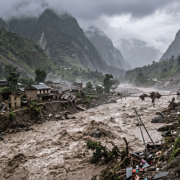
Rescue teams are continuing to search through debris, rocks, destroyed roads, and mud this week on the border of Nepal and China as thousands of people are still missing after devastating floods took over communities all throughout the region, with the UN now reporting that more than 1,000 have died from the disaster. 

It’s been reported that police in Kathmandu are burying dozens of bodies in trenches. Nepal’s disaster agency said that 1,003 deaths have been counted there with over 3,900 people missing, including 583 foreign nationals. In China’s most recent update, they reported 16 deaths with 546 people missing, including 261 foreigners. 

The disaster occurred on August 26th and devastated both nations due to how large it was. Extremely heavy flooding led to intense landslides that destroyed roads and buildings while isolating more remote areas, making rescue efforts difficult. 

Embed from Getty Images

The unstable terrain and debris are making it even more difficult for rescue crews to find people, and many are worried that the death toll could become much higher than it is currently. 

One of the rescue efforts involves hundreds of workers who are trapped inside tunnels at hydropower projects in Nepal due to flooding. According to local authorities, around 900 workers are missing from 12 projects with about 500 believed to be trapped in the tunnels themselves. 

Nepal’s army spokesperson, Brigadier General Rajaram Basnet, stated that teams who are being assisted by foreign experts were working at several hydropower projects. 

In China, rescue crews are dealing with a lot of rescue missions in areas hit by mudslides, specifically around the Gyirong Port border crossing which was destroyed. 

Rescuers are utilizing search dogs to look among rocks and debris for signs of life, with other teams using heavy machinery to clear out areas to make way for more equipment, personnel, and supplies to reach the disaster zone, according to China’s state-run Global Times newspaper. 

In Kathmandu, police have also been dealing with heavy rain conditions this week as they continue to bury dozens of bodies in multiple tranches adjacent to forested areas. 

All throughout Nepal, authorities have been using temporary graves until the individuals can be identified. As a part of this effort they’re also preserving DNA samples, photographing distinguishing marks and facial features, and taking detailed records of each victim to ideally be able to swiftly give their loved ones some closure. 

Embed from Getty Images

Authorities in Nepal reported that at least 11,814 people have been rescued so far, with emergency crews using helicopters and other aircrafts to reach communities that are stranded due to roads and bridges being destroyed from flooding and landslides. 

China’s Foreign Ministry spokesperson, Guo Jiakun, stated that efforts are being stepped up to help provide assistance to survivors in areas that have been cut off or damaged. He emphasized that a second batch of relief supplies was being sent to Nepal. Drones, DNA testing, and water purification equipment will be utilized. 

Bimal Sharma, a helicopter pilot who’s experienced in flying rescue and relief missions, told the media that he was shocked to see the devastation in Timure, the border town close to Tibet. 

“It felt like I was flying over an entirely different landscape. I can see the pain in [the survivors] eyes. It’s heartbreaking.”

Scientists who are studying satellite imagery of the disaster stated that it began in the Himalayas when a glacial collapse sent a large amount of rocks, ice , and meltwater into the valleys below, which triggered the major flooding. The rockfall alone was powerful enough to register as a magnitude 5.2 seismic event. 

Nepal’s Prime Minister Balendra Shah stated that the disaster shows just how much the world needs to take action to combat climate change. 

“This incident has indicated that the risks we face in the Himalayan region are increasing with climate change,” Shah said.

“Therefore, this region must be alert, and at the same time, it is time for us to strongly raise the issue of disasters caused by climate change before the international community.”

wildfires

Effects Of Europe And North America Wildfires Could Last For Years

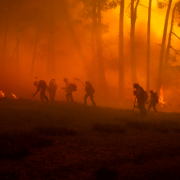
Wildfires across the globe have been rampant this summer, and are being fueled by the impact of climate change. These fires have forced thousands of individuals to flee their homes while they destroy forests, buildings, and dried out land. Experts are now looking at wildfires from years ago to prepare for the lasting effects of the blazes currently occurring throughout Europe and North America. 

This season, about 1,000 fires have been reported in the boreal forests of Canada, leading to a multitude of evacuations in both Canada and US cities as toxic smoke spreads in the air. 

The US is also experiencing a third major heatwave within a month that is causing parched land to dry, creating a perfect environment for wildfires to ignite and spread easily. Washington, eastern Oregon, and Idaho have been experiencing fires that are so intense, plumes of smoke have reached Florida, according to reports. 

Embed from Getty Images

Europe has been experiencing major wildfires all throughout the UK, France, and Spain, causing mass evacuations for over 250,000 people. 

The continuous burning of fossil fuels throughout the past decades have made the climate crisis even worse, creating fire-prone conditions around the world. Pedro Sánchez, Spain’s prime minister, emphasized the severity of these extreme weather events, pointing out how “the entire Iberian peninsula is suffering the effects of the climate emergency in a very specific way.”

Scientists have been consistently raising alarms about the consistent lingering impact of wildfire smoke, which can trigger severe respiratory and cardiac problems. In fact, according to a new study recently published in JACC Journals, it’s been shown that tiny particles carried in wildfire smoke can raise the risk of hospitalization specifically in older people who might even be hundreds of miles away from the actual fires. 

“The cardiovascular toll of wildfire smoke reaches well beyond the fire lines and well beyond the day the sky turns orange,” said Kai Chen, the study’s co-author and associate professor of epidemiology at Yale’s School of Public Health. 

The wildfires that have occurred and increased within the past few years are giving scientists the data they need to better determine long-term impacts on humanity, however, the information is fairly new. One of the biggest resources for this study, and other ongoing ones, has been looking at Maui, which suffered a devastating wildfire three years ago that killed over 100 people and destroyed several thousand buildings. 

The second largest island is still suffering from the aftermath three years later. There has been a major increase in health concerns like poor lung functioning, high blood pressure, and mental health challenges, according to the Maui Wildfire Exposure Study, led by researchers at the University of Hawaii and released on Monday.

Embed from Getty Images

Alika Maunakea, co-director of Maui study and a professor at the school of medicine in the University of Hawaii, said that “the progress is real, and it should be recognized.”

“The biological, emotional, and social consequences of a disaster do not disappear on the same timeline as debris removal or reconstruction.”

The Maui study was conducted utilizing screenings of over 2,500 participants, and it reported that 50% of the adults experienced continuous depressive symptoms with about 20% reported experiencing post-traumatic stress. There was also severe depression and post-traumatic stress symptoms found in children and adolescents, as well as blood pressure readings and obesity levels. 

“Children may appear resilient while still carrying significant emotional and physical effects beneath the surface,” said Christopher Knightsbridge, a mental health therapist based in Lahaina, one of the towns that was widely destroyed by the fires.

“Supporting children means supporting the entire family, including their housing, food security, daily routines and access to trusted care.”

In another research paper published last year, scientists found that there was a 7% increase in mortality among older people in Southern California over a three-year period due to wildfire smoke exposure. Lara Schwarz, an environmental health scientist at UC Berkeley who led the research, recommended that “activation of public health measures such as clean air centers should not only depend on intensity of smoke, as the long-term effects can be harmful, even at low levels.” 

“As wildfires become more frequent and severe in the context of climate change, with California being at high risk, understanding how these harmful wildfires will affect us in the long term is critical to informing better public health action and response.”

social media

U.K. Unveils Overnight Social Media Limits for 16- and 17-Year-Olds

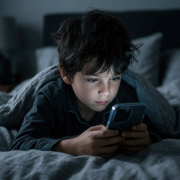
A monthlong experiment restricting teenagers’ social media use found that an overnight curfew offered the best balance between improving their well-being and allowing them to stay connected with friends.

More than 300 teenagers and parents from across the U.K. participated in the trial, which tested three different interventions. Some teenagers were limited to 15 minutes of social media use each day, others were blocked from accessing apps between 9 p.m. and 7 a.m., and a third group removed selected platforms entirely.

Participants reported benefits including improved mood, lower stress, greater energy during the day, better sleep and increased concentration. At the same time, the teenagers described a “social and emotional trade-off,” as social media remained an important way to communicate with friends who were not subject to the same restrictions.

The overnight curfew ultimately emerged as the most popular option, with participants viewing it as less socially disruptive than sharply limiting daily use or deleting apps altogether.

The findings are now informing a new set of online safety measures proposed by the U.K. government Wednesday for 16- and 17-year-olds.

Under the proposal, social media accounts belonging to older teenagers would come with an overnight curfew enabled by default beginning at midnight. The restriction would remain in place until 6 a.m., making platforms including Instagram, TikTok and YouTube unavailable through the affected accounts during those hours unless users changed their settings. Features intended to encourage prolonged use, including autoplay and infinite scrolling, would also be automatically disabled.

Teenagers would still be allowed to turn off or adjust those default settings. The measures are expected to come into force by spring 2027.

Technology Secretary Liz Kendall said the changes would be “crucial in helping young people get the sleep they need, focus on school and college, and spend more quality time with family and friends, all of which are fundamental to building a happy, healthy and fulfilling adult life.”

Online Safety Minister Kanishka Narayan similarly defended the proposals, arguing that the curfew and restrictions on autoplay would make Britain “the most robust place in the world when it comes to regulating” technology companies.

The proposal is part of a broader international effort to place tighter limits on children’s access to social media as technology companies face increasing scrutiny over the safety and potentially addictive design of their platforms.

It also joins an increasingly complicated collection of online safety measures already available to families, including optional parental controls on children’s devices and child-focused versions of major services such as YouTube.

“There have been concerns about the way services keep children and young people engaged on their phones for long periods, and that this can impact their sleep, amongst other effects,” Lorna Woods, a professor of internet law at the University of Essex, told the BBC.

Embed from Getty Images

In June, outgoing U.K. Prime Minister Keir Starmer announced plans for a more sweeping restriction: a blanket social media ban for children under 16. The ban would cover major services including TikTok, Snapchat, Instagram, Facebook, YouTube and X.

The U.K. announcement followed Australia’s move in December to become the first country in the world to enforce a legal social media ban for users under 16.

The government plans to present its latest proposals to Parliament by the end of 2026, to implement them alongside the under-16 ban the following spring.

It also announced plans for additional safeguards governing children’s use of artificial intelligence chatbots, including requirements for providers to introduce regular breaks for users under 18.

European Union officials are also advancing restrictions aimed at younger users. European Commission President Ursula von der Leyen said Monday that the region would move forward with age limits for social media platforms to reduce use among children and teenagers.

Technology companies, meanwhile, have defended the safeguards already built into their platforms. Ali Law, TikTok’s director of public policy and government affairs in Northern Europe, said during a Tuesday appearance with CNBC that the app was designed with the safety of younger users in mind.

According to Law, TikTok has more than 50 preset protections for users under 16. Those measures include a one-hour daily screen-time limit and a full-screen prompt appearing at 10 p.m. that encourages teenagers to stop using the app and take a break.

“All of these are little default aspects, little nudges to make sure that people have a balanced and healthy relationship with our app, because that works in our interests…because if people are using it for too much and are burnt out, they’re not going to get value from it.”

Other technology companies have argued that responsibility for verifying users’ ages should not rest solely with individual platforms. Meta, which owns Facebook, Instagram and WhatsApp, has previously called for age verification to be handled by device manufacturers.

Apple has since introduced device-level age checks that ask people using iPhones and iPads with the latest operating software to verify their ages.

Baroness Beeban Kidron, a longtime advocate for device-level safety and age-verification measures, criticized the government for focusing too heavily on restricting children’s access rather than changing the products themselves. She said the objective should not be “banning children from tech” but “banning tech from putting toxic products in the hands of children.”

The ability of teenagers to disable the proposed protections has drawn criticism from campaigners, opposition politicians and online safety experts who question whether the default settings will have a meaningful effect.

Embed from Getty Images

Ellen Roome, who believes her 14-year-old son, Jools Sweeney, died in 2022 after participating in a dangerous online challenge, argued that an optional restriction would be too easy for teenagers to circumvent.

“I just think it’s not good enough really just to have a product you can switch off, it’s a bit like offering a 17-year-old a bottle of alcohol and then moving it slightly out of arm’s reach, they can just drag it back in. I really wish they could go stronger and harder on these things.”

Andy Burrows, chief executive of the Molly Rose Foundation, welcomed the attention given to older teenagers but said the announcement remained too narrow.

“While we welcome these measures for older teens, this latest move is yet another piecemeal set of announcements, not the comprehensive plan for children’s safety that’s required,” Burrows said.

Some experts have also warned that a blanket nighttime restriction could unintentionally cut vulnerable teenagers off from support. Sonia Livingstone, a professor specializing in children’s digital rights at the London School of Economics, said a distinction should be made between curbing disruptive platform features and completely blocking access.

“If it’s a curfew on companies using push notifications to wake someone up in the night, absolutely have a curfew,” Livingstone told the BBC.

“But if it’s a curfew that prevents a child in need of support or help or comfort reaching out to trusted sources in the middle of the night, I think that’s quite harmful potentially.”

Dame Rachel de Souza, the children’s commissioner for England, said young people generally oppose outright bans but support protections from features that encourage compulsive use.

“We have to listen to young people. They don’t want a ban, but they do want to be protected from addictive, infinite scrolling,” she said.

De Souza added that she wanted more details on how the curfew would be enforced and said she would press the communications regulator, Ofcom, to fully exercise its authority over online safety.

Social media analyst Matt Navarra dismissed the proposal as “not a curfew,” but a “mildly annoying settings prompt with a government press release attached.”

“The UK Government is calling this ‘world-leading’ online safety, but with no VPN restrictions, it’s leaving the side door open and putting up a sign asking teens not to use it,” Navarra said.

The government does not currently plan to restrict virtual private networks, which can disguise a user’s location and have previously been used to evade online controls, including Australia’s social media restrictions. Officials said VPNs remain important to whistleblowers, minority communities and families seeking privacy.

Government-commissioned research also found little evidence that large numbers of children were using VPNs to bypass age-verification systems.

“We have decided not to limit VPNs today, and that’s the primary conclusion for now, but it is something we will continue to review,” Narayan said.

ai

Artificial Intelligence Is A ‘Hiroshima’-Style Threat To Humanity Without Regulations, Foreign Secretary Says 

Foreign secretary Yvette Cooper has warned that artificial intelligence poses a “Hiroshima”-style risk to humanity if global governments do not agree to regulate and limit how it is developed and used. 

Cooper recently told the Guardian that she’s urging nations to agree on international rules for AI and believes that the issue will be dominating foreign policy over the next two years. 

In an essay recently published by the Chatham House thinktank, Cooper covered her thoughts on many global issues from the new technology to Palestine. She emphasized that the world was at a dangerous time, pointing out that the permanent withdrawal of the US from its role as global arbiter is a key to many issues. 

Embed from Getty Images

The foreign secretary spoke in another interview about her biggest concerns regarding AI and the Palestine peace process specifically. 

“On nuclear, international agreement came only after the world saw the terrifying power of the new technology at Hiroshima – and asked what would happen if it fell into the wrong hands. We cannot afford to wait for an AI equivalent of Hiroshima before we act.”

“Across the world, people are feeling the same thing – there is amazing potential here, but there is also huge risk,” Cooper told the Guardian. 

“We are already in a world where we have malign actors who will use technology against us – whether that be hybrid threats, whether that be state-backed criminal groups or other kinds of organizations, or extremists and terror groups.”

“I think AI is going to end up being the dominant foreign policy issue that we deal with over the next two years,” she added. 

Cooper said AI is just one area that is threatening global security currently, adding that the climate crisis, irregular migration, and foreign interference on western liberal democracy are also adding to international hazards.

Her essay clearly laid her own worldview and where she thinks her department should devote its attention to in the coming years. 

Embed from Getty Images

Cooper also wrote that European powers need to adjust to the idea that the US will no longer guarantee international peace and democracy due to its current administration. Even after Donald Trump’s presidency, foreign bodies need to pay attention to the lasting impact, she explained.

“We should no longer expect the US to play the role it once did. There will continue to be issues where we disagree. But reduced dependence on any single ally will make us stronger.”

She also offered potential solutions to help the world’s future, such as having the UK and EU negotiate a more permanent settlement instead of attempting to renegotiate individual elements of trading arrangements multiple times. 

The government is also working on finalizing the latest round of EU renegotiation as ministers look to meet new deals on agriculture, electricity trading, and visas for young people. These were meant to be announced at a summit later this month, but were pushed back as EU officials hope to engage with the incoming Burnham government first. 

“We need to develop a new, structured relationship with Europe, leading the development of its new security architecture, with a more European Nato at its core. And we must settle our relationship with the EU as a closer but stable partnership, rather than one based on endless incremental bargaining,” Cooper wrote in her essay. 

police

Record Cocaine Bust in Australia Uncovers Buried Drug Caches and Suspected Crime Network

A record cocaine seizure in Australia has exposed what police described as an elaborate international trafficking operation involving buried drug caches, a suspected foreign supply vessel and an alleged Sydney-based crime network.

Authorities said Monday that investigators recovered 2.7 tons of cocaine from underground bunkers hidden on a semi-rural property in Londonderry, a northwestern suburb of greater Sydney.

The drugs, which police said were packed inside plastic tubs and buried beneath false floors, represent the largest cocaine seizure ever recorded in Australia and the country’s biggest drug bust in nearly two decades, second only to a 4.5-ton MDMA seizure in Melbourne in 2007.

The discovery was made Friday during an operation by a joint organized crime task force, with Australian Federal Police working alongside investigators from multiple states as part of Operation Minjiang, a Queensland-based task force focused on an alleged east coast drug network.

Two men, ages 21 and 25, were arrested at the property after they allegedly tried to flee from officers. Police described them as lower-level participants in a wider importation network linked to the Coconut Cartel syndicate, which authorities said includes former members of a prominent Sydney crime family. Each has been charged with possessing a commercial quantity of an unlawfully imported drug, a charge that carries a maximum sentence of life in prison. The men were refused bail Saturday and are expected to appear in Penrith Local Court on August 13.

Investigators allege the cocaine was imported through northern Queensland, where a foreign vessel offloaded the shipment before it was moved south to Sydney for distribution. Authorities said the importation was allegedly arranged by a Sydney-based organized crime group.

A vessel suspected of serving as the mother ship in the importation, the MV Wealth, has been detained in the Solomon Islands while authorities continue to examine its alleged role. The vessel is registered in Belize, though investigators said the cocaine’s point of origin remains unclear and may have been loaded anywhere from South America to northeast Asia.

Embed from Getty Images

Australian Federal Police Commander Stephen Jay said investigators are still working to trace the shipment and identify the broader network behind it.

“Investigations into the origin of the drugs remain ongoing, and we will work with our international and domestic law enforcement partners to identify the criminal syndicates.”

Jay said the cocaine could have generated more than Aus$800 million ($560 million) if sold on the street — proceeds that, “won’t make it into the pockets of organized crime.” Police placed the estimated street value at about Aus$816 million and said the amount seized was equivalent to roughly 3 million street-level deals.

“This alleged plot to distribute nearly three tons of cocaine … demonstrates how highly organized and determined these criminal networks are,” Jay said.

“We will work … to identify the criminal syndicates and anyone else involved in facilitating this alleged attempted drug import,” he added.

Jay said the loss would likely reverberate through the criminal network behind the shipment.

“There’ll be some soul-searching, no doubt, about losing Australia’s largest quantity of cocaine,” he said.

Police said six other people linked to the alleged importation had already been arrested and charged with drug-related offenses. One of them, a 31-year-old woman, allegedly lived at a suspected safehouse connected to the operation and was involved in storing the cocaine.

The broader investigation began in May, after Queensland police found 40 kilograms of cocaine in the water near the Midge Point boat ramp following reports of a burned-out flatbed truck. The six people later charged faced varying allegations, including drug possession and dealing with proceeds of crime.

Embed from Getty Images

“We know criminals go to extreme lengths, and often risk their own lives, to smuggle drugs into Australia with no regard to the harm they cause to Australian communities.”

Since Operation Minjiang began in May, authorities have also seized 178 kilograms of cocaine and 142 kilograms of methamphetamine, bringing the total amount of drugs confiscated through the investigation to more than 3 tons.

Queensland Police Acting Chief Superintendent Troy Pukallus said the case grew from local police work into a broader multi-agency investigation.

“What began with the actions of Mackay police … evolved into a sophisticated, multi-agency investigation targeting an organized criminal network,” he said.

The case also highlights the growing role of Pacific Island states as transit points for illicit drug shipments headed toward Australia and New Zealand. Authorities have previously warned that cocaine and methamphetamine are being moved through the region from as far away as South America and Southeast Asia.

“Criminals don’t care about borders, and they exploit our oceans to traffic drugs,” police said in a post on social media.

The record seizure comes amid growing concern about cocaine use and its consequences in Australia. Cocaine-related deaths rose 28% to a record 141 in 2024, according to an annual overdose report released this month by the Penington Institute, a drug-use research organization.

It also follows a series of major cocaine busts in the country. Last September, three dockworkers were arrested after authorities found more than 1,000 pounds of cocaine hidden behind a false wall inside a shipping container at Sydney’s waterfront. That same month, police said they had dismantled a trafficking ring known as “The Commission,” which allegedly brought more than a ton of cocaine into Australia within a few months.

In December 2024, Australian police seized 2.3 tons of cocaine and arrested 13 people after a fishing boat broke down off the Queensland coast.

The Londonderry discovery is also the second major underground drug operation revealed this month. In early June, U.S. authorities said they found a 2,000-foot tunnel connecting border cities in Mexico and California. The tunnel was equipped with electricity, reinforced walls, ventilation and a rail system.