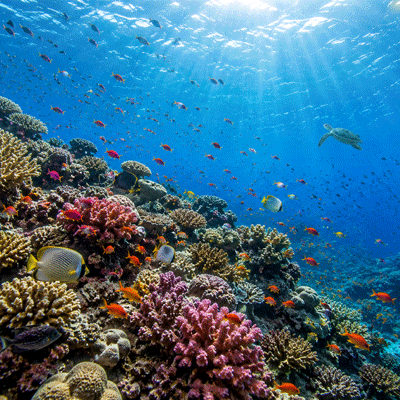
Earth’s Coral Reef Ecosystems Could All Collapse In 50 Years
According to a global assessment released this week, the Earth’s coral reef ecosystems almost all are facing a high risk of collapse within the next 50 years due to warming ocean temperatures and heat waves brought on by climate change.
Coral reefs are a critical source for seafood, tourism, and often serve as buffers from coastal erosion and storms. They also have the world’s richest biodiversity and support about 25% of all marine species, and coastal communities and businesses.
The International Union for Conservation of Nature announced at a UN biodiversity conference in Albania that some 96% of shallow-water reef systems are already critically endangered and could fully disappear by 2075.
The Great Barrier Reef in Australia, the Coral Triangle in the Western Pacific Ocean and Southeast Asia, the Mesoamerican Barrier Reef System and the Red Sea coral reefs, some of the world’s most famous reefs, are all at the highest level of threat; critically endangered.
“The risk of coral reef collapse is escalating, but this must be a wake-up call rather than a cause for despair,” said Mishal Gudka, the scientific lead of the global IUCN Red List of Coral Reef Ecosystems assessment, according to AP.
“Coral reefs have shown a remarkable ability to bounce back from devastating bleaching events. Pockets of surviving, resilient coral reefs can still remain in the future, so we must do everything within our reach to set them up for success.”
“Coral reefs are one of the clearest vital signs of the ocean’s health,” Grethel Aguilar, the IUCN director general, said in a statement.
The assessment itself covered 127 tropical and subtropical eco-regions, and 72,726 square miles of coral reefs globally. It also called climate change “the single most consistent threat driving coral reef decline worldwide.”
A week ago, another study in the journal Nature by the IUCN found that 44% of reef-building coral species are experiencing an increased risk of extinction because of climate change.
2024 was Earth’s hottest on record, and the ocean is seeing a lot of that impact. Annual sea surface temperatures of oceans away from the poles was a record 69.57 degrees Fahrenheit.
Experts have stated that the biggest way we can combat the detrimental effects of climate change in our oceans is to reduce pollution, overfishing, and coastal development.
“We know what is needed: ambitious emissions reductions, stronger protection and restoration efforts, and sustained investment in resilient coastal ecosystems and the communities that depend on them,” Aguilar said.
Andrew Baker, director of the Coral Reef Futures Lab at the University of Miami said “stopping global warming and pollution isn’t the only way to save corals.”
“It means finding new ways to restore corals using emerging technology and innovative approaches that can throw a lifeline to struggling reefs and buy us critically needed time to make these transitions.”

Eric Mastrota is a Contributing Editor at The National Digest based in New York. A graduate of SUNY New Paltz, he reports on world news, culture, and lifestyle. You can reach him at eric.mastrota@thenationaldigest.com.