
Great teachers don’t just deliver lessons—they cultivate wonder, spark resilience, and build tiny bridges between knowledge and self-belief. In a world where education is often measured by test scores and rigid standards, Joan Gillman has dedicated her life to proving that true learning happens when curiosity is nurtured, not controlled.
Sponsored Content
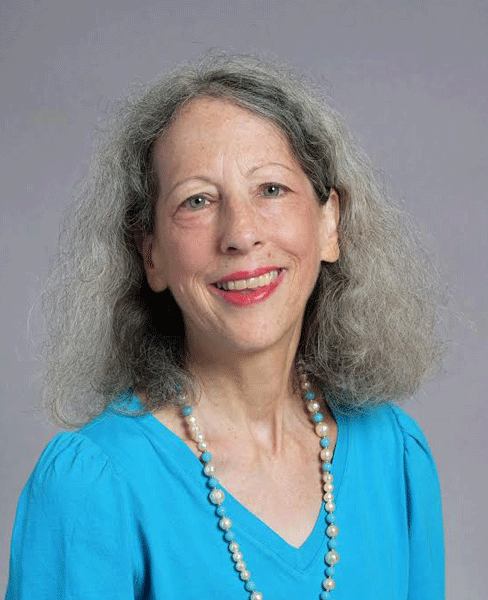

From her earliest days volunteering in classrooms to her decades-long career shaping young scientists and storytellers, Joan has made it her mission to meet every student where they are and help build them up.
From a young age, Joan Gillman felt at home in the classroom, not just as a student, but as a teacher-in-training. While most high schoolers were still figuring out what they wanted to be when they grew up, Joan was already gaining hands-on experience that would ultimately help shape her lifelong career in inspiring young minds.
Growing up, her school had a strong community service requirement for graduation, so she volunteered at its lower school. There, she began teaching the recorder, tutoring in math, and organizing recess games.
“The head of the school really loved the idea that I had everyone participating in the games. Not just those who were more athletically inclined, not just the popular kids, but everyone. She loved that idea of inclusiveness.”
Inclusivity and accessibility would become core values in Joan’s teaching philosophy. Even as a teenager, she was drawn to helping students—regardless of skill level—feel seen and capable. Outside school, she taught swimming at her local JCC, working with students with special needs to overcome their fear of water. She also served as a substitute ballet teacher at a neighborhood studio.
“All of this together really made me feel that this would be the correct career for me. I truly loved working with children and making a difference in their lives.”
That spark only grew stronger as Joan moved into full-time teaching roles in both private and public schools. One of her longest tenures, spanning 20 years, was at a school where she taught nearly every subject to fourth and fifth-grade students, as well as sixth-grade math and science, creating what she calls a “one-room schoolhouse.”
“That kind of experience really taught me, again, how to work with multiple levels. I had one child coming in who was 10 years old, who actually needed the eighth-grade pre-algebra book. He was just extraordinarily strong in his math skills. I had other students coming there not speaking a word of English, and I had to figure out ways to introduce them to the language and get them comfortable with it.”
She quickly saw that learning wasn’t one-size-fits-all, especially when it came to language acquisition and confidence. “I found the younger they came, the quicker their acquisition of English would be,” she explains.
“There’s a very big difference between a fourth-grader and a sixth or seventh-grader. Fourth graders are not scared to make a mistake in their language acquisition, but once they’re heading into middle school, they become a lot more self-conscious.”
In public school systems, she often encountered rigid expectations that didn’t align with how children actually learn. Every student was supposed to be on the same page, literally and figuratively, regardless of their progress.
“That’s just not how it works. Kids come in with varying levels of skills, and you need to start from their level of understanding and then help them progress. I always want to find the correct level for them. If they’re ready for more challenging material, I don’t want to hold them back either.
Eventually, she found a more flexible learning environment at a school that used an “open classroom” model, where she was free to let her curiosity guide the curriculum. Without the pressure to stick to a schedule, Joan could respond to students’ interests, especially in science.
“The freedom that I liked was that if the students, while we were learning a particular topic, were also interested in something that was related to the material, as an educator at that type of school, you were free to go ahead and explore that. That is child-centered. We want the kids to love education and find things that they are interested in so that we can pursue them together.”
That belief in a student-driven classroom, where wonder is the spark and exploration is the goal, has stayed with her throughout her career. In her current role as a second, fourth, and sixth-grade science teacher at the Browning School in New York City, Joan continues to center that sense of curiosity in her teaching.
The school is working toward alignment with the Next Generation Science Standards (NGSS), a national framework that emphasizes real-world applications, inquiry, and interdisciplinary thinking. “The whole aim there is that by the time the kids get into high school, they will have been exposed to all branches of science,” she says.
For Joan, that kind of broad exposure is personal. Her own love for science started long before she entered a classroom as a teacher. As a child, she measured snow accumulation with a yardstick, checked barometric pressure during storms, and watched the sky to identify cloud types.
“I would be seeing when water could turn to ice. I also had an older brother. Together, in the snowstorm, we would be making snow tunnels, including an escape window to make my mother happy. We would use our engineering skills to do that.”
She and her brother created miniature villages from cardboard boxes, built robots with glowing eyes using flashlights, and constructed tiny towns for Matchbox cars—one of which they named “Kinderkamack Village.” That early curiosity extended indoors as well, especially to her family’s bathroom, which became her first “lab.”
“In the bathroom, I was mixing different potions, powders, thinking I was going to come up with a way to save the world with one of my inventions. My parents let me do this, mixing and melting down soaps and putting powder into them. As a child, I was really exploring different elements of science.”
Those early experiences shaped her approach as a hands-on teacher, deeply attuned to how kids learn best, which is by building, experimenting, and imagining. Even in more traditional classrooms, she finds ways to keep learning tactile and student-driven.
“With our 6th-grade class, we were doing a whole section on potential and kinetic energy. One of the other teachers brought in toys for the kids to explore. For me, I had the kids build something that demonstrated the difference in energy transfer. It was great. I had a child who made a working water wheel.”
Notably, the student who built the water wheel struggled with reading and writing but flourished when given the chance to express his understanding differently. Joan’s class often includes these kinds of opportunities, alternative paths to mastery that honor the many ways a child’s brain can work.
One of her favorite classroom projects involves building and launching straw rockets. Students are given precise parameters: a straw length between 10 and 20 cm, 2–5 fins, a nose cone diameter no larger than 2 cm, and three distinct launch angles.
It’s a deep dive into the scientific method and just a fun afternoon. Students form hypotheses, test their rockets, collect data, and assess the results. Then they start over.
“I don’t just leave it at ‘my rocket was a total failure, forget it.’ I have the kids go ahead and redesign their rocket based on the information that we’ve now learned to see if they can improve upon their original model. It’s so much fun to see.”
It’s not about who gets the longest flight. It’s about watching kids come alive as they experiment, analyze, and refine their ideas through iteration.
Another beloved project is “The Elephant Challenge,” which blends structural engineering with storytelling and creativity. Students first learn about six types of bridges—truss, arch, suspension, and more—and are tasked with designing a bridge strong enough to support the weight of a “family of four elephants.”
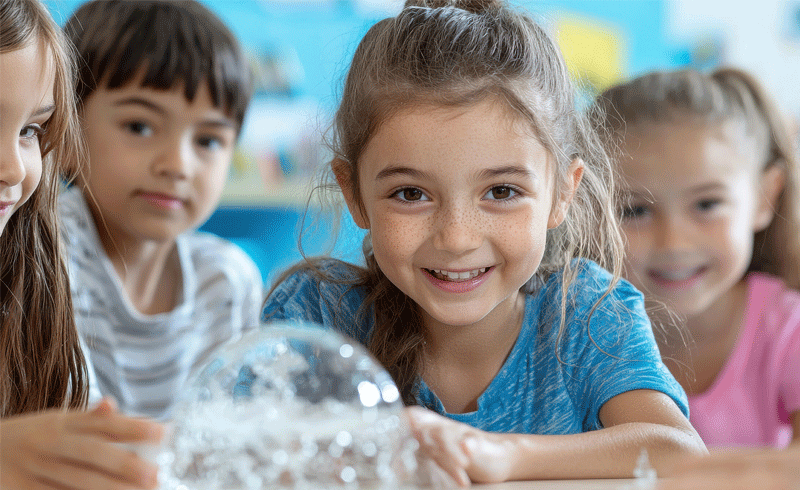
“The story goes: you have mommy and daddy elephant, and the two babies are out for a walk. The two babies go ahead and cross a bridge, only to realize that mommy and daddy are not there. They turn around crying, and the mother and dad come across the bridge, but now all four of them have to go back. So, the kids need to design a bridge that can hold the mass of those four elephants.”
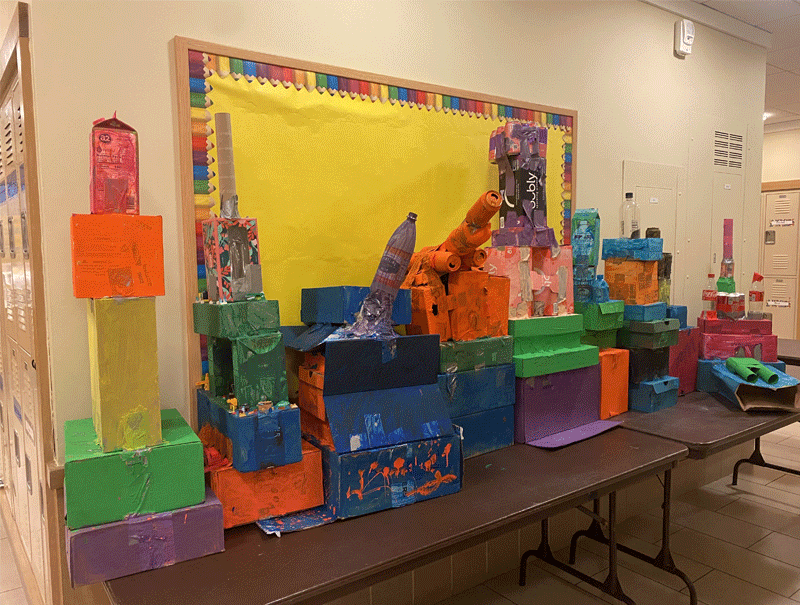
Families send in recyclables, such as boxes, ribbons, and cardboard tubes, turning the classroom into what Joan lovingly calls “The Great American Recycle Center.” Students test the strength of their designs and cheer each other on as they place plastic elephants on their bridges. “It’s so nice to see the kids really rooting for each other and cheering each other as each bridge is successful,” she says.
That same spirit of collaboration and care carries into Joan’s work with the school’s Green Team, a K–12 sustainability-focused club that empowers students to take real-world action on environmental issues. Whether they’re organizing neighborhood cleanups or fundraising for global water access, the club provides a platform where students can translate their knowledge into meaningful impact.
“Through this club, they can start to see that simple changes in their own lives can make a difference,” Joan says. One memorable student, after learning about the global safe water crisis, didn’t just write a report. With Joan’s help, he researched international organizations and pitched the idea of a fundraiser to the Green Team. Together, they raised over $1,000 for Water.org.
The club also leads weekly “green actions” that ripple across the school community. Past campaigns have included taking only what you can eat in the cafeteria, not snapping pencils in half, taking shorter showers, and improving recycling habits. During “biodiversity week,” the school hosts guest speakers, organizes field trips, and runs interactive activities to connect students with the natural world.
“It’s great to feel like I’m making a difference in these students’ lives, and they’re making a difference in the world. I try to help them become attuned to how they can develop into responsible individuals. Hopefully, they’ll carry that lesson when they are adults as well.”
Joan is passionate about environmental education and grateful that New York is one of the few states that mandates climate change in its curriculum. She’s candid in her frustration with states that try to erase the topic from schools.
“There are other places where they ban the teaching of it. Do they really think that if they don’t mention climate change, it won’t affect their state? That is ridiculous. It is vital that the students understand the science behind climate change so that they can make wise decisions about how to best help the planet. The Earth’s future is in their hands.”
That is why she supports a curriculum that weaves together climate science, disaster response, and social justice. In one unit, her students analyzed the mission statements of disaster relief organizations and compared them to how those organizations performed during six major hurricanes.
“It was interesting because my students first looked at the mission statement of our own school to see whether or not we really follow ours here. It was quite an eye-opener for the students.”
The students then developed recommendations on how the organizations could better serve communities, particularly those that have been historically underserved.
How does Joan get her students to be so excited about science? Sometimes, the best way to start a new unit is with a sense of awe.
“I was working on the 4th-grade curriculum yesterday, and I was trying to find something that would start us on studying waves. I found a video on the biggest waves in the world that surfers use. I’m going to use it as a stepping stone. It’s like trying to open their eyes to what is actually happening in this beautiful planet of ours, and then exploring exactly how it works.”
That’s the throughline in Joan’s classroom: curiosity as a launching pad, and action as the goal. “What we’re studying in science—my aim is that when these students leave me in the afternoon, they can’t wait to get home to take a look and see what else they can learn about the topic,” she says.
One of the joys of Joan’s teaching is helping students connect what they’re learning to the world around them, sometimes in literal, geographic terms. When her fourth graders are learning about bridges and infrastructure, a trip to the Bronx Botanical Gardens becomes a kind of scavenger hunt.
“They really get excited because the Bronx Botanical Garden constructs famous buildings and bridges of New York City using all-natural tree material during its annual holiday train show. The artistry is really neat. We use recyclables, and they’re using plant material. The kids make the connection.”
The excitement often begins before they even arrive.
“My favorite part is the bus ride over there, as the kids are identifying bridges they see outside of the bus’s windows. ‘There’s a suspension bridge! There’s an arch bridge!’ They’re identifying the bridges right as we’re going to our location, and I love that—it just makes it come alive.”
She sees that same spark when they visit Central Park and recognize the different kinds of bridges tucked into the landscape. Or when they look at constellations and realize those star patterns exist across cultures and histories, not just the Greek myths they may have learned first.
“I take it a step further where we look at the same constellations and we see how the Native Americans have formed their stories behind it. There are Arabic stories, there are ones from Britain, all over the world; they have their own constellation stories.”
For many of her students, those lessons resonate deeply. “Our students are really quite diverse,” Joan says, “and when you hit a particular country that they’re from, or their ancestors or relatives are from, it’s like, ‘Oh my god, that’s from my country!’ It makes them proud.”
There’s a similar emotional response when showing global photos of infrastructure.
“The kids are like, ‘Oh my god! I know that building! My grandparents live a few blocks from there!’ Or ‘I’ve been in that building—I saw it when I went to Mecca!’ They get a chance to feel good about who they are and where they come from. And that, I think, is really important in education, being able to show that it’s not just for one type of person. It’s for everyone.”
This perspective was also shaped by her certification in teaching the hearing impaired. She was struck by how limited access to language can shape a student’s outcomes. “The average profoundly deaf child after 12 years of education may read on a 4th-grade level,” she explains, “because it’s hard to learn a language you have never heard.”
But what left the strongest impression on her wasn’t just the statistics. It was the creativity of her cooperating teacher.
“She was doing a really sophisticated engineering unit, going through a lot of difficult terminology, but she was having the students make their own model—like a Great Adventure amusement park with working rides and attractions. Through this hands-on project, they fully grasped the scientific concepts we were trying to teach. This is not only good for deaf kids. This is good for everyone.”
That philosophy guides her day-to-day teaching. She arrives early and stays late, offering extra help whenever needed.
“I don’t want a child going away and feeling lost. That’s the last thing I want. I want every child to feel they can succeed. If one approach is not working, I’ll try to find another way to get the information across.”
One day, she noticed that students were struggling to study science vocabulary, unsure of how to begin. She introduced flashcards. Then something surprising happened: a student who had been struggling to grasp the concepts created an online game to help everyone else study.
“Talk about kindness. I love the fact that he wasn’t just thinking of himself. He thought of everyone else in the class who could benefit from it.”
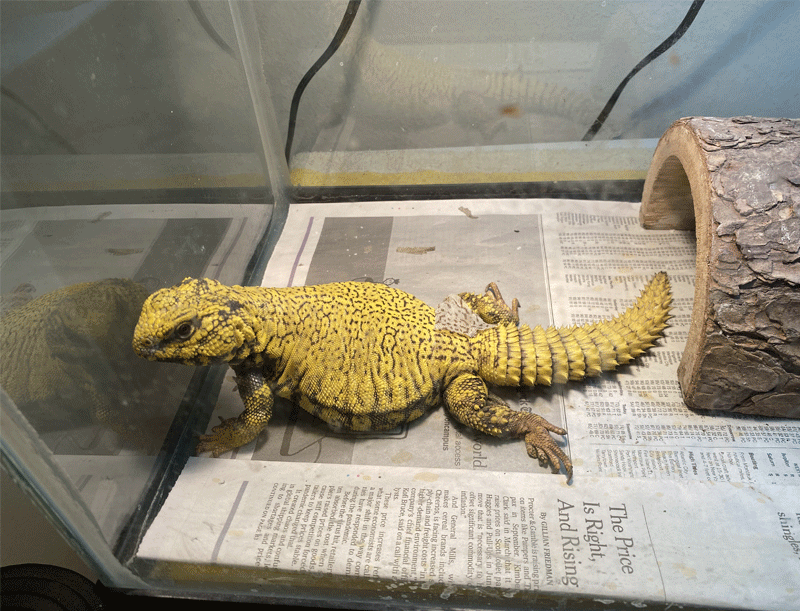
Joan helps students regulate their emotions, too, sometimes with the help of an unlikely assistant. Her classroom is home to a Uromastyx lizard named Dijon that students learn to hold close to their chests to calm down.
“I teach them how to hold the lizard, because if you’re not holding it properly, they wiggle their tail. You hold it close to your heart—it calms the kid down, calms the lizard down. Like a lizard whisperer. And that has worked.”
If a student is having a hard day, she offers them time with the lizard, followed by a conversation. “Then come to me and we talk,” she says. “It helps.”
As a sixth-grade advisor, she also begins each school day with emotional check-ins, using a “mood meter” to let students express how they’re feeling. If someone rates low, Joan pulls them aside to talk privately. “I want to see what I can do to make their day run smoothly. I like that about the school—they want to be attuned to how the children are feeling. I think that’s really important.”
It can also be powerful to shift a student’s internal narrative. Early in her career, she had a class described by others as “difficult.” Instead of starting each day with a warning or complaint, she tried something new.
“I decided I’m going to change that way of handling it. So, each day, when they’d come in, I talked about what was so great about yesterday’s class. I started each class with a positive.”
Years later, two students from that class told her that’s what they remembered most. “It made me feel happy,” she says. “Maybe I did make a difference in these kids’ lives.”
She still carries the memory of a teacher who made a difference in her life. Her third-grade teacher nurtured Joan’s curiosity and creativity. At the end of the year, she gave Joan a parting gift of a pin in a box with a mother turtle and baby turtles, which Joan still keeps to this day.
“She was ahead of her day. We were learning about dinosaurs in our class. We were constructing them in the art room. In the regular classroom, she had us using real grass seeds to make the diorama scene look more realistic.”
That kind of early creativity planted a seed that would grow into Joan’s own expansive, interdisciplinary teaching style. And even after four decades, she hasn’t burned out. Why? Because she stays curious.
“There’s a lot of burnout in education. To combat that, I’m always doing professional development. If I were still teaching the same way I was teaching 43 years ago? Forget it. I’d be burnt out.”
She regularly attends and gives workshops, serves as a subject area representative for the Science Teachers Association of New York State, and shares ideas with fellow educators. “It gives you another spark to go back to your class and try some new ideas,” she says.
That willingness to keep learning also led her to an unexpected hobby in her fifties—playing the violin. Though she’d studied piano from a young age, she didn’t pick up a violin until a school offered free string lessons to teachers. “In my second year there, I said, ‘Oh, what the heck—I’ll take violin,'” she recalls. “It was like a duck takes to water.”
Within weeks, she was playing in the school orchestra. Soon after, she joined the Bergen Philharmonic—the very orchestra her mother used to take her to as a child. Later, she joined the North Jersey Symphony and The August Symphony Orchestra. A few years ago, she was promoted from second to first violin with the North Jersey Symphony.
“It becomes a lot more challenging. You’ve got these notes that seem to be somewhere up in the attic, if you know what I mean!” she laughs. “It’s a good learning experience for me because it takes a lot more effort, a lot more time.”
That struggle has made her more empathetic to her students. “It enables me to have compassion and understanding for students who might be struggling to learn something,” she says. “Things don’t just automatically happen.”
She’s also been recognized beyond the classroom. Her straw rocket project was featured in Science and Children, the journal of the National Science Teaching Association. That article led to an invitation to be included in the NSTA book Bringing STEM to the Elementary Classroom, complete with photos and worksheets. Another publisher, Corwin Press, featured her in What Teachers Want to Know About Teaching Climate Change, a book about environmental education.
And she’s now a National Geographic Certified Educator, which gives her access to exclusive teaching materials and interdisciplinary resources. “It actually can really enhance my science teaching,” she says. “It’s wonderful.”
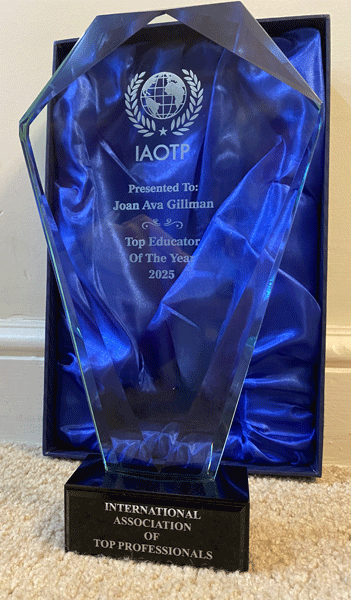
In May, Joan was nominated and then selected by the International Association of Top Professionals (IAOTP) as “Top Educator of the Year 2025.”
Still, for Joan, the accolades are never the point. “I teach because I absolutely love what I’m doing,” she says. “I want to make a difference in the world.”
She sees that difference in the kids who show up at 7:30 in the morning for Green Team, in the fourth graders who come back years later to tell her they’re still designing experiments, and in the students who, because of her, discover that science is not just for someone else.
“These children are the future of our world—of our country. They need to know how the world works so they can make wise decisions as adults. The future depends on them. I want them to be lifelong learners, to be curious, so they can make a difference.”
And thanks to her, many of them will. They’ll remember the rockets launched on the sidewalk, the lizard held close for comfort, and the waves crashing on screen. They’ll remember the elephant bridge, the stories behind the stars, and maybe, years later, they’ll pass that spark along to someone else.
Moumita Basuroychowdhury is a Contributing Reporter at The National Digest. After earning an economics degree at Cornell University, she moved to NYC to pursue her MFA in creative writing. She enjoys reporting on science, business and culture news. You can reach her at moumita.b@thenationaldigest.com.

