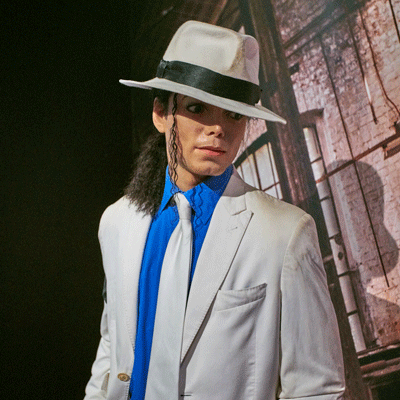
Jaafar Jackson Says Second ‘Michael’ Biopic Will Cover Sexual Abuse Allegations
The Michael Jackson biopic, “Michael,” smashed the box office earlier this year, making over $1 billion worldwide, and overtaking “Oppenheimer” as the highest-grossing biopic of all time. The intense success of the film made it no surprise that a sequel was almost immediately greenlit by Lionsgate; especially considering there’s still so much of the King of Pop’s story left to tell.
Studio executives have confirmed that production of the sequel film will hopefully begin at the end of 2026 or early 2027, with a potential release in late 2027 or early 2028.
One of the most polarizing aspects of Jackson’s life that was not included in the initial film was the sexual abuse allegations made against the singer. However, there initially was mention of the court cases in the film until a legal clause was brought to light later in production. The clause stipulated that one of the men who accused Jackson of abuse could never be depicted in a fictionalized account of the time period.
Prior to this discovery, a sequence showing a police raid at the Neverland ranch was filmed. $50 million of reshoots was then funded by the Jackson family.
In a recent interview with Variety, Jaafar Jackson, the nephew of Michael who starred in the movie, discussed the amount of editing and cuts that went into the production before they had their final product.
“I’ve heard many stories from other actors about how much you shoot on a project that doesn’t make it into the final picture,” he said.
“In the editing room, you go through scenes looking for specific performances or takes and things change constantly. So going in, I knew not everything we shot would make it into the final picture.”
Additionally, while speaking with GQ Middle East, Jaafar suggested that the sequel movie will address the allegations, specifically from Michael’s perspective at the time.
“I think the second film will give even more insight from [Michael Jackson’s] point of view, because at the end of the day, [the allegations] are always from someone else’s [point of view],” he said.
“It’s someone else’s story. It’s someone else’s idea of what it is … and that’s really the issue we’ve been having as a family – not having Michael’s voice being heard. I think that’s very, very important, especially in [his later] years.”
Jaafar also explained that he felt there was “considerable continuity” of Michael between the time periods within the two films.
“He never changed that purity, that sense of always wanting to find the good in other people. And no matter all the stuff he went through, how he was treated, what things were said about him, he never stopped treating people with kindness. He never stopped believing in and wanting to look for the good in people … even though he was broken, his heart still stayed the same.”
Earlier this year, the film’s director Antoine Fuqua stated that the sequel to the movie would not “sensationalise details of Jackson’s life. I think the key is, like, who was he as a human being? Stay on that path and then we’ll be OK, because that’s what it’s about. It’s a biopic, it’s about a human being, he’s a real person.”
Jackson was first accused of sexually assaulting a child in 1993, which later was settled out in court. In 2005 he was tried and acquitted on other child sexual abuse charges.
In 2019, the documentary “Leaving Neverland” was released by director Dan Reed, who recently criticized the “Michael” film for giving “zero insight into what makes Jackson tick. He’s this asexual plastic action doll of a figure in the film. And of course, the issue of his relationship with children is completely distorted by the fact that they portray him as an eccentric, overgrown child, which we know is not the full story.”
“The film just flips the truth on its head – black is white, white is black, and two and two make five … it’s a movie that’s impossible to take seriously,” he added.

Eric Mastrota is a Contributing Editor at The National Digest based in New York. A graduate of SUNY New Paltz, he reports on world news, culture, and lifestyle. You can reach him at eric.mastrota@thenationaldigest.com.