
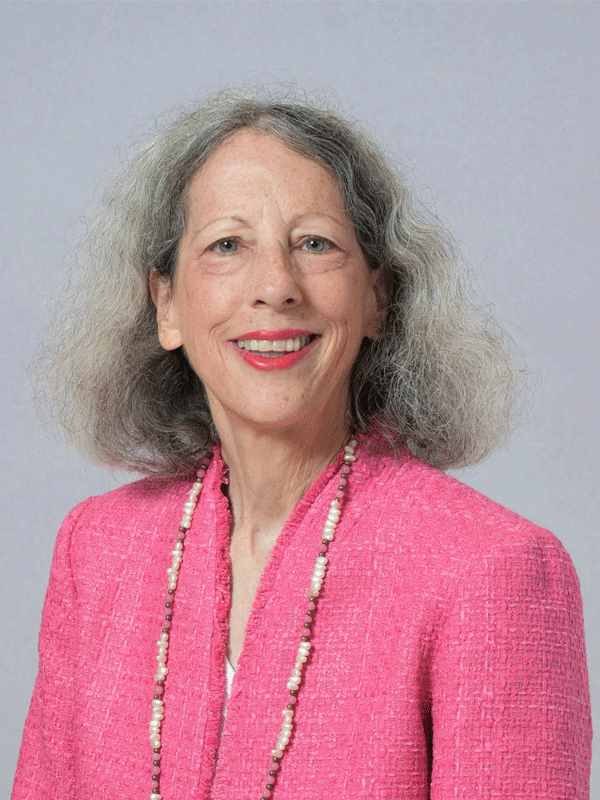
Joan Gillman has been a teacher for over 40 years, and has always prioritized maintaining a sense of natural curiosity and wonder when it comes to teaching her curriculum. Gillman emphasizes the creative and hands-on approach to learning while also creating a classroom environment that is inclusive and supportive for every student’s individual needs. Her methodology when it comes to teaching has grown and developed vastly over the years, but it truly all began with her own upbringing.
Sponsored Content

When you’re a child, the world around you is vast, new, and mysterious. There’s a natural-born level of curiosity that we all have instilled in us that drives us to ask questions, solve puzzles, and color outside of the lines. As we grow older, sometimes that sense of wonder can become diminished by rigid classrooms where learning is no longer about being hands-on with new information, but is simply a means of memorization to get the best grade possible.
Educators around the world have the important task and responsibility of shaping young and developing minds while ensuring that their students maintain their sense of excitement when it comes to learning. Even as adults, we’re all continuously learning every single day, but it can feel monotonous. Embracing our creativity to step out of our comfort zone and learn a new skill, take on a new hobby, or even just try something new can become daunting instead of exciting.
It’s important to remember that we all had a point in our life where the unknown was never scary, it was new and fascinating. A time where asking questions and getting our hands dirty was a daily occurrence that taught us about the world and why things are the way they are. It’s unfortunate that those feelings of motivation to be educated dim for so many of us as we get older, but it’s never too late to reignite them.
This is why it’s essential to have adults in your life growing up that cradle that creative spark and make you use it every day. Having teachers who make you feel excited about the world around you and want you to ask questions outside of just a means for a grade are the ones who stick with us the most.
Joan Gillman is an established educator who epitomizes this idea. As someone who’s been in her field for over four decades, every year, she prioritizes maintaining a sense of natural curiosity and wonder when it comes to teaching her curriculum. Gillman knows that kids deserve the opportunity to be engaged and have fun when they’re in school so that when they get older, they can hold on to that passion to become the best they can be in whatever they decide to do.
Gillman emphasizes the creative and hands-on approach to learning while also creating a classroom environment that is inclusive and supportive for every student’s individual needs. Her methodology when it comes to teaching has grown and developed vastly over the years, but it truly all began with her own upbringing. She was lucky enough to have a childhood that allowed her to experiment with the world around her. She was constantly encouraged by her family to ask questions, go outside, write notes, create drawings, and learn something new everyday.
With this upbringing, Gillman had a sense of passing along the energy she cultivated when it came to education. As a teacher, she learned to not only teach her students that they can make a real difference in the world, but do it with a sense of inclusivity, collaboration, and creation.
“While I never had any educators in my family, my mother always encouraged me in all my endeavors. I was always interested in science and engineering, and I can even remember as a young child heading into the bathroom and mixing different solutions together, thinking I’m going to come up with something that’s going to save the world.”
“I loved learning about weather and climate, and my mother provided me with a barometer to check the air pressure and thermometers to check the temperature.
Having an older brother also made a difference. We spent hours together building mini cities with Kenner’s Building Sets and Lincoln logs, and would use different sized boxes to make a robot with the top piece being a shoebox, and we’d cut out eyes and put flashlights inside so it would look like it was glowing. So I had this interest in creation at a very, very young age.
I can even think back to why I became a teacher. Back in high school, my school had a very strong community service graduation requirement. So, I decided, ‘Okay, I’m going to work with the students in the lower school.’ I was teaching them recorder, tutoring in math, and organizing games in the playground.”
From the beginning, Gillman cultivated an environment of inclusivity when it came to being a teaching figure to younger kids. Throughout her community service, she would include all children in the games she would create, regardless of if they were academically inclined or not.
“I wanted everyone to have a chance, and that’s something I’ve really carried into my own teaching career where I want to provide every child with the chance to shine.”
Going back even further, however, Gillman as a student reflected on the amazing educators she had in her corner that helped mold her into the leader she is today in the classroom. She referred to her third-grade teacher as “ahead of her time” due to the fact that she was hands-on with her lessons and how she taught Gillman’s class.
“One example that I always remember is when we were learning about dinosaurs, which I still love to learn about today. My teacher decided that we were going to set up a model of a dinosaur scene right in the classroom. So in our regular class we were reading and learning about dinosaurs, and in our art class we were constructing the dinosaurs using papier-mâché.
Our teacher then had a really brilliant idea. She said, ‘You know, just digging them in this container doesn’t look like much. We’re going to grow our own grass.’ So, we put in soil, grass, seeds, and water, and before we knew it, we had grass growing. By the time our dinosaurs were ready, we put the dinosaurs in that scene, and with that tall grass, it gave it a much more realistic appearance. I thought it was awesome.”
It was a collaborative effort, however, from all the adults in her life that gave Gillman the tools she needed to become an inspiring teacher whose students genuinely love to see and learn from everyday.
She recalled a sixth grade project regarding different Native American tribes that her father helped her with. She was assigned to create something based on the Cree Indians who lived in the woodlands in wigwams, and in the plains in teepees.
“My dad actually helped me construct a model of their village. We took a tiny little container that used to hold playing cards and turned that into our cooking pot. We took match sticks, burnt them, and then colored them red and put the pot on top, giving it a nice realistic appearance. We made our wigwam using a fern or a tan colored felt, and to keep it up we used old chopsticks and we constructed the whole thing together.”
“For many, many years afterward, the model I made with my dad stayed in my room. It kind of gave me good memories of working together with my dad and accomplishing our goals.”
Gillman’s mother also instilled the importance of experiences and absorbing culture in her childhood. She would often take Joan and her brother to concerts, opera in the park performances, the Philharmonic Orchestra, and instilled a true love of music in her kids.
“With any of my interests, my mother would make sure that she would find resources so I could actually follow through with them. I loved working with clay, and the local Y had a pottery class where I learned to throw pots on a wheel.
These skills that I learned all the way back then, I still have today, and I still use it. Even in high school, we learned to make macrame, and all around my house today I have macrame vases, candlestick holders, you name it. These interests that I had, my mother made sure that she provided the resources so I could continue with them.”
When it comes to creating a positive classroom environment where students are genuinely excited to learn, Gillman also recalled the lessons she learned while she was student teaching and earning her master’s degree at NYU.
“I was doing my student teaching at PS 47 Junior High School for the Deaf, and the woman who I was teaching under was incredible. Most deaf children after about 12 years of schooling read on maybe about a 4.3 grade level, because they’re trying to acquire a language they’ve never heard. We used sign language in total communication with the students. The best way I can describe it to those who are hearing is it would be like you’re going to a foreign country, turning on the TV, shutting off the volume, and trying to learn the language just by watching the lips move. That’s what it’s like for a profoundly deaf child.
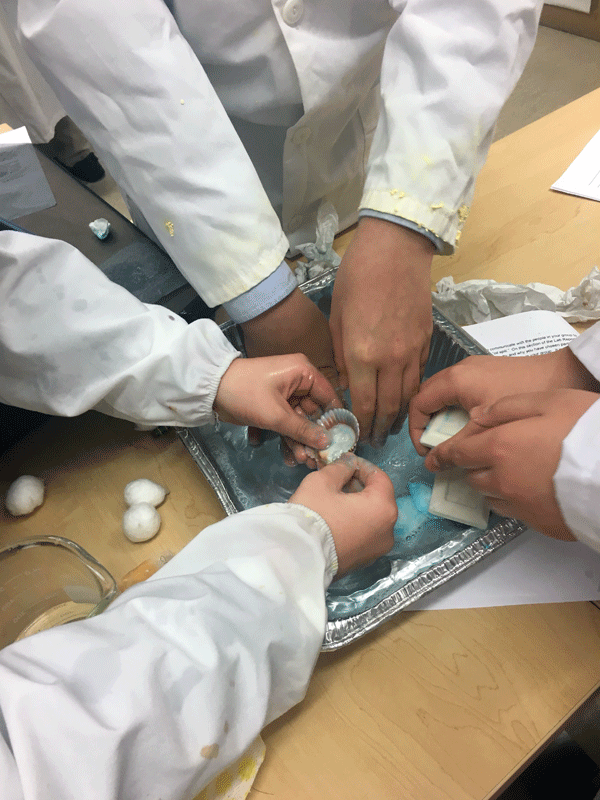
My cooperating teacher was brilliant. Here we are doing an engineering unit with learning about electricity, batteries, kinetic and potential energy. So how do you get this across? She decides they’re going to make a mini amusement park with working rides and attractions. We had students making gondolas with pulleys, a boat ride using batteries moving in a container, a roller coaster showing different gravitational potential energy and more.
The students knew exactly what was going on and what type of learning that they were trying to acquire. They came in the morning, got their supplies, and got right to work. That alone really made me realize the importance of this hands-on learning.
If the students were to just sit there and take notes, they weren’t going to know it. Actually using their own hands, ingenuity, and creativity to showcase their learning is something that will stand with them. I know for me it was a great learning experience, because if this works well for deaf kids, it certainly will work brilliantly for all other children.”
Keeping kids interested and included in the classroom is one of the biggest takeaways that Gillman has received from her past and the ways in which her parents and teachers maintained her interests.
Within her classroom she’s adopted a method known as interdisciplinary teaching. This method works to promote inclusivity for all students through various disciplines and crossing over subjects; the same way in which Gillman’s third grade teacher brought the dinosaur lesson from the classroom to the art room.
“With interdisciplinary learning, when you’re teaching a unit, you’re not just doing science, but you’re going to put in engineering, writing skills, history, math, and art. You incorporate all of the different disciplines into the learning so that the education is just not taking place in little isolations, but you see that connection between the disciplines, and really isn’t that the way life works?”
“To give an example, in my second grade class we have this amazing engineering unit. We spend part of the time learning about skyscrapers, and the other part learning about bridges. We look at skyscrapers around the world, and the students love this because many of my children come from many different countries, and suddenly they’ll see a building and say ‘Oh my goodness that’s where my grandmother lives right there. I visited that!’ They take such pride in their heritage as we learn about different structures from around the world.”
When it comes to bridges, Gillman annually holds a “competition” she calls the elephant challenge.
“We learn about six different bridge types. We learn about the pros of each one, the cons, where they’re built and how they’re used. We look at arch, beam truss, cable-style, cantilever, and suspension bridges, and the students learn all about each of them. Then I tell them the story of the four elephants.
So you have four elephants, mommy and daddy and the two babies who are out for a walk, and somehow the babies get ahead of the parents, cross a bridge, turn around, and mommy and daddy are on the other side, so they start crying out for help. The parents then cross the bridge, but now you have a situation where all four elephants have to cross together.
Their mission now, after having learned about the six different bridge types, is to construct a bridge that can hold up the mass of the four elephants. We then tap into our math skills and they have to actually find the mass of each elephant. Once they have that, they add up the total mass and now they have to work with that amount to have a bridge that can withstand that much force.”
Outside of the classroom, Gillman also understands the importance of extracurricular activities and prioritizing your own specific special interests to maintain curiosity and learning on your own accord.
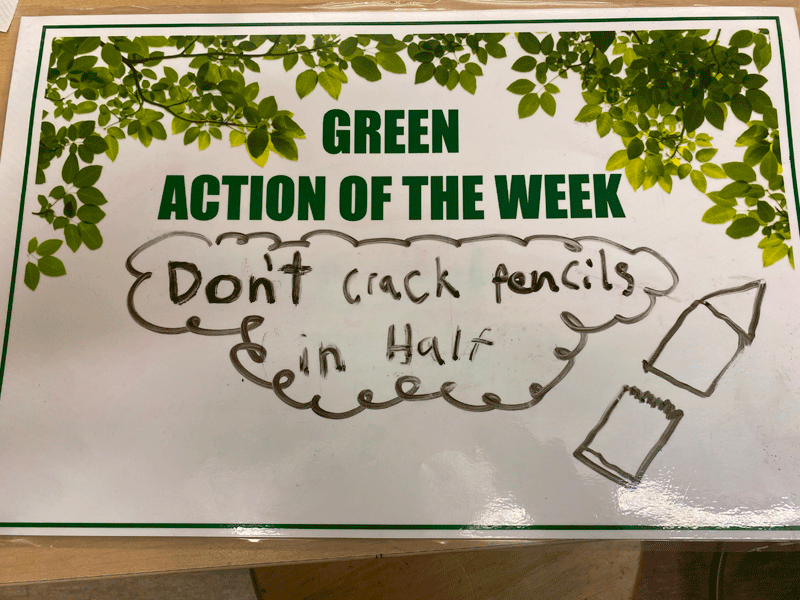
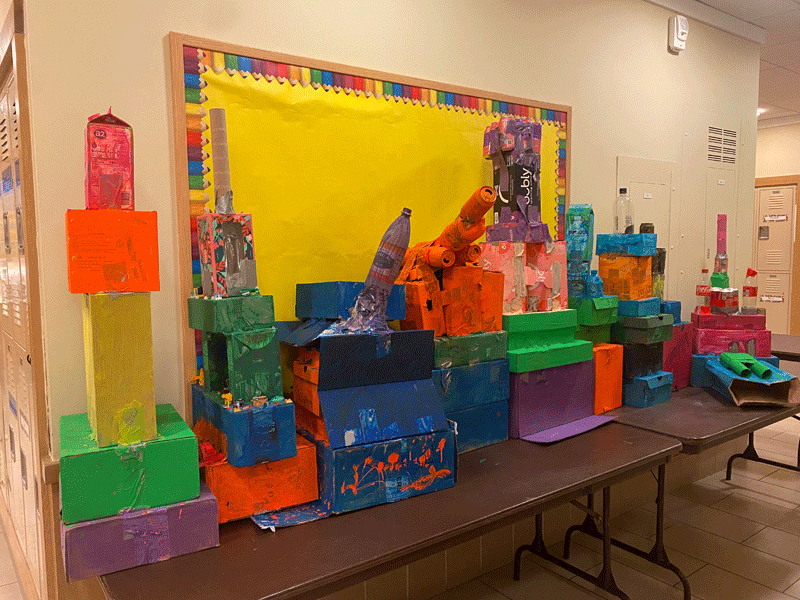
Gillman runs an environmental group at her school called the Green Team. Being based in New York City, she’s utilized this group to teach her students about local recycling protocols, separating materials such as cardboard, paper, plastic, cartons, and more. The students recycle themselves by using these materials from home to build the bridges for the elephant challenge. In just second grade her students envelop the entire construction and engineering process. From drawing out their plans, to organizing what materials can best be utilized where, her students are learning multiple lessons at once while being hands on and building something with their own two hands.
The project is also collaborative as the kids work together throughout the entire process before testing day. “They put together these bridges, they paint them, and then comes the testing day where they have to put all four elephants on top. If it stays up, everyone’s applauding, but even if it collapses, we congratulate them for a good try because I want the students to show good camaraderie and understanding.”
With all of the educational experience Gillman has from being a student herself, volunteering, and being the established teacher she is, her legacy has been cemented, and the next generation of educators could learn a lot from her the same way she learned from her parents and teachers growing into her career.
“For those new in teaching, don’t be afraid to ask for help. You are in an entire building filled with professionals, and you should feel at ease to ask your fellow teachers for guidance and advice. Even though this is my 44th straight year, I’m still learning. Every year I’m still taking professional development classes because I feel there’s so much more for me to know, and a lot’s changed.
I began in the South Bronx with a blackboard and chalk, never dreaming that I would be miserable without a smartboard. It’s important to continue your learning, just like I try to instill in my students to be lifelong learners, I’ve tried to model that same behavior myself. In 2018, I went through the program to become a National Geographic certified educator. A few years later, I became a Modern Classroom Project educator. So, I’m always continuing my education, and I like to show my students that I’m going ahead and continuing my education as well.”
Joan Gillman is the epitome of not only what teachers and students should aspire to be in the classroom, but who we should all be as human beings walking through life. The world can seem so dark and hopeless at times, but remembering how we lived as children, constantly asking questions, finding inspiration in the smaller details of everyday life, and remembering the true value of learning, we would create a much brighter, more collaborative, and creative life.
Take some time to reconnect with your inner child, find something that makes you curious and dive straight into it. Be like Joan Gillman and forge your own path while creating big enough footsteps for those coming after you to follow.
To learn even more about Joan Gillman and her amazing story, work in education, and more, check out our video interview with her by clicking here!
To read our other articles with Joan, click here!
Finally, to dive even deeper, check out Joan Gillman’s website by clicking here!

Eric Mastrota is a Contributing Editor at The National Digest based in New York. A graduate of SUNY New Paltz, he reports on world news, culture, and lifestyle. You can reach him at eric.mastrota@thenationaldigest.com.

