
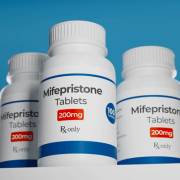
Supreme Court Restores Access To Abortion Pill Through Telehealth, Mail, And Pharmacies
This week, the Supreme Court restored broad access to the abortion pill mifepristone, blocking a lower-court ruling that initially threatened to remove one of the main ways abortions are provided across the US, according to reports from AP.
Justice Samuel Alito signed the order to temporarily allow women seeking abortions access to the pill at pharmacies or through the mail without needing an in-person visit to their doctor. These practices have been permitted for several years until a federal appeals court imposed new restrictions last week.
The order will remain in effect for another week while both sides work to respond and the higher courts take a deeper look into the issue.
AP reported that a majority of abortions in the US are provided through medications. Democratic-led states have laws that work to give legal protection to individuals who prescribe the drugs via telehealth to patients in states that have abortion bans in place.
These prescriptions have also cushioned the major impact of abortion bans in mainly Republican-led states after the 2022 Supreme Court ruling to overturn Roe v. Wade. “One recent report suggested that in the 13 states where abortion is banned at all stages of pregnancy, more women obtained abortions with pills prescribed by telehealth last year than by traveling to other states,” Mark Sherman and Geoff Mulvihill wrote for AP.
Typically, mifepristone is taken with a second drug misoprostol for abortions. According to the FDA label on mifepristone, the combination completes a full medical abortion 97.4% of the time.
Sometimes misoprostol can be used on its own to terminate pregnancy. Some studies placed its solo effectiveness at around 80% or higher.
In certain countries where mifepristone is banned or unavailable, misoprostol is often used alone.
Misoprostol has never been formally approved by the FDA for abortion while mifepristone has been.
Dr. Angel Foster, founder of The Massachusetts Abortion Access Project, said her organization “was prepared to send misoprostol only on Monday afternoon but was able to switch back to the two-drug combination.”
“Regardless of what happens with this regulatory issue, we and other groups will continue to provide high-quality abortion care to patients in all 50 states,” she said.
Foster said that her organization spent the weekend guiding different groups of patients: individuals who were sent mifepristone but have yet to receive it, and those who had been approved for the drugs but had not been paid or sent them.
“We have a little bit more time to navigate this new landscape with the stay,” said Julie Burkhart, the founder of Wellspring Health Access, a Wyoming abortion clinic.
Elizabeth Ling, associate director of legal services at If/When/How, an organization that provides legal guidance for individuals considering abortion, said that “wherever the legal battle goes next, there’s one thing women need to understand: ‘The outcome is not going to make it a crime for people to access care.’”
“Monday’s ruling is a temporary procedural step that leaves unresolved the very real concerns about the safety of these drugs and the decision under the Biden administration’s FDA to recklessly remove longstanding safeguards,” Carol Tobias, president of National Right to Life, said.

Eric Mastrota is a Contributing Editor at The National Digest based in New York. A graduate of SUNY New Paltz, he reports on world news, culture, and lifestyle. You can reach him at eric.mastrota@thenationaldigest.com.