
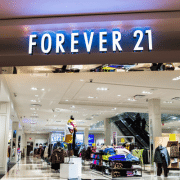
Forever 21 Files for Bankruptcy Again as Shein, Temu, and Amazon Dominate Fast Fashion
Forever 21 filed for bankruptcy protection for the second time in six years on Sunday, announcing plans to shutter its U.S. operations amid declining foot traffic in shopping malls and increasing competition from fast-fashion e-commerce giants such as Amazon, Temu, and Shein.
The retail chain’s U.S. operating arm has started liquidation sales across more than 350 locations and plans to cease operations entirely unless a suitable buyer emerges, according to recent court filings.
Forever 21 has actively searched for buyers over several months, reaching out to over 200 potential parties, with approximately 30 expressing serious interest by signing confidentiality agreements. However, none of these discussions yielded a viable agreement, leaving the retailer poised for liquidation.
In a statement, the company’s co-chief restructuring officer, Stephen Coulombe, attributed Forever 21’s latest financial struggles to heightened competition driven by online retailers Shein and Temu. Both companies exploit the “de minimis exemption,” a trade loophole allowing goods priced under $800 to enter the U.S. duty-free, significantly impacting domestic retailers like Forever 21, which must bear import duties.
“Certain non-U.S. online retailers that compete with the debtors, such as Temu and Shein, have taken advantage of this exemption and, therefore, have been able to pass significant savings onto consumers. Consequently, retailers that must pay duties and tariffs to purchase product for their stores and warehouses in the United States, such as the company, have been undercut.”
Coulombe added, “Despite widespread calls from U.S. companies and industry groups for the U.S. government to create a level playing field for U.S. retailers by closing the exemption, U.S. laws and policies have not solved the problem.”
Past attempts to counteract Shein’s dominance included a partnership initiated by Sparc Group, Forever 21’s operating company owner, in 2023. As part of the joint venture, Shein acquired about a third of Forever 21′s Sparc Group. Sparc also took a minority stake in Shein. The partnership allowed Shein to sell Forever 21 products on its site. It also allowed customers to return Shein-bought items in several hundred physical Forever 21 locations across the United States. However, the effort was insufficient to reverse losses or influence trade policy reform.
“The ability for non-U.S. retailers to sell their products at drastically lower prices to U.S. consumers has significantly impacted the Company’s ability to retain its traditional core customer base.”
While Forever 21’s U.S. operations face liquidation, the brand, owned by Authentic Brands Group, is expected to survive internationally. According to a recent CNBC report, the brand name and other intellectual property controlled are not for sale, and its international stores and website are anticipated to continue running.
Jarrod Weber, global lifestyle president at Authentic Brands Group, has expressed optimism about attracting new partners and operators interested in revitalizing the brand within the U.S. market, stating, “We are receiving lots of interest from strong brand operators and digital experts who share our vision and are ready to take the brand to the next level.”
“Our U.S. licensee’s decision to restructure its operations does not impact Forever 21′s intellectual property or its international business. It presents an opportunity to accelerate the modernization of the brand’s distribution model, setting it up to compete and lead in fast fashion for decades to come. We’re building a direct creation-to-shelf model that moves faster.”
After its initial bankruptcy filing in 2019, Forever 21 returned to profitability, reporting revenues of $2 billion and earnings before interest, taxes, depreciation, and amortization (EBITDA) of $165 million in fiscal 2021, under new ownership by Authentic Brands Group and major landlords Simon Property Group and Brookfield Property Partners.
Yet the company’s financial performance steadily deteriorated amidst rising inflation, supply chain issues, and shifting consumer preferences, accumulating over $400 million in losses in the past three fiscal years alone. Projected losses for fiscal 2025 stand at an additional $180 million.
Forever 21’s struggles also prompted drastic cost-cutting measures, including requests for rent reductions from landlords of up to 50%. Although these efforts secured around $50 million in savings, the amount was insufficient to offset mounting losses. Currently, the company carries debts totaling $1.58 billion, along with over $100 million owed to clothing suppliers, primarily in China and Korea.
The company, which was founded in 1984, was once a dominant force in fast fashion, employing over 43,000 people and generating annual revenues exceeding $4 billion at its peak. Its ongoing challenges highlight the rapidly changing dynamics within the retail and fashion industries.
Part of the problem, according to GlobalData managing director Neil Saunders, is that Forever 21 stores are too large for their present needs and are located in malls where there are not enough shoppers.
“Forever 21 was always a retailer living on borrowed time. Over recent years, it has been hit with dual headwinds from a weak apparel market and stiff competition from cheap Chinese marketplaces. Both things have eroded its standing and depleted its market share.”

Moumita Basuroychowdhury is a Contributing Reporter at The National Digest. After earning an economics degree at Cornell University, she moved to NYC to pursue her MFA in creative writing. She enjoys reporting on science, business and culture news. You can reach her at moumita.b@thenationaldigest.com.