Posts

dream

Nightmare on Cheese Street? Study Links Dairy Intolerance to Disturbing Dreams

That midnight grilled cheese might be coming back to haunt you, literally.

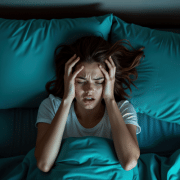
A recent study published in Frontiers in Psychology has found a notable link between food sensitivities, particularly lactose intolerance, and the severity of nightmares. Researchers believe that the gastrointestinal distress experienced by those with food intolerances during the night may disrupt sleep and sneak its way into their dream life.

“Nightmare severity is robustly associated with lactose intolerance and other food allergies,” Dr. Tore Nielsen, lead author of the study and director of the Dream and Nightmare Laboratory at Université de Montréal, told Newsweek.

“These new findings imply that changing eating habits for people with some food sensitivities could alleviate nightmares. They could also explain why people so often blame dairy for bad dreams!”

The research team surveyed 1,082 university students at MacEwan University in Alberta, Canada, collecting data on sleep patterns, dream content, physical health,  mental wellness, and dietary habits. Nearly a third of participants reported frequent nightmares, with women significantly more likely than men to recall dreams, report poor sleep, and experience unsettling dream content.

When participants were asked whether they believed food affected their dreams, either by worsening or improving them, approximately 40% said yes, mainly when they ate late at night. Around 25% believed that certain foods actively worsened their sleep quality, with sweets (31%), dairy products (22%), meats (16%), and spicy dishes (13%) topping the list of culinary culprits.

Embed from Getty Images

Notably, women were also almost twice as likely to report food allergies or intolerances. Of the people who believed their diet was related to worsened sleep, 30% were lactose intolerant.

Despite this, only 5.5% of participants reported that food influenced the emotional tone of their dreams in addition to quality. Still, among that group, dairy products, particularly cheese, were frequently mentioned as triggering strange or distressing dreams.

The findings might help address some of the issues brought up by a 2015 study that examined the variables influencing “food-dependent dreaming,” or how food influences dreams.

“In the earlier study, people were blaming cheese all the time for their bad dreams. And so I think we got some better answers in the study for that.”

The association may be rooted in how the body processes dairy during sleep. For individuals with lactose intolerance, consuming cheese or milk products before bed can lead to bloating, cramps, and other gastrointestinal symptoms. That discomfort may disrupt sleep and feed into negative or bizarre dream content.

“Nightmares are worse for lactose-intolerant people who suffer severe gastrointestinal symptoms and whose sleep is disrupted. This makes sense because we know that other bodily sensations can affect dreaming. Nightmares can be very disruptive, especially if they occur often, because they tend to awaken people from sleep in a dysphoric state. They might also produce sleep avoidance behaviors. Both symptoms can rob you of restful sleep.”

Embed from Getty Images

The findings provide a possible scientific explanation for an age-old folk belief that eating cheese before bed can lead to bad dreams. While the notion has existed for centuries, concrete evidence has been elusive until now.

According to the USDA’s Agricultural Research Service, 68 percent of U.S. adults consumed cheese on any given day in 2017–2018, whether as a snack or an ingredient. While cheese can contribute to calcium intake and even promote oral health, the timing of its consumption may be more important than many realize.

Interestingly, fewer students today seem to associate food with dreaming than a decade ago. Nielsen and co-author Dr. Russell Powell noted that in the prior 2015 study, more participants linked specific foods with dream outcomes. They speculate that growing awareness of food intolerances may lead people to avoid known trigger foods altogether, thus reducing the chance of sleep disruption in the first place.

While the researchers emphasize that the correlation between food and dreams is still complex and not fully understood, they do see potential in dietary adjustments to support better sleep. However, they stop short of making universal recommendations.

A poor diet might lead to poor sleep, and vice versa—or there could be a third factor we haven’t identified yet, Nielsen suggested to Newsweek.

“We need to study more people of different ages, from different walks of life, and with different dietary habits to determine if our results are truly generalizable to the larger population. Experimental studies are also needed to determine if people can truly detect the effects of specific foods on dreams. We would like to run a study in which we ask people to ingest cheese products versus some control food before sleep to see if this alters their sleep or dreams.”

Of course, not every food is associated with nightmares and disturbed sleep; in fact, certain foods may actually promote better sleep. 13% of those who drink herbal tea, 12% of those who eat a lot of veggies, and nearly 18% of those who regularly eat fruits reported having better sleep.

TJ Johnson Sleep Science Coach

How a Sleep Science Coach Uses Hypnosis To Help Clients Find Restful Sleep | TJ Johnson

According to the CDC, more than 1 in 3 Americans are sleep-deprived. Sleep deficiency leads to injuries, chronic diseases, mental illnesses, poor quality of life and lost work productivity. And yet, it is rarely addressed adequately in healthcare. Sleep Science Coach TJ Johnson is trying to change that. By using Neurolinguistic Programming, she empowers her clients to approach sleep in a new way.

Woman Waking up from good night sleep

The Key To A Better Night’s Sleep Is A Healthy Lifestyle

Sleeping is one of the most important things we can do for our health. Our bodies need rest in order to recharge and replenish our body’s natural systems so that they’re performing to the best of their ability. Many of us have certain sleep issues, whether it be having a hard time falling asleep, staying asleep, or trouble waking up in the morning, whatever it may be, there’s certain changes you can make to your everyday routine that can help improve your nightly slumbers, and get you the eight hours you need to feel great in the morning. 

One of the simplest solutions for improving sleep is ensuring that you’re in a dark environment. Dark rooms obviously support better sleep as there’s less sensory stimulation. Light exposure interferes with our bodies natural sleep cycle and circadian rhythms; which is a fancy term that refers to when your body tells you to wake up and when to fall asleep. 

Embed from Getty Images

Investing in blackout curtains is the easiest solution if your sleeping situation involves a room with a window that’s facing the sun at any given point in the morning or evening. Heavy and thick curtains not only block out the intense natural lighting of the outside world, but also encourages a more relaxed sleeping environment in general. Dark colored curtains will typically always do the trick, however, if a lighter color would better fit your rooms aesthetic, there are plenty of online options of light colored curtains with thick enough linings to darken any space. 

If you’ve done any research regarding sleep or insomnia, you’ve definitely heard about blue light emissions and their negative effects on our bodies ability to fall asleep. Electronic devices typically always have a “blue light” undertone that has been proven to disrupt our circadian rhythms specifically when we’re going to bed; as many of us like to mindlessly scroll through social media before falling asleep. 

This blue light suppresses the production of melatonin in our brains, which is the chemical that tells the rest of our body when it’s time for bed.  Some phones have a “night mode” setting that turns your screen a more amber hue to combat that harsh blue emission, and there are numerous screen-protector like products that do the same, however, the best thing you can do to promote a more solid night of sleep, is to avoid electronics at all cost at least an hour before going to bed. This can be tough for a lot of us who have developed a nighttime routine that involves some entertainment on our devices, but the only way to ensure you’re body will keep producing melatonin at a normal rate, and keep you rested throughout the night, is to unplug it all and read a book instead before bed. 

Embed from Getty Images

What you eat and drink throughout a day also has a heavy effect on your natural sleep cycle. Depending on when you go to bed, you should stop eating at 8 pm the latest. The later in the night you eat, the more your body will have to digest while you’re resting. This is an issue because our bodies digest at a much slower metabolic rate when we’re sleeping, which can either lead to an unpleasant middle-of-the-night bathroom trip, or an overall feeling of grogginess in the morning. 

Following a healthy meal plan that avoids processed foods and sugars will also keep your energy levels in a more natural and stable state, so when it comes time to unwind, your body will have no problem doing so because it received all the necessary nutrients it needed throughout the day. 

Finally, along the same lines as a healthy diet, getting regular exercise will improve how well you stay asleep throughout the entire night. Even just 10 minutes of activity a day can show positive results. So many of us get trapped in the 9-5 bubble of sitting at a desk all day and then going home and just sitting on the couch to unwind. When you keep up with an active exercise schedule, you’re lowering your risk for certain sleep conditions such as sleep apnea. 

Regardless of what issues you have when it comes time to turn the lights out, keeping up with healthy lifestyle habits will always help improve the way your body functions, regardless of if you’re conscious or not.

Girl waking up refreshed

These Foods Can Help You Sleep

Eating before bed is typically frowned upon. Technically we all should stop eating by 8pm every night in order to give our bodies the proper time to digest and absorb all the nutrients we took in that day. However, as we all can most likely relate to, late night snacks or meals just seem to happen. Unfortunately, a lot of the foods we choose to eat before bed can actually prevent our bodies from getting a full night of complete rest, due to the fact that parts of our bodies have to keep working throughout the night to digest, but that’s not the case for all foods. 

Celebrity nutritionist Kimberly Snyder works with the likes of Drew Barrymore and Kerry Washington, and also is a founding council member of the health and wellness blog “Well And Good.” Recently, Snyder wrote a study on some of the foods that actually aren’t bad to have before bed(in fact, they actually help us sleep). The study was released after she shared a post on her Instagram that showed a graphic of certain foods and drinks one can have before bed to help aid sleep. 

Embed from Getty Images

The main thing to look for in late night snacks is obviously the ingredients. Certain ingredients that are in our everyday food choices help our bodies in different ways—the key is to find those foods which have benefits that involve muscle/mind relaxation and support easy digestion. 

Pumpkin seeds, for example, contain vitamins A and C as well as fiber. When these small compounds combine, the fiber helps your body easily digest, while the vitamins are able to absorb and support your immune system. Snyder included seeds on her list because they also have a high magnesium content, which she claims is a “calming nutrient linked to better sleep.”

Another food that’s definitely been on all of our midnight snack lists that also contains a decent amount of magnesium is dark chocolate. However, as a sweet, Snyder suggests to “try to stick to just one ounce or less of dark chocolate—it contains a small amount of caffeine which could keep you awake.”

Embed from Getty Images

Like magnesium, tryptophan is another building block to many common foods that also helps to aid healthy sleep patterns. Tryptophan is an amino acid, and amino acids are the building blocks to all proteins. So chicken, eggs, nuts, etc. they’re all made up of different amino acids. Tryptophan is unique in the sense that it not only gives your body protein, but also has been proven to put the brain in a relaxed state that’s “similar to melatonin.” Popular foods that contain tryptophan that are light enough to enjoy before bed are brown rice, lentils, or spinach. 

Spinach itself is one of the more loaded “sleepy superfoods” as it contains both tryptophan and magnesium. Combining both compounds will double the effects on your brain and body. However, digesting leafy greens of any kind is not ideal for overnight. Snyder suggests if you want to have spinach before bed to aid your sleep, blend it up and drink it like a smoothie or soup. This way your body won’t have any difficulties digesting as you sleep; liquids are in general easier to digest compared to solids. 

Finally, a more commonly known sleep-aid is caffeine-free tea. “Caffeine-free tea has been shown to promote relaxation and sleep quality. For some, the ritual of having tea before bed signals the beginning of a bedtime routine, priming the mind and body for sleep. My favorites to sip on at night: chamomile, lavender, tulsi, and rooibos,” says Snyder.