Posts

ebola

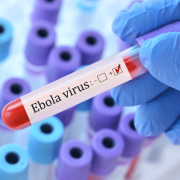
World Health Organization Chief Is ‘Deeply Concerned About Scale And Speed’ Of Ebola Outbreak 

The World Health Organization’s Director-General Tedros Adhanom Ghebreyesus stated that he was “deeply concerned about the scale and speed of” the recent outbreak of a rare type of Ebola in eastern Congo.

measles

World Health Organization Says Measles Cases Are Concerningly Surging

Between 2000 and 2024, deaths caused by measles dropped 88% thanks to vaccination, according to reports from the World Health Organization (WHO). It’s estimated that 58 million lives were saved from the success of the vaccine worldwide. 

Now, however, the WHO has released a new report that states vaccine coverage is now well below the level needed to stop transmission, with cases surging globally. 59 nations have reported large/disruptive measles outbreaks within the last year. This marks almost three times the number reported in 2021. 

Embed from Getty Images

About 25% of these outbreaks are occurring in nations that were previously declared to be measles-free, including the United States. 

“Global measles elimination remains a distant goal.”

This rise in outbreaks and decline in resources for immunization and disease surveillance is contributing as well, the report noted.

In order for “elimination” to occur, the virus needs to stop circulating within a country. Canada, for example, recently lost their elimination status, and WHO is concerned about the US losing its status next, according to Dr. Kate O’Brien, director of the WHO’s Department of Immunization. 

The US Centers for Disease Control and Prevention reports “1,798 confirmed measles cases in the US this year, the highest number of cases since the country reached elimination status in 2000.”

“Measles remains the world’s most contagious virus,” WHO Director-General Dr. Tedros Adhanom Ghebreyesus said

“Even though there’s a highly effective low-cost vaccine, the disease exploits gaps in immunization coverage.”

In 2024, there were more than 30 million children globally that were considered to be under-protected against measles. 

Embed from Getty Images

“We have made measurable progress towards measles elimination,” said Diana Chang Blanc, head of WHO’s Essential Program on Immunization. 

“But progress toward elimination is still too slow. Cases and deaths are still unacceptably high.”

A few nations have yet to give out the second dose of a measles vaccine as standard practice, which is essential because the second dose “increases vaccine effectiveness to 95%, providing most individuals with long-lasting immunity,” Chang Blanc stated. 

In 2024, the reports noted that only 84% of children received the first dose with only 76% receiving the second dose around the world. 

“This means that 30 million children remained underprotected from measles in 2024. Children living in fragile, vulnerable conflict-afflicted settings are the most adversely affected.” 

Chang Blanc stated that progress is not being accomplished due to the fact that there has been lower global immunization rates and a “backsliding of vaccination” since the Covid-19 pandemic. 

“Measles acts as a fire alarm for immunization programs. When the disease resurfaces, it warns that there are gaps in immunization coverage and health care access inequities,” O’Brien stated

Misinformation and disinformation are notable factors in slowed vaccination rates, WHO stated. 

Chang Blanc said that “the breakdown or lack of a strong foundation in the routine immunization system is the No. 1 reason for high measles case counts and outbreaks.

Although it sounds simple, those routine systems require trained health workforces, logistic systems, transport, surveillance systems and other resources that many countries do not have.

The major barrier to reaching 95% measles vaccine coverage is access to populations that need it most.”

monkeypox

World Health Organization Declares Monkeypox Outbreak As A Global Health Emergency 

The World Health Organization (WHO) has officially declared the global monkeypox outbreak as a public health emergency of international concern, the strongest call to action the agency can make. 

Since 2009, the WHO has declared seven global health emergencies, the most recent being for Covid-19, which was declared an emergency back in 2020. 

According to the WHO’s international health regulations, a Public Health Emergency of International Concern (PHEIC) is “an extraordinary event which is determined to constitute a public health risk to other states through the international spread of disease and to potentially require a coordinated international response.”

Embed from Getty Images

The UN health agency states that the term implies that the situation is very serious, sudden, unusual, and/or unexpected. A global health emergency also implies this is a threat for public health beyond national borders, and may require immediate international attention. 

Dr Tedros Adhanom Ghebreyesus, the WHO’s director general, said at a press conference that the “committee met on Thursday to review the latest data, but were unable to reach a consensus.”

“In short, we have an outbreak that has spread around the world rapidly through new modes of transmission about which we understand too little and which meets the criteria in the international health regulations,” he said. 

“For all of these reasons I have decided that the global monkeypox outbreak represents a global health emergency of international concern.”

While he said the “risk of monkeypox is moderate globally, it’s high in Europe and there is a clear risk of further international spread.”

So far there have been around 16,000 cases of monkeypox globally, 4,132 of which were in the past week according to data from WHO. It’s now been found in 75 countries and territories, and there have been five deaths. 

Embed from Getty Images

European regions have the highest number of total cases at 11,865, and the highest increase in cases within the last week, with 2,705. 

Dr. Rosamund Lewis, the technical lead for monkeypox at the WHO health emergency program, stated that there’s “a lot of work to be done. Action must be taken to establish what causes risk and to reduce situations that could put people at risk so they can protect themselves. This is how we will get to the end of this outbreak.” 

Monkeypox is classified as a viral infection typically found in animals in central and western Africa, although it can cause outbreaks in humans, as we’ve been seeing. 

Besides Europe, cases have been reported throughout the US, Canada, Australia, Nigeria, Israel, Brazil, Mexico, and others. 

Experts have stressed that anyone can get monkeypox as it’s spread through close or intimate contact. The UN has warned that some media portrayals of the virus impacting mainly Africans and individuals in the LGBT+ community “reinforce homophobic and racist stereotypes and exacerbate stigma.” 

Dr Michael Ryan, the executive director of the WHO emergencies program, said: “We all know how difficult it has been historically to deal with issues like this because of stigma. If nothing else this is about enlightened self-interest, as well as solidarity with those affected.”

Transgender Flag

Massive Protests Erupt In Response To Multiple Murders Of Black Transgender Women In America

Riah Milton was 25 and Dominique Fells was 27; both were black trans women, and both were murdered. The two victims were discovered a couple of weeks ago within the same week of eachother in what advocacy groups are calling the latest deaths in an epidemic facing transgender people; but more specifically black trans women.

Opioid Crisis

Could the US Opioid Crisis Have Been Prevented?

On average, 130 Americans die every day from opioid overdose, and this number continues to rise. As such, many are left wondering why the government has been so slow to act, what additional actions can be taken to address the epidemic, and what factors contributed to the genesis and expansion of the crisis.