
Nobel Prize In Medicine Given To Scientists For Their Work On Immune System Research
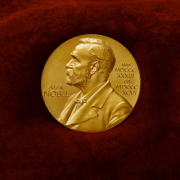
The 2025 Nobel prize in physiology or medicine has officially been awarded to three scientists for their work on how the immune system is prevented from attacking the body.
The scientists awarded are Mary E Brunkow, now at the Institute for Systems Biology in Seattle, Fred Ramsdell, now at Sonoma Biotherapeutics in San Francisco, and Shimon Sakaguchi, now at Osaka University in Japan.
The three pioneers in medicine are being celebrated “for their discoveries concerning peripheral immune tolerance,” reports state.
The Nobel assembly at the Karolinska Institute in Stockholm, Sweden announced the winners on Monday, who will share a prize of 11 million Swedish kroner (a little more than $1.151,000).
Professor Thomas Perlmann, the secretary-general of the Nobel assembly, said that when the official announcement was made, he had only managed to reach Sakaguchi.
“We have their phone numbers, but they’re probably on silent mode,” he said.
The three scientists are being awarded for making a “fundamental discovery” relating to one of the most important parts of the immune system, T-cells.
T-cells are a type of white blood cells that are produced in our bone marrow to help our bodies recognize invading microbes, and kill infected or cancerous cells.
Our immune systems are extremely important for our bodies overall functioning, as it keeps us healthy. It’s crucial that our T-cells do not attack our body’s healthy tissues, or it could cause autoimmune diseases like type 1 diabetes and multiple sclerosis.
Developing T-cells migrate to the thymus gland to mature, and the organ is also responsible to eliminate harmful T-cells. That specific discovery over the gland’s function was discovered in the late 1980s.
Professor Marie Wahren-Herlenius, of the Karolinska Institute, said:
“For a long time, this was believed to be the only way self-tolerance is obtained. However, some self-reactive cells escape out into our circulation and are potentially dangerous.”
Sakaguchi also revealed a second internal mechanism which our bodies use to eliminate the harmful T-cells. The mechanism showed that mature T-cells which carry a protein on their surface called CD25 can also eliminate their harmful counterparts. Those cells are known as regulatory T-cells.
“Essentially, they are the brakes of the immune system,” Professor Adrian Liston from the University of Cambridge stated.
Brunkow and Ramsdell both added more to Sakaguchi’s findings and revealed that mice with a severe autoimmune disorder called scurfy have a mutation in their X chromosome within a gene the pair called FoxP3, the Guardian reports.
They then went on to show that children with mutations in that gene develop an autoimmune condition known as Ipex syndrome, which is rare.
Sakaguchi was the first to highlight how the FoxP3 gene controls the development of regulatory T-cells, showing its importance with our bodies ability to maintain the immune system.
“Regulatory T-cells keep most of us from having autoimmunity and allergy. And another part is that by having a strong system of brakes present we are able to have stronger and faster immune reactions – the same way that a car can have a better accelerator if it has good brakes,” Liston said.
“It really is an essential part of the immune system, and leads to early fatal disease in childhood if it is broken.”
Wahren-Herlenius said the “discoveries have spurred on the development of several potential treatments. Clinical trials are ongoing to increase the number of regulatory T-cells for suppressing unwanted immune reactions in autoimmune disease or following organ transplantation.”
“Cancer cells can make use of our regulatory T-cells to avoid immune reactions that could destroy the cancer cells,” she said.
“For cancer treatments, the focus is therefore on down regulating or destroying the regulatory T-cells so that our immune system can act against the malignant cells.”
Prof Danny Altmann, an immunologist at Imperial College London, said:
“A huge part of the advance over the past 30 years in understanding the immune system has come with the description, definition and characterisation of the regulatory T-cells in diverse aspects of health and disease.”
Professor Adrian Hayday from King’s College London and the Francis Crick Institute stated that the prize for the discovery of regulatory T-cells was a long time coming, and now there’s more work to do to fully understand and harness the discovery.
“There really is an enormous amount that we still don’t know about T-reg cells, and the capacity to routinely exploit T-reg cells and their properties in the clinic has not yet been realised. However, I’m quite confident it will be,” he stated.

Eric Mastrota is a Contributing Editor at The National Digest based in New York. A graduate of SUNY New Paltz, he reports on world news, culture, and lifestyle. You can reach him at eric.mastrota@thenationaldigest.com.