Posts

zillow

Rare Virginia Octagon Mansion With Haunted Reputation Hits Market for $295K

A historic Virginia mansion known for both its unusual architecture and reputation for paranormal activity is on the market, giving buyers the chance to own a one-of-a-kind piece of American history.

The Octagon Mansion in Wytheville, Virginia, has been listed for $295,000. The six-bedroom property spans roughly 5,000 square feet and dates back to 1870, making it one of the few surviving octagon-shaped homes in the United States. The residence has also become known over the years for ghost stories, paranormal investigations and themed events, according to Realtor.com.

Visitors and investigators have reported hearing unexplained voices and conversations, doors opening or closing on their own, objects appearing to move without explanation and sightings of shadowy figures.

Local lore also includes stories of a young girl believed by some to have died during a 1950s polio outbreak, while other paranormal enthusiasts have claimed former residents and even Civil War-era spirits may still linger inside the mansion. None of those claims have been independently verified, but they have helped cement the home’s reputation as one of Virginia’s best-known haunted houses.

Embed from Getty Images

“The Octagon Mansion in Wytheville is a genuine rarity, and not just because of its haunted reputation,” Realtor.com Executive Editor Charlie Lankston told FOX Business.

Built during a short-lived architectural movement, octagon homes briefly gained popularity in the late 1850s and early 1860s after some designers argued the eight-sided layout provided homeowners with greater living space while reducing construction costs. The design was also popularized by Orson Fowler’s 1848 book, “The Octagon House: A Home for All.”

Lankston said that enthusiasm didn’t last.

Octagon homes had a brief run in the late 1850s and early 1860s, when some design experts argued the eight-sided layout could give homeowners “more space for less money,” he said. By the early 1900s, however, the style had largely fallen out of favor, and many of the homes were eventually demolished.

Today, many of the remaining octagon houses in the U.S. are on the East Coast.

“The fact that this 1870 property has survived more than 150 years largely intact, with its original hardwood floors, custom millwork, and architectural bones still in place, makes it a unique piece of American history.”

Embed from Getty Images

Although the mansion retains many of its historic details, it has undergone significant modernization over the years. Realtor.com reports that upgrades include refreshed bathrooms, updated electrical systems and the addition of a commercial kitchen. The listing also highlights updated plumbing, improvements to the property’s heat pump system and a new roof. Original features such as hardwood flooring, intricate millwork and built-in cabinetry have been preserved.

The home has also climbed onto Realtor.com’s weekly list of most popular homes.

The property’s commercial B-2 zoning offers flexibility for future owners. The mansion could potentially operate as a bed-and-breakfast, event venue or mixed-use property. The listing’s multiple entrances could help support several different uses for the property, while ample private parking adds to its potential.

“For anyone with an interest in preservation, there aren’t many opportunities like this left, particularly at a price point under $300,000.”

The home most recently operated as the Octagon Mansion History Museum after curator John Cushman purchased the property in 2019. During its time as a museum, it hosted recurring “Dinner with a Ghost” experiences that attracted visitors interested in the mansion’s paranormal reputation before the attraction closed in March 2025.

Before Cushman’s ownership, the property had reportedly sat vacant for nearly a decade. Now vacant once again, the listing describes the property as a “rare chance to own a true piece of Virginia history.”

A representative for the property’s most recent owners declined to say why the mansion is being sold.

nyc

Mamdani Unveils Sweeping Housing Blueprint Targeting NYC’s Affordability Crisis

Mayor Zohran Mamdani unveiled a sweeping housing blueprint Tuesday that aims to dramatically reshape how and where New York City builds new homes, with a particular focus on neighborhoods that have historically added little affordable housing despite the city’s worsening shortage.

The broader plan lays out a strategy for creating 200,000 affordable homes over the next decade, a major increase in city-backed housing production if achieved. It also includes measures to preserve existing housing stock as property owners face rising operating costs, while expanding opportunities for affordable homeownership.

The administration says the broader proposal would involve roughly $22 billion in housing spending over the next five years, including billions to stabilize and repair public housing across the city.

At the center of the proposal is an effort to address what the administration sees as uneven residential growth patterns across the five boroughs, where wealthier neighborhoods have often resisted new development even as rents and housing demand continue to climb.

“When communities don’t build new housing, rents stay high, housing choice stays limited, and many New Yorkers are locked out of neighborhoods where their families can thrive,” officials wrote in a section of the plan shared with POLITICO ahead of its release.

The city’s housing crisis has become increasingly severe. New York’s rental vacancy rate has dropped to 1.4 percent, the lowest level recorded in more than half a century, while affordable units for lower-income residents remain in critically short supply.

Mamdani announced the initiative in Gowanus, Brooklyn, the same neighborhood where a 2021 rezoning approved by the city triggered a major wave of residential construction.

“Let the largest city in the nation deliver the largest municipal housing transformation this country has ever seen.”

The administration plans to pursue multiple land-use and zoning changes to accelerate housing production. Among them are reforms that would permit additional housing density near public transit hubs.

Embed from Getty Images

The use of high-density zoning districts authorized under the state’s 2024 housing agreement will be expanded. In addition, City Hall intends to explore smaller “micro-plans” in certain communities that would permit added housing growth without requiring an extensive neighborhood-wide rezoning process.

“While some neighborhoods are adding significant amounts of housing, other neighborhoods add virtually none,” Mamdani’s housing plan states.

“Some high-cost, resource-rich neighborhoods, like parts of the Upper East Side, the West Village, and Park Slope, are even losing housing as wealthy New Yorkers combine existing apartments faster than new apartments are built.”

The administration is also preparing additional neighborhood-wide rezonings beyond the two already announced projects in Brooklyn and the Bronx.

Mamdani’s approach represents another example of his embrace of supply-side housing, as he continues to advocate for a rent freeze on stabilized apartments and crackdowns on negligent landlords.

“The mayor’s been very clear with me that we need to move at the scale and urgency that the housing crisis demands,” Deputy Mayor for Housing and Planning Leila Bozorg said in an interview. “We’d like to be as ambitious and aggressive as possible.”

Housing advocates largely praised the proposal following its release. Annemarie Gray, executive director of the pro-development nonprofit Open New York, described it as “an all-of-the-above approach that centers on building more homes, especially in the neighborhoods that have not done enough to be part of the solution.”

But some business and real estate leaders raised concerns about the plan’s labor standards and potential construction costs. Steven Fulop, president and chief executive of the Partnership for New York City, said the city’s housing goals were necessary but warned that additional wage requirements could discourage private investment.

“New York needs 200,000 new affordable homes, and it is a moral imperative, but regulations won’t build housing — private investment does. Right now, parts of this plan make that investment harder, not easier.”

Many of the tools Mamdani plans to use were approved during the administration of former Mayor Eric Adams.

Embed from Getty Images

Last year, city voters approved a package of charter revisions stemming from a commission assembled by Adams that sought to streamline New York’s often lengthy land use approval process and reduce the City Council’s ability to stop housing developments.

Under the revised rules, affordable housing projects proposed in 12 neighborhoods with the city’s lowest rates of housing production will be eligible for a shortened review process. Instead of requiring final approval from the City Council, those developments would conclude with a vote by the City Planning Commission, where the mayor appoints most members.

City officials plan to determine the 12 qualifying districts by October by measuring affordable housing permit activity in each community district over a five-year period.

The NYU Furman Center identified some of the city’s lowest-producing districts, including Bay Ridge in Brooklyn, Bayside in Queens, and Manhattan’s Upper East Side and Upper West Side.

The plan also places a significant emphasis on the future of the New York City Housing Authority, where residents have long dealt with mold, elevator outages, heating failures and deteriorating buildings. The administration said the cost of deferred repairs across NYCHA has climbed to nearly $80 billion.

Mamdani’s proposal would rely on existing financing programs, including PACT and the Public Housing Preservation Trust, to fund repairs and renovations at public housing developments. The administration said it hopes to renovate 25,000 apartments through the trust program, beginning with developments including Nostrand Houses in Brooklyn and Bronx River Addition in the Bronx.

At least 4,500 vacant NYCHA apartments and the construction of new housing on underused land owned by the authority will be restored. Officials also pledged expanded career training opportunities for NYCHA residents.

Some public housing advocates, however, criticized the continued reliance on public-private partnerships. Ramona Ferreyra, founder of Save Section 9, argued the proposal did not go far enough toward direct public investment. “I don’t need another hotline to call,” Ferreyra said. “I need taxpayer money to be used to invest in, rehabilitate and expand public housing.”

Congress Advances Major Bipartisan Housing Bill After Months Of Negotiations

The House moved one step closer to passing the most significant housing legislation in decades on Wednesday, approving a sweeping bipartisan package designed to address rising housing costs across the United States. The bill passed by an overwhelming 396 to 13 vote, reflecting a rare moment of agreement in a deeply divided Congress as lawmakers from both parties attempt to respond to growing voter frustration over affordability.

florida

Florida Real Estate Seeing Major ‘Gold Rush’ From Wealthy Buyers 

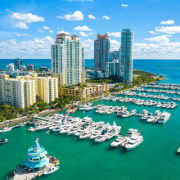
The state of Florida is currently experiencing what is being referred to as a “gold rush” in areas like Miami as wealthy upper class individuals are flocking to the state and buying lavish properties and condos the second they hit the market. 

Many of these new buyers are reportedly from New York, as reported by the Guardian as the “Mamdani effect” described as “the predicted exodus of wealthy New Yorkers in the wake of democratic socialist Zohran Mamdani’s election as mayor.”

Embed from Getty Images

However, on the other end, as these millionaires and billionaires put more money into the economy, the middle and lower classes are being priced out on everything, including housing, insurance, gas, groceries, and more. 

Florida Atlantic University took a poll recently that showed at least half of the state’s residents were thinking of leaving due to the increased cost of living. 80% of the poll’s responders stated concerns over housing affordability. 

Eric Levy, senior business economist at FAU and co-author of the poll, stated that there is no genuine panic amongst residents at the moment, and leaning into the positive, would like to see how the American Dream continues to live on and how families plan to “better their circumstances.” 

The increasing housing costs has placed Florida into the top 10 most expensive states to live in. Miami and Fort Lauderdale have new condos that easily reach tens of millions of dollars, however both areas are considered to be “house poor.” 

A May 2025 report in the Miami Herald, said that between 2014 and 2024, Miami’s population of millionaires increased by 94%, with Miami-Dade county seeing a net migration deficit of over 130,000 people between 2020 and 2023, largely connected to rising housing prices.

“Floridians believe in the American Dream, but they are paying dearly for it,” Monica Escaleras, chair of FAU’s department of economics, said.

“The Florida promise of sun, growth and upward mobility remains alive, but it is getting expensive to hold on to.”

“It’s certainly thought provoking that if a lot of wealthy people are moving in, are they going to displace the lower income and middle income folks?” Levy asked. 

Embed from Getty Images

“It’s definitely an interesting question. I don’t think that our data shows that, but I guess the shocking thing from our survey was that a lot of people were considering leaving Florida.” 

Residents who work in hospitals, schools, retail establishments, and other critical industries and services are priority, so there are several affordable housing projects currently in development in Miami. 

For example, Sebastian Lüdke, chief executive and founder of Germany’s ALP.X Group, is co-developing upcoming Cloud One Residences, which will consist of 85 loft apartments, a hotel, and retail and dining hubs in Miami. 

Lüdke said that he believes developers have a “moral obligation” to the communities they plan on building in. 

“The price point we’re setting starts around $400,000 to $500,000 so local people would definitely be able to afford living and buying in the building. But in general, the entire aspect of affordability in the city is an important one, and it goes beyond affordability and into livability,” he said.

“What is extremely important for Miami to evolve as one of the great three cities next to New York and Los Angeles is education, improving that from kindergarten to schools to universities.”

“With affordable and accessible education, a certain amount of upskilling of people takes place, which helps them get access to good jobs that will help them with affordability in the long run,” he said. 

“Also super important is investment in infrastructure, affordable housing, public transport, healthcare… with the growth that Miami has seen, and with the challenges Miami has with traffic, education, the availability of housing, this really needs to be a core focus for public administration and business people that contribute to investments in all these sectors.”

“My perception is that local people and business people are well aware of that.”

zillow

Zillow Stocks Get Crushed As Google Tests New Real Estate Listing Search Format

Zillow shares have plummeted by over 9% on Monday over fears of what the future of online real estate might look like. Specifically, Google and its parent company Alphabet are running tests on adding real estate listings and sales into their search results. 

Embed from Getty Images

Real estate tech strategist Mike DelPrete published screenshots that showed Google Search results with real estate listings powered by real estate data company HouseCanary. The listings allow users to view the full details on a property’s page, request a tour, and contact an agent. This model is very similar to how Zillow functions.

The Google real estate results, however, are just being tested and are only available in select markets and on mobile devices. 

Investors and experts in the field are already projecting Google’s success with this new search algorithm, leading to the decline in Zillow stocks. During Monday’s session, the stock was down by at least 11%, according to reports from CNBC.

Analysts from Wall Street stated that Zillow, however, is not very exposed to organic searching like Google’s new tool seems to be trying to capitalize on, so this drop in stock could be temporary. 

Alec Brondolo, a Wells Fargo analyst said that he would not “expect a meaningful financial impact from listings on Google shifting from organic to paid,” especially since Zillow is not overly dependent on organic search results for traffic. 

“The listings product appears similar to Google Hotel Metasearch results; introduction could increase traffic cost to Zillow, but disintermediation unlikely,” CNBC reports Brondolo said in a Monday note to clients. 

Embed from Getty Images

“In the hotel category, Google merchandises hotel rooms in search results as a metasearch ad product for OTAs. We would expect a similar approach in real estate, with Zillow, Homes.com, Realtor.com, etc. bidding for home listing ad units rather than Google attempting to monetize directly with an ad product sold to agents.”

Some analysts, however, can see the longer term implications of Google’s new search tool and how it could compete with Zillow and other popular online real estate portals. 

Michael NG of Goldman Sachs wrote in a note to clients that he believes Google’s real estate listings show to be in an advertising format for buy-side agents, so it directly competes with Zillow’s Premier Agent program by “facilitating lead generation” for both agents and prospective buyers. 

“While we don’t expect a direct near-term impact on Zillow’s business, given that most of Zillow’s traffic is direct (e.g., Zillow.com, StreetEasy.com, mobile apps) and Google’s new product is currently limited to select markets and mobile browsers, we view this development as a long-term risk for real estate portals like Zillow,” Ng wrote.

Oppenheimer’s Jason Helfstein stated that Google’s expansion into real estate will likely impact the number of Zillow’s consumers; which hit up to 228 million in the third quarter. This could cause their ability to monetize to decrease. 

“The impact would likely take years to play out and would need to be rolled out across the US to meaningfully impact real estate portal traffic,” Helfstein said.

real estate

Building A Real Estate Empire And Making It Home In Time For Dinner 

Desiree Leung has become a major figure within the real estate industry. As a senior marketing director, she’s building an empire and is consistently recognized by her peers as an inspiring force both in the office, and at home. One of her proudest accomplishments is her ability to work hard not only in her field, but as a mother of three.

mall

America’s Shopping Malls Becoming Obsolete Actually Fueling Housing Market 

Traditional shopping malls in America are struggling to remain mainstream. This downward trend regarding in-person shopping is actually helping fuel the housing market both in real estate development and access.

palo alto

Mark Zuckerberg Hands Out Noise-Canceling Headphones and Donuts as Furious Neighbors Endure Years of Construction

Meta CEO Mark Zuckerberg is no stranger to criticism online. Now, he’s facing it offline too—from the people who live next door.

The 41-year-old billionaire has been embroiled in a simmering feud with residents of Palo Alto’s Crescent Park, the affluent neighborhood where he and his wife, Priscilla Chan, have been steadily expanding a massive residential compound for over a decade. The project, estimated to be worth around $110 million, has disrupted the once-quiet community with nonstop building, security patrols, and a revolving door of contractors.

This week, Zuckerberg attempted a peace offering. Families disturbed by the grinding sounds of construction received noise-canceling headphones, bottles of sparkling wine, and boxes of Krispy Kreme donuts. The gesture, first reported by Fortune, was intended as a neighborly olive branch. Instead, it has fueled fresh outrage.

The tension has been building for years. In 2011, Zuckerberg made his first Crescent Park purchase: a $7 million home that remains the centerpiece of his estate. Since then, he has scooped up 10 additional houses, often paying well above market value. Some homeowners recall being approached out of the blue by intermediaries offering millions more than their property’s worth.

The effect has been dramatic. What was once a patch of tree-lined streets is now dotted with guesthouses, sprawling gardens, and elaborate security systems. One neighbor described the takeover bluntly: “No neighborhood wants to be occupied,” longtime resident Michael Kieschnick told The New York Times. “But that’s exactly what they’ve done.”

Embed from Getty Images

Property records reviewed by the Times reveal the scale of the transformation. A 2012 purchase added a $4.8 million house behind the couple’s main residence. In 2013 alone, Zuckerberg bought three more properties—one for $10.5 million and two more for $14 million and $14.5 million each. By 2022, the spree extended across the street, where he paid $5.7 million, reportedly $200,000 above the asking price.

Construction crews have since outfitted the compound with a hydro-floor swimming pool that can vanish beneath a retractable deck, a pickleball court, and a statue dedicated to Chan. Beneath the manicured lawns, a 7,000-square-foot underground bunker connects several of the homes. One property has even been repurposed as a private school, according to The New York Times.

“Another property has been used for the past few years as a private school for 14 children, even though that is not an allowable use of a house in the neighborhood under city code. Six adults, including four teachers, worked there this past school year.”

For many neighbors, the daily inconvenience of this empire-building outweighs the architectural marvels. The ceaseless rumble of bulldozers, jackhammers, and trucks has become a familiar part of the neighborhood’s soundscape. Zuckerberg’s response—headphones, wine, and donuts—has only amplified the criticism.

On social media platform X, reactions were swift.

“Money can’t buy you love, but it can buy headphones to silence all who complain about your excessively opulent lifestyle.”

Embed from Getty Images

Another user added: “Sorry for being an insufferable d—enozzle, here are some noise-canceling headphones. These people live in such a different world than us, and it’s sickening.”

Despite owning what amounts to an entire block, Zuckerberg himself is largely absent from day-to-day neighborhood life. Residents told The New York Times that he is rarely spotted outside, though his presence is felt through the elaborate web of security cameras, guards, and the seemingly endless rotation of contractors.

Ironically, the CEO who built his empire on connecting people has instead insulated himself from his community. The Crescent Park compound is designed for privacy, even secrecy, but the scope of his project has made it impossible to ignore.

When Zuckerberg first planted roots in Palo Alto, his fortune was estimated at $13.5 billion. Today, it exceeds $250 billion. His real estate holdings have grown in tandem with his wealth, transforming Crescent Park into a billionaire’s enclave.

What began with one $7 million house has expanded into a neighborhood-sized buffer zone. And for those who once described their block as “idyllic,” the constant construction has replaced tranquility with tension.

Zuckerberg’s headphones and donuts may offer a temporary distraction from the noise. Still, to many of his neighbors, the gifts symbolize something larger: the yawning gulf between Silicon Valley’s richest and the communities they inhabit.

As one resident put it, the Zuckerbergs haven’t just moved in. They’ve taken over.

home

U.S. Home Sales Could Hit Lowest Point in 30 Years as High Mortgage Rates Persist, Forecast Warns

The housing market may be heading into its quietest year in decades, as climbing mortgage rates continue to squeeze affordability and discourage buyers from entering the market. According to a midyear update from Realtor.com’s economic research team, existing-home sales in 2025 could drop to levels not seen since the mid-1990s.

The updated Realtor.com Housing Forecast, released Wednesday, revises earlier projections issued in December. Among the most notable changes is a bleaker outlook for both home sales and mortgage rates.

Originally, 2025 was expected to bring a modest rebound in existing-home sales compared to the previous year. That hope has been dashed. The updated forecast now anticipates a 1.5% decline in annual sales volume, bringing the total number of transactions down to just 4 million.

If that projection holds, 2025 will mark the third consecutive year of exceptionally low sales volume, comparable to or even below the levels recorded in 1995, when only 3.8 million existing homes changed hands.

For context, both 2023 and 2024 had already registered the slowest sales years in nearly three decades, according to data from the National Association of Realtors (NAR).

“Even with more homes on the market, buyer response has remained muted compared to what we’d expect from similar supply shifts in the past,” says Danielle Hale, chief economist at Realtor.com.

“In regions like the South and West, inventory gains have been more substantial, but affordability constraints continue to weigh on demand. Meanwhile, the Northeast and Midwest remain tighter markets with relatively steadier buyer activity.”

Embed from Getty Images

One of the main culprits behind the stagnating market is persistently high mortgage rates. The 30-year fixed mortgage rate is now expected to average 6.7% for the year, up from the 6.3% average projected just months ago. By year-end, rates are expected to hover around 6.4%, rather than the previously predicted 6.2%.

As of mid-July, rates were averaging 6.75%, according to Freddie Mac, marking a sustained stretch above 6.6% since the start of 2025.

“High mortgage rates are causing home sales to remain stuck at cyclical lows,” said Lawrence Yun, chief economist for the NAR, in a release.

“If the average mortgage rates were to decline to 6%, our scenario analysis suggests an additional 160,000 renters becoming first-time homeowners and elevated sales activity from existing homeowners.”

A Realtor.com chart included in the report illustrates how much more stubborn mortgage rates have been than initially forecasted, dimming hopes for a significant market recovery.

Even as sales falter, a dramatic decline in home prices doesn’t appear to be on the horizon. Instead, Realtor.com economists foresee modest price growth of 2.5% for the year, a downgrade from the 3.7% increase predicted in December, but still growth nonetheless.

Rather than slash their asking prices, many sellers are simply stepping away from the market entirely. Realtor.com recently noted a 47% surge in delistings in May compared to the same month a year earlier, suggesting that homeowners are more inclined to wait than to negotiate in this high-rate climate.

“Sellers still have pretty high expectations of what they can get for their homes,” Joel Berner, a senior economist for Realtor.com, told The New York Times.

“A lot of them are choosing to delist rather than take drastic price cuts.”

In effect, the market is caught in a holding pattern, being too expensive for many buyers to enter, yet too stagnant for prices to decline meaningfully.

Embed from Getty Images

One significant change this year is the increase in active listings, particularly in the South and West. In May, the nationwide number of homes for sale exceeded 1 million for the first time since late 2019, signaling an end to the ultra-tight inventory crunch that defined much of the pandemic era.

However, the hoped-for surge in sales that might accompany this inventory boost has not materialized. High borrowing costs and record home prices continue to deter buyers, many of whom are choosing to wait out the market or forgo homeownership altogether.

Meanwhile, residential construction projections have taken a sharp hit. Single-family housing starts are now expected to fall 3.7% in 2025, totaling just 980,000 units. That’s a far cry from the 13.8% annual gain that economists had forecast at the start of the year, a troubling development for a market still millions of homes short of meeting expected demand.

The continued mismatch between supply, demand, and affordability is having profound ripple effects on American households. The median age for first-time homebuyers has now climbed to a record 38 years old, as more young adults delay or abandon plans to purchase homes. Many are choosing to rent for longer or continue living with family to cope with rising costs.

This shift is reflected in the national homeownership rate, which is expected to dip to 65.2% this year, down from 65.6% in 2024 and 65.9% the year prior.

One modest silver lining lies in the rental market. While homeownership remains elusive for many, rent growth is expected to remain soft in 2025. Median asking rents are projected to edge down 0.1%, following a 0.2% decline last year, providing some relief for renters even as homebuyers continue to struggle.

All told, the 2025 housing landscape appears to be one of frustrating stasis with prices creeping upward, mortgage rates stubbornly high, and both buyers and sellers reluctant to act. Even with some improvements in inventory, the weight of economic pressures, particularly borrowing costs, continues to drag the market into a prolonged lull.

Unless there’s a significant shift in interest rates or wage growth, the U.S. housing market may remain stuck in this state well into next year.

deforestation

Federal Eviction Displaces Over 100 Homeless Residents in Oregon Forest

Federal officials have begun clearing thousands of acres in Deschutes National Forest near Bend, Oregon, displacing over 100 people living in cars and R.V.s. This decision marks one of the first major homeless encampment clearances under the Trump administration.

At about 3:30 a.m. on Thursday, U.S. Forest Service vehicles, marked by golden insignias, formed a barrier at the entry of a logging road guarded by law enforcement officers. Residents were permitted to leave but could not return without an escort.

Leading up to the midnight eviction deadline, residents scrambled to repair their vehicles to move them from federal land. Authorities had posted warnings on cars and R.V.s for weeks, stating that anyone caught trespassing after May 1 would face fines up to $5,000, misdemeanor charges, and potential jail time.

The closure affects a section of the forest that federal authorities intend to use for extensive wildfire mitigation and ecological restoration projects.

According to Jesse Rabinowitz, a spokesperson for the National Homelessness Law Center, the population taking refuge in this forested area surged significantly due to economic pressures from the COVID-19 pandemic, including rising housing costs and widespread job losses.

Notably, the planned eviction fell on May Day, which is historically recognized for its celebration of labor rights and working-class advocacy worldwide.

Richard Owens, 40, told The New York Times he desperately attempted repairs on his aging Subaru Outback using a YouTube tutorial. “It’s everything I own,” he explained, pointing to his belongings spilling out from an old R.V.

“They’ve told us that if we are not out, we will all go to jail. When I said, ‘Where are we supposed to go?’ They said, ‘It’s not our problem.’”

A volunteer mechanic was sent in overnight by an assistance organization working to help people without housing. According to Chuck Hemingway, a retired lawyer and one of the volunteers, the organization had raised thousands of dollars to replace damaged tires, purchase new batteries, and dispatch tow trucks in an attempt to aid the people trapped inside. Despite their efforts, Owens’ Subaru remained stuck behind police lines by morning.

Embed from Getty Images

Chris Daggett, another resident of the encampment, emphasized the difficulty he and others face in finding stable housing. Speaking to KTVZ-TV, Daggett, whose family has longstanding ties to Bend, stressed that being unhoused does not equate to criminality or moral failing.

“It’s incredibly difficult to get back on your feet once you’ve been knocked down. If they force us out on May 1, we still won’t have anywhere else to go. It’ll just make it even tougher for us to rebuild our lives.”

Earlier this month, four residents of the encampment, supported by two advocates for people experiencing homelessness, filed for a restraining order, seeking an injunction to prevent the eviction. The plaintiffs argued that enforcing the closure would inflict substantial harm on more than 100 people residing there, particularly impacting those with disabilities.

However, a recent update on the federal court’s docket indicated that U.S. District Court Judge Michael McShane denied their request for a restraining order, though a detailed opinion has not yet been published.

Homelessness has surged nationwide amid an ongoing housing affordability crisis. Bend, once a struggling logging community, has now transformed into a thriving destination with outdoor recreation and boutique businesses, epitomizing the issue. Housing costs in Bend have soared, with the average home now listed above $800,000, starkly contrasting with a local minimum wage below $15 per hour.

Although Bend has expanded its shelter capacity significantly, from 240 beds in 2021 to 517 today, and established parking lots specifically for people living in vehicles, the measures have not fully addressed the housing need. Bend’s Mayor Pro-Tem Megan Perkins noted homelessness dropped 5 percent last year due to these efforts, a significant achievement given previous annual increases of up to 20 percent. Yet, she acknowledged these actions were insufficient given the scale of displacement from the forest eviction.

Embed from Getty Images

“What I don’t understand, and what is keeping me up at night right now, is where everybody is going to go? I know that our service providers are doing absolutely everything that they can to find places for people, but it would be ridiculous to assume that out of 200 people living there, that all of them are going to find a place. It’s a societal failure—and I think to call it anything else but that, would be a mistake.”

The eviction is part of a broader forest management plan by the U.S. Forest Service aimed at reducing wildfire risks through tree thinning and controlled burns across 35,000 acres adjacent to Bend. “The closure does not target any specific user group and will restrict all access,” explained U.S. Forest Service spokeswoman Kaitlyn Webb.

“It’s not safe for the public to be in the area while heavy machinery is operating, trees are being felled, mowing operations are active, and prescribed burning is occurring.”

Residents facing eviction shared diverse stories of hardship. Mandy Bryant, 38, who lives in a camper shell with her boyfriend, described to The NYTimes the emotional and physical toll of living outdoors after fleeing an abusive relationship. Andrew Tomlinson, 41, recovering from a heart attack, struggled with severe leg pain and feared losing his home and belongings. Patrick Walston, 50, an arborist who suffered a debilitating stroke during the pandemic, fell behind financially and was uncertain how to relocate his R.V.

Chris Dake, 29, has lived in various federal land locations since sustaining a debilitating knee injury five years ago. Standing beside his broken-down Chevy Winnebago with visible injuries, Dake voiced the shared frustration and despair among those evicted. “There’s nowhere for us to go,” he said. “They’re pushing us out.”

Local advocate Eric Garrity, who unsuccessfully attempted a legal intervention to stop the eviction, warned that displacements were creating a cycle of homelessness. Many of the evicted planned to move to another nearby encampment, Dirt World, which is already slated for closure later this month. Garrity said its clearing would leave people without housing in a state of “perpetual displacement.”