Posts

cocoa

Europe Experiencing ‘Chocolate Crisis’ As Commodity Imports Are Impacted By Climate Change

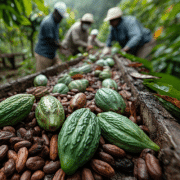
Climate change and wildlife loss are evident in the European Union, as reports show that cocoa and five other commodities that are coming from countries that are vulnerable to environmental threats.

Russian Flag

EU Agrees On Partial Ban Of Russian Oil Imports

According to European Council president Charles Michel, the European Union has agreed to enact a partial ban of as much as 90% of Russian crude oil imports and petroleum products delivered into member states over the next six months.

Michel announced the news on Twitter. “This immediately covers more than 2/3 of oil imports from Russia, cutting a huge source of financing for its war machine. Maximum pressure on Russia to end the war,” he said.

According to Michel, the package also includes de-swifting Russia largest bank, Sberbank, banning three more Russian state-owned broadcasters, and sanctioning individuals responsible for war crimes in Ukraine.

Embed from Getty Images

As the Associated Press notes, this kind of action against Russia was unthinkable months ago. World leaders have worked to increase the difficulty of the Kremlin’s ability to finance the war by targeting Russian officials and oligarchs.

However, the energy industry was seen as a last resort and the hardest to conquer, since the European bloc relies on Russia for 25% of its oil and 40% of its natural gas. Some countries, like Germany, rely on Russia for nearly half of its gas needs. According to Ukraine, the sanction could cost Russia tens of billions of dollars.

Oil prices saw jumps following the agreements. U.S. crude features rose to $119.42 per barrel, a 12-week high. Brent crude oils rose up 1.44% at $123.42 (a change of +1.34%), while WTI crude jumped 1.72% to $116.18 (a change of +1.49%).

This sanctions package is now the sixth levied by the EU against the Kremlin as the invasion of Ukraine enters its 96th day with no signs of a resolution in sight. The attack has resulted in at least 46,000 deaths and 13,000 non-fatal injuries, while displacing 15 million Ukrainians.

Meeting at a summit in Brussels, EU leaders had previously failed to find common ground on an oil ban Sunday before reconvening Monday. Doubt that a deal would be reached by the summit’s end was expressed by European Commission president Ursula von der Leyen.

Embed from Getty Images

The package needed the approval of all 27 EU members, and has yet to be formally ratified. A press release by the EU stated that an exception to the oil ban would be crude oil delivered by pipeline so that Hungary, Slovakia, and the Czech Republic can continue to receive crucial fuel.

The European Council will revert to the issue of the exemption “as soon as possible.” Given the magnitude of the role Russian oil plays in the bloc, emergency measures will be enacted to ensure a security of supply in the event of “sudden interruptions of supply.”

“This is a topic where we will come back to and where we will still have to work on, but this is a big step forward, what we did today,” von der Leyen said. In response to the ban, Russia — the world’s third-largest oil producer behind the U.S. and Saudi Arabia — has promised to find other importers for its oil.

“As [von der Leyen] rightly said yesterday, #Russia will find other importers. Noteworthy that now she contradicts her own yesterday’s statement. Very quick change of the mindset indicates that the #EU is not in a good shape,” Mikhail Ulyanov, Russia’s permanent representative to international organizations in Vienna, said on Twitter.

USA China Trade War 2

U.S. and China Discuss Rolling Back Tariffs

President Trump has invoked a trade war between the U.S. and China, resulting in potential economic damage to both countries. After Trump imposed tariffs on goods imported from China, China retaliated in kind, driving up the prices of consumer goods. Now, the two countries have agreed in an initial trade deal to roll back some of the tariffs each country has opposed on the other, pending finalization of their agreement. This development represents a reversal of the Trump administration’s position on tariffs, which they instituted in the first place, forcing China to retaliate. If the deal goes through, the price of consumer goods could decrease, boosting an economy which by traditional measures is already quite healthy.

Though Trump has canceled a planned tariff increase, he has continued to threaten Beijing with additional tariffs if they don’t comply with America’s terms. The battle between Trump and Xi Jinping has lasted for 19 months so far, and has caused pain for businesses, consumers, and investors in both countries. Following this news, stocks soared, as investors anticipate an end to the protracted and arguably unnecessary trade dispute. According to Gao Feng, a spokesman for China’s Commerce Ministry, the two countries have discussed resolving their differences over the past two sides, and have agreed to cancel tariffs by stages. However, a timeline has not yet been publicly established.

Embed from Getty Images

As the reality of a deal between the two countries becomes increasingly likely, markets have reacted with optimism, as the S&P 500 rose to more than 3,090, approaching a record closing high. The companies most positively affected by the news are ones that have close ties to Chinese manufacturers and retailers. Despite the positive reaction in the markets, however, other sectors of the economy continue to struggle. In particular, the trade war with China has negatively impacted farm belt states like Iowa, Kansas, and Nebraska, where economic growth has slowed considerably. Though the Trump administration claims that Americans do not experience the effects of tariffs, businesses and farmers disagree.

This is not the first time that the United States and China seemed close to reaching a deal to end the trade war.

As a result of Trump’s presidency, American tariffs now apply to more than two-thirds of imports from China, whereas Chinese tariffs affect 58 percent of their imported goods from America. Tariffs are paid by consumers in the countries imposing the tariffs, making the trade war destructive on both sides, leading economists to issue warnings about the long-term impacts of ongoing tariffs. The imposition of tariffs on Chinese imports has long been considered a bad idea by experts, who are now vindicated by the Trump administration’s reversal of policy under significant public pressure.

Embed from Getty Images

Issues unrelated to tariffs factor into the negotiations. American officials want China to take more aggressive action on protecting American intellectual property rights, for instance and contend that the ultimate decision is up to Trump. Additionally, the United States wants China to encourage more foreign investment and purchase more goods and services from abroad. This preliminary agreement suggests that China will be willing to make these concessions, but the final details have yet to be ironed out.

This is not the first time that the United States and China seemed close to reaching a deal to end the trade war. In May, the two countries agreed upon a resolution to end the trade war, which included concessions from China to change some of their business and legal practices. President Jinping even gave a speech celebrating the achievement. However, when a draft agreement was sense to the United States, significant changes had been made to the plan, leading Trump to accuse Beijing of reneging on its commitments. The changes to the draft agreement, which included the removal of promises to change domestic laws, were thought to have been personally made by Jinping himself. Only time will tell whether this new agreement suffers the same fate.