Posts

elephants

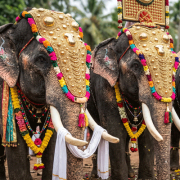
Robotic Elephants Are Replacing Live Ones In Temples And Festivals Around The World 

Elephants are revered across India and many religions as manifestations of the divine, and they’re often used in many temple rituals and festivals. Now, robotic elephants made from fiberglass, iron, and rubber are taking the place of live ones in temples around the world as an effort to further protect the species.

smog

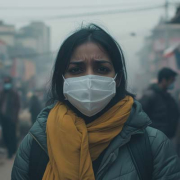
“Delhi Is a Death Trap”: Frustration and Fear Boil Over as Pollution Chokes India’s Capital

The police came before the protesters. In the days leading up to Sunday’s demonstration against Delhi’s toxic air, officers knocked on doors and flooded phones with warnings. Organizers were told to stay home or risk arrest.

Saurav Das, 26, was one of the many who refused to back down. Diagnosed with allergic bronchitis from the city’s filthy air, he told The Guardian that he had used social media to call for peaceful action at India Gate.

While nearly 400 citizens turned out in droves, including mothers with strollers, retirees in masks, and students clutching handmade signs, police had already cordoned off the memorial.

Within hours, nearly 100 protesters, including children and the elderly, were detained and held late into the night. By Monday morning, a criminal case had been filed against the organizers.

“We wanted to gather peacefully at India Gate to send a message, loud and clear, that people are fed [up] by failed policies and government apathy that have failed to combat air pollution. Instead, we were met with unnecessary brute force.”

Delhi’s government has changed, but the air hasn’t. Earlier this year, the Bharatiya Janata Party (BJP) took control of the Delhi state government after years of opposition rule. Many hoped the new alignment with Prime Minister Narendra Modi’s national administration would finally bring unified action against the crisis. Instead, Delhiites say the air has only worsened.

Critics accuse the BJP of downplaying pollution data and weakening restrictions. During Diwali, officials allowed “green” fireworks — a decision that triggered one of the most polluted festival seasons in years.

Opponents claim authorities even halted air-quality reports and sprayed water on monitoring stations to artificially lower the numbers. The BJP denied tampering, calling the charges “politically motivated,” and blamed its predecessors for the smog.

Embed from Getty Images

Its most expensive experiment, a multimillion-rupee attempt to seed clouds and make it rain, failed to yield results. Meanwhile, the government’s public message has remained largely unchanged: stay indoors, buy purifiers, and wait for the weather to improve.

“We have reached severe and hazardous levels of pollution, but the GRAP measures have not been implemented,” said Delhi-based environmental activist Bhavreen Kandhari.

GRAP refers to the Graded Response Action Plan, which was partially put into place to address air pollution in Delhi and its suburbs. Currently, the second level of the action plan is in place, which reduces the use of diesel generators and the burning of coal and firewood.

Despite worsening air quality, the third stage of the action plan, GRAP III, has yet to be implemented. It would also prohibit all non-essential building activity and the use of diesel vehicles in Delhi.

“This is about our children…My children will live 10 years less than their cousins [in other cities] who breathe cleaner air. We still have hope, and that’s why we are here.”

Delhi’s annual suffocation has become a ritual. For over a decade, Delhi has carried the grim distinction of being the world’s most polluted city. Every autumn, as temperatures drop and the wind dies, a familiar haze rolls over the capital. The so-called pollution season can linger four months or more, turning the skyline into a ghostly blur.

The culprits are no mystery: car exhaust from tens of millions of vehicles, crop-burning by farmers in neighboring states, coal-fired power plants, and open fires used to burn trash or simply keep warm.

In November, air quality readings climbed to more than 100 times the safe limit set by global health agencies. Pollution now kills more people in Delhi than diabetes or obesity.

“Any other city breathing this air would have declared a health emergency by now,” said Gopesh Singh, 58.

“How many more millions of people have to die for the government to act?”

Embed from Getty Images

Sunday’s protest was one of the few public demonstrations over Delhi’s air crisis in years and was meant to be symbolic. The India Gate location honors India’s fallen soldiers, but the irony wasn’t lost on participants who found themselves fighting a different kind of war.

By dusk, the famous monument had vanished behind an opaque brown curtain of smog. The Air Quality Index hit 500, ten times the threshold considered hazardous. “Delhi is not a liveable city anymore, it’s a death trap,” said Radhika Aggarwal, 33, an engineer.

“As I stand here, I’m breathing air that I know is killing me. But we see nothing but a failure by the government to do anything to stop this and clean up the pollution. No policies, no real action. So I’m here to fight for my city.”

Children stood beside their mothers, holding signs that read, “Breathing Is Killing Me.” Nearby, birds flew low through the haze — one of the few visible signs of life against the fading orange light.

Delhi’s 30 million residents have learned to adapt to the unthinkable. Those with money seal their homes with air purifiers or flee to cleaner states. Everyone else simply copes. Clean air has become a luxury commodity, as inaccessible to most as a beachfront vacation.

“I can’t breathe in this city anymore, I can’t take a walk without getting a terrible headache,” said Sofie, 33. “It feels like there aren’t enough masks in the world to make this air breathable.”

For many, the suffocation is both physical and psychological. Pollution has become so normalized that outrage often gives way to fatalism. This year, however, something cracked.

Delhi’s minister of environment, Manjinder Singh Sirsa, stated that the government was taking all possible steps to address the issue.

“We have installed anti-smog guns in all high-rise buildings, dust mitigation is being done across the city through water sprinklers, all construction sites are being monitored, and we have increased electric vehicles in Delhi’s fleet of public buses.”

Regardless, as the crowd at India Gate dispersed under police watch on Sunday night, the sense that Delhi is running out of time hung in the air thicker than the smog.

India Has Doubled Its Tiger Population Over A Decade

According to a new study published this week, India has doubled its tiger population in about a decade by protecting the species from dangers such as poaching and habitat loss.

protest

Open Letter In India Calls For Withdrawal Of Approval To Prosecute Booker Prize-Winning Author Arundhati Roy 

Last week, the Indian government approved the prosecution of Booker prize-winning author Arundhati Roy under the country’s anti-terrorism law. In response, more than 200 Indian academics, activists, and journalists have published an open letter urging the government to withdraw the decision. 

Embed from Getty Images

“We … deplore this action and appeal to the government and the democratic forces in the country to ensure that no infringement of the fundamental right to freely and fearlessly express views on any subject takes place in our nation,” the group said in the letter, according to the Guardian. 

Vinai Kumar Saxena, the lieutenant governor of Delhi, gave the approval for police to prosecute Roy last week for remarks she made at a seminar in 2010, claiming she violated an anti-terrorism law known as the Unlawful Activities Prevention Act (UAPA). Academic figure Sheikh Showkat Hussain was also called on to be prosecuted. 

Roy allegedly said that the disputed region of Kashmir was “never an integral part of India.”

“The Indian constitution upholds Roy’s right to the freedom of her opinions and we are a constitutional democracy,” said history professor Ajay Dandekar, further stating that the decision was unjustified. 

Protests from civil rights groups, activists, and students in both Delhi and Bengaluru have also taken place, calling for a reversal of this prosecution’s approval. 

Embed from Getty Images

Roy has been a critic of Narendra Modi’s government, as well as previous governments, since reaching literary success in 1997. Her main perspective criticizes capitalism, how minorities are treated, globalization, and supports human rights cases. The recent decision to call for her prosecution has caused Indians to question the validity of the democracy they live in.

“Are we a democratic country or not? We signed the letter because we have to uphold our constitutional right to disagree with the government. We can’t let the government take revenge against critics like Roy out of some personal whim,” stated Mukta Manohar, the general secretary of the Pune municipality Safai union, according to the Guardian.  

“The police will have to explain the 14-year delay and also explain why she should be charged when her words have not resulted in any violence or criminal acts in all this time,” supreme court lawyer Sanjay Hegde said. 

The human rights lawyer Colin Gonsalves agreed that “the case, if the government goes ahead, could collapse at the first hurdle. It’s a crazy decision and they won’t be able to prove that Roy was linked to any violence or any efforts to overthrow the state. The prosecution is unlikely to succeed,” he said.

Meta Approved AI-Manipulated Political Ads In India That Spread Misinformation And Incited Violence

In a new report, it’s been revealed that Meta, owner of Facebook and Instagram, approved a series of AI-manipulated political advertisements in India during its election period that not only spread misinformation, but incited violence.

tiger

India’s Endangered Tiger Population Is Steadily Increasing Thanks To Conservation Efforts 

In the beginning of the 20th century, there were around 100,000 tigers roaming around Asia before human intervention caused that number to plummet. In 2006, it was reported that only around 1,411 tigers remained in India; the nation with the most of the world’s remaining tiger population. 

Now, conservation efforts have helped that number grow, and nearly double, to around 3,167, according to reports from last year from a tiger census study. 

Embed from Getty Images

Currently, that number accounts for around 70% of the world’s tiger population, according to the World Wildlife Fund (WWF). Prime Minister Narendra Modi spoke on this increase in an address on Sunday.

“We have thousands of years of history related to tigers … The tiger is considered our brother in many tribes. A better future for humanity is only possible when our environments are protected and our biodiversity continues to expand.”

The tiger population in Asia began steeply declining in the 1940s due to an increase in the human population. Human’s efforts with agricultural expansion, deforestation, and natural infrastructure has impacted the natural environments in which tiger’s live. 

The WWF stated that these human interventions have caused tigers to no longer have a solitary environment, and drastically removed the large territories they use for hunting. They also reported that as of today, tigers exist on only 7% of the land they used to occupy. 

Embed from Getty Images

In 1971, India had a population of around 547 million, and today they’re at 1.4 billion and set to become the world’s most populated country this year. 

In the 1980s, unregulated poaching also caused the tiger population to decline drastically. Tigers have been hunted for sport, social status, and consumption. Although India banned tiger hunting in 1972, it still remains a major issue; in 2005 India cited poaching as the reasoning for the complete extinction of tigers living in an Indian reserve. 

In the past years, conservation efforts have developed 53 new tiger reserves that stretch across 75,800 square kilometers; initially these efforts only had 9 reservations. Authorities have even paid and relocated entire villages as a means of making more space for the tigers. 

Government funded technology has embraced the use of drones, camera traps, and advanced software systems to track tiger populations and ideally keep them safe from illegal poachers. 

While poaching and the ongoing threat of climate change still poses a major threat to the tiger population, the conservation efforts have given many a lot of hope, so much so that India has begun sharing their techniques and strategies with other countries to help them ideally increase declining tiger populations.

moon

Up To 100 Space Missions To The Moon To Take Place In The Next Decade 

Scientists are estimating that as many as 100 lunar missions could be completed within the next decade as interest in the moon heightens. Many nations and private companies have expressed interest in the moon, and cislunar space, referring to the area between Earth and the moon. 

According to the executive director of Astralytical, a space consulting firm based in Atlanta, Laura Forczyk: “We’re already seeing this competing rhetoric between the US government and the Chinese government. The US is pointing to China and saying, ‘We need to fund our space initiatives to the moon and cislunar space because China is trying to get there and claim territory. And then Chinese politicians are saying the same thing about the United States.”

Embed from Getty Images

Both the US and China currently have plans for lunar exploration programs involving bringing astronauts to the moon, as well as researching the possibility of building habitats and infrastructure in the moon’s orbit and on its surface. 

South Korea, the United Arab Emirates, India, and Russia are also interested in planning out lunar missions. Commercial companies such as SpaceX have already begun preparing to launch a private crew on a “tourism flight in lunar orbit” this year as well, according to reports from NBC News. 

“During the Cold War, the space race was for national prestige and power. Now, we have a better understanding of the kind of benefits that operating in cislunar space can bring countries back home,” said Kaitlyn Johnson, deputy director and fellow of the Aerospace Security Project at the Center for Strategic and International Studies.

Forczyk added that “with so many lunar missions planned over the next decade, space agencies and commercial companies will likely be angling for strategic orbits and trajectories.”

Embed from Getty Images

“It might seem like space is big, but the specific orbits that we are most interested in get filled up fast,” Forczyk explained.

“Much of the increased activity in cislunar space owes to substantial decreases in launch costs over the past decade, with advancements in technology and increased competition both driving down the price of sending objects into orbit. At the same time, planetary science missions offered humanity a glimpse of the resources available in space, ranging from ice deposits on the moon to precious metals in asteroids,” said Marcus Holzinger, an associate professor of aerospace engineering sciences at the University of Colorado Boulder.

“Once people started really thinking through that, they realized that that water-ice can provide substantial resources or enable the gathering or collection of resources elsewhere in the solar system,” he stated.

“If humans intend to establish a permanent presence on the moon, and venture beyond Mars, it will be imperative to prioritize safety, sustainability and transparency, said Jim Myers, senior vice president of the civil systems group at The Aerospace Corporation.

“Those elements have to be there. Unless we do this in a very thoughtful way, unless we plan, we’re going to run into all sorts of trouble.”

pride

Singapore To Repeal Law Banning Gay Sex, ‘A Win For Humanity’

Singapore will repeal a law that bans gay sex in the city-state, effectively making it legal to be homosexual, which activists are calling a “win for humanity.”

flooding

Pakistan’s Largest City Experiences Torrential Rain And Major Flooding Due To Climate Crisis 

Karachi, Pakistan’s largest city, is experiencing extreme torrential rain and flash flooding causing a multitude of public services and businesses to close down over safety concerns. Infrastructural damage and flooding has left at least 15 individuals dead since this weekend. 

This past Sunday, Karachi experienced 2.3 inches of rain, which is equivalent to the average of an entire month’s worth of rainfall for the area. Every summer Pakistan endures heavy monsoon rains, but more recently experts have been warning that climate change is accelerating and intensifying existing weather patterns. 

Sherry Rehman, Pakistan’s climate change minister, issued flash flood warnings for citizens in more than 14 cities and townships. 

Embed from Getty Images

“Since the monsoon season began last month more than 300 people have been killed by heavy rains across Pakistan,” according to Pakistan’s National Disaster Management Authority. 

The 16 million residents of Karachi have witnessed entire neighborhoods become partially submerged from flooding. Photos from the area show individuals knee-deep in muddy flood water with vehicles left completely stranded and submerged. 

“Infrastructure including bridges, highways and roads have been damaged, disrupting traffic and upending the lives of millions across the city. Many have stocked up on fuel for their generators in case of power outages,”  said Afia Salam, a climate change advocate in Karachi.

“Climate change is a threat. We are a coastal city. It’s happening so fast and we will bear the brunt. People need to see the situation beyond individual events like a bridge falling or a road getting flooded.”

“The rapidity of these events is increasing and our response is not keeping pace. We are being reactive to individual events. Strategies need to be put in place, the poorest and most vulnerable are on the front line of the crisis,” said Salam.

Embed from Getty Images

“Karachi, the country’s financial capital, boasts luxury hotels, malls and upmarket gated communities. But disparities in wealth and development remain, and an estimated 50% of its residents are forced to live in informal settlements,” according to the World Bank.

“Karachi’s infrastructure is highly vulnerable to climate-related disasters,” according to the World Bank.

Experts are stating that the climate crisis in Pakistan is also being exacerbated by poor flood management and ineffective disaster response. 

Extreme weather events in South Asia are becoming more frequent due to climate change, with temperatures in parts of India and Pakistan reaching record highs during a heat wave in April and May. 

According to a 2022 report by the Intergovernmental Panel on Climate Change (IPCC), they had “medium confidence that heat waves and humidity stress would become more intense and frequent, and annual and summer monsoon precipitation will increase.”

According to the IPCC India and Pakistan are among the countries that are expected to be the most affected by climate change.

World Military Spending Hits $2 Trillion For First Time In History 

In 2021, global military spending hit an all-time high of $2 trillion, according to a report from a leading defense think-tank in Sweden. This also marks the seventh consecutive year that collective spending on the military has increased from the previous year.