
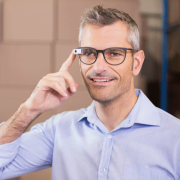
New App Notifies Users When Someone Is Using Smart Glasses Near Them
Smart glasses have become more mainstream in recent years, making it harder to tell when someone might be secretly recording videos in public. Now, a new smartphone app called Nearby Glasses can notify users when they’re in the presence of smart glasses.
The app scans Bluetooth signals and alerts the user when they pick up on a smart glasses signal. Smart glasses are packed with speakers, microphones, cameras, and AI features, but have begun looking more and more like regular glasses. Meta’s glasses, for example, are sold under the Ray-Ban and Oakley brands, two very popular eyewear companies.
Last year, according to reports, the company sold over seven million units. Major tech giants like Apple, Google, and Samsung are also working on their own devices.
The technology itself is also likely to become even more advanced. The New York Times reported earlier this month that Meta is working on facial recognition technology which would allow wearers to identify and pull up information about people through their AI assistant.
“I consider it to be a tiny part of resistance against surveillance tech,” Nearby Glasses developer, Yves Jeanrenaud, told 404 Media.
Jeanrenaud also said that his team began developing the app after they reviewed reports about smart glasses owners using the technology to record people without their consent. Specifically, there have been many reports of men filming inside massage parlors as well as Customs and Border Protection agents using them on duty.
Jeanrenaud then explained that Nearby Glasses work by scanning for Bluetooth signals that are broadcast by devices using advertising frames. He used a directory of Bluetooth Low Energy manufacturers to identify the signals used by Meta, Snap, and Luxottica Group, a subsidiary of the company EddilorLuxottica which manufactures Meta’s glasses.
“This is a tech solution to a social problem exaggerated by tech. I do not want to promote techsolutionism, nor do I want people to feel falsely secure. It’s still imperfect,” Jeanrenaud said, explaining that the app can still produce false positives and mistakenly identify VR headsets as smart glasses.
The app is currently only available to download on the Google Play Store and GitHub for Android devices, but an iOS port is currently in the works.
“Smart glasses are becoming more and more a part of our daily encounters. However, they are often not easy to distinguish from regular eyewear,” the app’s description reads.

Eric Mastrota is a Contributing Editor at The National Digest based in New York. A graduate of SUNY New Paltz, he reports on world news, culture, and lifestyle. You can reach him at eric.mastrota@thenationaldigest.com.