Posts

coral reef

Earth’s Coral Reef Ecosystems Could All Collapse In 50 Years

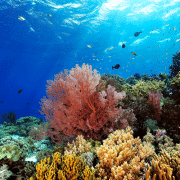
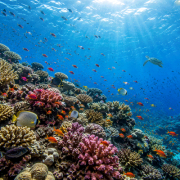
According to a global assessment released this week, the Earth’s coral reef ecosystems almost all are facing a high risk of collapse within the next 50 years due to warming ocean temperatures and heat waves brought on by climate change.

Coral reefs are a critical source for seafood, tourism, and often serve as buffers from coastal erosion and storms. They also have the world’s richest biodiversity and support about 25% of all marine species, and coastal communities and businesses. 

Embed from Getty Images

The International Union for Conservation of Nature announced at a UN biodiversity conference in Albania that some 96% of shallow-water reef systems are already critically endangered and could fully disappear by 2075.

The Great Barrier Reef in Australia, the Coral Triangle in the Western Pacific Ocean and Southeast Asia, the Mesoamerican Barrier Reef System and the Red Sea coral reefs, some of the world’s most famous reefs, are all at the highest level of threat; critically endangered. 

“The risk of coral reef collapse is escalating, but this must be a wake-up call rather than a cause for despair,” said Mishal Gudka, the scientific lead of the global IUCN Red List of Coral Reef Ecosystems assessment, according to AP.

“Coral reefs have shown a remarkable ability to bounce back from devastating bleaching events. Pockets of surviving, resilient coral reefs can still remain in the future, so we must do everything within our reach to set them up for success.”

“Coral reefs are one of the clearest vital signs of the ocean’s health,” Grethel Aguilar, the IUCN director general, said in a statement.

The assessment itself covered 127 tropical and subtropical eco-regions, and 72,726 square miles of coral reefs globally. It also called climate change “the single most consistent threat driving coral reef decline worldwide.”

Embed from Getty Images

A week ago, another study in the journal Nature by the IUCN found that 44% of reef-building coral species are experiencing an increased risk of extinction because of climate change. 

2024 was Earth’s hottest on record, and the ocean is seeing a lot of that impact. Annual sea surface temperatures of oceans away from the poles was a record 69.57 degrees Fahrenheit. 

Experts have stated that the biggest way we can combat the detrimental effects of climate change in our oceans is to reduce pollution, overfishing, and coastal development. 

“We know what is needed: ambitious emissions reductions, stronger protection and restoration efforts, and sustained investment in resilient coastal ecosystems and the communities that depend on them,” Aguilar said.

Andrew Baker, director of the Coral Reef Futures Lab at the University of Miami said “stopping global warming and pollution isn’t the only way to save corals.”

“It means finding new ways to restore corals using emerging technology and innovative approaches that can throw a lifeline to struggling reefs and buy us critically needed time to make these transitions.”

coral

Rising Sea Levels Brought On By Climate Change Could Wipe Out The Great Barrier Reef 

Climate change has drastically impacted our environment and its millions of inhabitants. In the 20th century, global sea levels specifically rose more rapidly than anytime within the past 3,000 years. By 2100, it’s projected to rise even further as climate change continues to escalate. 

The rapid melting of the Antarctic ice sheets is particularly becoming a problem, and reports show that sea levels can rise up to 5.2 feet from the melting. When sea levels rise, the multitude of ecosystems that exist throughout our oceans are negatively affected. 

Embed from Getty Images

Scientists are looking at coral reefs in particular, as their ecosystems support the life of so many species. New research from Jody Webster, Juan Carlos Braga,  Marc Humblet, Stewart Fallon, and Yusuke Yokoyama, show that we can look at the history of coral reefs to better understand, and maybe even prevent, the future of Earth’s reefs. Their research was recently published in the publication Nature Communications. 

The team specifically looked at how the Great Barrier Reef in Australia reacted to a significant rise in sea levels around 13,000 to 10,000 years ago. Throughout history there has been a multitude of recorded “meltwater pulse events,” which refers to when ice sheets melt and dissipate in large quantities, causing global sea levels to rise. 

Sea levels rising can actually cause shallow-water reef systems to “drown,” due to the fact that corals and other organisms living in the reefs rely on the sun for photosynthesis. When the levels rise and the water becomes deeper, the organisms cannot properly perform photosynthesis to grow and thrive. 

An increased presence of sediment and rising temperatures brought on by climate change can also lead to drowning as it adds even more stress to the species within the reefs. 

The team said that by looking at cores from previously drowned fossil coral reefs can help give scientists an insight into what’s to come for the world’s reefs. Specifically fossil coral reefs that have been preserved on the continental shelf edge of the Great Barrier Reef. 

Embed from Getty Images

These fossils reveal how past meltwater pulse events impacted reef growth, as well as how climate change specifically caused these melting events. 

“Although the Great Barrier Reef survived sea level rise roughly 11,000 years ago, the world was very different back then. Coral reefs faced less stress from human impacts. And ocean temperatures were rising more slowly,” the authors wrote for The Conversation. 

UNESCO’s World Heritage Committee has been reporting a high level of concern over the current state of the Great Barrier Reef and its future. Global warming, acidification of our Earth’s water, and pollution are also weakening our reefs. 

“Our findings suggest abrupt sea-level jumps of more than 11 meters are unlikely to occur without major instabilities in ice sheets. We’re in uncharted territory now, particularly with the Antarctic ice sheet displaying early signs of instability,” the authors wrote. 

“Our study also shows the Great Barrier Reef has been remarkably resilient, adapting to changing sea levels and continuing to grow even as the ocean rose rapidly. This resilience, however, had limits,” they wrote. 

The reef that they examined was found to have drowned about 10,000 years ago due to the multitude of stressors they cited throughout their observations. While there is hope from this evidence that shows reefs and their ecosystems can adapt to environmental changes, there will always be limits, especially as climate change intensifies. 

In order to protect our planet’s reefs, we need to use what the past has taught us. Reducing carbon emissions, protecting our oceans from pollution, and combatting environmental stressors brought on by humans is the key.

sea otter

Sea Otters Use Tools To Combat Food Competition Amid Climate Change, According To Study 

In certain parts of the ocean, sea otters are facing major competition for food, partially due to climate change limiting food supplies. However, they’ve adapted by utilizing “tools” such as rocks or even glass bottles to open tougher prey, like clams, giving them an opportunity to maintain their diet. 

These observations were recently published as a part of a new study published in the journal Science. The study analyzed sea otters in Monterey Bay, California, and was specifically looking at how individual otters used various tools they found, and how utilizing them impacted their health and nutrition. 

The findings also concluded that this skill set could increase sea otters chances of survival in ocean environments that are constantly changing as a result of climate change. 

Embed from Getty Images

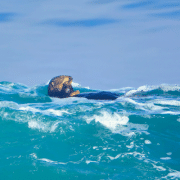
Sea otters often spend their days foraging for food in kelp forests by diving to the bottom of a body of water to grab morsels of food and rocks that they can use as tools. The study stated that they then bring their food and rocks to the surface of the water, float on their backs, and use their stomach as a table to open and eat their snacks. 

“Their preferred prey are usually urchins and abalone,” says Chris Law, a biologist at the University of Texas and the University of Washington involved in the study. 

Law stated that urchins and abalones are a part of sea otters diets and are typically easy for them to break apart and open. 

“Unfortunately, all those prey items have been declining or have declined,” especially in highly populated areas like Monterey Bay, says Law.

A big part of a sea urchin’s diet is kelp, and they can consume a lot at a relatively quick rate. When large groups of urchins go through a kelp forest, they can completely decimate it, which can in turn make the urchins “calorie-poor” with little nutritional value for the otters that consume them. 

“So that means otters have to eat alternative foods. A lot of those alternative foods are those super-hard-shell prey items that really require some kind of external force to break into,” said Law. 

Law added that “snails are abundant in the bay, but they’re low-calorie and basically like a rock that you have to break into to eat the insides.”

Law and his colleagues looked at data from 196 otters in Monterey Bay. They tagged the otters, and volunteers involved in the study monitored the marine mammals closely to see what they were eating, how large and tough their prey is, and if the otter utilized a tool to eat it. 

Embed from Getty Images

According to the report, otters who used tools were able to eat larger prey. Female otters’ use of tools is important for their overall nutrition because they’re smaller than males and don’t have the ability to bite down as hard.  

“They [female otters] typically wouldn’t be able to break into harder prey. But they use tools more than males, so they’re able to gain access to these novel sources of food items,” said Law. 

The use of tools also work to protect otters’ dental health. The otters monitored in the study received dental assessments as well, and the researchers found that those who used tools had less damage to their teeth than those who didn’t use tools, because they just bite down on the hard shells to break them open. 

“Without their teeth, they clearly can’t eat anything. So then they die. What we’re suggesting is that this behavior really allowed them to continue living on despite not having their preferred prey.”

“This is such an important paper,” says Rob Shumaker, president and CEO of the Indianapolis Zoo and one of the authors of a book called Animal Tool Behavior.

According to NPR, he said “scientists have spent decades documenting tool use in dozens of species; tool use in sea otters, for example, has been recognized since the 1960s. But now, studies like this one are showing that this field of research is starting to shift.”

“It’s not about describing the actual tool use or tool manufacture anymore. It’s describing the impact that it has on that animal’s life.”

Beach Clean up

A 25-Year-Old May Have Figured Out How To Clean Up The Great Pacific Garbage Patch

The Great Pacific Garbage Patch has grown quite famous in regards to the climate change conversation that the world is constantly taking part in. First discovered 20 years ago, the patch has now grown to be anywhere between the size of Texas to the size of Russia, based on how spread across the Pacific it is on a given day. Regardless, it’s a giant pile of plastic and garbage that has been excreting micro-plastics and pollutants into the ocean for two decades now, with no signs of improvement, until now. 

Boyan Slat is a 25 year old conservationist who 6 years ago, when he was just 19 years old, began developing a device that would clean up the garbage patch plaguing the Pacific once and for all. Slat is in an organization known as The Ocean Cleanup, who’s primary mission is to clean up our planet’s oceans, starting with the garbage patch. 

The U-shaped device looks like a bunch of buoys strung up together from an aerial view, and it’s meant to fold like a giant arm as a means of retaining plastic and moving it. On paper, the device seems simple enough to make and use, however, there’s a reason it took 6 years to fully develop and perfect. Originally the design hit a lot of bumps in the road during its initial testing. The initial reports stated that the system had difficulties retaining the plastic, causing it to leak out into different parts of the ocean. 

Embed from Getty Images

Boyan Slat

Additionally, the flotation devices that formed the bendable “arm” would suffer from some structural failures, causing the “arm” to disconnect from the entire system. These failures all continued to occur throughout the past 6 years, but each time the team from Ocean Cleanup made improvements that slowly but surely made the device completely functional. So much so that earlier this month the group was able to harvest 60 full bags of plastic debris from the patch and return it back to land; at their base in Vancouver. 


“We actually have the first plastic back on land. It fills me with a lot of pride and joy. [Even though] It’s absolute garbage, this stuff has been in the ocean likely for decades,” Slat said at a press conference on Thursday. 

The intention is to not only clean up the entire patch, but also recycle the plastic that’s collected. The Ocean Cleanup states as part of their mission that they’d want to turn the plastic into some kind of marketable product so the plastic doesn’t just end up back in the ocean somehow. The team does have an idea in mind as to what this product will be but for now they’re keeping that a secret; what we do know is that they intend to start selling it by September 2020.

Embed from Getty Images

The Ocean Cleanup states that the 60 bags that they collected is just step 1 of the massive project, and they intend on using their device to bring half of the patch back to land to be recycled within the next five years. 

“You might wonder: It’s 20 years ago that this patch was discovered. Why hasn’t anyone cleaned this yet? Well, it turns out that it’s actually pretty difficult. It’s one of the roughest environments on the face of the planet,”  Slat said.

Additionally, the device that they used still needs to be improved upon, along with further funding for the project. If they really want to have a shot at cleaning the ocean of this 20 year old patch of garbage, they need to make sure their device is at its fullest scale and fully operational, which would mean ensuring the device itself can spend long periods of time travelling in the ocean without any wear or tear.

Funding has become a major issue as well, as a majority of the money that was invested into The Ocean Cleanup has been spent throughout the past six years. This is the reason the company plans to make a marketable product out of the plastic, so this way they can further fund this project on its own; hopefully the device will begin to pay for itself with the money raised. For now though, Slat and his team couldn’t be more proud of this monumental step towards a plastic free ocean. 

Cleaning up Plastic

Plastic Bank Is Cleaning Up The Planet Of All Plastic, One Country At A Time

When it comes to climate change, one of the biggest man-made contributions lies in our single-use plastic consumption. Plastic floods our oceans, litters our forests, and distributes micro plastic pieces throughout our bodies. Efforts are always increasing to make the planet more green, and less artificial, now, Plastic Bank, a relatively new “social enterprise” based in Canada, is monetizing recycling plastic to benefit the planet, and the people in more underdeveloped areas of the world in which plastic creates the most issues. 

According to CNN, the overall goal of Plastic Bank, is to motivate individuals in underdeveloped areas of the world to collect and recycle plastic products in exchange for cash, goods, and services such as food, clean water resources, and even tuition for children struggling to afford education. 

“After collection, plastic is weighed, sorted, chipped, melted into pellets and sold on as ‘raw material feedstock’ to be manufactured into everything from bottles for cleaning products to clothing. I saw an abundance; I saw an opportunity. We inherently reveal the value in this material,” CEO David Katz told an audience at the Sustainable Brands Oceans conference in Porto, Portugal. 

Embed from Getty Images

Katz went on to explain that the company began back in 2013, and started in one of the poorest countries on the planet, Haiti. Now, there’s over 2,000 individuals working for Plastic Bank in the country and all those individuals are, on average, 63% above the poverty line thanks to income they’ve made recycling! The business is able to pay its workers through an app based system, which has also helped a lot of those individuals open their first bank account, (CNN). 

Plastic Bank has reported on their website that since 2013, the company has expanded into the Philippines, Indonesia, and most recently Brazil. Through their efforts and now multiple collaborations with major corporations such as S.C. Johnson, they’ve recycled over 13 million pounds of plastic! The company also reported that in 2020 they plan to expand into parts of Egypt, Colombia, and Vietnam. Egypt and Vietnam have been on the Bank’s radar for quite some time, both the Nile River in Egypt, and the Mekong River in Vietnam are responsible for up to 90% of plastic debris travelling into the planets seas, (CNN). 

Embed from Getty Images

While the business is constantly growing and helping reduce the massive amounts of plastic littering our natural world, there needs to be more done on the opposite end, in terms of plastic manufacturing and distribution. In order to truly clean up the planet and help make a real major difference, more plastic alternatives need to be introduced and mass produced. Single-use plastic is one of the number one culprits in terms of pollution, general society can help by switching to more paper-based, or any other biodegradable alternative for those single use products.  

“If we add large streams of other bio-materials … and we eliminate the value of what’s already on the planet [single use plastic], and nobody goes to collect any of it, and no one wants to trade it, then what? An increase in plastic alternatives has to occur while not interrupting or degrading the value of the plastic that’s already on the planet. What we need to do is get away from traditional capitalism where shareholders benefit first. Companies that stand forward to repair the damage will win. The regeneration economy is emerging,” Katz discussed at the conference. 

At the end of the day, Katz says his company’s mission is clear, we know the world has all the resources, and means to end excessive plastic use and production, and increase much greener options while remaining economically stable. It’s about everyone coming together and agreeing upon a plan to help save our planet and all the individuals habituating it.

Rising Sea Level

Rising Sea Levels Pose Greater Threat to Cities Than Previously Thought

Scientists have known for some time that global warming will lead to the melting of the ice caps, and in turn the rising of sea levels, threatening coastal cities. But scientists have disagreed over the timing and the extent of the impact of rising sea levels. New research, however, suggests that three times more people than previously thought could be affected by rising sea levels by 2050. The research was conducted by Climate Central, which is based in New Jersey, and was published in Nature Communications.

The new research, which uses advanced techniques based on satellite readings of land elevation, shows that previous predictions about the scope of rising sea levels were too optimistic. According to the new research, 150 million people currently live in areas that by 2050 will be below the high-tide line. Southern Vietnam, for instance, is at risk of disappearing almost entirely. Ho Chi Minh City, the nation’s economic center, could collapse.

Embed from Getty Images

Another country predicted to be strongly impacted by rising sea levels is Thailand, where the city of Bangkok is expected to be all but underwater in 2050. More than 10 percent of Thai residents live on land that will experience inundation in 2050, as do a quarter of Vietnamese residents, totaling more than 20 million people in those two countries alone.

Rising sea levels are expected to affect even those people who do not live in areas prone to flooding, as inundation of economic centers will have a drastic impact on the places that people work and live. Many of the world’s cities developed on coasts, putting them at particular risk for the effects of rising sea levels. Shanghai, for instance, is under direct threat of being consumed by water, as is much of the surrounding area. Mumbai, India’s financial capital and one of the world’s largest cities, is at high risk, as is the ancient city of Alexandria.

Also at risk are places where few people live, but have great historical significance, as they contain artifacts created by humans who lived centuries ago.

While the reality of rising sea levels is all but confirmed, there are measures that cities can take to combat the effects of climate change. Already, 110 million people live in places below the high tide line, as seawalls and other barriers prevent flooding. In order to combat this particular threat of climate change, many of the world’s cities previously unaffected by flooding will have to invest in technologies like seawalls in order to survive the end of the 21st century. As these massive infrastructure projects can be costly and take a long time to complete, particularly vulnerable cities would be wise to make such investments as soon as possible.

Embed from Getty Images

That being said, protective measures can only go so far and are prone to human error, as infamously occurred in New Orleans during Hurricane Katrina. Also at risk are places where few people live, but have great historical significance, as they contain artifacts created by humans who lived centuries ago. Unfortunately, these places are the least likely to be shielded by the effects of rising sea levels over the rest of this century, as the cost of doing so is great and offers little economic return.

Rising sea levels, of course, are not the only effects of climate change. Another major environmental consideration for cities as time progresses is the increasing frequency of extreme weather events, which pose a threat to both infrastructure and human life. Already, these effects are felt in the form of unprecedented, raging wildfires in California, which many experts believe to be exacerbated by the effects of climate change. Additionally, climate change has increased the intensity of hurricanes and other storms, as in the case of Hurricane Dorian, which devastated the Bahamas. While the reality of anthropogenic climate change is not in dispute among reputable scientists, ongoing research continues to reveal the various ways in which climate change affects and will continue to affect human life, oftentimes revealing that the impact will be more severe than previously thought.

Great Barrier Reef

Mother Nature Joins Effort To Save The Great Barrier Reef, But She Needs Our Help

After a massive underwater volcano eruption in the Pacific ocean, a giant raft of pumice began floating en route to Australia’s Coast. Pumice is volcanic rock that is made up of dust or powder that is packed together and consists of a rough textured volcanic glass.