Posts

Olympic Flame

Olympic Flame For 2026 Winter Games Is Officially Lit In Olympia 

The Olympic flame for the 2026 Winter Games Milano Cortina was officially lit last week at the official ceremony in Olympia, Greece, known as the spiritual home of the iconic global sports event.

la

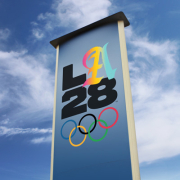
Los Angeles Planning To Host The Most Sustainable Olympics Yet For 2028 Summer Games

Los Angeles, California will be hosting the 2028 Summer Olympic Games. In the most recent Summer Games, hosted in Paris, there were major strides made in sustainability and protecting the environment while holding the world’s most anticipated athletic competition. 

Throughout the Paris Olympics, the total CO2 emissions equated to 1.59 million tons, which is less than half of the average emissions at both the London 2012 and Rio de Janeiro 2016 Games, according to reports from Forbes Magazine. 

Embed from Getty Images

Becky Dale, the Vice President of Sustainability for Los Angeles 2028 said that they’re ready and willing to try to become even more green than the Paris Games, which have become the new standard for sustainability. 

“It’s the great thing about the sports industry: everyone wants to win, including sustainability. Every time you host, you want to up the ante.”

Dale cited the 2028 Game’s Impact and Sustainability Plan, which outlines how the city is committed to reducing waste, utilizing materials that can be put back into the community. 

Nurit Katz, UCLA’s Chief Sustainability Officer, collaborated with Dale to give a presentation on how they plan on making the Games greener than ever. The two presented the plan at the Energy Innovation Conference at UCLA’s Anderson School of Management. 

LA 2028 also released an Impact and Sustainability Plan, “a structured document laying out how organizers plan to maximize the Olympic’s sustainability potential,” Blythe Lawrence for Forbes wrote.

One of the biggest aspects of this plan is that LA is not planning to build any new venues for hosting the event. This is major because the last time the Olympics took place without any new construction being built beforehand was London in 1948. 

The sustainability plan wrote: “[LA was] built for large, live-scale events, from the Grammys and the Academy Awards to the FIFA World Cup and the Super Bowl. With the region’s abundance of existing world-class stadiums and arenas ready to host the Games today, athletes at the 2028 Games will have access to exceptional fields of play and fans will enjoy unbeatable spectating.” 

Embed from Getty Images

This automatically sets LA up for being much greener than previous Olympic Games. Not only will there be a reduction of carbon emissions from the lack of construction, but it entails that every competition venue will take place within a 35-mile radius of downtown LA, so transport around from the Olympic village to each venue won’t take as much energy/emissions. 

Dale went on to explain that almost all of the materials used for the Games will be reused in some way after the Olympics are over. 

“The target is to have 90% of materials used for temporary infrastructure reused or recycled. LA will rely on a combination of rentals, buybacks, and donations to ensure reuse of as much material as possible,” she stated. 

The plan also noted that the electricity used to power venues will be fully renewable by using the grid to reduce the Games’s carbon emissions. 

Dale stated that the organizers will be enhancing public transit to motivate fans to to take it from one venue to another. 

“Our big challenge is how do we make public transportation the most attractive option for people coming to the Games? Ultimately people are creatures of free will, but there are ways to create incentives and smooth the path so we can make it a more desirable option,” she said. 

Katz also discussed at the conference that the Olympics going green doesn’t necessarily mean that the planning and implementation of the new sustainable measures will be more expensive than the average cost of putting on the Games. 

“There’s very much a myth that going green or being sustainable always has to cost more. Some of our initiatives, especially around energy efficiency or around reducing waste, really have operational savings.”

LA

Los Angeles Is Aiming For A ‘No-Car’ Olympics For 2028 Games

The mayor of Los Angeles, Karen Bass, has pledged to make the 2028 Olympic Games car-free, an announcement that has many Californians curious as to how it will be pulled off in a city known for its public transit and gridlock traffic.

Track And Field Olympic Athletes Call Out Nike Over ‘Sexist’ Uniforms 

US Track & Field female athletes are calling out Nike over their uniform kits for the Olympics, stating that the uniforms leave them very exposed, especially compared to the men’s uniforms, ahead of the summer Games.

olympics

2024 Paris Olympics Planning On Keeping Athletes Cool Without Air Conditioning 

According to reports, the Paris Olympics is currently trying to plan a way to keep the athletes of the 2024 Games cool without the use of air conditioning. 

According to organizers, as reported by AP, the current plan is to use a water-cooling system under the Athletes Village. They compared it to the current system used for the Louvre Museum, which helped keep the space cool during record-breaking heat waves last year. 

Embed from Getty Images

Organizers are working to make an air conditioner-less cooling system work as a means of cutting the carbon footprint of the Paris Games overall. The current goal is to cut the carbon footprint by half and put on the most sustainable Olympic Games in history. 

By installing special technology that utilizes natural resources to keep everyone cool, even if a heat wave occurs, is how organizers plan to accomplish this goal. 

“I want the Paris Games to be exemplary from an environmental point of view,” said Paris Mayor Anne Hidalgo.

Outside of the Olympics, Mayor Hidalgo has had the plan to tackle climate change through multiple action plans that will, ideally, reduce Paris’ greenhouse gas emissions and become carbon neutral by 2050.

“Compared to a conventional project, the carbon impact will be reduced by 45% for the Athletes Village during the construction phase and over the entire Olympic cycle,” she said.

Between July to September 2024, the Athletes Village in Paris will host around 15,600 athletes and sports officials, as well as 9,000 athletes and teams during the Paralympics. 

Embed from Getty Images

Organizers have been studying heatwave patterns block by block in the Athletes Village to prepare for next years Games. Their methods include simulations where heatwave conditions are recreated to see how successful their cooling system will be at combating high levels of heat. 

“The geothermal energy system will ensure that the temperature in the athlete apartments in the Seine-Saint-Denis suburb does not rise above 26 degrees Celsius (79 degrees Fahrenheit) at night, including during a potential a heat wave,” said Laurent Michaud, the director of the Olympic and Paralympic Villages.

He continued to explain that “organizers have conducted tests in rooms that are located on the highest floors of the residences and are facing south and exposed to direct sun on two sides. [We’ve] also considered directions of winds in the region and the water temperature in the Seine. [We also] have worked closely with France’s national weather agency to develop temperature forecasts.”

“Despite outdoor temperatures reaching 41 degrees Celsius (106 degrees Fahrenheit), we had temperatures at 28 degrees (82 degrees Fahrenheit) in most of these rooms. In other rooms, we clearly had lower temperatures,” Michaud told The Associated Press. 

“In addition to the underfloor cooling, the insulation built into the buildings will enable residents to keep the cold obtained during the night throughout the day,” Michaud said. 

The Rules Athletes Will Need To Follow To Participate In The 2021 Olympic Games 

The Olympics are officially going to happen this year on July 23rd in Tokyo, Japan. After the Games were postponed last year due to the Covid-19 pandemic, many individuals behind-the-scenes have been working hard this past year to make sure these Games happen as safely and efficiently as possible, which means all the athletes will need to abide by a strict set of rules to keep themselves and others safe. 

11,500 athletes are expected to travel to Japan from hundreds of countries this July. Additionally, about 79,000 journalists, officials, and staff will be in attendance. 

Embed from Getty Images

The individuals working behind the scenes have created an official list of rules that all parties involved must follow to avoid being potentially barred from competing or having their credentials completely stripped. 

The International Olympic Committee announced last month that Pfizer would be donating Covid-19 vaccines to all athletes and country delegates before they travel to Japan. While taking the vaccine isn’t a requirement for attending and participating in the Games, it’s highly encouraged for obvious safety reasons. 

All competitors from outside Japan must be tested for Covid-19 twice, on two separate days within 96 hours of their flight to Japan, they will then be tested again upon arrival. Athletes will be expected to download an app that will monitor their location and be used for contact tracing purposes as well. 

Athletes will also be required to quarantine for three days after they arrive. They will be allowed to participate in Game related activities during quarantine as long as they continue to test negative; they will be tested daily. 

Embed from Getty Images

Athletes will also be required to do daily reporting of their temperature and any potential symptoms that appear within the app. Temperatures will be checked upon entry to every Olympic venue. 

If an athlete does test positive for the virus, they will immediately go into isolation and their apps will be used to contact and trace any other individual they may have been in contact with. 

Social distancing protocols will also be enforced as all athletes will be competing at least six-and-a-half feet apart from each other. All physical interactions are discouraged as a means of preventing potential spreading of the virus. 

Athletes will be able to eat within the Olympic village or at specially-permitted venues and locations; they won’t be able to explore Japan during their downtime. 

Unless athletes are eating, drinking, sleeping, training, or competing, they will also be expected to wear a mask the whole time they’re at the Games. These rules will ideally keep all athletes, journalists, and behind the scenes workers safe and healthy throughout the entirety of the summer Games.

Professional Swimmer

Singer Cody Simpson’s Unexpected Bid To Compete In The 2021 Tokyo Olympics 

Cody Simpson is gearing up to compete at next month’s national championships for swimming in his home country of Australia. The singer will be going up against the nation’s top swimmers before June’s Olympic trials. 

The international singer has always been a competitive swimmer, however, his career as a teen pop icon obviously distracted from that fact. Simpson claims that Michael Phelps and Ian Thorpe are among his biggest mentors. His 6.9 million Twitter followers and 3.9 million Instagram followers only recently discovered that one of their favorite performers was also a junior Queensland state champion for swimming. 

According to sources close to Simpson, he began competitively swimming again around five months ago, and has been training non stop in the United States with former Australian Olympian Brett Hawke, who also posted daily updates of Simpson’s progress to his Instagram. 

Embed from Getty Images

Simpson went public with his re-entry into the competitive swimming world back in December, when he revealed to fans his 100 meter butterfly time of 54.7 seconds. That time is below the 56.87 second qualifying mark for the Olympic trials and would have been the 11th fastest time if Simpson competed at the 2019 Australian championships. 

“I just qualified for my first Olympic trials. I’d love to share this personal milestone and let you in on my current journey as an athlete that I’ve kept relatively low key until now. Growing up competing, and then inevitably having to cut my career short as 13-year-old Australian champion when I received an opportunity in music that I couldn’t refuse,”  Simpson wrote on Instagram in December.

Simpson continued to discuss how after years of “touring around the world, releasing albums, performing as a leading man on Broadway, publishing a work of poetry, travelling with and speaking at the United Nations on environmental and oceanic matters, I was fuelled by the silent fire in my stomach to return to swimming.”

Embed from Getty Images

Hawke also recently spoke with the media regarding Simpson’s return, claiming that they “kept it under wraps” for a while so he wouldn’t feel any additional pressure from his millions of fans to succeed. 

“We could’ve said something a little bit earlier but we just didn’t have any swim meets because of Covid … when a swim meet popped up on the radar we thought, ‘let’s go down and have a splash and get off the blocks for the first time … ’ and first swim he gets a qualification for the Olympic trials. It kind of took us all by surprise,” Hawke claimed. 

Hawke then went on to discuss how this is just the beginning for Simpson’s swimming career: “Our goal is to be as fast as we can possibly be this year and just keep building on that. He’s looking at this as a four-year plan, he’s committed to four years. He had a conversation with Michael Phelps, and Michael told him, ‘you can’t do anything in under four years, you’ve got to commit to that’ … so he’s looking at from the age of about 23-27 here, and that’s prime for anybody. I think that’s the best chance he’ll have, to try and make an Olympic team four years from now.”

Tokyo Olympics

Postponed Tokyo Summer Olympics Will Likely Not Allow Fans From Abroad To Attend 

Tokyo Olympic organizing committee President Seiko Hashimoto recently hinted at the possibility that no foreign fans would be allowed at the Tokyo Games this year after talking with International Olympic Committee President Thomas Bach and other Olympic executives. Hashimoto didn’t directly say that this rule would be enforced, however, it’s likely that in the coming months the announcement will be made official. 

Japanese newspaper Mainichi cited unnamed sources that were apparently “involved in the discussions” in which Olympic organizers claimed that foreign fans would be excluded from the Games this year due to safety concerns and the uncertainty surrounding where the world will be at with the Covid-19 pandemic by this summer. 

“If the situation is tough and it would make the (Japanese) consumers concerned, that is a situation we need to avoid from happening,” organizing committee president Seiko Hashimoto said after discussing how the decision on foreign fans will be officially made by the end of the month. She specifically is wanting one by March 25th, when the torch relay is projected to begin. 

Embed from Getty Images

The Olympic Games are currently expected to open on July 23rd, and according to the Mainichi newspaper, “unnamed government officials already know that in the current situation it is impossible to bring in foreign spectators.”

80% of residents in Japan have claimed that they want the Games to be postponed again, or fully cancelled this year due to the pandemic and health and safety concerns. Japan has overall controlled the pandemic much better than most countries, however, they still experienced 8,000 deaths. 

The subject of fans was a key part of the five-party talks with Bach, International Paralympic Committee President Andrew Parsons, Tokyo Governor Yuriko Koike and Olympic Minister Tamayo Marukawa, according to Hashimoto. 

“We will focus on the essentials. That means mainly the competitions. This has to be the clear focus. In this respect we may have to set one or another priority.”

Embed from Getty Images

The exclusion of fans is nothing new to the conversation surrounding the Olympics this year. The Japanese public has adamantly opposed the Games overall, claiming that allowing outsiders from dozens of countries to come into a small arena sounds like the last thing anyone should participate in during a global pandemic. 

According to Bach, “the games will involve 11,000 Olympic athletes, and later 4,400 Paralympians, and tens of thousands of coaches, judges, sponsors, media and VIPs. I was encouraged at the number of national Olympic committees that were getting athletes vaccinated.”

It’s important to note that the IOC said it encourages vaccinations but will not require them. The general plan as of right now is to isolate athletes in an Olympic Village located along Tokyo Bay. Once they arrive they will be placed in a bubble until they leave the nation; kind of like the NBA bubble at Disney but at a much larger scale. 

“A decision on venue capacity will be made by the end of April. We need to look at the overall situation before we decide on any percentage rates. We believe we will not be accepted unless the citizens feel confident that sufficient countermeasures are taken. Having fewer fans will be costly. The organizing committee has budgeted income of $800 million from ticket sales. That shortfall will have to be made up by Japanese government entities,” Hashimoto explained. 

Only time will tell if and how the 2021 postponed Tokyo Summer Olympic Games will be possible. 

Olympic Rings

Florida Official Wants 2021 Olympics To Take Place In His State Amid Cancellation Rumors 

Jimmy Patronis is Florida’s chief financial officer who recently wrote the International Olympic Committee (IOC) in an effort to get them to move the upcoming summer Games to his state should they be canceled in Tokyo. 

Patronis wrote the IOC this Monday, requesting that they relocate the 2021 Games to Florida should they be canceled or postponed again; the Summer Games were initially meant to happen in Summer 2020 but obviously the Covid-19 pandemic postponed that. 

In his letter he cited a recent report from Japanese officials that apparently already decided they would be canceling the Games this year completely due to the ongoing Covid-19 pandemic. The IOC adamantly denied the legitimacy of that report, however, and claimed that the government in Japan has made no such announcement yet. 

Embed from Getty Images

“There is still time to deploy a site selection team to Florida to meet with statewide and local officials holding the Olympics in the Sunshine State.”

Patronis continued on to claim that he would greatly “welcome the opportunity to pitch Florida and help the IOC make the right contacts to get this done.” He argues that Florida’s “ample hotel capacity and well-maintained transportation network” would allow it to successfully hold the Games and that the “12 major universities that have existing sports facilities” could be used as well. 

“I think most importantly, we have a state with leaders who are willing to get this done,” Patronis claimed. Unfortunately for him, it’s going to be pretty much impossible for the 2021 Games to be held in the Sunshine State. The IOC has not only already committed to holding the Games in Tokyo, but with only six months until the projected start of the Games, there’s literally no way for the committee to start from scratch and plan a worldwide event during a global pandemic. 

IOC has also made it very clear that there is no “Plan B” in place in regards to a new location to hold the Games, and even if they were interested in moving them to Florida, it would take the entire support of the federal governments from both Japan and the US to get behind it. This would also never happen as both government bodies are currently busy dealing with a global health crisis. 

Embed from Getty Images

Victor Matheson is an economist who is considered an expert in Olympic economic impacts for local communities. Matheson recently spoke with the press about Patronis’ suggestion, calling the plan “batsh*t insane.”

“The idea that just because Florida has a lot of hotels that they could organize an entire Olympics event within six months is absolutely crazy.”

The coronavirus also is obviously a major reason why the Games would never come to Florida of all places. Within the US Florida is number 3 in terms of states with the most Covid-19 cases. The state has been a hotspot for the virus on multiple occasions, and the state government has pretty much ignored every social distance rule, mask mandate, and any other health and safety policy meant to curb the spread of Covid-19; you can currently go out to clubs and bars in Florida without a mask. 

Regardless of any further efforts from Florida officials to try to get the Games to move locations, the IOC will continue to move forward with having the Olympics in Tokyo. The Games could potentially be postponed or cancelled all together this summer again pending how much worse or better the pandemic gets. 77% of Japanese citizens are in favor of canceling or postponing the Games again, so only time will tell if the world will see and Olympics this year or not.

Olympic Stadium

Olympic Stadium Unveiled In Tokyo, Japan

The new national stadium in Tokyo, Japan was unveiled this past Sunday, December 15th, finally revealing to the world where certain events for the 2020 Summer Olympic games will be held. Japanese Prime Minister Shinzo Abe and the extremely talented architect behind the huge project, Kengo Kuma, unveiled the stadium at the official ceremony. 

According to reports, the stadium cost about $1.4 billion and is large enough to hold 68,000 individuals. Obviously the stadium will be hosting the opening and closing ceremonies for both the Olympics and Paralympics. Additionally, the actual turf/field areas of the stadium will be used to hold various soccer matches and track-and-field events during the Games this summer.  

“The Olympics always becomes a symbol for the era, so with the 2020 Olympics, we wanted to create something that captures the people’s thoughts on the environment or the Earth at the time. So, we thought that the best material for this era would be wood,” Kuma told CNN in an interview. 

Embed from Getty Images

The use of wood materials also comes from Kuma’s own personal style as an architect. Kuma is generally known for his use of natural materials in his designs, no matter how industrialized or modern they are. So when taking on this specific monumental project, Kuma wanted to take that personal style, and mend it with traditional Japanese architectural elements. Part of that meant looking at the natural world/environment for inspiration, which could explain why observers have made so many comparisons to bird nests with the new national stadium’s lattice design. 

Kuma also expressed how the design for the stadium was partially inspired by Tokyo’s Edo-Period temples.  These temples have become iconic in association with Japanese culture and are instantly recognizable to most, so it makes sense that Kuma wanted to apply that same cultural value to his design.

“All over the world, architecture in the 20th century that uses concrete and steel feels cold and stiff. I want to make it softer, kinder, warmer. I think that’s the kind of architecture that humans need, during this stressful era,” said Kuma. 

Embed from Getty Images

The stadium itself is located in the Meijijingu Gain park. Kuma stated that he believes this park is the “greenest place in Tokyo,” and knew it would be perfect for the stadium, since it’s inspired heavily by the natural world. 

Reports state that the final design of the stadium features large roof eaves, which is the part of a roof that overhangs on the side typically to help rain water flow onto the ground, however, in this case the eaves are meant to encourage air circulation in the stadium. Air circulation will be extremely important when it comes time for the actual Olympic games, as one of the biggest concerns with holding the games in Tokyo was how brutally hot summers can be. The eaves in the roof will allow air to circulate throughout the lattice design and create a breeze within the stadium on hot summer days. 

Kuma also stated that he wanted the community to be a major focus when it comes to the stadium so he designated parts of the stadium, inside and out, where individuals can go and enjoy a walk on a nice day. When thinking of how to highlight traditional Japanese values within his design, Kuma knew that community values had to be at the center of it. 

“Of course, we would like both athletes and spectators to enjoy the stadium, but at the same time we thought of something we can contribute to the community,” Kuma said.