Posts

discord

Discord Rolls Out Age Verification Despite Privacy Concerns and User Backlash

Discord is moving forward with its age-verification rollout on Wednesday, introducing new restrictions for younger users and a system that estimates account holders’ ages based on their activity on the platform. The changes come months after widespread privacy concerns prompted the messaging service to postpone its original plans.

Under the new system, accounts identified as belonging to teenagers will automatically be barred from age-restricted servers and channels. Messages from people outside their friends lists will be directed to a separate requests inbox, while friend requests from users with no mutual connections will trigger additional warnings.

Confirmed adults, meanwhile, should see no changes to their Discord experience. According to Discord CTO Stanislav Vishnevskiy, more than 90% of users will not need to take additional steps to verify their ages, as the platform intends to rely primarily on information it already collects rather than requiring widespread biometric scans or government ID checks.

The decision to limit explicit verification follows months of controversy over the company’s original plans. Discord initially delayed its rollout in February after users raised concerns about the privacy implications of submitting sensitive personal information, particularly biometric data and government-issued identification.

Those fears were compounded by a security breach involving one of Discord’s third-party vendors last year. The incident potentially exposed information belonging to approximately 70,000 users, including photographs of government IDs and selfies submitted for identity verification.

Vishnevskiy acknowledged the controversy in a blog post published Tuesday, while explaining that expanding age-verification requirements have already forced the company to introduce similar measures in other jurisdictions.

Embed from Getty Images

“Age assurance draws strong opinions and skepticism, especially when it involves sharing biometric information or a form of ID. At the same time, age assurance laws are expanding, and since my last post we’ve had to launch age assurance in other regions, including in Brazil and in Texas.”

For its broader rollout, Discord plans to use a machine-learning model that analyzes existing account information to determine whether a user likely belongs to the adult, teen or unconfirmed age group. The system evaluates behavioral signals such as how long an account has existed, device information, activity data and broader usage patterns.

The company maintains that its age-estimation technology does not examine message content, profile information or demographic characteristics. It also says the system does not require collecting additional user data, although using existing behavioral information to infer personal characteristics may still raise privacy questions.

In a separate technical explanation, also published Tuesday, Discord described how its model identifies differences between how teenage and adult account holders typically interact with the platform.

“The way a typical 15-year-old uses Discord (including how many communities they’re a part of and how they interact with others) looks different in aggregate from how a typical 30-year-old uses Discord. Our machine learning model has learned these patterns to predict whether a given account likely belongs to an adult or a teen.”

Embed from Getty Images

Discord developed the technology using information gathered in jurisdictions where age verification was already mandatory. By comparing reliably confirmed ages against corresponding account activity, the company trained its model to recognize behavioral patterns associated with different age groups.

Although social media companies routinely collect and retain account activity and device data, Discord’s explanation illustrates how that information can also be used to draw conclusions about users without requiring them to disclose their identities directly.

For users whose ages cannot be confidently established, the company is offering alternatives to biometric verification and government-issued identification. Those who believe their accounts have been misclassified can appeal using a credit card or age-group information linked to their Apple App Store or Google Play Store accounts.

The rollout comes as governments worldwide increasingly require online platforms to verify users’ ages to protect children from inappropriate content. However, privacy and security experts have warned that such systems can create additional vulnerabilities, particularly when they involve collecting and storing sensitive identity information.

Discord’s reliance on behavioral data offers an alternative to requiring identification from every user, but it also raises questions about how much platforms can infer from information they already possess. The rollout will test whether that approach can meet growing regulatory demands while addressing the privacy concerns that prompted the company to postpone its plans in the first place.

social media

U.K. Unveils Overnight Social Media Limits for 16- and 17-Year-Olds

A monthlong experiment restricting teenagers’ social media use found that an overnight curfew offered the best balance between improving their well-being and allowing them to stay connected with friends.

More than 300 teenagers and parents from across the U.K. participated in the trial, which tested three different interventions. Some teenagers were limited to 15 minutes of social media use each day, others were blocked from accessing apps between 9 p.m. and 7 a.m., and a third group removed selected platforms entirely.

Participants reported benefits including improved mood, lower stress, greater energy during the day, better sleep and increased concentration. At the same time, the teenagers described a “social and emotional trade-off,” as social media remained an important way to communicate with friends who were not subject to the same restrictions.

The overnight curfew ultimately emerged as the most popular option, with participants viewing it as less socially disruptive than sharply limiting daily use or deleting apps altogether.

The findings are now informing a new set of online safety measures proposed by the U.K. government Wednesday for 16- and 17-year-olds.

Under the proposal, social media accounts belonging to older teenagers would come with an overnight curfew enabled by default beginning at midnight. The restriction would remain in place until 6 a.m., making platforms including Instagram, TikTok and YouTube unavailable through the affected accounts during those hours unless users changed their settings. Features intended to encourage prolonged use, including autoplay and infinite scrolling, would also be automatically disabled.

Teenagers would still be allowed to turn off or adjust those default settings. The measures are expected to come into force by spring 2027.

Technology Secretary Liz Kendall said the changes would be “crucial in helping young people get the sleep they need, focus on school and college, and spend more quality time with family and friends, all of which are fundamental to building a happy, healthy and fulfilling adult life.”

Online Safety Minister Kanishka Narayan similarly defended the proposals, arguing that the curfew and restrictions on autoplay would make Britain “the most robust place in the world when it comes to regulating” technology companies.

The proposal is part of a broader international effort to place tighter limits on children’s access to social media as technology companies face increasing scrutiny over the safety and potentially addictive design of their platforms.

It also joins an increasingly complicated collection of online safety measures already available to families, including optional parental controls on children’s devices and child-focused versions of major services such as YouTube.

“There have been concerns about the way services keep children and young people engaged on their phones for long periods, and that this can impact their sleep, amongst other effects,” Lorna Woods, a professor of internet law at the University of Essex, told the BBC.

Embed from Getty Images

In June, outgoing U.K. Prime Minister Keir Starmer announced plans for a more sweeping restriction: a blanket social media ban for children under 16. The ban would cover major services including TikTok, Snapchat, Instagram, Facebook, YouTube and X.

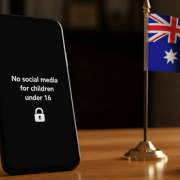
The U.K. announcement followed Australia’s move in December to become the first country in the world to enforce a legal social media ban for users under 16.

The government plans to present its latest proposals to Parliament by the end of 2026, to implement them alongside the under-16 ban the following spring.

It also announced plans for additional safeguards governing children’s use of artificial intelligence chatbots, including requirements for providers to introduce regular breaks for users under 18.

European Union officials are also advancing restrictions aimed at younger users. European Commission President Ursula von der Leyen said Monday that the region would move forward with age limits for social media platforms to reduce use among children and teenagers.

Technology companies, meanwhile, have defended the safeguards already built into their platforms. Ali Law, TikTok’s director of public policy and government affairs in Northern Europe, said during a Tuesday appearance with CNBC that the app was designed with the safety of younger users in mind.

According to Law, TikTok has more than 50 preset protections for users under 16. Those measures include a one-hour daily screen-time limit and a full-screen prompt appearing at 10 p.m. that encourages teenagers to stop using the app and take a break.

“All of these are little default aspects, little nudges to make sure that people have a balanced and healthy relationship with our app, because that works in our interests…because if people are using it for too much and are burnt out, they’re not going to get value from it.”

Other technology companies have argued that responsibility for verifying users’ ages should not rest solely with individual platforms. Meta, which owns Facebook, Instagram and WhatsApp, has previously called for age verification to be handled by device manufacturers.

Apple has since introduced device-level age checks that ask people using iPhones and iPads with the latest operating software to verify their ages.

Baroness Beeban Kidron, a longtime advocate for device-level safety and age-verification measures, criticized the government for focusing too heavily on restricting children’s access rather than changing the products themselves. She said the objective should not be “banning children from tech” but “banning tech from putting toxic products in the hands of children.”

The ability of teenagers to disable the proposed protections has drawn criticism from campaigners, opposition politicians and online safety experts who question whether the default settings will have a meaningful effect.

Embed from Getty Images

Ellen Roome, who believes her 14-year-old son, Jools Sweeney, died in 2022 after participating in a dangerous online challenge, argued that an optional restriction would be too easy for teenagers to circumvent.

“I just think it’s not good enough really just to have a product you can switch off, it’s a bit like offering a 17-year-old a bottle of alcohol and then moving it slightly out of arm’s reach, they can just drag it back in. I really wish they could go stronger and harder on these things.”

Andy Burrows, chief executive of the Molly Rose Foundation, welcomed the attention given to older teenagers but said the announcement remained too narrow.

“While we welcome these measures for older teens, this latest move is yet another piecemeal set of announcements, not the comprehensive plan for children’s safety that’s required,” Burrows said.

Some experts have also warned that a blanket nighttime restriction could unintentionally cut vulnerable teenagers off from support. Sonia Livingstone, a professor specializing in children’s digital rights at the London School of Economics, said a distinction should be made between curbing disruptive platform features and completely blocking access.

“If it’s a curfew on companies using push notifications to wake someone up in the night, absolutely have a curfew,” Livingstone told the BBC.

“But if it’s a curfew that prevents a child in need of support or help or comfort reaching out to trusted sources in the middle of the night, I think that’s quite harmful potentially.”

Dame Rachel de Souza, the children’s commissioner for England, said young people generally oppose outright bans but support protections from features that encourage compulsive use.

“We have to listen to young people. They don’t want a ban, but they do want to be protected from addictive, infinite scrolling,” she said.

De Souza added that she wanted more details on how the curfew would be enforced and said she would press the communications regulator, Ofcom, to fully exercise its authority over online safety.

Social media analyst Matt Navarra dismissed the proposal as “not a curfew,” but a “mildly annoying settings prompt with a government press release attached.”

“The UK Government is calling this ‘world-leading’ online safety, but with no VPN restrictions, it’s leaving the side door open and putting up a sign asking teens not to use it,” Navarra said.

The government does not currently plan to restrict virtual private networks, which can disguise a user’s location and have previously been used to evade online controls, including Australia’s social media restrictions. Officials said VPNs remain important to whistleblowers, minority communities and families seeking privacy.

Government-commissioned research also found little evidence that large numbers of children were using VPNs to bypass age-verification systems.

“We have decided not to limit VPNs today, and that’s the primary conclusion for now, but it is something we will continue to review,” Narayan said.

social media ban

UK To Ban Kids From Social Media, Ministers Lobby With US To Avoid Backlash 

The UK has announced that they will be banning social media for kids under the age of 16. Some of the world’s biggest technology companies, including Meta, YouTube, and Snapchat, have spoken out against this decision, claiming that it will only work to push teenagers to more harmful platforms. The ban was announced by Prime Minister Keir Starmer on Monday. 

A spokesperson for Meta, which owns Facebook and Instagram, said: “As we’ve seen in Australia, bans risk isolating teens from online communities and information, and driving them to unregulated alternatives that lack built-in protections and parental controls.”

YouTube echoed Meta’s sentiment in their own statement: “Blanket bans push kids out of such curated, supervised, beneficial experiences and towards anonymous, less-safe services.”

And Snapchat said: “Because the majority of time spent on Snapchat is in private messaging between friends and family, an outright ban that disconnects teens from those relationships doesn’t make them safer – it may simply push them to less safe platforms.”

Embed from Getty Images

During Starmer’s announcement at a press conference this week, he said that “social media makes children unhappy, it’s making it easier for billies to harass and abuse them, and it could even be harming their mental health.” He then emphasized the argument that the ban was not anti-tech. 

“I do not accept, and I will never accept, that you can’t be both pro tech and AI, and at the same time say we must protect our children,” he said. 

The plan mimics the one enacted earlier this year in Australia, however, it includes both a ban on all main social media platforms, and separate restrictions on online services such as gaming apps such as removing the option to chat with strangers. 

Under this new ban, kids under the age of 16 will not be able to download Snapchat, YouTube, TikTok, X, Facebook, and Instagram. They also will not be able to livestream. Teenagers under the age of 18 will also not be able to use any romantic chatbots designed to simulate sexual relationships. 

“This is not something I do lightly, and I will not present it as cost-free, as if social media has [brought no] benefits to young people, because clearly that is wrong. But the government is always about choices, and it’s clear to me that a total ban is the right choice,” Starmer said.

In Australia, many teenagers have found ways around the bans, which has even led to lawsuits against certain social media platforms for not doing enough to enforce keeping young teens and children off their apps. While this can obviously happen in the UK as well and it is a concern, Starmer stated that it wasn’t the point behind this objective. 

“We don’t say: ‘Oh, look, a teenager managed to get a drink somehow, so let’s not bother banning alcohol sales for children.’ We don’t do that, do we? I just don’t accept that,” he said. 

“Our laws are rules, but they’re also an expression of our values. They shape the social contract, and so this will change the conversations that parents have, and the expectations of children over time.”

“It will make a huge difference. It will make our children safer. It will make our children happier. It will give them more time, more security, full freedom to grow up, more opportunity, and that, at the end of the day, is what this government is about,” he added. 

The other side to this is combating the giant companies that are widely against these bans, which is intertwined with talking to the US government and president and reassuring them that this isn’t a targeted ploy towards US tech companies. 

Embed from Getty Images

UK ministers have been working on a lobbying operation to prevent backlash from the Trump administration. The administration had previously threatened the UK with “a big tariff” if the government does not drop its digital services tax, so they’re moving extra cautiously when it comes to this ban. 

“I honestly think that across world leaders there has always been a recognition that leaders have to take steps to protect children,” Starmer said. “In relation to President Trump, I spoke to him on Saturday, I’ll see him again this afternoon and, yes, of course, we’ll discuss this and many other issues, and lots of other leaders are very interested in it.”

Elon Musk, who owns X and has worked closely with the president, said “this censorship law is a wolf in sheep’s clothing. The real goal is to enable the UK government to track everyone.” 

Ministers are working on every detail of this ban and what it will entail. They’ve announced late-night social media curfews for 16-and-17-year-olds. One of the workarounds that teenagers have used in Australia is using virtual private networks (VPNs) to circumvent geographical internet controls, so the UK is looking into regulating those networks as well. 

This move will have a major impact on young people. In the UK, among 13-to-15-year-olds about 90% have a social media account, and have stated that their main resource for getting the news is YouTube, TikTok, Facebook, and Instagram, according to reports from the Guardian. 

The UK’s technology secretary, Liz Kendall, echoed Starmer’s sentiment regarding the importance of protecting children and their mental health and not having such a focus on how teens can work around the bans. 

“I have no doubt children who are currently on social media, for whom it’s an integral part of their lives, will try and get around the ban, and many will succeed,” she said. 

“But we do think we need to draw this line in the sand, give greater clarity to parents and greater protections for children.”

“I’ve never thought that the ban will be a complete silver bullet … It will be as much about resetting expectations and social norms for children who are seven, eight, nine, 10, now that they won’t be going on social media until they’re 16,” she told the BBC.

“This is a huge statement of our values, who we are as a country, and it’s a way of actually bringing our country together,” Starmer said.

influencer

Child Skincare Influencers On TikTok Raise Questions Of Exploitation On The Internet 

The world of influencers has grown rapidly within the past decade. As social media and the digital world has grown and expanded, so has the number of young people getting on these platforms. 

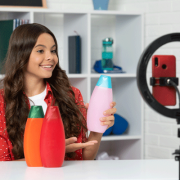
More recently, we’ve seen online influencers as young as 12 start to accept free products from brands to promote to their large followings. Ethics has become a major point in this conversation when it comes to privacy and safety concerns for children on social media, and the products they’re being influenced to buy/pushed to market. 

Embed from Getty Images

Skincare has become a major epicenter of this conversation, as dermatologists are warning that young kids are promoting products that they don’t need, and could even damage their skin all because they seem “trendy.”

In Europe, for example, the Italian Competition Authority (AGCM) is taking this matter seriously, and is now investigating beauty brands Benefit and Sephora after they began pushing a “particularly insidious strategy” of using young influencers to market their products to children intentionally, according to reports. 

The AGCM specifically has launched an investigation into the brands’ owner LVMH, a luxury goods company, for allegedly attempting to sell anti-aging treatments to children younger than 10. 

The Authority said the companies “may have failed to make clear the cosmetics they sold were not intended for children, while appearing instead to have encouraged their purchase through covert marketing strategies involving young micro-influencers.”

LVMH said that Sephora, Benefit, and themselves would “fully cooperate with the authorities. All the companies reaffirm their strict compliance with applicable Italian regulations.”

The Guardian also led their own investigation in which they found many videos of young people thanking brands for sending them free products. They also found an ambassador program that is open to children as young as 13. 

The investigation found that US skincare brand Evereden runs a “scheme” with no official age minimum or limit advertised, stating that they “love all ages and all stages,” with some of the youngest influencers in the program to be 12. 

Those under 18 need parental permission to join, but the company is clearly passionate about working with “aspiring influencers.” 

On its website, it says: “Yes! As a kids’ brand, we want to partner with our actual audience, as well as their parents and guardians. We think it’s important for kids to see people like them taking care of their skin and being empowered by age-appropriate self-care routines. However, we are committed to engaging with young creators in a responsible and ethical manner, and we require parental or guardian consent in all collaborations.”

Embed from Getty Images

Bubble is another company advertised as a youth skincare brand, with ambassadors who are aged 16+, but they previously accepted influencers as young as 13. In their particular program, ambassadors must like, share, and produce content advertising their products, and in return receive points that are redeemable for purchases. 

A spokesperson for Bubble said, according to the Guardian: “We do not partner with or pay children to promote our products. Our ambassador programme requires participants to be 16 or older, and parental consent is required for anyone under 18.”

“Clinical safety is foundational to how we operate. As far as we are aware, we are one of the only brands that conducts clinical safety testing on consumers aged eight and up on the products we would recommend for younger users. If younger consumers are using skincare, there should be real clinical validation behind its safety. We also have a paediatric dermatologist as a part of our robust dermatologists’ advisory board.”

Experts on the matter have stated that these programs are in a “regulatory grey area.” While there are many laws and regulations around the world regarding child labor for actors and models, those same rules don’t extend to child influencers on social media. 

“A lot of protections focus on consumers under advertising law, not on the child creating the content,” said law lecturer and coordinator of the Child Influencer Project, Dr. Francis Rees. 

Children creating online content do not have protections under the Online Safety Act or child performance legislation unless criminal thresholds are crossed, Dr. Rees explained. 

“Brands and agencies don’t have a duty of care to the child in these situations. They contract with the parent, who is expected to safeguard the child,” she stated. 

The Advertising Standards Authority requires all influencers to clearly label their posts as advertisements, while many younger creators believe that simply having “ambassador for _” in their bio is enough.

meta

Mark Zuckerberg Defends Meta In Landmark Trial Regarding Social Media Addiction 

Meta CEO Mark Zuckerberg recently testified during a landmark trial in Los Angeles Superior Court regarding social media addiction and safety, particularly in teenagers and kids.