Posts

whale

Gray Whale Sighted Near New England 200 Years After Species Were Thought To Be Extinct In The Atlantic Ocean 

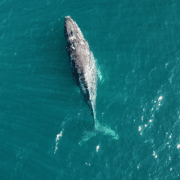
A gray whale has been confirmed by scientists to be seen near New England, two centuries after it was thought that the whale was extinct in the Atlantic Ocean. While this is an exciting discovery for science, experts are saying that it also illustrated the impact of climate change on sea life and their migration patterns. 

The gray whale was initially seen by members of the New England Aquarium in Boston while they were flying 30 miles south of Nantucket, Massachusetts. They sighted the whale, which can weigh up to 60,000 pounds, on March 1st, according to the Guardian. 

Embed from Getty Images

The gray whale typically lives in the northern Pacific Ocean, and seemingly vanished from the Atlantic ocean around the 18th century. Within the last 15 years, there have been about five potential observations of the whole in the Atlantic and Mediterranean waters. 

The aquarium stated that the whale found this month was likely the same what that was spotted late last year in Florida. 

The aquarium researchers who recently found the whale near Massachusetts were skeptical after their initial observations, however, after circling the area for about 45 minutes, they were able to take more detailed pictures and confirm it was a gray whale. 

Orla O’Brien, an associate research scientist with the Anderson Cabot Center for Ocean Life at the New England Aquarium, said that at first she “didn’t want to say out loud what it was, because it seemed crazy,” but was luckily proven to be right with ehr initial observations. 

While scientists are excited to see the gray whale in the Atlantic, they stated its presence likely has to do with the warming of the planet brought on by climate change. 

Embed from Getty Images

The North-west Passage connects the Atlantic and Pacific Oceans through the Arctic Ocean in Canada. In recent years, during the summer the passage has lacked a presence of ice, which prevents animals like the gray whale from passing through. 

Now, scientists are predicting that gray whales are able to travel through the passage during the summer months, when they otherwise would typically be blocked from ice. 

According to O’Brien, the gray whale’s recent sighting near New England is “a reminder of how quickly marine species respond to climate change, given the chance.”

When commercial whaling was more common, gray whales were almost hunted to extinction. Luckily today, the gray whale population has recovered immensely, so much so that they’re considered to be a species of “least concern” by the International Union for Conservation of Nature.” 

The organization also stated that the western population of gray whales that lives off Asia is still considered to be endangered. 

When compared to other, more commonly sighted, whales off the coast of New England, such as humpback whales, gray whales can be identified by their lack of dorsal fin and marks of spots or smears of color. Gray whales also make more gurgling, grunting, croaking noises, while humpback whales are known for their more haunting high pitched songs. 

Crabs

The Pacific Ocean Is So Acidic It’s Dissolving Crab Shells

One of the most unexpected effects of climate change would have to be the Pacific Ocean’s increasing acidity. Previously, scientists were aware that the world’s oceans were becoming more acidic, however, the changing nature of the marine environment’s pH is starting to affect the wildlife within it. 

The Dungeness Crab is labeled by Washington’s Department of Fish and Wildlife (WDFW) as one of the most vital commercial “fishes” in the Pacific Northwest. This is especially troubling considering that the decrease in the Pacific’s pH is beginning to dissolve parts of the Dungeness crab’s shell, and damage some of their sensory organs, according to a new study. 

“Their injuries could impact coastal economies and forebode the obstacles in a changing sea. And while the results aren’t unexpected, the damage to the crabs is premature: The acidity wasn’t predicted to damage the crabs this quickly. If the crabs are affected already, we really need to make sure we pay much more attention to various components of the food chain before it is too late,” said study lead author Nina Bednarsek, a senior scientist with the Southern California Coastal Water Research Project.

Embed from Getty Images

So how does the ocean’s pH become more acidic in the first place? Like most of the ailments to the natural world in the 21st century, the answer is climate change. As carbon emissions and greenhouse gases continue to rise in our atmosphere, they do the same in our oceans. An increase in carbon dioxide, specifically, in the Pacific Ocean is what has caused its pH to lower. 

According to the National Oceanic and Atmospheric Administration (NOAA), ocean acidification shifts coastal ecosystems by releasing an excess of nutrients that “can create algae blooms and increase sea temperatures and salinity.” Salinity is how high the salt levels are in a given body of water. 

Crustaceans such as crabs, oysters, clams, coral, and plankton all rely on compounds known as carbonate ions in order to build their shells and coral skeletons. The more acidic a body of water is, the less carbonate ions will be present, as they need a more neutral pH in order to truly grow and thrive. Without carbonate ions present, crustaceans aren’t able to build their shells as strongly; and now the Dungeness crabs are really feeling the effects of that. 

Embed from Getty Images

The deterioration of the Dungeness crab’s shell began with its larvae. Scientists began to notice that the larvae’s young shells were already becoming corroded. They were able to notice because the larvae itself was much smaller than it normally should’ve been. Upon further research, they discovered that their shells were dissolving; which explained the small size of the larvae. This quickly became an issue for the crabs, as their shells are their main defense mechanism from predators.

“We found dissolution impacts to the crab larvae that were not expected to occur until much later in this century. The tiny hair-like structures crabs use to navigate their environments were damaged by the low pH levels, too. Crabs without these mechanoreceptors could move more slowly and have difficulty swimming and searching for food,” said Richard Feely, study co-author.

It’s hard to combat a massive issue such as ocean acidification without some serious systematic change occurring. The NOAA suggests that a reduction in greenhouse gas emissions overall would be the only way to truly return the ocean’s pH to what it was. The Dungeness crab is the first to begin to fall victim to this issue, but as time progresses, and the Pacific’s pH continues to decrease, who’s to say what other crustaceans will be affected.