Posts

FDA

FDA Approves Groundbreaking Drug For Advanced Pancreatic Cancer 

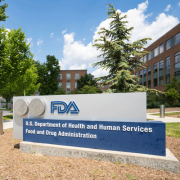
The Food and Drug Administration (FDA) approved of a new groundbreaking drug this week for people going through advanced pancreatic cancer. The goal is to offer US patients more effective treatments and improved survival rates. 

The first-of-its-kind pill is called daraxonrasib, which works by blocking mutated proteins that fuel tumor growth in more than 90% of pancreatic cancer cases, according to reports. 

Revolution Medicines will be selling the daily pills under the brand name Rasonque. The company announced that a one-month supply will cost around $39,800. 

Embed from Getty Images

In the medicines study, researchers randomly assigned the pill for patients to either receive the experimental treatment, or go through additional chemotherapy. Patients who took the drug were found to nearly double their survival time. The 500 patients that participated all had cancer that was metastatic, spreading, and had quit responding to prior treatments. 

The patients who received the new treatment lived for an average of 13.2 months, compared with 6.7 months for chemotherapy recipients. Side effects reported included skin rash, mouth sores, diarrhea, and other digestive issues. 

Dr. Andrew Coveler of the Fred Hutch Cancer Center stated: 

“This is one of the most anticipated approvals I can think of. This medicine is not a cure but a significant improvement.”

Pancreatic cancer is known as one of the most deadly forms of cancer, mainly due to the fact that it’s difficult to detect in its earlier stages, so it gets the chance to grow and spread to other organs in the body. 

The American Cancer Society estimates that around 67,000 new cases will be diagnosed in the US this year, with more than 52,000 dying from the disease. The five-year overall survival rate is also reported to be about 13%. 

Embed from Getty Images

Former Senator Ben Sasse was one of the recipients of the drug this year, and told CBS’ “60 Minutes” that he was experiencing less pain, causing the pill to receive national attention, and motivating the FDA to speed-up their approval. 

The FDA was then granted “expanded access” before the drug is officially approved, so it can be given to patients who meet certain criteria. 

FDA regulators this week also said that they approved the drug more than six months ahead of their target date. 

“It is our fundamental duty to deliver more cures and meaningful treatments to patients as quickly as possible,” FDA’s acting commissioner, Kyle Diamantas, said in a statement. 

Doctors who specialize in treating pancreatic cancer are also hopeful that the makeup of this drug can ideally be used to create new treatment options for other types of cancers as well, especially with so many experimental treatments currently in the works. 

“I think this has opened doors for many other companies,” said Dr. Pashtoon Kasi of City of Hope Orange County, a California-based cancer center. 

“Downstream I think there are going to be a lot more trials looking at this approach in other tumor types.”

pill

New Experimental Pill Offers Hope For People With Advanced Pancreatic Cancer 

A new novel pill is reportedly helping people with advanced pancreatic cancer, one of the deadliest, live longer, according to new research recently published in the New England Journal of Medicine and presented at the American Society for Clinical Oncology (ASCO).

“While not curing the cancer, it is a very large step forward,” said Dr. Zev Wainberg of the University of California, Los Angeles, who helped lead the study. 

Embed from Getty Images

The new drug is called daraxonrasib, and it works by blocking a mutated protein that fuels tumor growth in over 90% of pancreatic cancer cases. Pancreatic cancer is also known for being very deadly with very little viable treatment options. 

The pills are meant to be taken daily and have shown to nearly double one’s survival time with fewer side effects in a study that randomly assigned the experimental drug or more chemotherapy to 500 patients with metastatic cancer that have stopped responding to other treatments, according to reports from AP. 

The research showed that those who took daraxonrasib lived for an average of 13.2 months compared with 6.7 months for chemotherapy recipients. Dr. Wainberg said while this may seem like a small improvement, it marks the first drug to show a substantial advantage over chemotherapy. 

“Having treated pancreatic cancer for 16 years, I actually started crying when first seeing the study results,” Dr. Rachna Shroff of the University of Arizona Cancer Center, said at the ASCO meeting. 

“[I was struck by how] patients stayed on this treatment because it was providing a durable and meaningful benefit to them.”

The pills’ effects eventually decrease but those taking it for significantly longer than the chemotherapy group reported less pain and a better quality of life. Many continued to use the medications after the data was analyzed. Dr. Wainberg stated this means the survival gap may widen as researchers continue to track them. 

Embed from Getty Images

Dr. Brian Wolpin, of the Dana-Farber Cancer Institute, presented the findings and said “the drug should become a new standard of care” for previously treated metastatic pancreatic cancer. Researchers also will explore its use earlier in the disease, including to see if tumor shrinkage might let more patients qualify for surgery,” AP reported. 

He also said the side effects most likely to impact the treatment course were a rash that can become severe and mouth sores. 

The Food and Drug Administration is planning to expedite their review of the drug because of its success. It was developed thanks to funding from Maker Revolution Medicines. The agency is granting “expanded access” to the drug for patients who meet the criteria. 

Pancreatic cancer is one of the most deadly forms due to the fact that it’s hard to detect before it starts spreading throughout the body. The American Cancer Society estimates around 67,000 new cases will be diagnosed in the US this year with more than 52,000 people dying from the disease. 

Pancreatic cancer is also harder to treat and doesn’t respond to chemotherapy the same way other cancers do. This drug is leaving a lot of experts very optimistic about the future of treating this deadly disease, as well as other cancers.

Purple Ribbon

New Technology That Can Help Diagnose Pancreatic Cancer Patients Earlier

At this time of year many of us find ourselves being thankful that we have managed to navigate another year on this planet and, hopefully, came out the other side of 2019 with our homes, our family, our friends, some money and, most importantly, our health. But that is not always the case.

Cancer is a dreadful disease that affects most families. The National Cancer Institute claims an estimated 1,735,350 cases of cancer were diagnosed in the United States during 2018, with 609,640 ultimately dying from the disease. While we hear a lot about specific forms of cancer – such as breast cancer, cervical cancer and lung cancer – pancreatic cancer is actually one of the worst types of cancer to be diagnosed with.

Due to its very nature, pancreatic cancer is hard to detect thanks to it having minimal symptoms until the sufferer is in the late stages of the disease, meaning it is not often diagnosed until there is nothing left that the medical profession can do to help you.

If you are not sure what the pancreas is it is a vital organ that produces the hormone that regulates our body’s blood sugar – insulin. However the pancreas is tricky to locate as it is hidden by the liver and stomach at the back of the abdomen, which is why it can be difficult to detect early tumors when we go for our routine physical exams.

Embed from Getty Images

With this knowledge it is easier to understand why 9% of pancreatic cancer patients are able to stay alive five years beyond the original diagnosis. Endocrinologist Dr Somashekar Krishna acknowledges that pancreatic cancer “doesn’t produce any symptoms early on.” However, researchers have begun to find ways that they can help those suffering with this dreadful disease.

This was the case with Patricia Beatty. When she had been struggling with a stomach virus she went to the hospital to be checked out. Once there the doctors scanned her stomach and found out she was not actually suffering from a stomach virus but in fact she had a cyst which they told her was “precancerous.”

There are two different ways that pancreatic cancer develops. Patients either have a cyst that can change and become cancerous, or they already have a cancerous tumor. The main difference between a cyst and a tumor is that while a pancreatic cyst is mainly fluid, a tumor is solid. Pancreas cysts are found quite often and, with doctors able to test the cyst fluid, thankfully most of them are benign. However it is quite difficult to determine which will stay benign and which will develop into actual cancer.

By using sonograms – or some of the other diagnostic imaging tools available – both cysts and tumors, cancerous or benign, can be detected however these procedures are very expensive and therefore are only used if and when doctors are fairly certain of the outcomes.

Embed from Getty Images

Ohio State University Wexner Medical Center has been carrying out a study of a new device that could detect pancreatic cancer earlier. The diagnostic tool provides a microscopic look at the cyst wall and Krishna – who led the study – confirms the study shows a high accurate rate during the virtual biopsy, saying “we can diagnose cysts with the accuracy of 96% to 97%.”

But how does the procedure actually work? A tiny scope beams a laser light which in turn produces a cellular image not only of the cyst but more importantly, the inside of the cyst. Krishna continues “[in] looking at the image pattern which comes from the cyst wall, which comes as a direct video feed in real time, we can conclude what the diagnosis is.”

With this new technology becoming more available Krishna and his colleagues are training doctors across America how to use it in their hospitals, meaning more patients will be able to have the treatment and potentially beat pancreatic cancer thanks to their precancerous cysts being diagnosed earlier.

But while this latest technology can ultimately save lives, it is still an expensive procedure and will only be carried out if a doctor has already ordered a sonogram or an MRI is ordered – potentially for a different reason due to the symptom free nature of this disease. Therefore, unless like Patricia Beatty you are at the hospital for problems requiring further treatment, the silent killer will continue to grow in the majority of sufferers until a time when it is too late to treat them.

Obviously the easiest way to make such diagnoses’ earlier is via a blood test – as is the case for many more diseases and illnesses. However Krishna admitted that although researchers were working on producing this simple test it is as yet to be developed.

Until then, patients have to hope they have a reason to head to the hospital for tests, so they too can be like Beatty. Thanks to the procedure the doctors found her cyst before it became malignant and spread meaning she is now cancer free.