Pennsylvania Measles Outbreak Puts Amish Vaccination Rates Under Scrutiny
A measles outbreak in Pennsylvania has drawn attention to low vaccination rates among Lancaster County’s Amish population, as public health officials expand immunization efforts and political leaders clash over the response.
Pennsylvania has recorded 1,398 cases and five measles-associated deaths, including two infants and three adults with underlying health conditions. Nearly two-thirds of infections have involved adults, an unusual pattern for a disease that typically affects children.
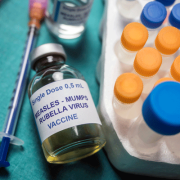
Since Aug. 1, approximately 150,000 doses of the measles, mumps and rubella (MMR) vaccine have been administered statewide, including more than 50,000 in October.
Although Amish religious teachings do not prohibit vaccination, one study found that fewer than one-third of residents had received the MMR vaccine.
Steven Nolt, a professor of history and Anabaptist studies at Elizabethtown College, told The Guardian that vaccination decisions are generally shaped by family traditions rather than religious requirements. He also noted evidence that vaccine-skeptical organizations have conducted outreach to Amish communities since 2015.
“We don’t have good data, but it’s clear they are under-vaccinated, but by how much we don’t know. The Amish are a religious group, so governments are not allowed to track information. We don’t know any better how many Amish are immunized than how many Anglicans or Presbyterians are immunized.”
At the New Holland auction house in Lancaster County, residents expressed differing views on immunization.
Christ Stoltzfoos said attitudes have shifted considerably over the decades.
“It wasn’t that way 50 years ago in our community,” he said.
Stoltzfoos said his immediate family was vaccinated and avoided infection, while several unvaccinated relatives contracted measles.
“I guess you don’t get to change anybody’s mind. The people that changed their mind are the people who got really sick from it. They say now they would have gotten vaccinated. But the people that didn’t really get sick, they still say: ‘Oh, it’s not really that bad.'”
Still, he suggested immunization was becoming more common.
“A lot of people now get the shots,” he said.
Others remained skeptical. John Kaufman, 81, argued that natural infection was preferable to vaccination, repeating unfounded concerns about vaccines weakening the immune system.
“You get the measles, and you get over it. People have it once, and it’s over. But if you hurt your immune system with the shots, something else will creep up on you. The shot will take care of the measles, but it’ll stir something else up. Then what?”
He also cited unsupported claims linking COVID-19 vaccines to cancer and heart attacks.
“If you’re strong and healthy, you might be able to work the COVID shot off. But if you had a weakness in yourself, it could take over.”
Another attendee, a young woman named Anna, said nearly her entire family contracted measles, except her vaccinated father.
“It was miserable,” she said. “My whole family had it, except my dad. He got the vaccine. I wouldn’t get the vaccine now because if you had measles, you’re stronger for it. Why change that?”
While infection generally provides lasting immunity, measles can cause serious complications, including pneumonia, brain inflammation and death. Vaccination offers protection without those risks.
Despite the outbreak, economic pressures dominated much of the conversation at the auction.
Premium hay prices exceeded $400 per ton, approximately 20% above last year’s levels, while farmers faced declining dairy prices, rising equipment costs and shifting agricultural markets.
Stoltzfoos and his uncle, Amos, said organic milk remained relatively profitable at approximately $51 per 100 pounds.
“We’re at their mercy, but I don’t feel that we’re wrongly used,” Christ said of dairy purchasers.
Discussing regulations on raw milk sales, Stoltzfoos also supported government oversight. “I think it’s good they regulate raw milk, or it will be like the measles soon,” he said.
However, both men acknowledged the Amish community’s general reluctance to engage with government institutions.
“Most of us don’t even know what’s going on,” Christ said. “I read the paper but that don’t tell me much.”
The public health crisis has intensified tensions between Pennsylvania Gov. Josh Shapiro and Health and Human Services Secretary Robert F. Kennedy Jr.
Kennedy accused Shapiro’s administration of politicizing the outbreak, claiming the “people of Pennsylvania suffered” because of its handling of the crisis. He also attributed the nationwide measles resurgence to declining vaccination rates during the COVID-19 pandemic.
Shapiro, meanwhile, accused federal officials of failing to accurately acknowledge Pennsylvania’s measles-related deaths. The CDC has recorded three deaths nationwide among 4,588 confirmed cases in 2026, conflicting with Pennsylvania’s reported five fatalities.
Shapiro claimed the federal figures failed to reflect the state’s deaths “because it doesn’t fit their phony narrative. I think RFK is doing great destruction in this country by stoking this vaccine skepticism.”
His administration has deployed approximately 300 health department employees to the affected region and organized pop-up clinics and other vaccination initiatives.
The controversy has entered Pennsylvania’s 11th Congressional District race, where Republican Rep. Lloyd Smucker faces Democrat Nancy Mannion. Smucker, who was raised Amish until age five, defended the community’s ability to make personal healthcare decisions while criticizing Shapiro.
“The role of government should be to do research and development on vaccines and be open and transparent about what that means. It was disappointing to me to see the governor using the measles to score political points,” he said. “It turns out that the first two deaths really weren’t caused by measles at all.”
Mannion, a former emergency nurse, argued that broader vaccine skepticism and limited access to healthcare were contributing to the outbreak.
“The Amish aren’t anti-vaccination, but they don’t access the healthcare system in the same way. It’s not just the Amish that are part of this outbreak because of the skepticism has brought to vaccines; I would tie directly back to Robert Kennedy Jr.”
Measles, she said, “is completely preventable and had been eradicated, but now we’re living in a surge. I’d say there is a link between his anti-vaccine stance generally and what we’re seeing now.”
The United States declared measles eliminated in 2000, although imported infections and subsequent outbreaks have continued.
Other states, including Texas and South Carolina, have experienced measles outbreaks, primarily affecting children.
In New York, three Amish schools are challenging state immunization requirements on religious freedom grounds and face potential fines of $2,000 per unvaccinated student.
Gov. Kathy Hochul recently declared a statewide public health emergency after more than 100 measles cases were reported. Epidemiologists suspect connections between the New York outbreak and those in Pennsylvania and Ohio.
The disputes underscore the challenges facing public health officials as they work to contain measles amid vaccine skepticism, uneven healthcare access and disagreements over government intervention.

Moumita Basuroychowdhury is a Contributing Reporter at The National Digest. After earning an economics degree at Cornell University, she moved to NYC to pursue her MFA in creative writing. She enjoys reporting on science, business and culture news. You can reach her at moumita.b@thenationaldigest.com.