Posts

Gretchen Samuels SammyBaby Fur Babies Transportation

Transforming Pet Care with Heart and Innovation | Gretchen Samuels

In the heart of a community where pets are not just animals but family members, Gretchen Samuels stands out as an innovator in pet care, transforming the very nature of how we interact with and care for our animal companions through her unique and comprehensive range of services. Gretchen’s business, Sammybaby Fur Babies Transportation, is not just another pet care service; it’s a one-stop solution for every imaginable pet need, infused with love and personal touch.

parrot

Parrots Taught to Video Call Other Parrots Formed Lasting Friendships, Researchers Say

Can technology ease the emotional burden of captivity? A new study suggests it just might for parrots. Scientists from Northeastern University, the University of Glasgow, and MIT designed a video calling system for parrots to “chat” with other parrots via smartphones and tablets. Over time, the birds developed a preference for specific companions, repeatedly dialing their chosen feathered friends.

The United States is home to 20 million pet birds, and scientists are trying to find a way to help them connect from afar. Video calling opens up a new realm of interaction for these intelligent creatures, bridging distances and reducing social isolation in a way that was previously unimaginable.

Parrots are highly sociable creatures, flocking together in their natural habitats in groups of anywhere between a few to several hundred birds. However, these birds are typically kept as solo pets in households or other forms of captivity. Due to their high intelligence, parrots can become distressed and even pluck their feathers if they’re not provided with adequate attention and mental stimulation.

The 15 volunteers who completed the experiment were recruited from Parrot Kindergarten—a training platform that helps owners deepen their relationship with their birds and “better meet their needs for mental enrichment and challenge.”

Parrot owners spent the first two weeks of the study training their birds to ring a bell and touch the image of another parrot displayed on a tablet screen to initiate a video call. There were a total of 212 video calls placed by parrots. The owners then turned off the calls after five minutes or once their parrots lost interest.

Phase two of the experiment involved an “open call” period during which the participating parrots could call any other parrot in the study at any time. In total, the parrots made 147 calls to other birds, providing over 1,000 hours of footage for researchers to analyze and study.

Embed from Getty Images

The study’s authors, Rébecca Kleinberger, an assistant professor at Northeastern University; Jennifer Cunha, a parrot behaviorist and researcher at Northeastern; and Ilyena Hirskyj-Douglas, an assistant professor at the University of Glasgow, reported that the parrots usually stayed on their calls for the maximum time they were permitted. The birds also appeared to understand that there was a real “fellow bird” on the other side of the screen.

Some parrots even taught their companions new skills, such as flying, foraging and different vocalizations. “She came alive during the calls,” one pet parent said about their bird.

“I was quite surprised at the range of different behaviors,” Hirskyj-Douglas told the Guardian.

“Some would sing, some would play around and go upside down, others would want to show another bird their toys.”

The birds also formed clear preferences. Cunha’s Goffin’s cockatoo named Ellie became friends with an African Grey parrot named Cookie. “It’s been over a year, and they still talk,” Cunha told Northeastern Global News. They seemed to be making vocalizations that mirror “Hello, I’m here” in parrot-speak.

The birds formed lasting bonds, as measured by the frequency with which a bird chose to call another bird. The most socially active parrots, who initiated the most calls, also received the most calls, pointing to a “reciprocal dynamic similar to human socialization.”

Embed from Getty Images

Some parrots were even reported to have developed attachments to the human caretakers of their virtual friends.

Despite the promising results, the authors caution parrot owners against launching impromptu FaceTime chats on their birds’ behalf. In the study, experts monitored the parrots they were working with, ending calls at the first sign of stress, aggression, disinterest, or discomfort. Researchers warn that “unmediated interactions could lead to fear, even violence, and property damage.”

“We were really careful about training the birds’ caregivers thoroughly to ensure that they could offer an appropriate level of support to empower their parrots but also help them avoid any negative experiences. As soon as the birds showed any signs of distraction or discomfort, the calls were stopped.”

Kleinberger notes how parrots were only recently domesticated for a generation or two, unlike dogs, cats, and horses. “We’re not saying you can make them as happy as they would be in the wild,” she says. “We’re trying to serve those who are already [in captivity].”

Many parrots can’t be physically close to other birds for a variety of reasons. For example, certain captive breeds are prone to disease. Despite having hardly ever seen another macaw in their lives, two ailing, elderly male macaws that were brought together in the study developed a strong attachment, dancing and singing energetically through the screen and exclaiming, “Hi! Come here! Hello!” anytime one of them left the frame of the video.

Their brains are still wired for wild social structures, and as the research shows, parrots don’t easily outgrow the need for connection. Speaking about Cookie and Ellie, Hirskyj-Douglas says she found their bond particularly moving. Their ongoing friendship stands as a testament to the emotional lives of animals and to the possibilities of technology that connects rather than isolates. Turns out, birds of a feather really do FaceTime together.

“It really speaks to how cognitively complex these birds are and how much ability they have to express themselves. It was really beautiful, those two birds, for me.”

dog

How To Help Your Pets And Wildlife Stay Cool During The Final Month Of Summer 

Rising temperatures around the world are impacting pets and wildlife greatly this year. Pet owners are doing everything they can to keep their furry friends cool and safe for the remainder of the summer, but it’s important to think about the wildlife animals that are also enduring this heat. 

The Royal Society for the Protection of Birds (RSPB) is a wildlife conservatory based in the UK, which is currently experiencing heat waves and droughts due to the heat this summer. An RSPB spokesperson recently discussed the best tips for keeping pets and wildlife safe throughout the rest of this summer.

Embed from Getty Images

Many water sources throughout the world have begun to dry up due to extreme temperatures, causing multiple species of wildlife to become dehydrated. 

“A garden pond, no matter what size, benefits wildlife all year long, but is especially necessary in the heat. But even a shallow dish of water will help,” the spokesperson explained. 

“Some animals and birds will want to bathe and cool down, others just to drink, so keep it topped up with clean water and refreshed daily. Add pebbles or some kind of ramp around the edge of any water source to help the smallest creatures climb in and out.”

Dry conditions also cause a lot of vital food sources to become scarce, so the RSPB recommends putting out small quantities of food for wildlife. 

Embed from Getty Images

“Putting out fruit and seeds will help, in small quantities but often, to avoid it spoiling. A bowl of dog or cat food (not fish-based) at night will help small animals. It’s essential to keep anything clean that you’re putting out – whether it’s a feeder or an upturned bin lid of water, as diseases can spread rapidly with different animals using them and in the heat.” 

“We  advise giving bird feeders a clean once a week with soapy water and emptying bird baths daily,” the spokesperson continued. 

If you have the garden space, let plants and trees grow as much as possible to provide multiple shade options for wildlife and your pets. 

“Shade is great for us, for our pets and certainly for our wildlife. A log pile will help lots of creatures to find a cool corner, from tiny woodlice to frogs and toads, as will longer grass. Avoid pruning and tidying up areas where leaves and branches are providing more shade,” the spokesperson explained. 

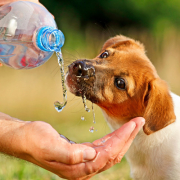
For your pets at home, make sure you’re consistently providing fresh water. Ice cubes are a great “summer treat” for dogs as well. 

If you happen to find a wild bird or mammal that seems to be in distress due to the heat, contact your local wildlife rehabilitation center for the best possible care.

Dog Flowers

Pet Safe Flowers To Brighten Up Your Garden This Summer 

As the summer quickly approaches, many of us are gearing up to beautify our gardens and homes with flowers. For those of us with pets, it’s important to know which flowers are safe to have around the house in case our furry friends decide to do what animals do best and eat something they shouldn’t. 

To ensure all the flowers you buy are non-toxic to your pets, it’s recommended to buy individual bouquets rather than the ones that are pre-assembled. Pre-made bouquets don’t normally have every flower in them listed when you purchase, so it can be hard to tell if everything is safe. 

Like most plants, if ingested, flowers can cause your dog or cat to have an upset stomach, so it’s important to know the least harmful ones you should be reaching for at the garden store. 

Embed from Getty Images

Roses are a classic and safe option for both dogs and cats. Fallen petals that can be accidentally ingested by your pet won’t make them extremely sick, and they come in a wide variety of colors to brighten up any space. If your roses have thorns, try placing them in the least accessible place possible.

Gerber Daisies are some of the most popular flowers among pet-owners as they are both beautiful and safe to have around. Make sure that when you buy these flowers you’re purchasing Gerber Daisies specifically, as other flowers within the daisy family, like chrysanthemums or mums, can be toxic to pets. 

Sunflowers are a classic and safe option for summertime. If the petals or seeds are ingested by a dog or cat, it’s likely that they will experience mild stomach discomfort, but they won’t have any serious health issues. 

It’s vitally important to note that if you notice your pet has a habit of eating plants and/or flowers that you stop them immediately and try to reconfigure your space to give them little to no access to the flowers themselves. 

Embed from Getty Images

Orchids are another beautiful option that pet owners can feel confident about having in their home. Like most flowers on this list, if your pet ingests a petal or leaf they’ll likely experience an upset stomach, but they’re non-toxic overall. 

Freesias are a tall and funnel-shaped flower, which makes it even harder for pets to reach if they’re in a vase. They are, however, lemon scented, which could be tempting for any furry friend. These flowers are non-toxic to dogs and cats though, so an upset stomach will be the biggest concern if they do ingest any part of the flower. 

Beyond the safe flowers, it’s important to know of the ones that you should absolutely never have around a dog or cat, as they’re toxic if ingested. 

These toxic flowers include lilies, mums, tulips, azaleas, daffodils, foxgloves, hydrangea, baby’s breath, peonias, iris’, lavender, and eucalyptus. To be absolutely safe, always do your research before bringing any sort of plant or flower into the home.

Small Pets Are At Risk Of Heatstroke As Temperatures Rise

If you’re a small animal owner, it’s important to remember as we transition into warmer seasons in the coming months that your furry friends are at risk of heat stroke, depending on where you live, their setups, and how easy it is for them to cool down. Animals like rabbits, guinea pigs, hamsters, ferrets, chinchillas, and others need to be protected from extremely hot and humid environments.

Researchers have said that there needs to be an increase in public awareness of heatstroke, and the risks that different animals have to experiencing it. Climate change is making it even harder for small animals to remain cool during the summer months. 

Embed from Getty Images

The most common symptoms that researchers found across every species include abnormal breathing, lethargy, collapsing, and stomach issues like diarrhea. Caged animals like rabbits, guinea pigs, and ferrets are at risk of heatstroke because of their confinement in their cage set ups. Make sure you have the largest and safest set up for your small animals and allow them to get free time every day to stretch. 

Dr Anne Carter, a researcher at Nottingham Trent University, said: “There is a misconception that heatstroke in pets only relates to dogs in hot cars and we need to do more to raise awareness of risk factors not only for dogs but in the wider pet population.”

“Owners of small animals such as rabbits, ferrets and guinea pigs may need to review their pet’s housing and take steps to keep their pets cool in the warmer months to reduce the risk of heatstroke.”

If you have a flat-faced rabbit, typically lop-ears have flatter faces, it’s important to know that they are more susceptible to heatstroke.

Embed from Getty Images

Emily Hall, a researcher and vet, said: “Heat-related illness can affect all pets and is likely to become more common as global temperatures rise. Our findings highlight the need for better public awareness of heatstroke and the risk to all animals.”

“The fact that brachycephalic [flat-faced] dogs and rabbits were overrepresented in our study suggests that owners of these animals should be particularly vigilant during hot weather.”

The data from the study observed a relatively small number of pet patients, so the researchers made it clear in their findings that the overall figures for heat stroke among small animals, dogs, and cats is likely much higher than any reported numbers. 

Lack of awareness from the owner can be the biggest cause of death from heatstroke. In general, when you commit yourself to an animal, no matter how big or small, it’s important to do the proper research and make sure you’re doing everything you can to keep them comfortable and healthy throughout the warmer months.

Golden Doodle

Some Of The Most Popular Pets Being Adopted During The Pandemic 

Dogs and cats have always dominated in terms of popular pets for the whole family, and while the Covid-19 pandemic has given numerous households the opportunity to commit to raising a puppy or kitten full time, many are opting for some more unique additions to their family while enduring the rest of the pandemic. 

According to Pets4Homes, an online resource used by many Americans for finding or putting up adoption listings for any and all pets, nearly 20,000 parrots were rehomed in 2020; a 79% increase when compared to 2019. The company claims this is likely because many individuals got tired of the silence in their homes and wanted an animal that could talk back to them. 

Embed from Getty Images

That’s not all either, according to Pets4Homes stats on the past year a wide variety of extremely unique pets have risen in popularity amid the numerous lockdowns the US has endured within the past ten months. Chickens, salamanders, ferrets, quails, tarantulas, and stick insects are among some of the coolest species on the list. 

Lily Wakefield is an average citizen who recently spoke with the media about this unique pet phenomenon and discussed why her and her housemates became obsessed with the idea of owning and raising baby quails after watching numerous TikTok videos about it. TikTok and social media in general has been a major player in getting all of these diverse species onto people’s feeds and thus getting them interested in what it would be like to be an owner of that species. 

“The quails are very funny and have individual personalities. They’re also a great conversation starter as nobody is doing anything in lockdown, and we get so many eggs to give to our neighbors.”

Embed from Getty Images

Daniella Dos Santos is the senior vice president of the British Veterinary Association who also spoke with the press about how while it’s awesome to see so many animals finding loving homes, many of these owners don’t actually take the time to learn about all the specific care that goes into taking care of these species. 

She also went on to discuss how in a year from now when the world is likely back to normal, many of these owners may begin to neglect their pets once they’re able to go out into the real world again. Remember, for these pets, you’re their whole life, and your home is also the only space they will occupy for their entire life. We all now know what it’s like to be stuck in our homes indefinitely, so make sure you’re giving your pet the best care and most loving and entertaining life possible, and make sure you do the research!

Many of these animals have indeed found those loving spaces and owners that actually need their new friends as much as they need them. Romy Miller is a barista who said she found comfort in adopting her axolotl Pluto. Axolotl’s are nicknamed “little water dragons,” to give you an idea of what they look like. 

Miller explained how lockdown gave us all the opportunity to appreciate those we love the most, and that includes our animals. People are finally able to really commit to their pets like they should’ve been all along, and give them the same level of love and emotional companionship that all pets give to their owners.

Dog with Mask

New Study Reveals Which Animals Can Contract Covid-19

Researchers working at the University of California, Davis recently discovered a way to find out which species of animal are susceptible to being infected by the coronavirus. Many researchers have attempted to figure out ways of testing this since the beginning of the pandemic, however, no one was able to come up with a way to do it without potentially harming the animal by infecting them on purpose; until now. 

The study was recently published in the Proceedings of the National Academy of Sciences of the USA (PNAS). The research showed that any animal that has the same enzyme in their cells that SARS-CoV-2 uses to infect human beings with the coronavirus would be at risk. The enzyme is referred to by scientists as ACE2, and is found within multiple types of cells in the human body, specifically our lung, nose, and mouth cells; the areas the coronavirus impacts the most initially. 

Embed from Getty Images

When the coronavirus enters our bloodstream it binds itself to 25 amino acids (the particles that build proteins) and the ACE2 enzyme. Animals that have the same specific enzyme and 25 amino acids have the highest risk of potential infection while animals who have the enzyme but not all 25 specific amino acids are at a much lower risk. 

Prior to this study, we were already aware that the coronavirus could potentially infect dogs and cats, as it already has multiple times. Last month, Buddy the german shepard went viral online after being the first dog in America to contract Covid-19; Buddy unfortunately lost his life to the virus as well. House cats and wild cats are also at major risk, you may remember a couple of months ago when three African lions at the Bronx Zoo contracted the virus, however, there is no record of any type of cat dying from the virus. So this study wanted to focus more on other species that may be overlooked in terms of the coronavirus conversation. 

“Among 103 species, 41 (40%) are classified in one of three ‘threatened’ categories (vulnerable, endangered, and critically endangered), five are classified as near threatened, and two species are classified as extinct in the wild. This represents only a small fraction of the threatened species also.”

Embed from Getty Images

12 marine mammals, including dolphins, are at high risk as well as many different species of rodent, three types of deer, and more. Giant anteaters and the Angolan colobus monkey also made the list of high-risk for infection. The main goal of this entire study was not only to figure out which animals could potentially get the virus, but also to find new ways that humans and animals may be transmitting it to each other. 

The Centers for Disease Control and Prevention have already stated that there is no evidence that infected dogs or cats could give the virus to humans, and person-to-person will always be the number one source of infection. Asymptomatic individuals being the most dangerous demographic of individuals, as they could be unknowingly spreading it around. 

The research concluded that household pets really aren’t at risk, as they normally are always socially distancing from other animals and people by staying at home, however, it’s important to note that it’s unclear as to whether or not humans can give the virus to their pets. So remain diligent in your own health and safety procedures not only for your own safety, but also for the furry friends who rely on you everyday to take care of them.

Girl with her Dog

How Owning A Pet Can Lead To A Healthier Lifestyle

Having a pet is one of the most beneficial things humans can do for both their mental and physical health. A lot of people just think pets make us happy because we’re their owners and provide for them, which is accurate, however there’s a much deeper relationship that develops when we grow a bond with a pet over time. Especially during a pandemic that forces us to remain indoors indefinitely, many of us are turning to our furry friends as a means of comfort and joy, in a world that’s so scary and uncertain. 

Many individuals are also using the pandemic as a means of finally pulling the trigger on becoming a pet-owner, as there really is no better time to train/take care of a new animal and do all the proper research than during a quarantine. Beyond just having the time for a pet, many are looking to find additional means of emotional support, as spending months on months at home takes a toll on anyone after a while. 

Embed from Getty Images

The fact that animals are able to provide emotional support isn’t just some commonly understood phenomenon, there’s scientific evidence that backs it up as well. It’s why some animals are specifically trained to be emotional support animals the same way some are trained to help assist individuals with disabilities. Dogs in particular have such a unique cognitive ability to be trained in specific fields as long as that training starts young. 

From a scientific perspective, the hormone cortisol is what’s released when we feel stressed. Research studies have shown that pets in general – whether it be a dog, cat, hamster, fish, rabbit, etc. – naturally help human beings reduce their cortisol levels through things like training or bonding. Even owning a fish can help relieve stress, simply by looking in your little friends tank every day and watching them live their simple, stress-free life, it ends up becoming contagious. 

Embed from Getty Images

Think about how when we watch a certain television show, and for the time being we forget about all of our life’s stresses because for 30 minutes we’re engulfed in another fictional universe where our problems don’t exist, and the characters’ problems become our problems for that duration of time. It’s an empathetic reaction, and that’s what happens with owning a pet as well. Looking down at your dog or cat, thinking about how they are completely unaware of the world’s issues and just focused on the present moment can be completely contagious, and will remind you to try to remain in the moment. 

The same way that pets lower your cortisol levels, they also have been proven to reduce blood pressure/heart rates in certain individuals. The concept is essentially the same, owning a pet and building a loving bond with it is relaxing. In those moments where it’s just you and your pet, it’s hard to focus on everything else so your whole body is likely to be a lot calmer, and thus, your blood pressure and heart rate stabilize. 

Certain pets, like dogs, promote an active lifestyle as well. Dogs have to be walked, played with, and constantly attended too especially when they’re puppies. Owning an animal that leads an active lifestyle will force you to get up and do the same, because someones gotta clean up after your furry babies. Studies have even shown that owning a dog reduces older individuals risk of having a heart attack due to all the activity.

Finally, the bond you build with your pet is so unique and special that it’s been proven to reduce feelings of depression, anxiousnesses, and other mental stresses that many of us are enduring right now. Your pet may not be your whole entire life and world, but to them, you are their entire life, and that love is easily felt everyday.

Puppies in cage

Animal Cruelty Is Officially A Federal Crime

Animal cruelty has become a growing problem in this country. Whether it be blatant abuse that comes from the world of illegal pit bull fighting rings, parents dropping their puppy Christmas gifts off at shelters after they turn into an actual dog, or leaving dogs out in the cold during winter because they have a dog house, more people are just getting pets for the sake of getting them and not viewing them as an actual responsibility and companion. When animals end up in kill shelters, they’re more likely to end up in the wrong hands, as the background check process isn’t as extensive, and more animals are left to be killed or subject to abusive behavior, when all they want is a loving home and owner. 

Luckily, this month the government is making more moves to ensure that the animals who do find themselves in a domestic home, aren’t abused and are federally protected from those horrors. This past Monday President Donald Trump signed a bill that states animal cruelty is now a federal crime, and will be punishable as such. 

The specific act is titled the “PACT Act,” which stands for the “Preventing Animal Cruelty and Torture Act.” According to the official bill, the act itself is a “bipartisan initiative that bans the intentional crushing, burning, drowning, suffocating, impalement or other serious harm to living non-human mammals, birds, reptiles, or amphibians. The law also bans ‘animal crush videos,’ meaning any photograph, motion picture film, video or digital recording or electronic image that depicts animal cruelty.”

Embed from Getty Images

The penalty for violating this new federal law will be a hefty fine, decided based on the specifics of each case, up to seven years in federal prison, or potentially both. The National Public Radio reported that the initial bill was introduced by Congressman Ted Deutch and Vern Buchanan of Florida. The bill was pushed to vote through the senate thanks to Senator Richard Blumenthal of Connecticut, and Senator Patrick J. Toomey of Pennsylvania. 

Animal cruelty has been an ongoing and growing issue within this country. America already has a whole series of individual state laws against animal cruelty and torture, however, without federal legislation giving a general basis and guideline for these laws, it’s become increasingly more difficult to prosecute specific cases without any major point of reference. 

“PACT makes a statement about American values. Animals are deserving of protection at the highest level,” Kitty Block, president and CEO of the Humane Society of the United States, said in a statement.

“I’m grateful to see the PACT Act finally signed into law. The barbaric torture of animals has no place in a civilized society and should be a crime — and thanks to this new law, now it is. Senator Toomey and I worked together for years to ensure that this kind of despicable torture of animals is forbidden for good, Senator Blumenthal said.

Many individuals who worked on this bill and helped sign it into legislation, including the President, have stated that this has been a long time coming, and animals are long overdue these types of federal protections. As previously mentioned, state’s were responsible for enforcing their own animal cruelty laws, as the only federal regulations before this point were more specifically based on animal fighting rings, and the distribution of videos depicting animal cruelty. Now, with the PACT Act, federal authorities will be able to target and go after animal abusers head on, as the act has granted them federal jurisdiction country-wide. The passing of this act is a win for animal rights activists, and more importantly our countries furry friends who all deserve a loving home, and are now being given a better shot at finding one.

Baby Chicks

Indonesia Is Giving Kids Baby Chicks To Combat Internet Addiction

As this decade comes to a close and we begin a new one, it’s safe to say a lot has changed within the past 10 years. What’s been the most significant and obvious transformation is how much technological advances have been made. We now have phones that we unlock using our faces or fingerprints, headsets that let us enter the world’s that video games create, cars that drive for us, and an endless stream of social media posts and notifications. While this new technology has advanced us as a society, it also has its major drawbacks, one of the biggest being how dependent we all are on it, especially the younger generation. 

Kids are becoming more addicted to social media and the internet every year, and a huge part of that has to do with how accessible personal internet devices have now become. More parents are allowing their children to own either a tablet, phone, laptop, etc. whatever is easiest and can work as the best distraction for them. While this practice may be quite common here in America, other parts of the world are putting great efforts into preventing their children from becoming overly dependent on these devices. 

Embed from Getty Images

Specifically, a city in Indonesia is combating internet addiction in kids with trees, and chicks. Bandung, Indonesia has launched a new program in which students are given both a baby chicken and chili seeds in an attempt to get their eyes off the screen, and onto the process of growth in the natural world. Kids ranging from elementary school to junior high school are being given the responsibility of caring for their new “exotic” pets and plants to grow. According to CNN, The Bandung government backed the pilot program and has provided 2,000 chicks and 1,500 chili seeds to 12 schools in the Bandung districts (10 elementary schools and two junior high schools). 

As stated above this program is still in its “pilot” phase, meaning the results in regards to internet use is unconfirmed, however, educators have high hopes that growing trees and caring for young chicks will help motivate the kids to focus on what’s real. CNN reports that the Mayor of Bandung, Mayor Oded Danial, kicked off the program by holding a “symbolic hand-over ceremony” in which the chicks were handed off to the kids as their new caregivers. 

Embed from Getty Images

This program is happening in Indonesia specifically due to increased smartphone addiction rate which is growing concerns amongst many parents in the country.  According to the Global Digital Report for 2019, South Asia has one of the highest online presence globally, and the average Indonesian internet user spends an average of nine hours a day online! For reference, that’s two hours more than the GLOBAL average. 

Several parents in Bandung appeared supportive of the program dubbed ‘chickenization.’”It’s good to increase the discipline of children. Caring for trees is better than playing with cell phones,” local parent Elis Puri said to CNN.

The children themselves are just as excited, local accounts for the program showed off several plans that all the kids had for the baby chicks. Some said they would like to begin breeding chickens in general to create a constant source of eggs and protein for his family, others had a little more morbid of a plan and want to raise the chick until they’re big enough to eat. At least they have a solid plan for raising the babies.  

Local government officials and school officials plan on monitoring the program for the next year. They plan on recording data on both how successful every child is at maintenance care for their pets and plants, as well as their average internet use in comparison to before the program was implemented into their lives.