Posts

Dr. Young Suh Kim physicist

Bridging Quantum Mechanics and Relativity: The Moving Hydrogen Atom | Dr. Young Suh Kim

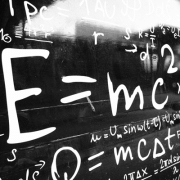
Albert Einstein’s revolutionary ideas transformed the world of science, introducing the theory of relativity and fundamentally reshaping how we view space, time, and matter. For many, he stands as an immortal figure in the world of physics. For one man, Dr. Young Suh Kim, Einstein is not just an inspiration but the focal point of his life’s work. Dr. Kim’s professional goal has long been to write his name into the scientific genealogy of Einstein by solving one of the great unanswered questions of modern physics: how the hydrogen atom behaves when in motion.

gold

Modern Alchemy: CERN Physicists Successfully Transform Lead Into Gold Using Particle Collider

Ancient alchemists dreamed of transforming lead into gold through a mystical process they called “chrysophobia,” believing they could harness an elusive “philosopher’s stone.” Centuries later, modern science at CERN’s Large Hadron Collider (LHC) near Geneva, Switzerland, has shown this feat is indeed possible, using particle physics instead of magic.

Recent experiments at the LHC have demonstrated that gold can be created by smashing lead atoms together at incredible speeds—specifically, 99.999993% the speed of light. Between 2015 and 2018, during the collider’s second operational phase, scientists successfully produced around 86 billion gold nuclei. The total yield was still minuscule, equating to merely 29 trillionths of a gram.

These fleeting gold particles existed momentarily before smashing with the collider’s beam pipe and breaking apart. However, even their extremely brief lifespan didn’t escape detection. Marco van Leeuwen, spokesperson for A Large Ion Collider Experiment (ALICE) collaboration, explained the ephemeral creations prove the feasibility of further studies.

“It is impressive to see that our detectors can handle head-on collisions producing thousands of particles while also being sensitive to collisions where only a few particles are produced at a time, enabling the study of rare electromagnetic ‘nuclear transmutation’ processes.”

Embed from Getty Images

Historical alchemists weren’t entirely misguided. Inspired by Aristotelian ideas, they observed similarities between gold and lead, believing the heavier metal was simply an “ailing” form of the more precious one.

In reality, gold and lead are neighbors on the periodic table, separated by just three protons. Gold has 79 protons, whereas lead has 82. Modern physics can exploit this proximity by stripping three protons from lead nuclei (alongside some neutrons) to form gold. Further reducing protons results in different metals such as mercury or thallium.

To precisely measure the particles generated inside the collider, physicists utilized ALICE’s sophisticated Zero Degree Calorimeters (ZDCs). These sensitive devices track neutrons and protons ejected from billions of high-speed particle interactions each second.

The third and current run of the LHC has proven even more productive, reaching an impressive rate of approximately 89,000 gold nuclei per second—almost double the rate of earlier runs, thanks to increased collision energies.

“This is the first systematic experimental detection and analysis of gold production at the LHC, thanks to ALICE’s specialized ZDC instrumentation,” said Uliana Dmitrieva, a physicist involved in the project.

Although Run 3 has created nearly twice as much gold as Run 2 due to ongoing improvements to the machines, the total still comes to trillions of times less than what would be needed to make a piece of jewelry.

Embed from Getty Images

“While the dream of medieval alchemists has technically come true, their hopes of riches have once again been dashed,” CERN stated.

Physicist John Jowett, who was also involved in the experiment, stated that beyond the alchemical novelty, these findings enhance scientists’ understanding of electromagnetic processes, providing practical insights.

“The results also test and improve theoretical models of electromagnetic dissociation which, beyond their intrinsic physics interest, are used to understand and predict beam losses that are a major limit on the performance of the LHC and future colliders.”

According to Jiangyong Jia, a physicist at Stony Brook University in New York, lead was detected turning into gold between 2002 and 2004 at another CERN accelerator known as the SPS. However, the most recent tests are at higher energy, have a far better chance of producing gold, and provide far cleaner observations.

Although they have no plans to pursue gold mining as a side business, CERN researchers claim that a greater knowledge of how photons can alter nuclei will enable them to enhance the performance of the LHC. “Understanding such processes is crucial for controlling beam quality and stability,” says Jia.

einstein

Solving the Bohr-Einstein Issue of the Moving Hydrogen Atom | Dr. Young Suh Kim

There is no more recognizable name in the history of science and physics than Albert Einstein. Ask any pedestrian on the street in any country, and chances are that they will have heard about the German scientist, often associating him with the title of “genius.” However, many people would be surprised to know that the scientist had somewhat of a tumultuous upbringing. 

wormhole

Physicists Create ‘Baby Wormhole’ Using Quantum Computer

Physicists announced on Wednesday that they had successfully simulated a pair of black holes and created a “theoretical” wormhole on a quantum computer. The researchers were able to transmit a message through the wormhole without affecting space or time, potentially paving the way for future studies of teleportation.

According to a study published in the journal “Nature,” scientists at the California Institute of Technology used the computer to virtually simulate what amounts to a tunnel connecting distant regions of the universe.

The achievement is a small step in understanding the relationship between gravity and quantum mechanics.

Dr. Maria Spiropulu, a physicist at the California Institute of Technology, the leader of a consortium called Quantum Communication Channels for Fundamental Physics, and co-author of the report, described that the “holographic” tunnel has the elements of a “baby wormhole.” 

“This is important because what we have here in its construct and structure is a baby wormhole. And we hope that we can make adult wormholes and toddler wormholes step-by-step.”

Of course, scientists did not create a real-life wormhole, but physicists celebrated their work as a spectacular technical triumph. Dr. Spiropulu and her colleagues created the wormhole through an “emergent” two-dimensional space with “quantum fields on the edge of space-time determining what happens within.” 

Embed from Getty Images

The computer-generated cosmic tunnel was built by scientists on Google’s Sycamore quantum processor. Essentially, their system was small enough to be implemented on current hardware while retaining the key properties of a gravitational wormhole.

Experts like Dr. Spiropulu stressed that scientists are still a long way away from being able to teleport any living being through a time-travel portal.

“Experimentally, for me, I will tell you that it’s very, very far away. People come to me and they ask me, ‘Can you put your dog in the wormhole?’ So, no.”

The study’s co-author, Dr. Joseph Lykken, said, “These ideas have been around for a long time, and they’re very powerful ideas.”

“But in the end, we’re in experimental science, and we’ve been struggling now for a very long time to find a way to explore these ideas in the laboratory. And that’s what’s really exciting about this.”

Dr. Daniel Jafferis, a physics professor at Harvard, said that the “key question, which is perhaps hard to answer, is: Do we say from the simulation it’s a real black hole?”

“I kind of like the term ’emergent black hole.’ We are just using the quantum computer to find out what it would look and feel like if you were in this gravitational situation.”

M.I.T. physicist Dr. Daniel Harlow, who was not involved in the experiment, told the New York Times that the study’s foundation was an extremely simplistic and unrealistic model of quantum gravity.

“So I’d say that this doesn’t teach us anything about quantum gravity that we didn’t already know. On the other hand, I think it is exciting as a technical achievement, because if we can’t even do this, and until now we couldn’t, then simulating more interesting quantum gravity theories would certainly be off the table.” 

According to Dr. Harlow, developing computers capable of handling these simulations might take 10 or 15 years.

Dr. Leonard Susskind, a Stanford University physicist who was also not involved in the study, agreed with Dr. Harlow.

“They’re learning that they could do this experiment. The really interesting thing here is the possibility of analyzing purely quantum phenomena using general relativity, and who knows where that’s going to go.”

Embed from Getty Images

The concept of a wormhole was first born from physicist Albert Einstein’s general theory of relativity in 1935. Einstein and a fellow physicist, Nathan Rosen, showed how shortcuts connecting black holes through space and time could theoretically exist. These bridges were later termed “wormholes” by physicist John Wheeler in 1957. 

The recent wormhole experiment used the mathematics of general relativity to investigate quantum teleportation in the hopes of illuminating some previously unknown facet of physics or gravity.

In quantum teleportation, researchers can use a set of quantum manipulations to convey a message between two entangled particles, whether separated by inches or miles, without the researchers knowing what the information is. The technique is seen as fundamental to the development of an unhackable “quantum internet” of the future.

In a Nature article accompanying the paper, Dr. Susskind and Dr. Adam Brown, a physicist at Stanford, said the results could help demystify aspects of quantum mechanics.  

“The surprise is not that the message made it across in some form, but that it made it across unscrambled.”

According to Dr. Lykken, the most straightforward explanation is that the message went through a “really short” wormhole. 

In quantum mechanics, the shortest conceivable length of a wormhole in nature is 10⁻³³ centimeters, which is also known as the Planck length. Dr. Lykken calculated that the wormhole in the study was no more than three Planck lengths long.

“It’s the smallest, crummiest wormhole you can imagine making. But that’s really cool because now we’re clearly doing quantum gravity.”

Airplane Flying

Data Is Fueling Changes in Aviation Engineering

Airline passengers are easy to upset, often rightly bemoaning delays and disruptions. But for the operator, with a plane on the tarmac grounded by mechanical failure, the frustration is even more intense.

The Federal Aviation Administration estimates this inertia equates to an eye-watering loss of at least $150 per minute.

With optimal reliability and an uptime vital just to break even, squeezing every drop of efficiency from an aircraft’s assets has become critical to the sector’s future health. Forecasts, from aviation consultancy Cavok, predict global sectors spending on maintenance, repair and overhaul will hit $100 billion by 2021, with smarter analysis of aircraft data playing a central role.

In turn, engine and airframe manufacturers are incorporating predictive models in their offerings to airlines, which will not only help identify faults and component failures, but also pre-empt issues before they become more serious.

“Predictive technology is great at finding a needle in a haystack and helping engineers pinpoint the areas they need to focus on. With experienced aircraft engineers proving scarce and many now retiring, these solutions are set to become even more vital in gathering and utilising all this invaluable knowledge and information,” says Torsten Welte, global vice-president for aerospace and defence at enterprise software company SAP.

Embed from Getty Images

Mr Welte traces the genesis of this traction to the power-by-the-hour approach for engine maintenance, which Rolls-Royce pioneered in commercial aviation in the 1980s.

“When Rolls-Royce innovated the model with performance-based contracts that charge customers per flying hour of the engine, it became a case of ‘we must keep the engine running or we won’t make any money’,” he says.

“This changed the dynamics in the aviation industry between manufacturer and operator, and drove a different behaviour from the former that was now far more focused on getting the most out of their resources at all times.”

The exponential rise in data has continued to fuel momentum. IBM figures reveal that an average aircraft generates between 500 to 1,000 gigabytes of data. Data analytic platforms such as SAP HANA tap into this business intelligence to monitor fuel speed, torque and pressure with internal predictive algorithms making recommendations in real-time so parts can be sourced and engineers reassigned even while the plane is airborne, and it doesn’t stop there. The technology is also able to tackle the information silos which have traditionally undermined the effective sharing of key intelligence across the aviation ecosystem.

Mr Welte says: “In some countries, due to local ownership rights, performance data is owned by the pilot rather than the airline, which means they have to get permission to access it. Elsewhere, a manufacturer does not necessarily have access to maintenance data which is often owned by the airlines’ own maintenance systems, so it’s all very disjointed.”

Embed from Getty Images

Another process undergoing significant transformation is the traditionally complex task of tail planning; in essence, assigning the most appropriate aircraft to a flight route. For example, if an aircraft has an issue that adversely affects fuel burn, it will be allocated to the shortest flight.

Typically, an airline would spend three to four hours working on a plan which can be subject to 150 changes daily. Until recently, the process had barely evolved from the handwritten schedules of the mid-1980s, with many airlines still transferring the information manually into spreadsheets comprising a dozen pages.

Dubai-based airline Emirates is one of the big names now automating the process, having adopted software vendor IFS Aviation and Defence’s predictive technology.

“Previously, the plans were devised based on the judgment of someone with perhaps 10 to 20 years’ experience, but our technology means we can tap into historical data that goes back 40 years, all in a matter of minutes,” says IFS business development head Espen Olsen.

“Maintenance history, fuel consumption, climate, forecast – all these characteristics are put into the algorithm to calculate the best option, which means reduced risk, increased fuel efficiency, and improved fleet utilisation and maintenance planning.”

Mr Olsen believes the Middle East is driving this market: “They see an issue and do something about it without over-analysing the problem, and they are definitely ahead of Europe when it comes to using this technology. One manufacturer does something visionary and everyone follows.”

More broadly, he is seeing a lot of interest from oil and gas companies inspired by the latest innovation in aerospace and defence. “There has been so much money in this market in the past, they didn’t have to consider how they could become more efficient,” says Mr Olsen. “Yet since the downturn, they are now far more focused on extending the life of equipment and how, as a service provider to the industry, they can commit to a 10-year contract on a fixed basis and still make money. Increasingly, predictive analytics has the answers.”

Soccer ball in stadium

Upcoming FIFA 20 Offers Players a More Realistic Soccer Simulation

EA has published their series of soccer simulation games for several decades now, with each new release iterating on the previous one to maintain the same core gameplay mechanics that players love while introducing new elements to enhance the game’s sense of realism and accuracy. Using the tagline “Experience football intelligence,” EA plans to continue this trend with the September 27th release of FIFA 20. The newest installment in the series features a host of improvements to the game’s core simulation engine, attempting to provide the most convincing facsimile of the sport yet.

Chief among these improvements is the game’s introduction of a mode titled “VOLTA Football,” which allows players to simulate street football in addition to the traditional matches associated with the series. This mode will allow for smaller games, with 3v3, 4v4, and 5v5 matches, and enables players to customize the gender, clothing, shoes, and tattoos of their avatars. This mode includes a storyline mode, allowing players to insert themselves into a narrative about a football player rising to fame and glory.

Embed from Getty Images

The game also features a revamped career mode, which includes several additional features tailored to responses and criticisms about previous iterations of the game. These include interactive press conferences, in which players can decide how to approach the media, and the simulation of conversations between players. As in previous installments in the series, the game features real-life football leagues, teams, and players, and approximates the various levels of skill of each player based on their real-world performances. The game also integrates 90 fully licensed real-world stadiums from 14 countries.

Perhaps the most impressive aspect of the newer entries of the FIFA series, especially FIFA 20, is the convincing and realistic physics and animation engine. Players move about the field realistically, as animations blend into one another seamlessly, and physical contact between players is portrayed dynamically and believably. Additionally, FIFA 20 features enhanced ball physics, and the movement of the ball on the field is governed by a physics simulation that takes into account the contact between the ball and various elements present in the game environment, including the players as well as the ball’s spin and trajectory.

Embed from Getty Images

Another improvement in this year’s entry is the addition of mechanics to give advanced players more control over the ball, further simulating the tactics and techniques employed by real-world professional athletes. These additions include strafe dribbling, affording players more agility while on the ball, controlled tackling for taking back control of the ball, and composed finishing, creating more realistic shots at goal. While these new mechanics may take time to master, they are sure to reward dedicated players with the satisfaction of greater maneuverability and immersion in the game.

Though fans of the series will have to wait nearly two weeks to get their hands on a copy of the game, they can treat themselves to a free demo released today, September 10th, for the Xbox One, PS4, and PC. The demo showcases the new Volta Football mode as well as offering players a chance to try out the new game mechanics. Unfortunately, Nintendo Switch owners will not be able to access the demo, and the version of the game released on Nintendo’s less-powerful handheld will lack many of the features that separate FIFA 20 from previous entries. Initial reactions to the game to the game have been mostly positive, although the game’s representations of each professional players’ skill levels have been met with some criticism. As reviewers have not yet had a chance to get their hands on a copy of the retail version of the game, only time will tell whether FIFA 20 will be as beloved as earlier games, or whether fans will reject the changes in this year’s update.