Posts

delta

Delta Offering $30,000 To Passengers In Canada Plane Crash 

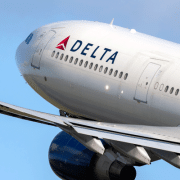
Delta Air Lines is offering passengers  who were on a plane that caught fire and flipped upside down on a Toronto runway $30,000 each with “no strings attached.”

Flight 4819 crashed after touching down at Toronto’s Pearson airport this past Monday. Videos of the crash were recorded and posted online by witnesses and by passengers inside of the plane. 

Embed from Getty Images

According to a statement from Delta, “twenty-one of the plane’s 80 passengers and crew were initially transported to the hospital after the incident. All were released by Thursday,” the Guardian reported. 

The crashed flight was operated by Endeavor Air, a subsidiary of Delta. Both American and Canadian authorities are currently investigating the incident. 

“It’s horrifying when you look at the video,” Delta CEO, Ed Bastian, told CBS. 

“You can imagine when I received the text minutes after it happened, hearing there was a regional jet upside down on an active runway.”

“The reality is safety is embedded into our system. Air travel in the United States is the safest form of travel.”

Embed from Getty Images

“[The $30,000] gesture has no strings attached and does not affect rights,” a spokesperson for Delta said.

Paramedic Pete Carlson who was a passenger said: “For at least a brief period of time I thought ‘I’m not getting off this plane.’”

“The next thing I know, I’m upside down and my seatbelt was still belted.”

This crash comes after a series of serious incidents involving aircrafts around the nation, specifically in Washington DC where a passenger plane collided in midair with an army Black Hawk helicopter. 67 individuals were killed when both aircrafts crashed into the Potomac River. 

That crash was hailed as the worst air disaster in the US since 2001. Air traffic controllers have warned for years that employees in towers were overworked in understaffed environments.

Electric Plane

World’s First Electric Plane Flies For 15 Minutes in Canada

Climate issues and air pollution are a top priority for many countries around the world with the number of electric cars in many towns and cities steadily on the increase. But what about the aviation world?

It is a known fact that air travel is damaging the planet with American flights responsible for around 11 percent of our CO2 emissions. But what can we do to reduce it?

This week saw a seaplane, completely powered by electric, take its maiden flight in Vancouver, Canada, leading some to claim it as a “world first” for the aviation sector.

Harbour Air – who has a fleet of airplanes that carries around 500,000 passengers annually – and magniX carried out a test flight of an aircraft that had been fitted with an electric motor. And although the plane was only a small six seater aircraft, it has been hailed as leading the way to “the world’s first all-electric commercial fleet.”

Taking off near the Fraser River in Vancouver, the electric seaplane continued for around 15 minutes before landing safely.

It is hopeful that by bringing electric into the aviation sector, the amount of carbon emissions could be reduced. Similar to that of the motor industry, where electric cars produce between 17 – 30 percent less carbon emissions to that of a petrol or diesel powered car, it is believed electric airplanes can reduce carbon emissions significantly, something the high-polluting sector should be embracing.

Embed from Getty Images

In a joint statement released by magniX and Harbour Air, it was claimed that “this historic flight signifies the start of the third era in aviation – the electric age.”

magniX, an Australian company, actually launched the plane at the Paris Air Show in June this year and states that the propulsion system – the companies used a DHC-2 de Havilland Beaver which has a 750-horsepower (560kW) magni500 propulsion system – enabled them to create a “clean and efficient way to power airplanes.”

It is believed that Harbour Air, a Canadian operator of seaplanes, are aiming to have an all-electric fleet of airplanes, they currently have 40 aircraft, by 2022, however this all depends on whether they secure the relevant regulatory and safety approvals.

There are many benefits of having electric airplanes with zero emissions as well as a much lower operating cost. Yet they are proving to be a bigger challenge to engineers, unlike the concept of electric trains and cars, which do not travel such long distances. Currently the plane’s batteries are only able to fly about 100 miles in between battery charging, which severely hampers the majority of flights.

The size of the motors and batteries that would be needed to not only launch an electric plane but to also keep it in the air – and for several hours at a time – would mean that it could be difficult for the planes to be flown.

However these are only minor issues that can be resolved eventually due to the rapid advancements in electric flights. In 2017 a non-commercial electric plane crossed both the Pacific and Atlantic Oceans during a round the world trip.

Embed from Getty Images

But will moving airplanes to electric engines actually help cut gas emissions in the aviation sector?

There has been increasing concern regarding the amount of pollution from flying and the impact it has on the planet, with many travelers aiming to reduce their carbon footprint in any way they can. For instance, many try to travel by alternative methods where possible, such as train, while others are utilizing websites that help give something back to the environment – such as BedandTree who plant a tree each time you book your travel through them – while many businesses now hold their cross-country business meetings via video conferencing apps – such as Zoom – therefore removing their impact on the environment completely.

Swiss bank UBS released a survey recently showing that flyers are trying to reduce their air travel due to their environmental concerns, with “flygskam” or “flight shame” spreading throughout the country. And in the United Kingdom it has been claimed that by 2050 the biggest source of air pollution will be from aviation.

However, the prospect of using electric airplanes for long haul flights continues to be a major challenge for those in the aviation sector.

Although there has been a significant advancement in generators, power distribution, electrical motors and controls, battery technology has not advanced as much.

With this in mind, the electric airplane we saw recently in Canada can fly around 100 miles (160km) on lithium battery power, according to AFP.

magniX chief executive Roei Ganzarski commented that “the [flight] range now is not where we’d love it to be, but it’s enough to start the revolution.” He has also questioned ‘’if people are willing to drive an hour to work, why not fly 15 minutes to work?”

Traffic

Thanksgiving Travel Expected To Be Highest on Record

With the Thanksgiving holiday just around the corner many families and friends are planning breaks away to spend time with their loved ones and airlines are anticipating record breaking levels of travel despite the grounding of the Boeing 737 Max aircraft.

An announcement by Airlines for America (A4A) has predicted this year’s Thanksgiving holiday to not only be the busiest time of this year but also in US commercial aviation history.

A major player in American aviation services, A4A represent the nine biggest US cargo and passenger carriers and have claimed over 3.1 million passengers will be traveling on the Sunday after the holiday meaning 1 December could be breaking records across the country.

After analysing the holiday period, A4A have claimed between 31.6 and 55 million passengers will be traveling throughout the 12 day holiday period, an increase of 2.7 per cent over the same period last year.

It is also expected load factors are to be between 79% and 91% for the period, with the official holiday break confirmed as being between Friday 22 November and Tuesday 3 December.

The Transportation Security Administration (TSA) are expecting the busiest days for travel being Wednesday 27 November and Sunday 1 December, with the actual Thanksgiving Day being the quietest time to travel. In fact in order to reduce security line times various U.S. airlines have increased their offerings with a further 850 flights – or 108,000 seats – added to the schedules each day.

Embed from Getty Images

These increases have been predicted despite daily airline departures still being reduced significantly due to the grounding of the 737 Max in March this year following two fatal accidents. Currently 76 new aircraft have not been delivered as expected while 72 planes are still grounded meaning all airlines have had to put together new plans to keep up with demand, including retirements being delayed, holidays being postponed, schedules being restructured and maintenance being carried out where required.

John Heimlich, Vice President and Chief Economist of Airlines for America states, ‘airlines had to take greater measures to offset the Max issues.’

November and December are the busiest periods in the travel calendar however this year the daily departures are currently estimated to have a net reduction of 417 for November and 426 for December, which are higher than average. This is despite the increase over the holiday periods.

Clearly all airlines are keen to have the planes returning to active service with Mr Heimlich commenting on the long term effects the industry could suffer once they are in back in service:

‘It’s unlikely that the manufacturer will be able to deliver all those planes on day one. It will be phased in, and even at the airlines which have already taken delivery of Max aircraft, it will take some time to work them back in to the schedule. The market knows this is coming.’

Embed from Getty Images

The additional aircraft, and therefore extra flights, will be in demand during 2020. Currently the U.S. has a strong economy thanks in part to the constant growth in employment leading to more disposable income. Add to this the consistently low fares as well as consumer confidence at an all time high and the continuing increases in gross domestic product.

According to Boeing the Federal Aviation Administration (FAA) are expected to award certification within the next 6 weeks, however this does not mean there is a specific date for the aircraft to return to our skies.

A4A recently published their industry review and have stated that around $18.1 billion was spent upgrading the metal for all the fleet renewal, satisfying demand, however if the Max had not been grounded the investment would have been nearer $19 billion. According to Heimlich that extra billion dollars should be deferred to the 2020 budge.

Domestic travel has continued to grow throughout the United States with passenger traffic in the first nine months of 2019 seeing an increase of 4 per cent compared to the same period in 2018. An average of 26,100 flights took off from U.S. airports each day via both American and foreign airlines, an increase of 2.7% from last year. The number of seats filled also increased with an extra 3.16 million sold, an increase of 3.5%.

If this has put you off the idea of flying home for the holidays you could drive, however the roads are expected to see around 49.3 million travellers heading to their families. These figures are a 2.8% increase on last year and the largest figures since 2005.

The American Automobile Association (AAA) predicts a peak of traffic on Wednesday as most travelers try to beat the holiday rush. Yet mixed with the every day commuters trips can be expected to take up to four times as long, so make sure you pack enough supplies to keep you fed and watered.

Bad Weather Traffic

Storms Threaten Holiday Travel Across US

The holidays are undoubtedly the most difficult time of the year to travel in the United States, as roughly 55 million Americans take to airports and highways to visit their families before the end of the year. This year, however, may pose even more of a travel headache than usual, as multiple storms are forecasted to hit various parts of the US this Thanksgiving. According to U.S. News, a snowstorm is expected in Colorado, Kansas, and northern New Mexico on Friday and Saturday, potentially wreaking havoc on these states’ roads. Additionally, a mixture of rain and snow is forcasted for Missouri and Maine, among other states. Much of the southeastern U.S., alongside the East Coast, is expected to be impacted by thunderstorms as well. 

Embed from Getty Images

Over the weekend, the disruptive weather system is predicted to continue moving east, causing freezing rain in Ohio, Pennsylvania, Indiana, West Virginia, New York, Vermont, New Hampshire, Maine, and Massachusetts. Next week, rain will turn into snow in Chicago on Tuesday, and Wisconsin and Michigan will receive heavy snow on Tuesday and Wednesday. In the Northeast, temperatures will not reach freezing, but a storm system will cause rain on Tuesday and Wednesday, thankfully clearing up in time of New York’s Thanksgiving Day parade on Thursday.

Already, a winter storm in Denver has caused a 50 car pile-up, and this storm is moving from the Rockies toward the Northeast, according to ABC 7 NY. The central U.S. is predicted to be the area of the country most affected during the peak of Thanksgiving travel, but travel is sure to be disrupted throughout the country due to weather over the coming days and weeks. According to the AAA, travel during the holidays already takes four times longer than usual due to the increase in traffic, and weather will likely make this travel time even longer to the point of being nearly impossible in some areas. Even more people are predicted to travel this year than last year, as the AAA predicts an additional 1.6 million more people will travel in 2019 than in 2018, as a result of a strong economy.

Embed from Getty Images

If you’re one of the millions of Americans planning on traveling this year, it would be wise to take some precautions to ensure you arrive at your destination safely and on time. According to a AAA report, the absolute worst day to travel is Wednesday, the day before Thanksgiving, though roads are likely to see very heavy congestion all week. AAA predicts that it will receive more than 368,000 calls from motorists in need of help this holiday season, with dead batteries, lockouts, and flat tires being the most common issues. While gas prices are predicted to stay at a relatively low $2.57 per gallon this holiday, this means that more people will be motivated to drive, making congestion worse.

Many people travel to warm-weather areas during the holiday season, and this year will be no different. According to the AAA, the top three travel destinations for Thanksgiving will be Orlando, Florida; Anaheim, California; and New York, New York, with theme parks being a major attraction during the holidays. In addition to car and plane travel, travel by train, bus, and cruise ship is also expected to peak during the holiday season, though not to the same degree as the other, more popular forms of travel. Air travel in particular will be more difficult this year than last year, as the AAA predicts that air travel will grow by 4.6% this year, a substantially higher margin than any other form of travel. The most important thing to consider when traveling during the holidays, especially when weather conditions are projected to cause difficulties, is the personal safety of yourself and your passengers. As such, you should take steps to prepare for the event of an emergency if you plan to travel.

Flight Simulator

Microsoft Leverages Cutting-Edge Technology in Flight Simulator

Believe it or not, Microsoft’s longest-running franchise is its Flight Simulator series of titles which debuted in 1982 on IBM PCs. The latest release in the series, 2006’s Flight Simulator X, was widely believed to be the end of the franchise as Microsoft had not made any announcements on the subject for over a decade. That changed this year, however, as the software company announced they were working on a reboot of the franchise, simply titled Flight Simulator, which is due to release in 2020 on Windows and Xbox platforms. Though the program is still in the alpha stage of development, Microsoft showed off their progress at a press event in September, impressing journalists with the depth and complexity of various aspects of the simulation.

Perhaps the most immediate and visually striking aspect of the simulation’s design is the environment. In crafting a believable and lifelike world for users to explore, Microsoft leveraged its extensive collection of satellite and aerial imagery, creating 3D facsimiles of real-world locations using software. Whereas the environments in previous Flight Simulator titles were created by artists who placed individual objects in the virtual world, next year’s title uses machine learning to extract details about the real-world environment to represent in the simulation. For instance, the program identifies forests and other wooded areas and populates them with procedurally-generated trees and other fauna. The result is an environment so detailed and true-to-life that members of the press were even able to identify their apartment buildings while flying overhead in a small plane.

Embed from Getty Images

In addition to the terrain, the simulation also attempts to replicate real-world weather conditions, constructed from data collected by weather stations around the world. The system analyzes radar imagery and other measurements in order to reconstruct cloud patterns, rain, snow, and other weather events, allowing users to fly through storms and hurricanes in real-time. As volumetric clouds are rendered dynamically, either in accordance with conditions in real life or at the user’s behest, the scattering of light through the sky is also simulated, leading to realistic shadows, sunrises, sunsets, and even rainbows where they would appear in real life.

By leveraging an approach where the environment is procedurally-generated, the developers at Microsoft are able to graphically represent the entire world, a feat that would be next to impossible if the environment were crafted by hand. There exist 44,000 airports in the real world, and Microsoft is intending to replicate all of them in their simulation. That also means that the game’s file size, relative to other games, is absolutely massive – as such, content is dynamically streamed into the simulator from the Internet. An offline mode is also available, but this mode reduces the detail of the environments considerably, causing them to look more like the simple, flat satellite imagery used in 2006’s Flight Simulator X.

Aircraft reacts realistically to changes in weather and other variables, and photogrammetry technology was used to replicate the interior of planes’ cockpits.

While the program’s simulation of the entire Earth is impressive and perhaps unprecedented, perhaps the more important aspect of the simulation is found within its collection of aircraft. Microsoft is focused on creating as realistic an experience as they can, with an additional focus on accessibility, as the team is working to ensure that a wide range of peripherals, from flight sticks to the standard Xbox gamepad, are supported. Aircraft reacts realistically to changes in weather and other variables, and photogrammetry technology was used to replicate the interior of planes’ cockpits. To demonstrate the accuracy of the simulation, Microsoft even invited a journalist to pilot a real plane after learning how to do so using the simulator.

Microsoft has very ambitious plans for this iteration of Flight Simulator. The company intends to support the product with continued development for an impressive ten years after its release, though it admits it doesn’t know yet exactly what this support will entail. Instead, Microsoft is going to release the closed alpha to a select number of users to observe how they interact with the virtual environment, and focus continued development efforts on the areas that generate the most engagement. There is certainly a lot of potential for simulation opportunities with a foundation as strong as the one Microsoft is building, and the company is going to be looking to the community for direction moving forward.

Train travel

Should You Consider Traveling By Train Instead of By Plane?

If there’s one aspect of traveling that can really put a damper on the experience, it’s the stress and frustration of dealing with airports. They are often crowded, the food is usually overpriced and mediocre, and going through security is a pain. Air travel generally involves spending long hours sitting in airports, where access to electrical outlets is limited, cellular data networks are congested and sometimes fail, and free Wi-Fi is nowhere to be found. And the experience is not much better once you get in the air; seat sizes have been steadily decreasing over the years to fit more people onto planes, in-flight entertainment options are usually limited, and meals are generally limited to bags of chips and small cups of soda. Nevertheless, plane trips are widely regarded as a necessary evil when traveling to sufficiently distant destinations, and are generally more bearable than a long car trip.

Embed from Getty Images

In many cases, however, there is a better way to travel, which is to take a train. There are several benefits to doing so. For instance, the drive to a train station is often much shorter than the one to an airport, and train tickets are nearly universally cheaper than plane tickets. You don’t have to go through security when boarding a train, nor do you have to deal with long waits in airports, and selections for food and beverages are often better. Also, trains happen to be a more environmentally-friendly form of transportation than planes, which have recently been found to pollute more than previously thought, and cell phone reception on trains is generally better than at airports and in the air. Of course, for sufficiently long distances, taking a plane can be your only option, but for a trip that would take one hour by plane it may be a better idea to take a five-hour long train trip when all factors are taken into consideration.

The quality of the time you spend on a train is often better than the time you spend in the air travel process, as you often have more legroom and opportunities for relaxation or work.

One such factor is the hidden additional time it takes to fly beyond the time spent in the air. Regardless of how long your trip to the airport is, you generally have to wait at least a few hours in the airport before boarding the plane, and it’s always recommended to arrive extra early as a precaution. The disembarking process also takes time, as you find your luggage while navigating an unfamiliar airport, and then you’ll often have to wait to be picked up by a taxi service or a relative. All of this time adds up, and a one-hour flight can quickly become a five-hour affair, making a train trip of similar duration more appealing. Furthermore, the quality of the time you spend on a train is often better than the time you spend in the air travel process, as you often have more legroom and opportunities for relaxation or work.

The New York Times writer Elaine Glusac compared details of traveling between various popular Americans cities by train and by plane in order to test the theory that train trips are often more desirable than plane trips. Her results, surprisingly, argued that for many trips we tend to imagine as necessitating air travel, trains were a superior form of transport. The trip from Boston to New York City, for instance, is both cheaper and faster by train than by airplane, as is the trip from New York City to Washington. The trip from Boston to Washington, however, is a better deal by plane. The trip from Seattle to Vancouver, British Columbia, was recently made easier by the signing of an agreement between the United States and Canada to allow travellers to clear customs and immigration before leaving a country, and taking a train instead of a plane allows travelers to save both time and money on this trip.

Embed from Getty Images

With the advent of the Internet, it’s never been easier to do research on travel opportunities. One popular online resource is Hipmunk, which allows users to input the details of their journey to compare prices and travel times between different airlines and automatically includes details for taking a train instead. Before embarking on any trip, you should look into the various rules and restrictions of your travel method of choice, as both airlines and planes impose limitations on the size and type of luggage you can carry, among other rules. When planning a trip, make sure you take all eventualities into consideration, as a thoroughly-planned trip is much likelier to be a successful one than a spontaneous journey.