Posts

rover

Curiosity Rover Uncovers Ancient Carbon on Mars, Hinting at Lost Habitability

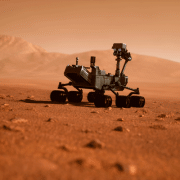
NASA’s Curiosity rover uncovered significant new data while ascending the rugged terrain of Mount Sharp within Mars’ vast Gale Crater, where it detected extensive carbon-rich deposits inside carbonate minerals. The discovery carries profound implications, suggesting the Red Planet may have once been capable of supporting life.

Carbonate minerals, which form when carbon dioxide interacts with water and rocks, serve as critical markers of historical environmental conditions. Scientists had already documented sparse carbonate occurrences on Mars through various exploration methods, including satellite observations, rover analyses, and meteorites originating from the planet that had tumbled toward Earth. Yet, Curiosity’s newest discoveries offer newfound clarity about these deposits.

The findings were published this week in the journal Science. “It tells us that the planet was habitable and that the models for habitability are correct,” Dr. Ben Tutolo, lead author and associate professor at the University of Calgary’s Department of Earth, Energy, and Environment, said in a statement. Tutolo is a participating scientist on the NASA Mars Science Laboratory Curiosity Rover team.

“The discovery of large carbon deposits in Gale Crater represents both a surprising and important breakthrough in our understanding of the geologic and atmospheric evolution of Mars. The abundance of highly soluble salts in these rocks and similar deposits mapped over much of Mars has been used as evidence of the ‘great drying’ of Mars during its dramatic shift from a warm and wet early Mars to its current cold and dry state.”

Embed from Getty Images

The carbonate minerals identified appear to have crystallized in environments characterized by extreme aridity, emerging from reactions between scarce Martian water and surface rocks followed by significant evaporation. These conditions suggest that Mars once boasted a thicker, warmer atmosphere abundant in carbon dioxide, sufficient to maintain liquid water on its surface. However, as Mars gradually lost its atmospheric density, gaseous carbon dioxide became permanently locked into rock formations.

One mineral, siderite, stands out due to its surprisingly high concentration, constituting approximately five to ten percent of the discovered deposits in three drill sites. The rover also detected iron oxyhydroxides within these carbonate deposits alongside soluble salts.

These minerals also suggest Mars once possessed a dynamic carbon cycle similar to Earth’s, in which carbon trapped in rocks could eventually return to the atmosphere, influencing the planet’s climate.

“The question looking forward is how much of this CO2 from the atmosphere was actually sequestered? Was that potentially a reason we began to lose habitability?”

Tutolo emphasized the significant impact of this discovery on our understanding of how the planet’s atmosphere changed over time. “Studying the collapse of Mars’ warm and wet early days also tells us that habitability is a very fragile thing,” Tutolo said.

Embed from Getty Images

“The broader implications are the planet was habitable up until this time, but then, as the [carbon dioxide] that had been warming the planet started to precipitate as siderite, it likely impacted Mars’ ability to stay warm.”

Curiosity’s findings intersect compellingly with ongoing climate initiatives. Tutolo is actively researching ways to mitigate climate change by converting industrial carbon dioxide emissions into stable, solid carbonate minerals, a method analogous to what likely occurred naturally on Mars.

“What we’re trying to do on Earth to fight climate change is something that nature may have already done on Mars. Learning about the mechanisms of making these minerals on Mars helps us to better understand how we can do it here.”

This new data highlights the delicate and fleeting aspects of planetary habitability, offering essential insights for our comprehension of the environmental futures of both Mars and Earth.

NASA has indicated that upcoming missions and further examination of additional sulfate-rich regions on Mars may validate these findings, contributing to a deeper understanding of the planet’s early history and the transformations it underwent as its atmosphere dissipated.

“The most remarkable thing about Earth is that it’s habitable, and it has been for at least four billion years. Something happened to Mars that didn’t happen to Earth.”

Webb Telescope

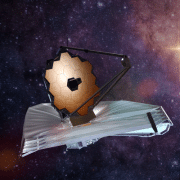
Webb Telescope Detects Potential Signs of Life on Distant Exoplanet

Scientists utilizing NASA’s James Webb Space Telescope (JWST) have captured what they describe as compelling indicators of potential life on an exoplanet beyond our solar system. The telescope detected gases in the atmosphere of exoplanet K2-18b that, on Earth, can only be produced by living organisms.

Specifically, the gases identified, dimethyl sulfide (DMS) and dimethyl disulfide (DMDS, are predominantly produced by marine phytoplankton, a form of algae. Although the findings are promising, scientists emphasize caution, highlighting that these gases represent potential biosignatures rather than direct evidence of extraterrestrial life.

“These are the first hints of a world that is possibly inhabited,” explained astrophysicist Nikku Madhusudhan from the University of Cambridge’s Institute of Astronomy at a press briefing on April 15. Madhusudhan was the lead author of the study, which was published in The Astrophysical Journal Letters.

“This is a transformational moment in the search for life beyond the solar system, where we have demonstrated that it is possible to detect biosignatures in potentially habitable planets with current facilities. We have entered the era of observational astrobiology.”

K2-18b is a sizable planet, approximately 8.6 times Earth’s mass and has a diameter about 2.6 times as large as our planet. It orbits its host star, a red dwarf smaller and cooler than our sun, in the “habitable zone,” where liquid water could potentially exist—a critical factor for life as we understand it.

Situated about 124 light-years away in the constellation Leo, K2-18b falls into a category scientists refer to as “Hycean” worlds, planets hypothesized to possess vast oceans conducive to microbial organisms beneath hydrogen-rich atmospheres.

Embed from Getty Images

Prior studies using Webb had already revealed the presence of methane and carbon dioxide in K2-18b’s atmosphere, marking the first identification of carbon-based molecules on an exoplanet within a habitable zone. “This is an independent line of evidence, using a different instrument than we did before and a different wavelength range of light, where there is no overlap with the previous observations,” Madhusudhan said. “The signal came through strong and clear.”

“The only scenario that currently explains all the data obtained so far from JWST, including the past and present observations, is one where K2-18b is a Hycean world teeming with life. However, we need to be open and continue exploring other scenarios.”

Madhusudhan clarified that while these environments suggest simple microorganisms, they do not yet indicate the existence of more complex or intelligent life forms.

Still, he described the findings as “potentially one of the biggest landmarks in the history of science,” stating, “I know this sounds grand, and it’s not my intention to make it sound grand, but there’s no other way to put it.”

DMS and DMDS were detected at atmospheric concentrations exceeding 10 parts per million by volume, much higher than those found naturally on Earth.

“For reference, this is thousands of times higher than their concentrations in the Earth’s atmosphere and cannot be explained without biological activity based on existing knowledge.”

However, the scientific community remains skeptical. Christopher Glein, principal scientist at the Southwest Research Institute’s Space Science Division in Texas, underscored the necessity of cautious optimism.

“The rich data from K2-18b make it a tantalizing world. These latest data are a valuable contribution to our understanding. Yet, we must be very careful to test the data as thoroughly as possible. I look forward to seeing additional, independent work on the data analysis starting as soon as next week.”

Embed from Getty Images

Astronomers determine the composition of exoplanet atmospheres using the transit method, analyzing starlight filtering through planetary atmospheres as the planet passes in front of its star. This technique allowed Webb to confirm the gases’ presence with a 99.7% confidence level, still leaving a slight possibility of 0.3% that the findings are a statistical anomaly.

Addressing the ultimate goal of exoplanet research, Madhusudhan deems discovering life on an Earth-like planet beyond our solar system as the “Holy Grail” of astronomy, noting humanity’s long-standing quest to answer whether we are alone in the universe.

“When you are seeing something like this, it’s like—this is a question humanity has been asking for thousands of years, and if you’re witnessing it for the first time, it is a shock to the system. And it takes a while to recover from that, from the enormity of it.”

Nevertheless, he emphasized the importance of rigorous validation, calling for repeated observations and further studies to rule out non-biological origins of these gases.

“First, we need to repeat the observations two to three times to make sure the signal we are seeing is robust and to increase the detection significance” to the level at which the odds of a statistical fluke are below roughly one in a million, Madhusudhan said.

“Additionally, further research is required to verify “whether or not there is another abiotic mechanism to make DMS or DMDS in a planetary atmosphere like that of K2-18b. Even though previous studies have suggested them [as] robust biosignatures even for K2-18b, we need to remain open and pursue other possibilities.”

For now, the discovery remains cautiously promising, marking an unprecedented step forward in our search for life among the stars.

saturn

New Study Reveals Saturn’s Rings Are Much Younger Than The Planet Itself 

A new study from the University of Colorado at Boulder has found that Saturn’s rings are likely around 400 million years old, which is much younger than the planet of Saturn itself, which is thought to be around 4.5 billion years old. 

The research was published this month in the journal Science Advances, where it states that Saturn’s rings are likely no more than 400 million years old, making the rings significantly younger than Saturn itself, which is around 4.5 billion years old. 

Embed from Getty Images

The study itself was led by physicist Sascha Kempf from the University of Colorado at Boulder. “In a way, we’ve gotten closure on a question that started with James Clerk Maxwell,” said Kempf.

Kempf broke down that the conclusion of their research came after analyzing dust, and tiny grains of rock material which are constantly moving through the entirety of our Earth’s solar system. When there’s influxes of this tiny grain rock material’s presence, it can leave behind a thin layer of dust on the planets, including on the ice that makes up Saturn’s rings. 

“Think about the rings like the carpet in your house. If you have a clean carpet laid out, you just have to wait. Dust will settle on your carpet. The same is true for the rings.”

Kempf and his team of researchers used an instrument known as the Cosmic Dust Analyzer on NASA’s Cassini spacecraft from the years of 2004 to 2017, analyzing the specks of dust around Saturn. Throughout that time, the team collected around 163 grains that originated from beyond the planet’s immediate proximity. 

With this information, they were able to initially hypothesize that Saturn’s rings have only been gathering dust for a few hundred million years; much younger than the age of the planets in our solar system. 

Embed from Getty Images

“We know approximately how old the rings are, but it doesn’t solve any of our other problems. We still don’t know how these rings formed in the first place.”

Scientists do know that Saturn has seven rings that are made up of chunks of ice that are mostly the size of the average boulder here on Earth. For most of the 20th century, it was assumed that the rings formed at the same time that Saturn did. However, as time went on researchers became skeptical about their origin, as the rings are much cleaner when compared to the actual planet of Saturn. 

“It’s almost impossible to end up with something so clean,” Kempf said.

The other interesting aspect of Saturn’s rings and their development is that they also might be vanishing. NASA scientists have reported in the past that the ice chunks that make up the rings are slowly melting and raining down on the planet itself. They’ve reported that the rings could even fully disappear within the next 100 million years. 

While we still know little about how these rings initially formed, and why they formed so much later than the planet itself, this new research gives an intriguing new insight into the history of Saturn, and our solar system overall.

earth

Scientists Discover New Layer Under Earth’s Crust

Researchers from Australian National University have found evidence of a hidden layer inside Earth’s inner core. The scientists found the layer, an iron-nickel alloy ball around 800 miles (1350 km) wide, by studying the reverberations of seismic waves from large earthquakes through the Earth.

When seismic waves travel through the Earth, they change shape and provide insight into Earth’s internal structure. Previous studies had only looked at single bounces of seismic waves (from one side of the Earth to the other and back).

In this new study, scientists accessed data from waves of 200 earthquakes with magnitudes above 6.0, traveling up to five times across the Earth’s diameter.

“In this study, for the first time, we report observations of seismic waves originating from powerful earthquakes traveling back and forth from one side of the globe to the other up to five times like a ricochet,” study co-author Dr. Thanh-Son Phạm, a seismologist and postdoctoral fellow at the Research School of Earth Sciences at the Australian National University told CNN in an email.

The earthquake waves penetrated different depths and angles near the center, suggesting a different crystalline structure was nestled beneath the surface. The findings were published in the journal Nature Communications.

Earth’s internal structure has four known layers—an outer crust, a rocky mantle, an outer core made of molten-liquid magma and a solid inner metal core. In the 1930s, scientists used the same seismic wave analysis method to discover the Earth’s metallic inner core.

Embed from Getty Images

In 2002, researchers hypothesized that the Earth’s inner core concealed another unknown layer. Thanks to the improved accuracy of seismic monitoring, scientists can now verify this hypothesis.

Lead author of the study and observational seismologist Thanh-Son Pham of ANU, told Reuters, “We may know more about the surface of other distant celestial bodies than the deep interior of our planet.”

“We analyzed digital records of ground motion, known as seismograms, from large earthquakes in the last decade. Our study becomes possible thanks to the unprecedented expansion of the global seismic networks, particularly the dense networks in the contiguous U.S., the Alaskan peninsula and over the European Alps.”

Both the inner core’s outer shell and the sphere within it are hot enough to be molten. However, the high pressures found at the Earth’s center render them solid.

Australian National University geophysicist and study co-author Hrvoje Tkalčić told Reuters, “I like to think about the inner core as a planet within the planet. Indeed, it is a solid ball, approximately the size of Pluto and a bit smaller than the moon.”

“If we were somehow able to dismantle the Earth by removing its mantle and the liquid outer core, the inner core would appear shining like a star. Its temperature is estimated to be about 5,500-6,000 degrees (Celsius/9,930-10,830 Fahrenheit), similar to the sun’s surface temperature.”

According to Pham, there does not seem to be a clear line that distinguishes the outer region of the inner core from the sphere nestled within. Instead, the transition is gradual. Scientists could tell the two regions apart because seismic waves behaved differently between them.

“It could be caused by different arrangements of iron atoms at high temperatures and pressures or the preferred alignment of growing crystals.”

Embed from Getty Images

As the Earth slowly cools, its inner core grows, while its outer core contracts as molten materials solidify.

The researchers told The Washington Post that the innermost core might hold clues to a “significant global event that occurred in the planet’s past,” allowing scientists to understand the evolution of Earth’s magnetic field by providing something akin to a fossilized record.

“The latent heat released from solidifying the Earth’s inner core drives the convection in the liquid outer core, generating Earth’s geomagnetic field. Life on Earth is protected from harmful cosmic rays and would not be possible without such a magnetic field.”

The discovery may also give “us a glimpse of what might have happened with other planets,” Pham said. “Take Mars as an example. We don’t understand yet why (Mars’ magnetic field) ceased to exist in the past.”

Mars is thought to be devoid of life because it lost its magnetic field some 4 billion years ago, leaving it vulnerable to the solar winds and dust storms that swept away the planet’s atmosphere and oceans.

asteroid

NASA To Slam Probe Into Asteroid for Planetary Defense Test

On Sept. 26, NASA will slam a probe into an asteroid during its Double Asteroid Redirection Test mission. The mission is part of NASA’s larger planetary defense plan against any asteroids that may someday impact the Earth.

If an asteroid were to hurl toward Earth in the future, a probe like the one used in DART should be able to realign its trajectory or destroy it, neutralizing its threat.

One of the engineers orchestrating the mission acknowledges, “this is an amazing moment for our space program.”

“For the first time, we will move a celestial body intentionally in space, beyond Earth’s orbit! This test goes beyond international borders and really shows what we can accomplish if we all work together as one team and as one on Earth.”

NASA mapped the orbits of 30,000 nearby asteroids and determined that, as of right now, most of them are unlikely to collide with Earth or are so small that they would burn up in the atmosphere before any significant impact.

Embed from Getty Images

The last time an asteroid collided with Earth, it ended the age of dinosaurs some 66 million years ago. The 6-mile wide asteroid Chicxulub killed over 75% of the Earth’s species, triggering a mass extinction event. Earthquakes reverberated throughout the crust; wildfires spread in all directions from the asteroid’s impact, and mammoth tsunamis engulfed dry land.

NASA does not want to rule out that an asteroid may hit Earth in the future. The probe will impact an asteroid named Dimorphos, which orbits another asteroid named Didymos, nearly the Earth’s size. Its mission is to realign Dimorphos and change the duration of its orbit by 11 minutes.

The agency says this will determine if a strategy like DART would successfully prevent planetary threats posed by asteroids by gauging how asteroids respond to kinetic impact. The stakes of the test are low since it poses no threat to Earth, but the agency says the difficulty of the maneuver will remain the same.

Embed from Getty Images

During a news conference, Andrea Riley, a program executive at NASA, spoke on the importance of the DART test. The probe will only be able to detect Dimorphos an hour and a half before impact, making this an accurate test of its precision. Once the probe detects the asteroid, it will autonomously guide itself into a collision.

“If it misses, it still provides a lot of data. This is a test mission. This is why we test; we want to do it now rather than when there is an actual need.”

NASA will hold a televised briefing for the test at 6 p.m. on Sept. 26. NASA TV will then provide live coverage of the impact, predicted to be at 7:14 p.m. EDT the same day.

Planets in Sky

Planet 10 Times As Massive As Jupiter Discovered Orbiting Around Two Giant Stars

The boundlessness and mystery of space always opens up the possibilities of new discoveries at any moment – and the newest one is changing the way scientists are looking at planet-hosting stars.

A study in the journal Nature revealed a giant planet has been found orbiting a young binary star system, called b Centauri, about 325 light-years away from Earth. The newly found planet, named b Centauri (AB)b or b Centauri b, is about 10 times as massive as Jupiter, the largest planet in the solar system.

Embed from Getty Images

“Finding a planet around b Centauri was very exciting since it completely changes the picture about massive stars hosting planets,” the study’s lead author Markus Jansen, an astronomer at Stockholm University, said.

b Centauri b was discovered using the European Southern Observatory’s Very Large Telescope (VLT), along with the mounted Spectro-Polarimetric High-contrast Exoplanet REsearch instrument (SPHERE). According to the ESO, b Centauri has six times the mass of the Sun, which makes it the most massive system where a planet has been discovered. It also becomes the hottest planet-hosting system, and is three times as hot as the Sun.

The discovery is notable, as it disapproved a belief that B-type stars — which possess surface temperatures between 10,000 to 30,000k — couldn’t support a sizeable planet due to their nature. “B-type stars are generally considered as quite destructive and dangerous environments. It was believed that it should be exceedingly difficult to form large planets around them,” Jansen explained.

The observatory said that b Centauri b’s orbit is one of the widest that have ever been discovered – it has a distance 100 times greater than Jupiter from the sun. Taking into account the binary B-Star’s harshness, b Centauri b’s orbital distance could be necessary for it in order for it to avoid the intense emitted radiation.

Embed from Getty Images

This isn’t the first time that b Centuari has been captured – Imaging of it was actually done nearly 20 years ago by another telescope, but it was not recognized as a planet at the time.

b Centuari b now becomes the latest exoplanet, or a planet outside of the Solar System, to be discovered. To date, 4,576 exoplanets have been located, while there have been 3,393 systems with confirmed planets found.

Speaking to ESO, study co-author and Stockholm University PhD student Gayathri Viswanath emphasized just how different the environment of b Centauri b is from what we know and experience on Earth and in our system.

“It’s a harsh environment, dominated by extreme radiation, where everything is on a gigantic scale: the stars are bigger, the planet is bigger, the distances are bigger.”

Jansen noted that it’s currently a mystery as to how b Centauri b formed, but said that finding out the answer will be an “intriguing task.” ESO explained that with upgrades to the VLT and the Extremely Large Telescope (ELT) to start making observations within the decade, more about b Centauri b, such as its formations and features, will be studied.

Jasen said in an email to NBC News that the discovery has motivated him and his team to expand on a survey titled BEAST, which is currently examining 85 similar stars. Jasen also acknowledged his belief that the field will see an increased search intensity for high-mass stars in order to confirm planets and characterize them.

Milky Way

Scientists Have Discovered a Hypervelocity Star Heading Out Of The Milky Way

A star has been seen making its way out of the Milky Way at a speed of 3.7 million miles per hour, the equivalent of 1056 miles per second or ten times faster than the majority of the stars in the Milky Way, including the sun. However it is widely believed it will take a further 100 million years before it actually makes its way out of the Milky Way and will then spend eternity roaming around intergalactic space.

Hypervelocity stars were discovered by astronomers in 2005 although numbers are still low, with fewer than 30 found in the last 14 years. Named S5-HVS1, the star has made its way to the constellation of Grus, which is at a distance of just over 29,000 light-years.

University of Oxford astronomer Dr. Douglas Boubert confirmed that the S5-HVS1’s velocity is so high it will ‘inevitably leave the Galaxy and never return,’ while Carnegie Mellon University researcher Dr. Sergey Koposov exclaimed ‘this is super exciting, as we have long suspected that black holes can eject stars with very high velocities’.

Embed from Getty Images

It is the first time a black hole has thrown a star out of the galaxy since the act was predicted 30 years ago via the Hills mechanism suggested by astronomer Jack Hills, and Dr. Ting Li from Carnegie Observatories and Princeton University was quick to confirm that ‘seeing this star really is amazing as we know it must have formed in the galactic center, a place very different to our local environment.’

The Southern Stellar Stream Spectroscopic Survey (S5) are responsible for the discovery thanks to the data collected from a 3.9-m Anglo-Australian Telescope alongside ESA’s Gaia satellite. The astronomers were then able to understand the star’s journey out of the Milky Way’s center.

S5’s main goal scientifically is to probe the stellar streams, however they were able to provide some of their resources to look around the Milky Way to see if there was anything interesting. Using this technique they were able to discover the star and Lowell Observatory’s Dr. Kyler Kuehn is hopeful they will ‘find even more’.

The team’s paper was published in the Monthly Notices of the Royal Astronomical Society.