Posts

rain

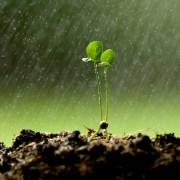
Study Suggests Plants Respond to the Sound of Rain

A raindrop striking the ground may sound soft to human ears, but beneath the surface, it delivers something closer to a shockwave. For seeds lying in soil or submerged in water, that impact can act as a powerful environmental cue that may determine when it’s time to grow.

In a study published in Scientific Reports, researchers found that rice seeds exposed to the sound of rainfall germinated significantly faster than those kept in silence, offering some of the first direct evidence that plants can detect and respond to sound.

The finding adds a new dimension to a long-standing scientific question around how much plants actually sense about the world around them. While previous research has suggested plants can respond to light, gravity, touch, and chemical signals, evidence linking sound to a clear biological outcome has remained limited.

To test the idea, researchers submerged roughly 8,000 rice seeds in water, conditions that mirror their natural growing environment, and exposed some to recorded rain sounds while keeping others in identical, quiet conditions. The seeds exposed to sound consistently sprouted earlier, from 30 to 40 percent faster, suggesting that rainfall itself may act as a trigger for germination.

Embed from Getty Images

“What this study is saying is that the seeds can sense sound in ways that can help them survive,” said study co-author Nicholas Makris, a professor of mechanical engineering at the Massachusetts Institute of Technology, in a statement. “The energy of the rain sound is enough to accelerate a seed’s growth.”

“Brilliant research has been done around the world to reveal the mechanisms behind the ability of plants to sense gravity. Our study has shown that these same mechanisms seem to be providing plant seeds a means of perceiving submergence depths in the soil or water that are beneficial to their survival by sensing the sound of rain. It gives new meaning to the fourth Japanese microseason, entitled ‘Falling rain awakens the soil.’”

The mechanism behind that response may lie in statoliths, tiny starch-filled structures within plant cells that help detect physical changes, such as gravity and orientation. These structures shift within cells to guide early growth, including the direction roots take as they emerge.

Makris and his team hypothesized that vibrations from raindrops, especially in water or saturated soil, could be strong enough to disturb these statoliths, effectively signaling that conditions are favorable for growth.

Embed from Getty Images

The physics of sound supports that theory.

“It has to do with the fact that water is denser than air, so the same drop makes larger pressure waves underwater. So, if you’re a seed that’s within a few centimeters of a raindrop’s impact, the kind of sound pressures that you would experience in water or in the ground are equivalent to what you’d be subject to within a few meters of a jet engine in the air.”

From a seed’s perspective, then, rainfall may not be subtle at all. Instead, it becomes a powerful environmental signal that could provide a crucial timing advantage. Germinating quickly after rain allows seeds to take immediate advantage of moisture and nutrients, increasing their chances of survival.

Although the study focused on rice, the researchers suggest that similar responses may occur in other plant species, particularly those that require wet conditions for germination.

Makris and his co-author, Cadine Navarro, plan to explore whether plants might also respond to other environmental cues, such as wind, which can generate its own patterns of vibration.

If those signals prove meaningful, it would further challenge the idea of plants as passive organisms, suggesting instead that they are quietly attuned to the physical rhythms of their environment.

 

spray

Scientists Name Fungus-Killing Compound After Keanu Reeves

Researchers from Germany’s Leibniz Institute have found a naturally occurring compound so effective at busting human and plant pathogenic fungi that they named it after actor Keanu Reeves.

The three nonribosomal lipopeptides scientists isolated—Keanumycins A, B, and C—are byproducts of Pseudomonas bacteria typically found in soil and water. Scientists observed the compounds while studying Pseudomonas for their effectiveness against predatory amoebas.

“We have been working with pseudomonads for some time and know that many of these bacterial species are very toxic to amoebae, which feed on bacteria,” said study leader and head of the department of Paleobiotechnology at Leibniz-HKI Pierre Stallforth.

The researchers wanted to know if the same bacteria would be effective against fungi, which have a cell structure similar to amoebas. Testing showed that the bacteria’s byproducts were lethal to a fungus infecting a hydrangea.

The scientists’ findings were published in the Journal of the American Chemical Society in January. The study’s first author, Sebastian Götze, said in a press release that they named the lipopeptides after Keanu Reeves because of his iconic roles in action films.

“The lipopeptides kill so efficiently that we named them after Keanu Reeves because he, too, is extremely deadly in his roles.”

Embed from Getty Images

Notably, the Keanumycins were effective against Botrytis cinerea—the fungus responsible for gray mold rot that destroys various crops, such as strawberries and wine grapes, and causes significant harvest losses. Farmers frequently use chemical fungicides to combat its aggressive spread.

Having seen the potential of the Keanumycins, the study’s authors are conducting experiments to determine whether or not a fungicide containing Keanumycins can effectively eradicate crop-damaging fungi without leaving any harmful residues behind in soil or on produce.

If the results are promising, the compounds could provide a biodegradable alternative to chemical pesticides.

Götze said that the compounds may also help treat human fungal infections that are becoming resistant to conventional antifungals. For instance, Keanumycins are non-toxic to humans and were found to “strongly inhibit” the pathogenic fungus Candida albicans, which is responsible for yeast infections.

“We have a crisis in anti-infectives. Many human-pathogenic fungi are now resistant to antimycotics — partly because they are used in large quantities in agricultural fields.”

Dr. Matt Nelsen, a researcher from Chicago’s Field Museum, told CNN in an email that the study “documents another exciting means by which microbes have evolved to compete with and fight other organisms.”

“Previous efforts have sought to exploit such natural products for human use to combat animal and plant pathogens. However, over time, many pathogenic organisms — including fungi — have evolved resistance to the chemicals we use to battle them. Consequently, we need to find a new way to ‘outsmart’ or ‘one-up’ them.”

Embed from Getty Images

This is not the first time a scientific discovery has been named after a famous face. In February, researchers Juan C. Sánchez-Nivicela, José M. Falcón-Reibán and Diego F. Cisneros-Heredia discovered a mystical steam frog in Ecuador and named it after fantasy author J.R.R. Tolkien.

The frog, Hyloscirtus tolkieni, was found in a habitat that reminded Sánchez-Nivicela of the Fangorn Forest from Tolkien’s “Lord of the Rings” series.

The paper on their findings started with an homage to the opening lines of Tolkien’s “The Hobbit.”

“In a stream in the forest, there lived a Hyloscirtus. Not a nasty, dirty stream, with spoor of contamination and a muddy smell, nor yet a dry, bare, sandy stream with nothing in it to perch on or to eat: it was a Hyloscirtus-stream, and that means environmental quality.”

There are also several beetles named after celebrities, including the Agaporomorphus colberti named after late-night talk show host Stephen Colbert, Agra catbellae named after actress Catherine Bell, Agra katewinsletae named after actress Kate Winslet, and Agra liv, named after actress Liv Tyler. 

Sir David Attenborough, famous broadcaster, biologist and natural historian, has over 40 species named after him, including a prehistoric marine reptile and a native British flower.

On Saturday, Keanu Reeves participated in a reddit AMA (ask me anything) where he was asked about his thoughts on having the killer compounds named after him.

“Hi, thank you…they should’ve called it John Wick…but that’s pretty cool…and surreal for me. But thanks, scientist people! Good luck, and thank you for helping us.”

Dog Flowers

Pet Safe Flowers To Brighten Up Your Garden This Summer 

As the summer quickly approaches, many of us are gearing up to beautify our gardens and homes with flowers. For those of us with pets, it’s important to know which flowers are safe to have around the house in case our furry friends decide to do what animals do best and eat something they shouldn’t. 

To ensure all the flowers you buy are non-toxic to your pets, it’s recommended to buy individual bouquets rather than the ones that are pre-assembled. Pre-made bouquets don’t normally have every flower in them listed when you purchase, so it can be hard to tell if everything is safe. 

Like most plants, if ingested, flowers can cause your dog or cat to have an upset stomach, so it’s important to know the least harmful ones you should be reaching for at the garden store. 

Embed from Getty Images

Roses are a classic and safe option for both dogs and cats. Fallen petals that can be accidentally ingested by your pet won’t make them extremely sick, and they come in a wide variety of colors to brighten up any space. If your roses have thorns, try placing them in the least accessible place possible.

Gerber Daisies are some of the most popular flowers among pet-owners as they are both beautiful and safe to have around. Make sure that when you buy these flowers you’re purchasing Gerber Daisies specifically, as other flowers within the daisy family, like chrysanthemums or mums, can be toxic to pets. 

Sunflowers are a classic and safe option for summertime. If the petals or seeds are ingested by a dog or cat, it’s likely that they will experience mild stomach discomfort, but they won’t have any serious health issues. 

It’s vitally important to note that if you notice your pet has a habit of eating plants and/or flowers that you stop them immediately and try to reconfigure your space to give them little to no access to the flowers themselves. 

Embed from Getty Images

Orchids are another beautiful option that pet owners can feel confident about having in their home. Like most flowers on this list, if your pet ingests a petal or leaf they’ll likely experience an upset stomach, but they’re non-toxic overall. 

Freesias are a tall and funnel-shaped flower, which makes it even harder for pets to reach if they’re in a vase. They are, however, lemon scented, which could be tempting for any furry friend. These flowers are non-toxic to dogs and cats though, so an upset stomach will be the biggest concern if they do ingest any part of the flower. 

Beyond the safe flowers, it’s important to know of the ones that you should absolutely never have around a dog or cat, as they’re toxic if ingested. 

These toxic flowers include lilies, mums, tulips, azaleas, daffodils, foxgloves, hydrangea, baby’s breath, peonias, iris’, lavender, and eucalyptus. To be absolutely safe, always do your research before bringing any sort of plant or flower into the home.

South Africa Plants

South Africa Is Seeing A Massive Increase In Plant Extinction

The Succulent Karoo desert is located between the country of Namibia and South Africa. What the United Nations describes as the most “biodiverse arid desert on the planet” is home to more than 6,300 rare plant species, and countless exotic animals, most of which can only be found there. 

According to reports, a combination of overgrazing from wildlife, plant poaching, and other human demands on the desert has left only 25% of the Karoo in a habitable, intact state. It’s for this reason alone that conservationists in Africa have made protecting the Succulent Karoo a main priority. However, not many officials in Africa take the conservationist effort seriously, as for the most part the Karoo is just a barren desert. However, this desert’s ecosystem is extremely fragile and valuable to all of Africa’s inhabitants. 

Succulents are defined as plants that store water in their leaves, stems or both for long periods of time, hence why they’re most commonly found in dry, arid, desert environments. Cacti and aloe plants are the most common types of succulents, and the Karoo desert is full of them. In fact, the Succulent Karoo alone contains a third of the entire planet’s succulent species. 

Embed from Getty Images

The 6,300 plant species that grow in the Karoo often have bright and colorful flowers stemming from them, which indicates to insects and small animals that they contain moisture and nutrients. Insects come and drink the water and eat the leaves, which in turn attracts insect-eating animals to the desert, such as moles, scorpions, tortoises, birds, and lizards, most of which have sub-species that are exclusive to the Karoo, much like a majority of the succulents. These beautiful plants also attract a plethora of tourists when they’re in bloom, however, tourists also means illegal poachers, and I don’t mean the kind that are hunting elephants. 

“A growing illegal market for succulents is fueling poaching activities in the Karoo region. Scorpions, baboon spiders, and some lizard species also fall prey to poachers in the region. Overgrazing by farmed ostriches, sheep and cattle is also seriously damaging the desert landscape, especially during droughts. This environment is very easily damaged, and has a long recovery period. The desert has also been mined for uranium, diamonds and sand, leaving great scars in the landscape,”says Marienne De Villiers, an ecologist for the South African government’s conservation organization, CapeNature.

Embed from Getty Images

The desert is so vast and the inhabitants are so sparse and small that scientists find themselves having a difficult time locating and identifying species for protection. However, recently CapeNature researchers and conservationists have begun using drones to locate certain species that otherwise are out of sight. 

According to the researchers, the drones they use are mounted with infrared sensors that are connected to a machine that is able to identify species from long distances based on shapes and motion. Scientists are able to use this information to learn about when certain species are typically out in the open and therefore more susceptible to poaching threats. 

According to the Environmental Literacy Council, an international conservationist non-profit, only 3% of the Succulent Karoo Desert is protected under government legislation. This issue is CapeNature’s main focus, so much so that in 2002 they created something called the Biodiversity Stewardship Program. This program calls upon local landowners and farmers in South Africa to be recruited for their land as a space for wildlife to live and be protected. Paying landowners for portions of their vast properties is much cheaper than raising the funds to actually buy new land to be used as a wildlife safe haven.

“Over time, these projects have helped to build buffer areas and wildlife corridors throughout the Western Cape, helping to protect the Succulent Karoo and its rare species. I hope the Stewardship program will educate people about the value of the desert for years to come. There’s still so much that we don’t know about the Succulent Karoo, and there’s probably a wealth of species still out there waiting to be discovered,” says De Villiers.

Outdoor Property

How to Make Your Outdoor Property More Appealing

Those of us who are lucky enough to have an outdoor space to call our own, whether it be a deck, patio, or backyard, ought to take into careful consideration how best to maximize the enjoyability of the space. After all, nobody wants to be greeted with an eyesore right after leaving the house or apartment or know that they’re wasting a space that has potential for bringing relaxation, comfort, and social opportunities. But the task of transforming an out of doors space into one you can be proud of can seem overwhelming or difficult. As such, this article should serve as a reference for guiding you in your pursuit to take advantage of your property in fun and exciting ways.

As with any home renovation project, the first steps involve planning. This means taking a good look at the space in question and visualizing the impact of various changes. Also think about how you intend to use your piece of real estate. Good designs are ones that are functional and invite people to participate in specific activities. Ask yourself: is this an outdoor balcony where I’d like to host dinner parties? If you have a large backyard, should the space be meant to accommodate a small number of guests or many? Or would you prefer an area where you can spend some quality time alone, reading a book or soaking in the sun? Having an idea of one or multiple activities for your space will inform all aspects of the design process.

Embed from Getty Images

Also, before you start modifying the environment, make sure you have a theme in mind that matches your sense of style, and consider how the theme you’ve chosen relates to the design of your interior spaces. It can be jarring to move from an indoor space that embodies one sense of style to an outdoor space with a radically different one. If your interior design takes cues from Japanese traditions, for instance, you can install a bamboo fence outdoors with foliage to match, or if you want your space to be reminiscent of the English countryside, opt for moss-covered rocks and weathered wood seating. You’ll want to strike the right balance between making sure that your interior and exterior designs are different enough to ensure that being in these spaces feels different from each other, while not being so different that the transition between places feels random and thoughtlessly constructed.

When you’re creating designs for an outdoor space, you often have less flexibility than you would in an indoor space, as you have to contend with naturally-occurring terrain and views of surrounding properties. However, you can use this variable to your advantage by centering your designs around the most attractive elements of your property so as to highlight them. If a particular corner of the space has a great view, for example, it would be wise to install seating arrangements appropriately. If not, an area of lower elevation could make for a natural spot to gather. Installing outdoor rugs can add to the charm and character of a space with a concrete floor. 

Embed from Getty Images

While plants and flowers can make for wonderful additions and accents to a space, they should be considered after the more practical elements of your design are finalized. If you start with choosing places to plant foliage, you may find that while the result is visually appealing at a glance, you may have sacrificed a space that could have been better used as somewhere to put chairs, a firepit, a grill, or another attraction. And before investing in plants, take into consideration how they will look from inside the house or apartment as well as outside. The same goes for other furnishings as well. Be sure to place seats somewhere that gets plenty of shade, and before installing or repositioning a grill or firepit, check with your city’s rules to ensure you are in compliance with requirements, including the distance of the feature from buildings and the size of the feature. 

In addition to considering how different choices of materials influence the visual design of a space, don’t forget to also incorporate the cost of installing and maintaining these materials into your plan. As they are exposed to the elements, outdoor furnishings often require a level of care and maintenance that go beyond your first impressions, so think about how much time and money you’re willing to spend on upkeep. Make sure to do your research when it comes to different material choices. Wood furniture, for instance, lasts years but needs to be treated every season to maintain its appearance, and weather-treated fabric cushions need to be cleaned and stored at the end of the season. If you live in an area that’s prone to extreme weather events like hurricanes or tornadoes, make sure you have a plan in mind for securing your furniture to protect your safety and property as well as those of your neighbors.

Embed from Getty Images

If you’re ambitious enough to put in the required amount of work, creating a garden in your outdoor space can not only make for a visually appealing environment but provide you with recreation and even ingredients for your meals. Due to the amount of effort involved in maintaining a garden, you should start small and give yourself space to gradually expand the garden over time. Other outdoor features to consider include heat lamps for enjoying the space into the fall, a hammock installed either between two trees or on a porch, or a walking path to connect different elements of your outdoor area.

This article references “How to Improve Your Outdoor Space,” published by the New York Times. For more detailed advice, follow the link.