Posts

cdc

CDC Continues To Warn About Measles Outbreaks In US, Sends ‘Disease Detective’ To Pennsylvania 

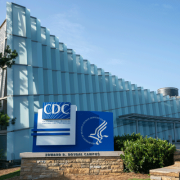
The county that is at the center of Pennsylvania’s measles outbreak is currently struggling greatly. Local officials have told the media that it lacks its own health department, so now the Centers for Disease Control and Prevention (CDC) is stepping in to help.

New Simple Blood Test Can Predict Which Breast Cancer Treatment Would Work Best For Patients

According to a new study, scientists have developed a simple DNA blood test that can predict how well certain breast cancer treatments will work for patients, offering up the most effective options to boost the individual’s chances of beating the disease.

running

To Lower Heart Disease Risk, Men Need Twice As Much Exercise As Women

According to new research published in Nature Cardiovascular Research, in order to reduce the risk of coronary heart disease, men need twice as much the amount of exercise as women. The scientists who were a part of the study said that healthy living guidelines need to take more of an account of the biological differences in the sexes to truly help everyone reduce the risk of developing heart disease, or other diseases for that matter. 

Embed from Getty Images

Scientists in the study looked at physical activity records from over 80,000 people, according to reports. They found that the risk of heart disease decreased 30% in women who got up to 250 minutes of exercise every week, while men needed to hit 530 minutes (about nine hours) to have the same effect. 

The study also cited previous research which suggested that women benefit more than men from the same level and amount of exercise, however, it also showed that women are, in general, less physically active and less likely to meet the recommended targets. 

NHS guidelines state that men and women from ages 16 to 64 should do at least 150 minutes of moderate exercise, or 75 minutes of vigorous exercise per week, and also perform muscle-strengthening activities at least twice a week. 

“Compared with male individuals, females derive equivalent health benefits with only half the exercise time. The findings might have potential to encourage females to engage in physical activity,” the authors wrote. 

Utilizing the UK Biobank project, Dr. Jiajin Chen at Xiamen University in China and his team analyzed data from activity trackers worn by middle-aged volunteers. 

They initially reviewed data from 80,243 participants who did not have coronary heart disease. Within that group, women who did 150-minutes of exercise a week had a 22% lower risk of developing heart disease over eight years of following up when compared to those who did not reach that target. For men, the risk was 17% lower. 

The team revealed that it also showed that women could reduce their heart disease risk by 30% through exercising for 250 minutes a week. Men only achieved this rate by reaching 530 minutes of physical activity weekly. 

Embed from Getty Images

The study also showed that of more than 5,000 men and women who already had coronary heart disease, the risk of dying was three times lower for women who met the weekly exercise target than for active men. 

Professor Yan Wang, a senior author on the paper, said “the work showed both sexes could gain substantial cardiovascular benefit from physical activity.” In general, it’s recommended that everyone gets regular exercise to maintain a healthy lifestyle and reduce the chances of experiencing health ailments and disease. 

“We particularly hope that our findings could encourage physically inactive females to become more active, thereby reducing their cardiovascular risk,” he said.

While the data showed a pattern, there is no conclusive evidence as to why exercise benefits women more than men in these findings. They hypothesized that it could be due to differences in hormone balances, muscle fibers, or digestion. 

In an accompanying article, Dr Emily Lau, a women’s cardiovascular health specialist at Massachusetts General hospital, stated: 

“This study provides further evidence that one size really does not fit all and challenges us to move from conversation to action. It is time to embed sex-specific strategies into guidelines and to develop tailored interventions to optimize cardiovascular health for women.”

vaccine

Scientists Worried About Bird Flu Vaccine Development As Cases Rise In Farm Animals Across US 

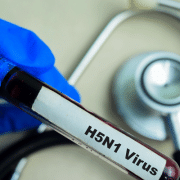
The avian flu virus has been taking out flocks of birds and infecting other animals, mainly on farms, throughout the US. According to reports from CBS, there are cattle in at least nine states that have been infected, as well as two people. While the two individuals only suffered from pink eye and quickly recovered, the spreading is relatively unheard of, raising concerns of another global pandemic. 

Scientists are particularly concerned about the millions of fertilized hen eggs that are needed to make vaccines, in the case that there’s a larger outbreak of a new flu strain. 

Embed from Getty Images

“It’s almost comical to be using 1940s technology for a 21st-century pandemic,” said Rick Bright, who led the Health and Human Services Department’s Biomedical Advanced Research and Development Authority.

“It’s not so funny when the currently stockpiled formulation against the H5N1 bird flu virus requires two shots and a whopping 90 micrograms of antigen, yet provides just middling immunity. For the U.S. alone, it would take hens laying 900,000 eggs every single day for nine months,” Bright said.

The raw material utilized for an influenza vaccine derives from the virus being grown within fertilized eggs. The birds themselves need to not be infected, and there’s always a chance that the virus won’t grow well, or well grow in a mutated form that would make it ineffective. 

“Everyone knows cell-based vaccines are better, more immunogenic, and offer better production. But they are handicapped because of the clout of egg-based manufacturing,” said Amesh Adalja, an infectious disease specialist at Johns Hopkins University’s Center for Health Security. 

Embed from Getty Images

“The companies that make the cell-based influenza vaccines, CSL Seqirus and Sanofi, also have billions invested in egg-based production lines that they aren’t eager to replace. And it’s hard to blame them,” said Nicole Lurie, an executive director of CEPI, the global epidemic-fighting nonprofit.

“Most vaccine companies that responded to an epidemic — Ebola, Zika, COVID — ended up losing a lot of money on it,” Lurie said.

CBS reported that Adalja said “the vaccines currently in the national stockpile are not a perfect match for the strain in question. Even with two shots containing six times as much vaccine substance as typical flu shots, the stockpiled vaccines were only partly effective against strains of the virus that circulated when those vaccines were made.” 

“Flu vaccine companies have a system that works well right now to accomplish their objectives in manufacturing the seasonal vaccine. And without a financial incentive, we are going to be here with eggs for a while, I think,” Boucher said.

ai

How AI Could Help Prevent Brain Injuries In Contact Sports 

Artificially intelligent computers are now being taught how to identify on-field head impacts, within the NFL and other contact sports, as a means of preventing and identifying brain injuries right away as opposed to waiting for the player to get checked out. 

NFL’s chief medical officer, Allen Sills, spoke with The Guardian about how the new technology is helping to reduce head injuries and major impacts, as well as advancing the equipment medical teams in professional sports leagues have access to. 

Embed from Getty Images

At the NFL match between the Baltimore Ravens and the Tennessee Titans in London, the technology was used to analyze the level and rate of head impacts for the players, and using that information to teach better techniques for the players as a preventative measure. 

The technology, if adopted, would be used within sensors in the football helmets, so it can analyze the force of each tackle and conclude how severe a given injury may be when it occurs. In Europe, rugby teams became the first to adopt smart mouthguard technology to flag major impacts in real time. 

If a player is hit, and the force exceeds a certain threshold, the player will automatically be taken off the field for head injury assessment by a doctor. Dr Eanna Falvey, World Rugby’s chief medical officer, calls it “a gamechanger  in potentially identifying many of the 18% of concussions that now come to light only after a match.”

Embed from Getty Images

The technology can also be utilized in sports like boxing to get the most accurate readings as to whether or not one of the athletes is potentially concussed.

According to Dr Ross Tucker, a science and research consultant for World Rugby: “we are still only scratching the surface when it comes to how smart mouthguards and other technologies could make sports safer.”

“Imagine in the future, we could work out that four impacts above 40G creates the same risk of an injury as one above 90G, or that three within 15 minutes at any magnitude increases risk the same way that one at 70G does. There are so many questions we can start asking,” Tucker says. 

“It’s one thing to assist to identify concussions, it’s another entirely to say it’s going to allow coaches and players to track exactly how many significant head impacts they have in a career – especially with all the focus on long-term health risks. If they can manage that load, particularly in training, that has performance and welfare benefits,” he says.

covid

Covid-19 Is Still A Part Of Our Reality: How The Virus And Our Immunity Has Changed

According to the US Centers for Disease Control and Prevention, 97% of people in the US have some level of immunity against Covid-19 through vaccination, infection, or both. Covid-19 infections are now on the rise again, and with the government slowing down on health and safety measures since the public health emergency was declared over in May, many individuals are wondering what to do as we enter this next wave of infections.

run

Study Finds Regular Physical Activity Could Reduce Covid-19 Risk 

According to a data analysis published in the British Journal of Sports Medicine, regular exercise can lower the risk of developing Covid-19 or getting seriously ill when one contracts the virus. The data suggests that about 20 minutes of exercise a day yielded the greatest results. 

The study stated that a weekly total of 150 minutes of moderately intense exercise or 75 minutes of vigorous physical activity would give the greatest results. 

Embed from Getty Images

“Regular physical activity seems to be related to a lower likelihood of adverse Covid-19 outcomes,” the team of researchers wrote. 

“Our analysis reveals that individuals who engage in regular physical activity have a lower likelihood of Sars-CoV-2 infection, Covid-19 hospitalization, severe Covid-19 illness and Covid-19-related death than physically inactive individuals, independent of design and instrument used.”

In general, exercise has a protective effect when it comes to respiratory infections. Regular physical activity reduces one’s chances of obesity, type 2 diabetes, and a multitude of other illnesses, most recently Covid-19. 

The researchers emphasized that the analysis was relatively limited, so the results shouldn’t be taken at face value. The team attempted to quantify the specific threshold of physical activity needed to make an actual difference in lessening the risk of contracting Covid-19, or lessening the severity should one become infected. 

The study observed data from 1.8 million adults, 54% of which were women, and the median age of each individual was 53. 

Embed from Getty Images

The data analysis showed that, overall, “those who included regular physical activity in their weekly routine had an 11% lower risk of infection with Sars-CoV-2, the virus that causes Covid.”

Those individuals also had a 36% lower risk of hospitalization, a 44% lower risk of severe Covid-19, and a 43% lower risk of death from Covid-19. 

The research team also warned that the data was a result of “observational studies, differing study designs, subjective assessments of physical activity levels, and concerned only the Beta and Delta variants of Sars-CoV-2 rather than Omicron, all of which could weaken the findings.”

“There are plausible biological explanations for what we found. Regular moderate-intensity exercise may help to boost the body’s anti-inflammatory responses, as well as cardiorespiratory and muscular fitness, all of which may explain its beneficial effects on Covid-19 severity,” the researchers said. 

“Our findings highlight the protective effects of engaging in sufficient physical activity as a public health strategy, with potential benefits to reduce the risk of severe Covid-19.”

“Given the heterogeneity and risk of publication bias, further studies with standardized methodology and outcome reporting are now needed,” they wrote. 

US To Ease Travel Restrictions For Fully Vaccinated International Visitors

Jeff Zients, White House Covid-19 response coordinator, said the new rules will take effect in November to give agencies and airlines enough time to prepare for the influx of travel that will likely come from these new standards.

Olympic Athletes Will Put On Their Own Medals This Year To Prevent Spreading Of Covid-19 

The International Olympic Committee president Thomas Bach announced this week that all athletes at the Tokyo Olympics will put their medals around their own necks as a means of protecting themselves and others from the Covid-19 virus. 

“The medals will not be given around the neck. They will be presented to the athlete on a tray, and then the athlete will take the medal to him or herself.”

Embed from Getty Images

“It will be made sure that the person who will put the medal on the tray will do so only with disinfected gloves so that the athlete can be sure that nobody touched them before,” Bach explained. 

Many individuals in the industry were wondering what the medal ceremonies would look like this year, considering Japan is currently enduring another state of emergency due to the spreading of the Delta variant of Covid-19. 

In Europe, UEFA president Aleksander Ceferin has been personally hanging medals around the necks of all players involved in the competition finals. He also shook hands with Italy’s standout goalkeeper Gianluigi Donnarumma and other all star players. 

Embed from Getty Images

Bach, however, confirmed this Wednesday that during the 2021 Tokyo Games there will be no hand shaking or hugs allowed during the ceremony. This marks just one of the many changes the International Olympic Committee is going to have to continue to endure for deciding to move forward with the Games this year. 

Many of the residents of Japan are adamantly against hosting the Olympic Games this year, considering the world is still very much battling the Covid-19 pandemic, despite the rollouts of multiple vaccines internationally. 

Vaccination rates are different in every country, so the thought of bringing in thousands of individuals from hundreds of countries all with different vaccination and infection rates, has most Japanese citizens worried for the health of their country; especially considering they’re currently in lockdown and the Games are set to begin in less than two weeks. 

It’s still unclear what other modifications will be made to the Games this year. Covid-19 infection rates are still on the rise in Tokyo and Japan in general, and while the IOC has taken a multitude of measures to protect all athletes and staff involved in the Olympics, it’s unclear how smoothly this event will go considering all that’s at stake.

Ohio Set To Open One Of The Largest Solar Factory Complexes In The World 

The company known as First Solar revealed plans this week to double its manufacturing in the United States by building a new factory in Ohio. This construction would give Ohio the largest solar factory complex in the world outside of China. 

The investment is currently valued at $680 million and marks First Solar’s third factory in the Toledo area. First Solar is the only major manufacturer of solar panels headquartered in the United States. 

Embed from Getty Images

First Solar said it believes “this will be the largest fully integrated solar manufacturing complex in the world — outside of China. It will be capable of making one solar module every 2.8 seconds, and it will primarily supply America’s booming market for clean energy.”

“This investment really helps us position the United States on solid footing to achieve its objectives of energy independence and security – and having US manufacturing enable it,” First Solar CEO Mark Widmar told the media.

This expansion will also work to fulfill the Biden Administration’s goal of cutting US greenhouse gas emissions by 50% by 2030. Ramping up renewable energy sources, like solar power, are key for accomplishing this goal. 

China currently makes most of the materials required for producing photovoltaic (PV) solar panels, and its supply chain has been completely tainted within the past year due to trading issues and allegations of forced labor. 

Embed from Getty Images

“China largely dominates the PV supply chain. But unlike many other major solar manufacturers, we’re not dependent on China. That’s because our thin-film PV panels do not rely on the popular crystalline-silicon technology that is made mostly in China. Renewables created this great promise of liberation and energy independence. But the dominance of the Chinese has taken over this industry. It really undermines the opportunity we created when renewables became reliable,” Widmar explained. 

The new facility in Ohio is projected to be 1.8 million square feet, and would allow First Solar to produce around half of all their solar panels in America. The new facility couldn’t have come at a better time for the nation either, as the solar power capacity in America in 2020 was the highest it’s ever been, and that capacity is set to quadruple by 2030, meaning more of the nation will have the infrastructure required to make solar energy more accessible. 

The biggest concern, according to Widmar, will be finding workers who are experienced in the field and able to come work in Ohio full time. 

“There clearly is a shortage of qualified workers. It is a concern of ours. Due to the constrained labor market, First Solar plans to lean more on automation than it normally does. In addition to robots, First Solar plans to use automated and guided vehicles to move materials. For example, the fork lifts at the new facility will all be automated,” Widmar said.