Posts

gas

US Inflation Increased To 3.8% Last Month As War With Iran Continues

According to data from the Bureau of Labor Statistics, US inflation rose to 3.8% in April as the war in the Middle East continues to drive energy prices and everyday costs up in America. Prices rose by the same percentage within the past year, marking the highest jump since 2023. 

Embed from Getty Images

This is the second official measure of the consumer price index, which measures the price of basket goods and services since the beginning of the war with Iran. In March, prices rose 3.3%, up from 2.4% in February, according to reports.

In April, energy prices rose 3.8%, accounting for over 40% of the overall monthly increase. Gas prices rose by 28.4%, with the national average price for a gallon of gas steadily increasing every month since the US-Israel war with Iran began. 

The Guardian reported that higher energy prices directly correlates with the ongoing closure of the strait of Hormuz, where a fifth of the world’s oil and gas typically passes through. 

Oil prices are climbing this week after Donald Trump called Iran’s response to US peace proposals “totally unacceptable.” 

Airfare pricing has also increased 20.7%. Costs essential to everyday living are also increasing, including food (3.8%) and energy services like electricity and utilities (5.4%).

Embed from Getty Images

Australia, Canada, South Korea, and other nations are also experiencing rapid inflation. According to a new survey from PwC, British households are also bracing for an increased cost of living. Asia’s manufacturing sector has also reported signs of strain with increased costs. 

The Trump administration is continuing to campaign for lower interest rates to make borrowing money in the US cheaper. The Fed usually increased interest rates during times of high inflation to cool off spending and lower prices. 

Incoming US Federal Reserve chair Kevin Warsh has emphasized that he believes interest rates should be lower, and rising inflation may make it more difficult for him to be able to make the case to do so. 

Warsh needs to convince the rest of the Fed’s 11 voting members that despite these increased prices, the Fed should continue to cut rates. Only one member of the board voted to lower rates at its meeting last month over slow job growth and uncertainty in the Middle East. 

Rates are currently sitting at 3.5% to 3.75%. 

The US Senate is expected to confirm Warsh as Fed chair in the coming days and the end of ongoing Fed chair Jerome Powell’s term is Friday. 

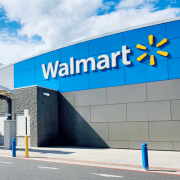
walmart

Trump Tells Walmart to ‘Eat the Tariffs’ After Retailer Warns of Raising Prices

A growing clash between President Donald Trump and Walmart is drawing national attention as the retail giant warned consumers that they will soon face higher prices due to Trump’s sweeping tariffs.

Walmart has signaled that the cost of goods will begin to rise as a direct consequence of the administration’s trade policies, particularly the mounting tariffs on Chinese imports. Retailers across the country have echoed this concern, cautioning shoppers that inflation at the checkout may soon become unavoidable.

Trump has taken a combative stance in response. Instead of accepting that tariffs often translate into higher prices for American consumers, Trump insists that companies like Walmart should absorb the impact.

In a fiery post on Truth Social over the weekend, Trump directly called out Walmart, urging the retail juggernaut to shoulder the cost rather than pass it along to customers.

“Walmart should STOP trying to blame Tariffs as the reason for raising prices throughout the chain. Between Walmart and China, they should, as is said, ‘EAT THE TARIFFS,’ and not charge valued customers ANYTHING. I’ll be watching, and so will your customers!!!”

The confrontation arrives during an already shaky moment for the U.S. economy. On Monday, financial markets reacted with caution after Moody’s unexpectedly downgraded the U.S. sovereign credit outlook, citing economic uncertainty. Treasury yields spiked as borrowing costs climbed, while Walmart’s stock dipped over 1% amid the escalating tension.

Embed from Getty Images

In a statement, Walmart defended its pricing strategy, saying it was working to keep costs as low as possible “for as long as we can given the reality of small retail margins.”

Behind the scenes, Walmart executives have been more blunt about the challenges. CFO John David Rainey told CNBC last week that price hikes are imminent.

“We’re wired for everyday low prices, but the magnitude of these increases is more than any retailer can absorb. It’s more than any supplier can absorb. And so I’m concerned that consumer is going to start seeing higher prices.”

He added that customers can expect the changes to start rolling out this month, with additional increases expected in June.

Walmart CEO Doug McMillon also warned that tariffs targeting imports from Latin American countries like Colombia, Costa Rica, and Peru will likely drive up food prices in particular.

Trump’s public rebuke of Walmart places pressure not just on the Arkansas-based chain but also on other retailers set to report earnings this week, including Home Depot, Lowe’s, Target, and TJX Companies (parent of TJ Maxx and Marshalls). Initially, Walmart’s forecast may have given competitors tacit permission to follow suit with their own price hikes, but Trump’s aggressive messaging could put them in his political crosshairs.

Embed from Getty Images

Despite the rhetoric, Trump’s own Treasury Secretary, Scott Bessent, acknowledged the practical reality. Speaking on NBC’s Meet the Press on Sunday, Bessent said he had spoken directly with McMillon and confirmed Walmart would absorb some of the tariff-related costs “just as they did in ’18, ’19 and ’20.”

Bessent was quick to push back on any notion that the administration was twisting arms. “I just wanted to hear it from him,” he said, “rather than second-, thirdhand from the press.”

He also attempted to downplay inflationary fears, noting that lower gas prices would help cushion the blow to consumers’ wallets. Yet, in a separate CNN appearance, Bessent admitted, “Walmart will be absorbing some of the tariffs; some may get passed on to consumers.”

Recent data from the Bureau of Labor Statistics backs up the notion that companies have, so far, largely resisted passing tariffs on to consumers. April’s figures showed manufacturers and service providers holding the line on price increases, at least temporarily.

That resistance may not last. As the nation’s largest retailer, Walmart’s pricing decisions could open the floodgates. Industry analysts believe that Walmart’s move would give other chains the cover to do the same.

“If Walmart’s coming out — with its scale and its buying power and its focus — and saying prices are going to rise, everyone else is going to have to follow suit,” said Neil Saunders, managing director at GlobalData, a retail research firm. “Walmart is firing the starting gun on a period of price increases.”

As consumers brace for potential sticker shock, the showdown between Trump and Walmart is shaping up to be a defining flashpoint in the broader debate over tariffs, trade policy, and the true cost of “America First.”

dow

Dow Tumbles More Than 1200 Points After Inflation Data

US stocks plummeted Tuesday after the latest Consumer Price Index report showed inflation rates are still at a 40-year high. The Dow fell more than 1200 points on its worst day since June 2020.

The report revealed that monthly consumer prices rose more than expected in August. History shows that low unemployment and rising inflation often precede a recession. High inflation rates erode consumer purchasing power. They also decrease companies’ profits due to rising material costs, causing stocks to fall and economic activity to slow down.

Embed from Getty Images

Matt Peron, director of research at Janus Henderson Investors, agreed with most analysts that the Federal Reserve will likely increase the federal funds rate higher to cool off the market.

 “The CPI report was an unequivocal negative for equity markets. The hotter than expected report means we will get continued pressure from Fed policy via rate hikes.”

The Fed responds to rising inflation by increasing the federal funds rate. In the wake of the pandemic, the rate sat at near zero in an attempt to stimulate the economy. The Fed then hiked rates from a range of 0.25% to 0.50% in March 2022 to a range of 2.25% to 2.5% in July 2022. The rate of increase in borrowing costs was the fastest since the 1980s.

When the Fed raises the federal funds rate, the cost of credit throughout the economy increases and loans become more expensive for businesses and consumers, since interest payments are higher. At the same time, people with savings in banks earn more interest on their deposits. Together, this drops the amount of money in circulation, bringing down the inflation rate. However, if the Fed increases the federal funds rate too high, it may also trigger a recession by slowing economic activity too much.

Embed from Getty Images

The Fed is expected to keep hiking the federal funds rate until a sustained drop in consumer price inflation. Investors hoped that the Fed would keep its interest rate increases at a slower speed, with analysts predicting a federal funds rate of 3.4% at the end of the year. Brian Jacobsen, a senior investment strategist at Allspring Global Investments, told Reuters his concerns.

“The big risk is that next week, the Fed tries to convince the markets that they’re not going to just try to go for 4% with the Fed funds rate, but that they could push it to something closer to four and a half percent.”

All three major US stock indexes — S&P 500, the Dow, and Nasdaq had their most significant one-day percentage drops in over two years. The CBOE volatility index, which measures the market’s expectations for volatility over the next 30 days, rose to 25.74 points.

The next Federal Reserve meeting is scheduled for Sept. 20.


Real Estate Home & Keys

UK Housing Market Showing Major Increases In Housing Prices

House prices in the United Kingdom rose by 8.5% throughout 2020, this marks the largest annual growth rate for the nation since October 2014, according to new official figures released by the government. 

In December 2020, the average price of a house in the UK hit £252,000, which is equivalent to $355,370 in the United States. Government leaders believe this increase is due to the pandemic, but also due to the stamp duty holiday which is projected to finish at the end of March this year. 

The Office for National Statistics released figures this week that showed north-west England as experiencing the highest growth in pricing. Housing rose by 11.2%% last year for that sector, and prices in London rose by just 3.5%. By the end of 2020 the average price of a home in England was around $327,048 in American currency (£269,000).

Embed from Getty Images

“In Wales prices grew 10.7% to an average of £184,000 ($223,706). Scotland had an 8.4% increase to an average of £163,000 ($198,174), while in Northern Ireland a house would typically set buyers back £148,000 ($179937) – up 5.3% on the figure for December 2019,” according to reports.

The fact that so many individuals have been working from home during the Covid-19 pandemic has obviously stunted how many individuals are willing to put their homes on the market during the worst global health and economic crisis in decades. There’s simply not enough supply to meet the demand, even if that demand is exponentially smaller than normal. 

The Office for National Statistics also claimed that the average price of detached properties rose by 10% in 2020 compared to a 5% growth in pricing for flats and maisonettes. 

Embed from Getty Images

“Recent price increases may reflect a range of factors, including pent-up demand, some possible changes in housing preferences since the pandemic, and a response to the changes made to property transaction taxes across the nations.”

In July 2020 the chancellor announced a stamp duty holiday as a means of getting the property market moving. The holiday released property purchases in England and Northern Ireland up to the value of £500,000 ($607,897) from tax payments, according to reports. 

Sarah Coles is a personal finance analyst in the US who claims there’s already hopeful signs that the market will begin to cool down. “Early calculations from Halifax are that house prices fell back 0.3% in January, while the RICS survey showed sales had plummeted, and estate agents expect things to get worse as we go through the spring. A shortage of properties on the market should keep prices from falling, but there’s not going to be a great deal of enthusiasm for more rises.”

Coles went on to explain that “the chancellor could breathe some new life back into the market in the budget if he makes some kind of concession for people mid-sale when the stamp duty rules change. However, there’s no guarantee he’ll do this, and, even if he does, buyers and sellers may be reluctant to get back into the race.”

Food Waste

AI Pioneer Winnow Vision Helps to Combat Global Food Waste

Winnow Vision is building artificial intelligence tools to help chefs run more profitable and sustainable kitchens by cutting food waste in half. Its recent success in securing $12m in fundraising follows an $8m loan from The European Investment Bank (EIB) which in total means the firm has raised a staggering $20m in the last month.

Ingenious was the latest to announce that its Infrastructure Ventures EIS Service has invested in Winnow, the technology company behind Winnow Vision, the artificial intelligence tool helping chefs cut food waste in half, as it completes its series B round of funding at $12m. Other co-investors in this fund raising round include Ingka Investments, Mustard Seed, Circularity Capital, D-Ax in addition to Ingenious. This follows a recent loan from The European Investment Bank (EIB) and in total means the firm has raised $20m in the last month, allowing it to focus on global markets. Ingenious co-invested in the latest funding round through the Infrastructure Ventures EIS Service, representing its third investment to date.

Winnow believes that food is far too valuable to waste and that technology can transform the way food is used. For this reason, their mission is to help the hospitality industry tackle avoidable food waste by connecting the kitchen, empowering chefs to run a more efficient operation.

Embed from Getty Images

According to the Winnow website, food prices have risen by 120% since 2000 and most commercial kitchens simply don’t know how much they waste – traditional manual tracking using pen and paper is prone to error and costs staff valuable time while generating only marginal reductions in waste. In fact, commercial kitchens waste up to as much food as they generate in profits! The hospitality sector wastes 600,000 tonnes of food per year compared to the retail sector (including supermarkets) which wastes 400,000 tonnes of food per year (WRAP). What’s more, almost two thirds of the food waste the hospitality sector sends to landfill could have been avoided (DEFRA Food statistics pocketbook 2013 refers to waste from hotels, pubs, restaurants and quick service restaurants).

Launched in a single staff restaurant in 2013, Winnow has been adopted by more than 1,000 sites globally and is now operating in 40 countries with offices in London, Dubai, Singapore, Shanghai, Cluj-Napoca and Iowa City. Winnow’s latest AI product Winnow Vision, the most advanced food waste technology on the market, has been developed to automate waste tracking, enabling chefs to run more profitable and sustainable kitchens. With global clients already adopting Winnow Vision, from IKEA stores through to the Armani Hotel in Dubai, the demand by companies to drive down food waste in 2019 is increasing.

Winnow’s systems have already reached and surpassed human levels of accuracy in identifying wasted foods.

Kitchens using Winnow tend to see a 40-70% reduction in food waste within 6-12 months, driving food cost savings between 2-8% in total, which improves profit margins whilst operating in an ethical manner.

Guy Ranawake, Investment Director at Ingenious, commented: “We are very happy to support Winnow and look forward to seeing the growth of the company which aligns strongly with our investment strategy and sector focus, including resource efficiency.”

Marc Zornes, CEO at Winnow, said: “We are very excited about driving the business forward in our global fight against food waste and we are grateful for the continuous support of our investors. This year we launched our ground-breaking AI product Winnow Vision, and chefs using Winnow around the world are saving $33m worth of food from going to waste annually. We have set a target to save our customers $1bn by 2025, and this investment will accelerate our technology development and business development approach to help achieve this ambition.”

Embed from Getty Images

Winnow Vision works by taking photos of wasted food as it’s thrown away and uses the images to train itself to recognise what has been discarded. Winnow’s systems have already reached and surpassed human levels of accuracy in identifying wasted foods. This means for clients, over time, these systems will enable their kitchens to automatically register food waste without any human interaction. Food will be thrown in the bin and the data will be captured automatically.

The transaction was led by Ingenious’ infrastructure division and represents the third investment from the Infrastructure Ventures EIS Service, following the backing of Over-C, an analytics company focused on operational performance in the workforce management market and Reactive Technologies, a world leading technology platform facilitating the transition to a low carbon future.

Ingenious is an FCA regulated alternative investment manager that specialises in media, infrastructure, real estate and education. Founded in 1998, the company has raised and deployed over £9 billion of capital on behalf of clients across all the operating divisions since inception. Ingenious’ infrastructure division has deployed over £720m in energy infrastructure projects since it was established in 2011 across the UK, Republic of Ireland and Australia. A dedicated team of some 30 investment professionals have experience across investment, finance, law, accountancy and engineering. The infrastructure management team benefits from lengthy experience in the origination, execution and management of investments in the infrastructure sector and related technologies, including energy, mobility, digital and resource efficiency.