Posts

cancelled

Thousands Of US Flights Canceled Amid Storms And TSA Agent Shortage 

Thousands of flights across the US were canceled or delayed over the weekend and into Monday amid powerful storms across the eastern half of the country, and a partial government shutdown impacting TSA screenings for a second month. 

Embed from Getty Images

The shutdown that began on February 14th has greatly strained staffing at security checkpoints at a time where airports are crowded with spring break travelers and fans heading to March Madness games, according to reports from AP

This week, flights were greatly delayed and canceled at some of the nation’s largest airports due to major storms and snow throughout the Midwest and moving to the East Coast. Airports in New York, Chicago, and Atlanta were affected by high potential for heavy winds and tornadoes, the National Weather Service said on Monday. 

Specifically, over 4,400 flights scheduled to fly into, out of, or throughout the US on Monday were canceled with about 10,400 being delayed, according to FlightAware, a flight-tracking site. About 290 flights in the US scheduled for Tuesday have been canceled as well. 

“The nationwide cancellations included about 570 in and out of Chicago O’Hare International, more than 430 at Atlanta’s Hartsfield-Jackson International and over 270 at John F. Kennedy International Airport,” according to FlightAware.

The current partial government shutdown impacts only the Department of Homeland Security, which includes the Transportation Security Administration. Many airport security screeners missed their first full paycheck over the weekend. 

Embed from Getty Images

AP reports that Democrats in Congress have stated Homeland Security won’t get funded until new restrictions are placed on federal immigration operations after the fatal shootings of Alex Pretti and Renee Good in Minneapolis this year. 

This is the third shutdown in less than a year to leave TSA workers temporarily without pay, and once the government reopens, employees will have to wait longer for back pay. 

Some airports are seeing longer security lines due to staffing shortages with TSA workers needing to take on second jobs to pay for their basic needs. Homeland Security stated that over 300 TSA agents have quit since the beginning of the shutdown. 

TSA union leaders in Atlanta held a news conference this week outside Hartsfield-Jackson where they said that air travelers could experience increasingly long wait times as the shutdown continues. 

TSA workers “are coping with eviction notices, vehicle repossessions, empty refrigerators and overdrawn bank accounts,” said Aaron Barker, a local leader with the American Federation of Government Employees. 

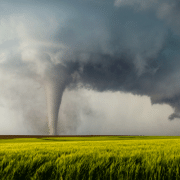
tornado

Major Tornado Outbreaks Throughout US Leave Many States At Risk For Extreme Flooding

A major tornado outbreak across the US has led to a rare and widespread flooding threat throughout the midwest and South this week, according to weather forecasting experts. The experts are emphasizing just how “prolific” and “historic” these weather events are as a means of also highlighting the shortage of forecasting and disaster response efforts across the country. 

Embed from Getty Images

Around 100 tornadoes impacted various parts of the US on Wednesday alone, and at least four people have died as a result of this extreme weather. 

The National Weather Service (NWS) stated that they were short-staffed while issuing a nearly record-breaking number of tornado warnings for one single day. They issued 284 tornado outbreaks for Wednesday. The only other major weather event to hit that level of intensity occurred in April 2011. 

The warnings stretched across nearly 1,000 miles from Arkansas to Michigan, according to reports

 The cold front that prompted the multitude of tornadoes this week will slow down over the next few days, however, as it slows the threat of thunderstorms near some of the US’s major rivers will create “life-threatening, catastrophic, and potentially historic flash flood event”, according to the NWS.

Memphis, Tennessee is specifically preparing to see flooding up to 12 inches over the next three days. “Communities in the region should prepare for possible long duration and severe disruptions to daily life,”  a NWS forecast bulletin said.  

Embed from Getty Images

The flooding expected to occur across the US is in the same areas that were just impacted by the tornadoes, leaving many communities vulnerable more than once within the same week. At an NWS office in Kentucky, a tornado-producing thunderstorm severely damaged the property while they’re dealing with non-functioning restrooms. 

“They have worked multiple tornado events this spring already and their office doesn’t even have functioning toilets!” wrote a NWS employee.

The Federal Emergency Management Agency recently fired hundreds of its probationary staff after they were ordered too by President Donald Trump and the White House. 

Rural regions in states like Arkansas, Missouri, Tennessee, Kentucky, and Illinois are expected to struggle greatly after the storms pass due to staffing issues and a removal of resources. 

Additionally, the nationwide network of River Forecast Centers has stated that they’ve also been greatly affected by staffing cuts. These weakened agencies are doing everything they can to help the many Americans being impacted by extreme weather events, but their resources are dwindling.

50 Million Americans Under Flash Flood Warnings As Tropical Storm Elsa Moves Up East Coast

Tropical Storm Elsa is currently heading north along the East Coast of the US, and is expected to impact all major cities along the way. More than 50 million Americans woke up to flash flood warnings as severe weather conditions have already begun to impact a majority of the coast. 

The center of the storm is projected to go over Dover, Delaware early Friday morning and will make its way towards Boston by the afternoon, according to meteorologist Robert Shackelford. The storm has already caused tornados, multiple injuries, and at least one death in Florida and Georgia this week. 

Embed from Getty Images

In New York, the Metropolitan Transportation Authority (MTA) was pre-positioning crews and equipment yesterday all throughout Long Island, where the storm is forecast to be the most intense. 

The MTA will also be banning all empty tractor-trailers and tandem trucks from its seven bridges and two tunnels until at least noon on Friday. This ban is due to heavy wind gusts and rain which could cause larger vehicles to be more susceptible to tipping over. 

The National Hurricane Center announced that the storm is currently moving at a rate of 25 mph and has hit a maximum sustained wind speed of 50 mph. Much of the Northeast is expected to see 2 to 4 inches of rainfall by the weekend. 

Once Elsa’s center passes by a given area, residents can still expect to see heavy rainfall and high wind speeds on the outskirts. 

Embed from Getty Images

Some tornadoes were also reported across northern Florida and southeastern Georgia on Wednesday. An EF-2 tornado caused multiple injuries and damage at Naval Submarine Base Kings Bay in Kings Bay, Georgia. 

“Thankfully, there was no loss of life here last night. This tornado that came through could have been a lot worse,” base commanding officer Capt. Chester Parks told local media outlets. 

Parks said that a tornado impacted by the southside of the navy base ended up moving north, hitting the base of an RV park on the way. Twelve recreational vehicles were damaged and nine people were transported to the navy base for medical treatment. 

Elsa initially hit Florida earlier this week, and caused the most damage in both the sunshine state and Georgia. The entire storm system touched down this Wednesday along the Gulf Coast in Taylor County, Florida. 

“Winds starting howling in the middle of the night, and rain starting pounding the windows. Never seen anything like this before in my life,” said Johnathan Riches who was staying at a motel in Cedar Key, Florida when the storm hit.

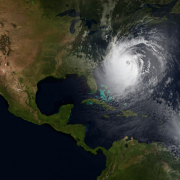
Hurricane

Hurricanes Continue To Get Stronger As A Result Of Climate Change, According To New Study

Climate change is still just as much of an issue as it’s been for the best decade, however, the intensity of concern over our planet’s climate crisis has subsided due to the Covid-19 pandemic. Even so, it’s becoming increasingly evident to scientists around the world that major natural events such as hurricanes, typhoons, and tropical cyclones have the potential to become much more deadly as the planet continues to heat up. 

According to a study performed by researchers at the University of Wisconsin and the National Oceanic and Atmospheric Administration (NOAA), the probability of storms reaching a hurricane status of category 3, with winds exceeding 110 miles-per-hour, has consecutively increased every decade for the past 40 years. 

“The change is about 8% per decade. In other words, during its lifetime, a hurricane is 8% more likely to be a major hurricane in this decade compared to the last decade,” said Jim Kossin, author of the study.

Embed from Getty Images

The idea that natural disasters get stronger as climate change worsens is not a new concept, and the data has clearly proven this to be correct within the past four decades. The study states that initially researchers were just looking at data from 25 years ago, however, looking back even further would give them even more evidence as to what aspects of man-made global warming that have had the most detrimental effects on the planet. 

“Almost all of the damage and mortality caused by hurricanes is done by major hurricanes (category 3 to 5). Increasing the likelihood of having a major hurricane will certainly increase this risk. The study reveals that global warming has increased sea surface temperature in regions where tropical cyclones form. The combination of these warm temperatures along with changes in atmospheric conditions, have allowed storms to more easily reach higher intensities,” Kossin said.

Embed from Getty Images

Within the past few years specifically, Kossin and his team have been noticing these trends more in the Northern Indian Ocean, but he believes that’s mostly because data collection in that part of the world isn’t as advanced for this type of research, so the disaster occurrences seem much more random when they’re not. This study in particular neglected to include the past two years as well, which Kossin also knows could have skewed the data. 

The research also concluded that global cyclones should be the planet’s top concern for future natural disasters, as they’ve shown the most evidence for growing in intensity as a direct result of global warming. This is due to our ocean temperatures increasing, which results in stronger hurricanes to build out in the middle of the ocean and grow even larger before they hit land. 

“Here, the authors apply an objective technique on four decades of satellite data to create a consistent record of global tropical cyclone intensity, their results are consistent with the theory that increasing sea-surface temperatures are indeed increasing the intensity (but not frequency) of the strongest storms of at least major hurricane strength,” said Ryan Maue, a private industry meteorologist not involved in the recent research.

There are a multitude of natural reasons why these natural disasters have also increased in intensity, however, the evidence is clear. If we want a shot at a more healthy planet in the future, it’s up to us and our world leaders to fix all the damage we’ve caused.