Posts

ai

 AI Toys Are On The Rise, Experts Want Them More Strictly Regulated 

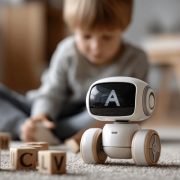
Developmental psychologists from the University of Cambridge have recently performed a study in which they analyzed the impact of toys that use artificial intelligence on children. The researchers concluded that these products need to be more tightly regulated as they struggle with social and pretend play, misunderstand kids, and react inappropriately to certain emotions. 

Embed from Getty Images

AI toys that have the ability to “talk” to kids need to be “more tightly regulated to ensure psychological safety by limiting toys’ ability to affirm friendship and other sensitive relational areas with young children,” according to Dr. Emily Goodacre, a developmental psychologist at the University’s faculty of education.

“Because these toys can misread emotions or respond inappropriately, children may be left without comfort from the toy, and without emotional support from an adult, either,” said Dr. Goodacre. 

“A recurring theme during focus groups was that people do not trust tech companies to do the right thing. Clear, robust, regulated standards would significantly improve consumer confidence,” Professor Jenny Gibson, the study’s co-author, said. 

One of the toys they looked at is known as Gabbo, a soft plushie with a computer screen face. The Guardian reported that during the research, a three-year-old boy named Josh kept asking the toy “Are you sad?” until it replied it was “feeling great. What’s on your mind?” Josh said: “I’m sad,” to which the toy replied: “Don’t worry! I’m a happy little bot. Let’s keep the fun going. What shall we talk about next?”

Gabbo is made by Curio, a US company which also helped with the study. The toy was tested with 14 three to five-year-olds. 

“[There’s] wide uncertainty and fear about unknown implications or impacts on children.” Specifically, the team was concerned over how the kids may not be able to fully engage in imaginary play with the toy, as well as where the data from the conversations with the children end up. 

“[The toy] couldn’t quite figure out when the kid was doing something pretend,” said Goodacre. 

Embed from Getty Images

“A child would say: ‘Hey, look, I’ve got you a present’. And it would say: ‘I can’t see the present. I don’t have any eyes.’ As an adult, it’s really obvious that even if I had my eyes closed, I would know that that was pretend play initiation.”

“Playing with AI toys could weaken children’s imaginative muscle,” she said.

“Something both the early years practitioners and the parents we spoke to were quite concerned about was that children don’t have to imagine any more, and that the toy might get them out of the habit of imagining.”

“I would hope that these AI toys could help children to engage in imaginary play … That doesn’t seem to be what we’ve observed so far,” she said. 

“Child safety guides every aspect of our product development, and we welcome independent research that helps improve how technology is designed for young children,” Curio stated

“[We] believe research like this helps advance understanding of both the opportunities and current limitations of early AI-powered play experiences”.

“Applying AI in products for children carries a heightened responsibility, which is why our toys are built around parental permission, transparency and control,” they added

“Observations such as conversational misunderstandings or limits in imaginative play reflect areas the technology continues to improve through an iterative development process, and further research into how children interact with AI-powered toys is a top priority for Curio this year and in the future.”

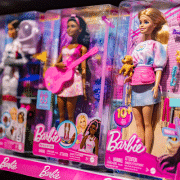
Barbie Prices Set to Rise as Toy Manufacturing Giant Mattel Responds to U.S. Tariffs

In response to escalating tariffs enacted under President Donald Trump’s administration, toy manufacturing giant Mattel has announced plans to raise prices for certain products sold in the United States. Simultaneously, car manufacturer Ford disclosed that tariffs could inflate its costs by approximately $1.5 billion this year.

lego

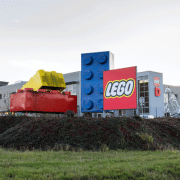
Lego Opens Factory In Vietnam That Runs Entirely On Clean Energy 

This week, Lego officially opened a new factory in Vietnam. The $1 billion project is making headlines after it was announced that the company will be producing their famous toys using completely clean energy. 

The new factory is located in Binh Duong, an industrial area. This will be the first factory in Vietnam to run completely on clean energy, and Lego stated the factory will reach that goal by 2026. 

Embed from Getty Images

This is Lego’s sixth factory worldwide and their second in Asia. The Lego market in Southeast Asia is growing rapidly, so the company has implemented high-tech equipment to match up with the market’s demand, according to reports

“Today marks an exciting milestone for us as we proudly open our sixth factory in the world. We want to make sure that the planet that the children inherit when they grow up is a planet that is still there. That is functional,” Lego CEO Niels Christiansen told The Associated Press.

“This state-of-the-art site reflects our commitment to sustainable growth and innovation, bringing more LEGO play experiences to children and our fans in the Asia-Pacific region through increased manufacturing capacity.”

In general, Lego has stated that they have a goal of ending their greenhouse gas emissions by 2050, and are hoping to reduce their emissions by 37% by 2032. They’ve invested $1.2 billion in finding and implementing more sustainable production/manufacturing practices. 

Vietnam as a nation is also working to achieve net-zero emissions by 2050, so the clean energy that the Lego factory will be running on is helping aid that goal. The factory is equipped with 12,400 solar panels and an energy storage system, which the nation is hoping will set a new standard for future sustainable manufacturing.

Embed from Getty Images

“The use of battery storage solutions and power purchase agreements to increase renewable energy is not just a first for the LEGO Group but among the first for any company in Vietnam. I am thankful for the collaboration we have had with our partners in establishing frameworks and policies that can serve other companies looking to increase their own use of renewable energy,” COO of the Lego Group, Carsten Rasmussen, said.

“I am extremely proud of our environmental sustainability progress in Vietnam, strengthening our positive impact locally while supporting our global ambitions.”

Mimi Vu, a founder of the consultancy Raise Partners in Ho Chi Minh City, said to AP:

The Lego factory, which spans 62 soccer fields, sets the ‘blueprint’ for making large, power-guzzling factories sustainable while remaining profitable. Sometimes it takes a big company, like Lego, to take those risks. To show that we can do it … And we can be profitable.”

According to AP, this factory is an example of a facility that will benefit from the new 2024 rule called a direct power purchase agreement (DPPA). DPPA allows large foreign companies to buy clean energy directly from solar and wind power producers to meet clean energy requirements. 

“Lego and Vietnam, we have the same aspirations. We both want to be green, to play our part in the climate. And I think this with the solar and battery and DPPA, it is showcasing that it can be done,” Senior Vice President Asia Operations at the LEGO GroupJesper Hassellund Mikkelsen, told AP.

How Rotary Phone Toys Managed To Stay Relevant Throughout The Rise Of Smart Technology

Chances are we’ve all played some version of house when we were growing up. Pretending to be grown up, cooking in the play kitchen, and making important calls on our toy rotary phones. These classic elements of play have withstood the test of time, so much so that old school toys like toy rotary phones are still relevant today, regardless of how much technology has changed. 

Fisher Price initially released the toy “chatter telephone” in 1961. You can likely still picture the red phone receiver, eyes that would blink when the phone would ring, and a happy smile.

Embed from Getty Images

Although we’re living in a new era of toys and technology, certain nostalgic items like the classic rotary phone have continued to sell and be played with worldwide. While actual rotary phones may no longer be in style, the toy is still holding its place in the market. 

Jules Burder is someone who has worked in early childhood education for 14 years. She recently spoke to the media and confirmed that the rotary phone – whether in toy or actual form – “ticks many developmental boxes. The repetitive task of rotating the dial builds fine motor skills and dexterity – this helps with pre-writing skills like pen holding,” she stated. 

“The phone also helps with counting, number recognition and even rhythm – you can imagine the click and the zing as the dial is drawn to each selected number.”

“Pretend play helps young children draw from and reflect on their own experiences and it encourages them to develop an understanding of social norms,” she says.

Embed from Getty Images

“The nostalgia factor may explain why parents keep buying these toys.”

Lucia Di Mauro, the owner of Stranger Than Paradise toy shop, believes “nostalgia plays a large part in the dial phone’s enduring popularity.”

“We find that parents remember these toys from when they were kids. The design is mostly unchanged, and it sparks a memory of love or happiness. In the same way that people want to share a great song or movie, parents [and grandparents] want to pass on this positive experience to their children and grandchildren,” Lucia says. 

“Obviously, its appeal to children is not based on nostalgia. They don’t know that the toy is modeled on an old item that is no longer produced. It’s a multifaceted toy that offers many types of play, and that is what kids love.”

Flick Davies, the store manager of Honeybee Toys, finds that, “rather than the adults seeking it out, it’s the children who gravitate towards it. It seems they can’t help but pick it up. Instinctively they know what to do with it – it’s got a receiver like mummy’s phone … that just happens to be attached by coloured string.”

Online Shopping

Facing Online Competition, Toy Stores Forced to Innovate

In the face of the existential threat to their business posed by Amazon and other online retailers, toy stores are obligated to innovate or face extinction, as in the case of the ill-fated Toys R Us. Camp is one store that does just that by offering children an opportunity to play with toys before their parents buy them, transforming the shopping process into one more focused on creating family experiences. Indeed, Camp, which recently opened a store in Downtown Brooklyn, bills itself as a “family experience store,” not strictly as a toy store, and the company hopes to lure customers away from online stores by creating a space where kids can have fun and parents can enjoy spending time with their children. In addition to selling toys, Camp hosts family activities, such as arts and crafts projects like making gingerbread houses or building a balloon powered car. The stores change their theme every few months in a bid to encourage families to visit repeatedly; currently, the space is summer-camp themed, and offers spaces like a playground and disco floors for children to play.

Embed from Getty Images

While it’s free for anyone to visit any of Camp’s five retail locations, toys that are available for purchase can be found all over the place, enticing children to convince their parents to buy them something that catches their attention. As such, Camp’s plan to compete with online retailers involves fostering a physical environment where people are more likely to spend money. While it is surely expensive to maintain a store like this, the company hopes that the unique space they offer will attract not only children but parents who would prefer for their kids to play somewhere in the real world instead of engaging mainly with electronic devices. While this may be a risky strategy given the complicated and unpredictable environment of today’s retail industry, it is one that has resonated with investors, who are helping to fund the company’s expansion.

Camp’s bet is that even in this day and age, children are still interested in exploring physical spaces and interacting with each other in person

Digital media poses a threat to the toy industry in more ways than the popularity of online stores. Indeed, toys themselves may become less attractive to children as technology advances, as smartphones and tablets can provide a more engaging experience. And while video games have been a favorite among children for decades, recent advancements in technology have made this hobby far more widespread, as devices like iPhones and iPads grow in popularity and versatility. However, technology has also led to the collapse of physical media, as it is much more convenient to download a game, movie, or even book than it is to buy one from a retail location. Video gaming is a tremendously popular industry, and as toy stores generally sell video games as well, the fact that children are less likely to go to the toy store for video games in recent years is another factor that threatens the industry.

Embed from Getty Images

Camp’s bet is that even in this day and age, children are still interested in exploring physical spaces and interacting with each other in person, but often miss opportunities to do so as they grow up in an increasingly digital environment. While traditional camp programs are expensive and can mean several weeks of separation between parents and their children, Camp is nominally free, and the company’s retail locations are in densely-populated, affluent neighborhoods, ensuring its customers don’t have to travel too far to get there. Unsurprisingly, the toys at Camp are sold at a premium to subsidize the rest of the experience. However, for many parents, the opportunity to spend some quality family time in an environment that’s fun for kids makes the added cost worth it.