Posts

weather

Brace for a Dramatic Forecast Shift: Record Heat in the West, Winter’s Return in the East

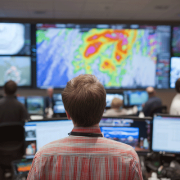
A sharp and unusual shift in weather patterns is set to sweep across the United States, bringing a striking split of an intense, record-breaking heat in the West and a renewed blast of winter in the East.

The change is being driven by a powerful atmospheric setup that will likely persist for up to two weeks. A strong ridge of high pressure, often called a “heat dome,” is expected to settle over the western half of the country, allowing temperatures to surge well above seasonal norms. At the same time, the jet stream will dip southward on the eastern side of that ridge, funneling cold Canadian air into the Midwest and East.

The result will be a pronounced case of weather whiplash. Areas that recently experienced springlike warmth will soon return to much colder conditions, with the possibility of additional snowfall through mid-to-late March.

Cities that climbed into the 70s and 80s earlier this week are expected to cool dramatically, with highs dropping into the 30s and 40s. Washington, DC, for example, reached 84 degrees on Tuesday but is forecast to fall into the 50s over the weekend and into the 40s early next week. Parts of the Northeast, which also saw temperatures in the 70s, could face multiple chances for snow over the next five to seven days.

The chill may extend as far south as Florida, where some areas could see overnight lows in the 50s this weekend, with a further drop into the 40s early next week. While the East braces for a late-season cold snap, the situation in the West is expected to be far more extreme and potentially dangerous.

Embed from Getty Images

Forecasters say the heat wave will dominate headlines beginning Thursday and could persist for at least two weeks. Numerous locations across the region are likely to challenge or break all-time March temperature records.

The National Weather Service has issued warnings, particularly for the Southwest, urging residents to prepare for unusually intense and long-lasting heat. In Phoenix, temperatures could reach 100 degrees, the earliest ever recorded, more than 10 days ahead of the current record.

“Given the unprecedented length and magnitude of this extreme heat wave, heat stress will be increasing each day.”

Extreme heat is the leading weather-related cause of death in the contiguous United States each year, underscoring the risks posed by early-season temperature spikes.

Beyond the immediate dangers, the heat wave is expected to worsen already concerning environmental conditions. Snowpack across the West is significantly below average, and the surge in temperatures will accelerate melting, raising alarms about water availability later in the year and the potential for an intense wildfire season.

Embed from Getty Images

Speaking about the West, University of California climate scientist Daniel Swain stated the outlook for snowpack is especially dire in states like Colorado and Utah, which are on track to set record lows.

“We’re going to get to April first, and we’re going to see some very scary snowpack numbers essentially everywhere.”

Southern California, in particular, could see temperatures soaring 20 to 30 degrees above average during the next two weeks, according to the National Weather Service.

This event comes on the heels of an already exceptional season. The West just experienced its warmest meteorological winter on record, with several states setting all-time highs for winter temperatures.

Scientists note that climate change is increasing the likelihood, duration, and intensity of heat waves and is likely contributing to the region’s record-breaking winter warmth.

Seasonal patterns themselves are also shifting. Winter is warming faster than any other season across much of the United States, and spring is arriving earlier in many regions, with the final freeze occurring sooner than in the past.

For now, however, the immediate story is of a country divided between early-summer heat and a lingering grip of winter, all unfolding at once.

Punxsutawney Phil

Punxsutawney Phil Sees His Shadow, Predicts Six More Weeks of Winter

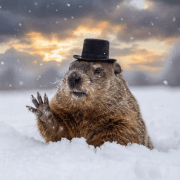
For the 20th time since 2000, Punxsutawney Phil has delivered a familiar forecast: winter isn’t ready to loosen its grip. The world’s most famous groundhog emerged early Sunday morning at Gobbler’s Knob in Punxsutawney, Pennsylvania, where he saw his shadow — a sign, according to tradition, that six more weeks of winter lie ahead.

Temperatures hovered just above zero as tens of thousands of spectators gathered for the annual Groundhog Day ritual. Despite the bitter cold, longtime attendees said the celebration offered a welcome break from winter monotony.

Rick Siger, Pennsylvania’s secretary of community and economic development, said the thermometer in his vehicle read 4 degrees Fahrenheit as he drove to Gobbler’s Knob. Still, he returned for his fourth consecutive Groundhog Day.

“I think it’s just fun — folks having a good time. It brings people together at a challenging time. It is a unifying force that showcases the best of Pennsylvania, the best of Punxsutawney, this area.”

Nearby, Lisa Gibson marked her 10th Groundhog Day bundled up in a lighted hat designed to resemble the tree stump from which Phil appears each year at dawn. She attended with her husband, who was dressed as Elvis Presley, and their teenage daughter.

“Oh man, it just breaks up the doldrums of winter,” Gibson said. “It’s like Halloween and New Year’s Eve all wrapped up into one holiday.”

The Pittsburgh resident said she had been hoping Phil wouldn’t see his shadow. The forecast was met with loud boos from the crowd. Phil’s handlers cut short the customary post-prediction photo opportunities, citing the extreme cold and concerns about keeping the animal exposed for too long.

Embed from Getty Images

Despite his celebrity status, Phil is far from the most reliable weather forecaster. In 2025, the National Oceanic and Atmospheric Administration evaluated 19 animal-based prognosticators, including live animals, taxidermized figures, and even statues, and ranked their accuracy.

Staten Island Chuck claimed the top spot with an 85% accuracy rate. Phil ranked 17th, with a success rate of just 35%.

This year’s predictions from other animal forecasters were split:

  • Staten Island Chuck (New York): six more weeks of winter
  • Woodstock Willie (Illinois): early spring
  • Dunkirk Dave (New York): early spring
  • Buffalo Bert (New York): six more weeks of winter
  • General Beauregard “Beau” Lee (Georgia): six more weeks of winter
  • Woody the Woodchuck (Michigan): six more weeks of winter

On Sunday, Phil reportedly selected one of two scrolls confirming the extended winter prediction.

Phil’s forecast hinges on a simple rule. If the sun is shining and he sees his shadow, the Punxsutawney Groundhog Club says it signals “an omen of six more weeks of bad weather,” prompting him to return to his burrow. If clouds obscure the sun and no shadow appears, Phil stays above ground, signaling an early spring.

The shadow-based ritual traces back centuries to Candlemas, a Christian holiday observed on Feb. 2 that marks the midpoint between winter and spring. Candlemas commemorates the presentation of Jesus at the Temple of Jerusalem and traditionally involves blessing candles for use throughout the year.

Historically, the weather on Candlemas was believed to predict the coming season. An old English rhyme reflects that belief. “If Candlemas be fair and bright, winter has another flight. If Candlemas brings clouds and rain, winter will not come again,” it reads.

Before groundhogs entered the picture, Europeans observed other hibernating animals, such as bears and badgers, to predict seasonal change, according to the National Weather Service.

When German immigrants settled in Pennsylvania in the 1700s, they brought their Candlemas customs with them. Lacking native badgers, they turned to groundhogs instead, cementing the animal’s role in American folklore.

Embed from Getty Images

The modern celebration began in the late 19th century. Clymer Freas, editor of the Punxsutawney Spirit and a member of the Punxsutawney Groundhog Club, originally a groundhog hunting group, published an article in 1886 claiming a local groundhog could predict the weather.

The first official trip to Gobbler’s Knob followed on Feb. 2, 1887, when Phil saw his shadow. The tradition gained global fame decades later with the release of the 1993 film “Groundhog Day,” starring Bill Murray. Today, Phil is promoted as the “Seer of Seers,” drawing visitors from around the world each February.

As the crowd gathered this year, People for the Ethical Treatment of Animals (PETA) renewed its push to replace Phil with a hologram.

In a Jan. 20 letter to Punxsutawney Groundhog Club President Tom Dunkel, PETA founder Ingrid Newkirk argued that groundhogs are timid animals that prefer not to be around noisy crowds.

“As we’ve pointed out before, it’s time to chuck this tired tradition. Groundhogs are timid prey animals who, if they’re able to, actively avoid humans. They dislike human smells, fear loud noises, abhor gatherings, and prefer to stay in their burrows. Yet every year, this terrified little animal is subjected to loud announcers and noisy crowds and held up and waved around without any regard for his feelings, welfare, or instincts.”

PETA proposed retiring Phil and his family to a sanctuary in exchange for “a massive, state-of-the-art, 3-D projection of a groundhog complete with vocal weather predictions to light up the stage at Gobbler’s Knob each year.” The animal rights organization argued the town could “still make a quick buck out of Chuck.”

“A giant 3-D hologram would thrill crowds and illuminate the fact that compassion and innovation go hand in hand. Punxsutawney could at last show that genuinely caring for Phil means letting him hibernate, dig, burrow, smell fresh air, and simply live like the wild animal he is in a reputable sanctuary.”

Pennsylvania Gov. Josh Shapiro dismissed the idea in a post on X, sharing a photo of Phil alongside the caption “Don’t tread on me,” a reference to the Revolutionary War–era Gadsden Flag.

The nonprofit has made similar appeals before. In 2025, it suggested replacing Phil with a vegan “Weather Reveal” cake, sliced open to reveal blue for six more weeks of winter or pink for an early spring. For now, though, the forecast and the forecaster remain unchanged.