Posts

depressed

Women Carry A Higher Risk Of Depression Genetically, Study Says 

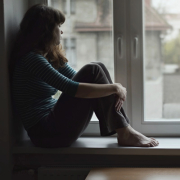
A new recently published study has found that women carry a higher genetic risk of depression. The research was published this week in Nature Communications, and has claimed to be the largest genetic study on major depression in different sexes. It found 16 genetic variants linked to depression in women and eight in men.

Australia’s QIMR Berghofer Medical Research Institute led the study, which showed a large amount of the genetic variants linked to depression were shared between the sexes, but were “higher burden of genetic risk in females which could be due to female-specific variants,” according to the Guardian.

Embed from Getty Images

“We already know that females are twice as likely to suffer from depression in their lifetime than males,” said Dr. Brittany Mitchell, a senior researcher at QIMR Berghofer’s genetic epidemiology lab.  

“We also know that depression looks very different from one person to another. Until now, there hasn’t been much consistent research to explain why depression affects females and males differently, including the possible role of genetics.”

The study also emphasized previous research and knowledge regarding the higher rate of depression in women and its links to behavioral, environmental, and pre-existing biological factors. One of these factors includes the fact that men are less likely to seek out counseling and treatment.

Women are also more exposed to sexual abuse and interpersonal violence, which is one of the biggest environmental factors for these findings. 

The study stated that these factors emphasize the need for a “multifaceted approach” in order to understand all the underlying mechanisms of depression, and “proposed that a key component of the biological mechanisms underlying these disparities could be differences in genetics.”

For the study, researchers looked at DNA from five international cohorts: Australia, the Netherlands, United States and two from the United Kingdom, the Guardian reported. Their final sample size included 130,471 women and 64,805 men with major depression, as well as 159,521 women and 132,185 men without the diagnosis.  

The authors acknowledged that the study included about twice the amount of women with depression as men, so they performed additional analyses to ensure their findings were not caused by the difference in sample sizes. 

They also found a stronger genetic correlation in women between depression and metabolic traits when compared to men with the same traits. 

Embed from Getty Images

Dr Jodi Thomas, the lead researcher, said “these genetic differences may help explain why females with depression more often experience metabolic symptoms, such as weight changes or altered energy levels.”

Professor Philip Mitchell, from the School of Clinical Medicine at the University of New South Wales, said: “there has been longstanding debate about the reasons for the consistent finding around the world that depression is more common in females than males, with most studies reporting that women have two to three times the risk of depression compared to men.” 

“The most dominant theories have been related to social and psychological factors, for example the impact of the female role in caring for families compared to the income earning role of males, or personality vulnerabilities in women,” said Mitchell. 

“This very interesting novel genetic study in a very large global study provides strong evidence that these differences in rates of depression may in fact be due to genetic factors, with the statistically significant finding of more depression risk regions in the genome in females compared to males, and little overlap in these regions between males and females.”

“As well as strengthening the evidence that the differences in depression rates between men and women may be largely due to biological factors, it also points to the future possibility of different pharmacological treatments for depression in women and men, as the biological systems coded for by these genetic regions become better understood.”

red carpet

Women Dominated The Grammys This Year 

Taylor Swift, Miley Cyrus, SZA, Billie Eilish, and Victoria Monet dominated the major categories at this year’s Grammy Awards, which many are praising as a ‘night for women’ in the industry.

row vs wade

Roe Vs Wade Overturned, Experts Warn Maternal Mortality Rate Will Rise In US 

The Supreme Court voted to overturn Roe vs Wade last week in a 6-3 decision, officially revoking the constitutional right to an abortion in the United States. Experts are now saying that pregnancy-related deaths will almost certainly increase, especially among people of color. 

Rachel Hardeman, a reproductive health equity professor and researcher at the University of Minnesota School of Public Health, spoke on the issue: 

“There are going to be more people who are forced to carry a pregnancy to term, which means that there’s going to be a greater number of people who are at risk. More pregnancy means more likelihood of deaths.”

Current state bans could lead to an additional 75,000 births every year for those who won’t be able to access abortion, according to one experts estimate. The bans will also likely impact younger and poorer people of color at a much higher rate.

Currently in America, for every 10,000 births, 23.8 people have died from either pregnancy or childbirth-related causes, according to data from the US Centers for Disease Control and Prevention. 

Embed from Getty Images

More than half of the US states are likely to ban abortion following the fall of Roe.

“The truth of the matter is, it’s already hitting people [of color] harder than others – that’s been the reality,” said Monica McLemore, an associate professor of family healthcare nursing at University of California, San Francisco.

“Black people in the US were already 3.5 times more likely than white peers to die because of pregnancy and childbirth, according to one study looking at data from 2016-2017, and 2.9 times more likely,” according to a CDC analysis in 2020. 

“Because Black, Indigenous, and Latinx communities are going to be disproportionately impacted by lack of access to abortion services, it’s going to exacerbate the maternal mortality racial gap that we’ve already seen in the United States,” Hardeman said.

“It’s translating into not getting the care they need, which can be a matter of life and death. And racism also takes an immense physical toll, so by the time that person becomes pregnant, they are at less optimal health than their white counterparts who haven’t experienced racism across the life course.”

The cumulative and chronic effects of living in America as a person of color increases stress, which can also affect reproductive health. “We know that the stress pathway is what leads to infant mortality, preterm birth, and other outcomes,” Hardeman said.

“We have to be thinking about the Scotus decision and abortion bans generally as a racist policy, because the burden will fall the hardest on Black pregnant people, it’s going to fall hard on Indigenous people and other people of color, people living in rural areas as well and people of lower socioeconomic status,” Hardeman continued.

Embed from Getty Images

“The supreme court decision on Friday and bans on abortion instituted at the state level disproportionately harm people of color and reinforce a system of inequity and, frankly, of white supremacy.”

“If you think about why people get abortions, it’s often because it’s not safe for them to stay pregnant,” Stevenson said. “The people who are currently having abortions are very likely to actually have higher rates of pregnancy-related deaths and maternal mortality than the people who are currently giving birth.”

Having an abortion is “much, much, much safer than staying pregnant”, Stevenson said. 

Current research indicated that childbirth is 14 times more deadly than having an abortion. 

“We have to be thinking about the fact that because we live in a society where access to resources is based on racism and race, there are people who are not going to be able to access the services that are available.”

McLemore emphasized that direct action is what’s needed in order to protect the people in states that will be banning abortions. 

“Congress could act right now and render Scotus’s decision irrelevant by enshrining reproductive rights into national law. If this Congress doesn’t, she said, the six in 10 Americans who support abortion rights should vote for a new Congress that will,” she explained.

“We need an all-hands-on-deck approach here – with brilliance, not fear.”

MeToo Movement

Viral Footage Of Women Being Attacked In China Revives #MeToo Movement For The Nation

Security footage shared online showed a violent attack on female diners at a restaurant in China, sparking outrage online and a call to revive the #MeToo movement against gender inequality, something President Xi Jinping has tried to suppress.

African American Girl Reading Book

New Online Platform Aims To Link Black Women To Supportive Healthcare Systems 

Health In Her Hue is a New York City-based digital platform that has been operating since 2018 with the goal of empowering Black women with the community and resources they need to find a supportive and culturally sensitive care facility. 

Ashlee Wisdom and Eddwina Bright are the co-founders of the platform. Back in 2018 they secured a $1 million pre-seed funding which helped them immensely when it came to getting their business running. 

“Fundraising is never a walk in the park, especially as Black women. No matter how credentialed you are, it’s hard for everyone. But then you add on the layer of the fact that there aren’t many Black women who are building venture-backed companies or get funding. We’ve experienced some challenges throughout that journey,” says Wisdom.

Embed from Getty Images

The pair are currently working on building their new web platform and membership experience to offer care, support, and resources tailored to each woman’s specific healthcare needs. 

“Ultimately, our vision for Health In Her Hue is to be the first touchpoint for women of color managing their healthcare.”

Eddwina Bright explained how the social relationship between herself and Wisdom led to their desire to make a change in the industry: 

“I think our first foray into working together was when Ashlee was doing a video series on maternal health and asked me to share my birthing story – at that point, we knew each other socially. My experience giving birth to my oldest was not great. I felt very much coaxed into a C-section; doctors were not answering my questions, not telling my husband anything. It was just not a great experience. And so from that, I was able to take a step back and find a provider that was more culturally aligned with me. So when it came time to have my second child, I felt seen, I felt heard, I felt taken seriously, and was able to really advocate for myself and have a much better birthing experience.”

Embed from Getty Images

“So that’s the passion that I bring to the work that we do. I’d like us to help the women that we serve to advocate for themselves without having to go through really traumatic healthcare experiences. And the company happens to align with my professional experience in finance and non-profit entrepreneurship. So we definitely have a great balance of health and business expertise,” Bright explained.

 Wisdom explained how the “resounding thing we kept hearing was that it’s difficult to find a Black doctor, or a doctor of color, on existing platforms. So that was the impetus to build out a curated directory of Black physicians across the country. When we launched that directory in June 2020 – given the pandemic and the racial reckoning – people were ready. Thirty-four thousand people logged in within the first week or two.”

In the future, the pair hope to become the ultimate resource for BIPOC women so that they feel confident when it comes to their health. 

“I’d love for us to also become a resource for BIPOC women to better navigate not only their individual health, but the health of their families: their kids, their spouse, their parents. Because we know that community health is very important for the collective.”

The two are currently working on launching their online platform to get their message out there and to ideally help as many women as possible.

Music Teacher Creates Map Of Female Composers Lost In History 

We all know who Wolfgang Amadeaus Mozart was; one of the most famous composer prodigies of the 18th century and all time. However, most of us don’t know he also had a sister, Maria Anna, who was just as much of a prodigy as her brother, but wasn’t given the same opportunities due to the fact that she was a woman. 

Sakira Ventura is a music teacher from Valencia who wanted to shine a bright spotlight on Maria and any other woman in music who has been lost and forgotten due to sexist societal values. To do so, Ventura created an interactive map that features more than 500 female composers from across the globe. 

Embed from Getty Images

“We’ve never given women the place they deserve in history. They don’t appear in musical history books, their works aren’t played at concerts and their music isn’t recorded.”

“I came up with the idea after realizing I had rarely heard of women who had composed classical music during my academic studies of music. I had always talked about putting these composers on the map – so it occurred to me to do it literally,” she explained. 

To create the map, Ventura did extensive research into encyclopedias, libraries, and social media archives. 

“When I started I thought I wouldn’t know more than five female composers, but after more than a year and hundreds of hours of work, the site documents 530 composers – including a short description of each one and a link to listen to their work.”

Embed from Getty Images

Ventura is currently working on cycling through another 500 names to add onto the map as well. The catalogue currently includes artists who were born all the way back in 810, who wrote hymns that are still sung in the Orthodox Church to this day. 

Ventura explained that women are often erased from music history, especially classical music, due to the fact that at the time music was only seen as a hobby for women, and could never be taken up professionally. 

“It was taken for granted that a work composed by a woman wouldn’t be of the same quality as that composed by a man. The barriers forced female composers to get creative; some enrolled in convents in order to study music while others published works under male pseudonyms.”

Ventura has even collaborated with other teachers on the map who are using it as a part of their lessons now. “I’m 28 years old and nobody ever spoke to me about female composers,” she said. “So I want to do what hasn’t [been] done for me, I want my students to know that [Wolfgang Amadeus] Mozart and Beethoven existed but also that there were also all these female composers.”

Woman Practicing Yoga

Study Suggests Lifestyle Changes Reduce A Woman’s Risk Of Stroke

A new study performed has determined that even in their middle age, women are way less likely to suffer from a stroke if they begin to adopt a healthy lifestyle at any point during adulthood. The research itself was performed by experts from Harvard’s T.H. Chan School of Public Health, and the University of São Paulo Medical School in Brazil. The teams used data that’s been gathered as a part of an ongoing study in America called the “Nurses Health Study,” which focuses on investigating “risk factors for major chronic diseases in women.” 

Thanks to data from that study, the researchers had access to health information from over 59,000 women, all of which consented to being involved in these projects. The data provided information regarding each women’s smoking status, exercise/eating habits, as well as their body mass index (BMI), which is a number that represents how healthy one is based on height, weight, and age. Within the Nurses Health Study specifically, all of the women were around 50-years-old when they began, and they remained in the study for an average of 25 years. 

Embed from Getty Images

The findings were published in a journal from the American Stroke Association, called Stroke, and found that 4.7% of the women who made no lifestyle changes at all throughout their 26 years in the study had a stroke of some kind; “2.4 percent experiencing ischemic stroke and 0.7 percent having a hemorrhagic stroke.”

Besides healthier eating habits, the “lifestyle changes” that researchers were looking for specifically focused on those who quit smoking, began doing 30 minutes of exercise a day, and lost weight if they were considered to be overweight from a health officials perspective. If the women made these three specific changes, the study suggests that they could reduce their risk of stroke by up to 25%.

If the women just adopted healthier eating habits, they reduced their stroke risk by 23%. Goodarz Danaei, one of the lead authors of the study, also suggested that by increasing things like fish and nuts in ones diet, while also reducing the amount of unprocessed red meat you eat, would also decrease the risk of stroke in women.

Embed from Getty Images

“We found that changing to a healthy lifestyle, even in your 50s, still has the potential to prevent strokes. Women who made lifestyle modifications in middle age reduced their long-term risk of total stroke by nearly a quarter and ischemic stroke, the most common type of stroke, by more than one-third,” Danaei said.

Danaei then emphasized that this was simply an observational study, so the data isn’t necessarily concrete enough to make a direct correlation between these specific lifestyle changes and risk of stroke, however, as most studies/professionals will tell you, a healthy life in general will likely lead to less medical ailments/conditions down the road.

Danaei said “there are other studies to support that the proportional changes in stroke risk from lifestyle and dietary modifications may be generalizable to men. We also estimate that exercising 30 minutes or more daily may reduce the risk of stroke by 20 percent.”

With a global pandemic on all of our plates, now really is the perfect time to begin practicing healthier habits in our day-to-day proceedings. It can be so easy to get couch-locked with a bag of chips and candy, but try to start doing little things every day to lead you to a happier and healthier life once all of this is over.

Wealth

Study Finds 22 Men Own More Wealth than All Women in Africa

One of the major topics of political concern both in the United States and around the world is the problem of economic inequality, which continues to increase by the day. Oxfam International, a charity that focuses on alleviating global poverty, has released a study that found that economic inequality has become so severe that the world’s richest 22 men own more wealth than all 326 million women who live in Africa. According to Oxfam, much of the world’s wealth is concentrated in the hands of a few billionaires, whose fortunes contribute little to society even as women and people of color are excluded from the economy because of biased economic systems. To address the problem, Oxfam has called on governments around the world to institute policies that ease the financial burden on women who care for children and the eldery, often without pay. Oxfam recommends that governments increase taxes on the wealthy in order to fund programs to support child care and health care.

Embed from Getty Images

The report included a number of surprising statistics that highlight just how bad economic inequality has become. For example, it found that the world’s 2,153 billionaires have more wealth than 4.6 billion people; that the world’s richest 1% have over twice as much wealth as 6.9 billion people; that the value of unpaid care work by women is $10.8 trillion annually; and that the number of billionaires in the world has doubled over the past decade. The report links economic inequality with gender inequality, arguing that economic policies that have been instituted around the world are biased towards men, allowing them to dominate in business in government. As a potential remedy to this problem, Oxfam recommends that governments recognize the unpaid yet essential care work performed predominantly by women by expanding the public sector’s role in providing care to children, the elderly, and others who cannot care for themselves. As populations age and governments around the world cut access to public services, this problem is expected to worsen with time.

Embed from Getty Images

Oxfam believes that the influence of the super-rich on governments is too great, as the wealthy have the power to influence governments to enact policies that benefit themselves at the expense of the world’s poor, which disproportionately affects women and people of color. There is much disagreement around the world as to whether or not the existence of billionaires is good for society. Some argue that the fact that billionaires exist is evidence of the success of the capitalist system that has raised millions of people out of poverty, whereas others say that increasing taxes on the super-wealthy would lead to a more fair, just, and equal world where fewer people suffer unnecessarily. According to Oxfam, the capitalist system is broken because of the massive and growing economic inequality it generates and how it allows wealth to essentially be taken from the poor and given to the rich.

Gender Inequality

Report Suggests Gender Equality Still a Century Away

While the push for women’s equality has made substantial progress over the last several years, a new report released by the World Economic Forum suggests that civilization is still a long way away from ensuring equal treatment of the sexes. Entitled the “Global Gap Gender Report 2020,” the report analyzes 153 countries and ranks them according to how successfully they enable gender parity. While the report found many areas in which societies have made progress, such as ensuring that girls have access to educational resources in developing countries, it also remarks that the pace of progress has been slow, as only a handful of countries in the world were determined to even approach reaching full gender equality. The report predicts the milestone of achieving global gender parity to be 99 years in the future, with the areas of Economic Participation and Political Empowerment being where the gender gap will likely take the longest to close.

The countries ranked as the most gender-equal include Iceland, Norway, Finland, and Sweden, as the Nordic countries have some of the most progressive gender policies in the world. Finland, for instance, recently elected the world’s youngest female leader, Prime Minister Sanna Marin, and their Parliament contains an almost equal number of men and women. Finland and other Nordic countries also have policies like several months of paid parental leave, sophisticated sex education programs, and widespread access to abortion and birth control, which help to reduce the social gender gap in these countries. The World Economic Forum’s report focused on four main themes: economic participation, educational attainment, health and survival, and political empowerment; and the Nordic countries were found to perform among the best in these areas.

Embed from Getty Images

On the other end of the list, Middle-Eastern countries like Syria, Pakistan, Iraq, and Yemen were ranked lowest. In these countries, according to the report, women’s rights are severely limited, particularly in the areas of “divorce, inheritance, asset ownership, access to justice and freedom of movement.” In some of these countries, women are almost entirely absent from political life, and the rates of literacy are much lower for women than for men as a result of unequal access to education. And when it comes to employment, women in these countries are routinely discriminated against, resulting in a low level of female involvement in the workforce.

Though different parts of the world are making progress in closing the gender gap at vastly different rates, the overall social gap between the genders is gradually narrowing, albeit very slowly. The report found that the world has almost achieved 100% gender parity in the categories of Health and Survival and Educational Attainment, but has only achieved 58% parity in Economic Participation and Opportunity and 25% parity in Political Empowerment, leaving the Global Gender Gap Index at a combined percentage of 69% of full parity between the sexes. The report stresses the urgency of increasing the pace of progress towards gender equality, saying, “without the equal inclusion of half the world’s talent, we will not be able to deliver on the promise of the Fourth Industrial Revolution of society [or] grow our economies for greater shared prosperity… at the present rate of change, it will take nearly a century to achieve parity, a timeline we simply cannot accept.”

Embed from Getty Images

Even developed, industrialized countries like Japan display shocking deficiencies in the area of gender equality. Women in Japan, for instance, perform four times the amount of unpaid labor as men do, and despite government initiatives to expand female participation in the workplace, women often have difficulty advancing into senior work positions. There’s no question that the project of achieving gender equality is a difficult and complicated one, as gender issues stem from social, economic, and political factors, but countries like Finland show that with enough effort these barriers can in large part be overcome.

Netflix

Netflix Documentary Affects Yoga Industry

While yoga has been a discipline of many for several centuries, the concept of “Bikram” yoga has seen a huge increase in popularity since its creation during the 1970s.

However a recent documentary on Netflix, focusing on claims of sexual abuse against founder Bikram Choudhury, has forced many yoga studios to invest thousands of dollars on rebranding in an attempt to keep hold of their share of the $16 billion Americans spend on the industry each year.

Family-owned yoga company Bikram Yoga Scarsdale has received many emails over the past year from clients asking why they have not changed their name and if they are even going to. Co-owner and yoga instructor Nicole Pike spoke about the effects the sexual abuse claims and company name has had on her business, confirming that they have had to rebrand. The company will now be known as Sweat Central and offers “original hot yoga” rather than Bikram classes in a further attempt to distance themselves from Choudhury.

Bikram: Yogi, Guru, Predator is currently available on Netflix and takes a look at the life of Bikram Choudhury, who made a fortune thanks to his trademarked Bikram hot yoga empire. However the main focus is on the numerous sexual abuse claims from women against him.

Embed from Getty Images

When allegations first started to appear over six years ago many yoga studios changed the names of their classes and studios in an attempt to distance themselves away from Choudhury while staying true to the original teachings, with Pike confirming that:

“While the classes themselves are amazing, Bikram the person has done terrible things we in no way want to be associated with. We want people to feel comfortable at our studio, and confident that their money is in no way supporting him.”

With this in mind she is spending around $20,000 on rebranding to keep her customers’ faith and trust in her business rather than stopping providing the actual classes.

Choudhury was once seen as a leader of mental and physical healing among the world’s yogi community, thanks to his form of hot yoga, which involved a sequence of 26 postures carried out for 90 minutes in a room heated to 105 degrees. According to research the exercise has provided many benefits to students, including improving endurance and lowering stress levels as well as aiding mindfulness and mental strength. It is also practiced to help improve balance, tone muscle and increase your flexibility.

Yoga as an industry has seen a massive growth worldwide with the sector now worth a staggering $80 billion in America alone, with $16 billion being spent each year not just on the classes but also on equipment, accessories and specific clothing. With over half of us using yoga as a much needed stress relief aid a further 59 percent claims it helps them to sleep better.

Still Hot Yoga in Druid Hills, Georgia used to be called Bikram Yoga Decatur until assault allegations started to surface in 2014, prompting studio owner Cleve Willis to change the name making sure his students would not link his studio with Choudhury.

Embed from Getty Images

Willis spent $1,500 in preparation for the backlash he said he could see coming. However, while he changed the studio’s name, signage and accessories, Bikram classes still appears on the schedules so as not to confuse clients that may be searching specifically for these classes online.

“They can still see we’re not associated with the guy, but we do the actual traditional class. Someone new coming into town may not know what it is. That’s why we didn’t change the name of the class.”

With roughly 36 million Americans taking part in yoga, an increase from 20.4 million in 2012, 72 percent are women. This has led to a #metoo style movement throughout the yoga community with many teachers as well as students coming forward to discuss unwanted touching in classes as many instructors are providing hands-on corrections without the student’s consent.

Unfortunately for 29 year old instructor Kelsey Lowe from Bikram Yoga Harlem in New York, she has had first hand experience of this abuse. Working with a male instructor at a different New York City studio she says this backlash has not come as a shock to her. Talking about her experience she says:

“He was coming to adjust me, but it was a little too close for comfort. You can feel someone’s body up against yours and it’s like, “I don’t even know this guy’s last name” kind of thing.”

After the incident she chose to change studios and works within her current studio, both practicing and teaching yoga. However she believes leaders gaining “cult-like followings” – such as Choudhury – aids sexual misconduct as “you can’t give all this power to one person.”

It is hoped that the backlash from the Netflix documentary will not affect the business in a negative way, rather making sure that unwanted actions are eradicated for good.