United Nations Says Funding To Help Poor Nations Cope With Climate Crisis Is Falling Flat
A new report from the United Nations has shown that funding allocated to help poor countries deal with the devastating impacts of climate change have been flat or falling since 2022. This is especially concerning considering the increase, and acceleration, in extreme weather, natural disasters, and global heating in recent years.
The report itself broke down the “financial support or adaptation” for poorer nations, which shows measures like improvement to infrastructure, early warning systems, flood protection, and drought-resilient irrigation systems. The results showed that the promises made by richer countries in 2021 to help these nations were not met, and now the problems have gotten worse.
According to the UN Environment Program, the world’s 155 developing nations will need $305 billion annually by 2035 to adapt to “heatwaves, fires, floods, storms, droughts, and rising sea levels that are made more intense or more frequent as a result of decades of burning fossil fuels, mostly in wealthy global north nations,” Jonathan Watts reported for the Guardian.
2024 is the most recent year that had available data, and it showed finance from wealthier to poorer countries actually reached a peak of $32 billion, one billion more than 2023. One of the cited reasons for the lull in funding is that many governments in Europe specifically are spending their budgets on defense.
The report stated that the spending is “behind the pace” required to meet an initial goal of hitting $40 billion by 2025.
At the Cop30 global climate talks in Belém, Brazil, last year, wealthy nations made an agreement to triple adaptation finance for developing nations by 2035. “This increase to between $85bn and $120bn would reduce the gap, but still meet only 20-29% of needs,” the report said.
The UN estimated that the world’s least developed countries need $40 billion to $50 billion annually in adaptation finance.
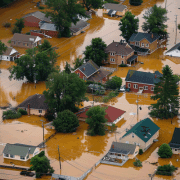
Between 2020 and 2025, low and middle income countries accounted for 99% of the 765 million people that were impacted by floods and landslides.
Inger Andersen, the UNEP executive director, said that “a global temperature overshoot of 1.5 degrees Celsius above preindustrial levels is now locked in, making climate impacts more intense, frequent, and unpredictable.”
“For the countries that contributed the least yet suffer the most, this is an unavoidable reality. Adaptation finance is a vital investment in global resilience.”
“Delivering on these commitments protects frontline communities, prevents forced displacement, safeguards global food security, and ensures no one is left behind. Now is the time to honor commitments in full. Delays not only increase long-term costs, they also strain our near-term capacity to cope as our systems reach their limits,” she said.
Many advocacy and climate justice groups around the world agree that adaptation finance is one of the most crucial issues to be addressed at the upcoming COP31 UN climate summit in Turkey this month. The goal is to see not only an increase in spending, but an increase in the speed in which this money is allocated.
“While some might view climate action as a separate issue, ignoring it only increases national and regional vulnerability, especially as many climate impacts unfold beyond national borders,” Anderson emphasized.
“Failing to invest in mitigation and adaptation only exposes nations to greater risk. Climate change directly threatens people, economies, and the ecosystems that sustain us – and why adaptation is a direct investment in national security and resilience. The two are fundamentally inseparable.”

Eric Mastrota is a Contributing Editor at The National Digest based in New York. A graduate of SUNY New Paltz, he reports on world news, culture, and lifestyle. You can reach him at eric.mastrota@thenationaldigest.com.