
The forces that shape human interaction aren’t always loud or visible. They’re often made of meaning—the stories people carry with them, the assumptions they come to treat as fact, the words that can turn a passing moment into a rupture. Entire relationships, institutions, and communities can pivot on language, on what is said, what is assumed, and what goes unspoken. For some educators, leaders, and organizers, the work begins there, not with policy or infrastructure, but with the dynamics of perception itself.
Sponsored Content
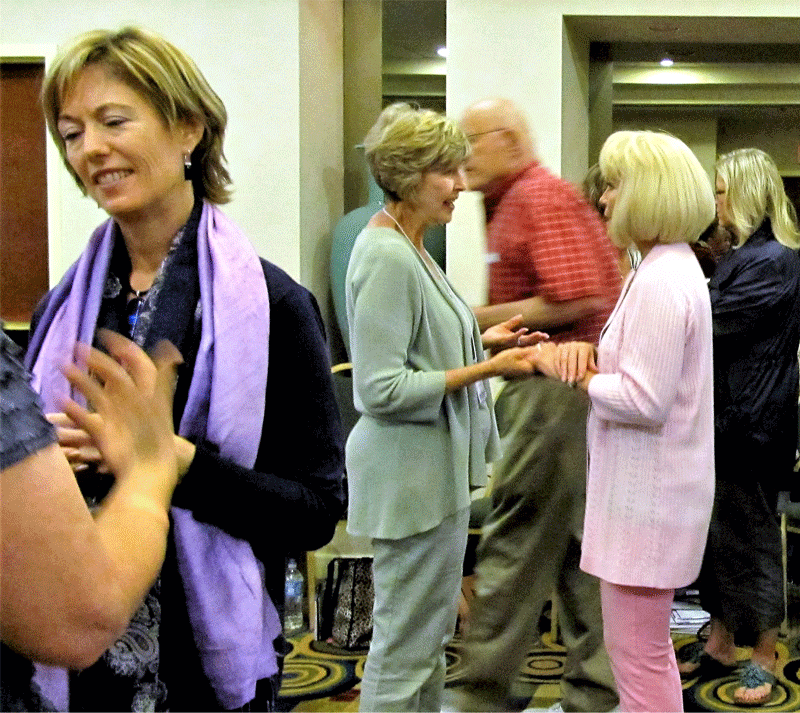

The Planetary Peace, Power, and Prosperity Legacy Foundation is one such creation. Structured as an educational nonprofit, it frames communication and interpretation as practical skills—habits that can be noticed, trained, and refined.
The foundation describes its mission as supporting “inner peace, personal (em)power(ment), and prosperity (gratitude, abundance, having enough).” Rather than offering a standardized curriculum, it positions itself as a dialogue-based practice resting on a set of tools and conversations intended to slow reactive habits and draw attention to how meaning is being created—word by word, moment by moment.
Its founder and director, Dr. Janet Smith Warfield, previously worked as an attorney and author and has presented workshops internationally. She has described the foundation’s ambitions in expansive terms, referring to its work as “a semantic solution to all the human-created suffering on our planet.” In that framing, conflict is not only a matter of external circumstance, but of interpretation—how people assign meaning, attach intent to words, and treat perspective as fact.
In practice, much of the foundation’s public-facing work has taken the form of guided dialogue and media. Its materials include recorded conversations and interviews for its TV show, numerous workshops and retreats, and resources designed to prompt reflection—all content it continues to redistribute through its online platforms, where it has emphasized reach and visibility as part of its educational mission.
The organization also functions as a collective of individuals—board members, hosts, and collaborators—whose work connects to the mission in different ways. Some contribute through media and public dialogue. Others describe service work rooted in education, mentoring, and community support. The structure is a network organized around shared principles and a shared vocabulary.
The foundation does not define itself primarily through material aid. Rather, its center of gravity is reflective and relational, emphasizing language, perception, and communication as skills capable of shifting society. At the same time, contributors describe those principles as something meant to travel beyond conversation—into the daily decisions and community efforts that shape how people live with one another.
One of the foundation’s core practices is something Dr. Warfield calls “Word Sculptures.” They are open-ended conversational and reflective practices that can include personal stories, quotations, poetry, images, metaphors, analogies, questions, and dialogue designed, she says, “to draw out what has always been present but has not previously been noticed” and to create room “to shift conditioned reaction into conscious choice.”
In other words, the point is not to “win” a conversation or impose a conclusion. The point is to notice what is happening inside a person as they interpret a moment. What assumptions appear? What emotions arise? Which stories get activated, and what language reinforces those stories?
That interior noticing is also why the foundation emphasizes uncertainty and humility in its worldview. It often returns to the idea that no individual perspective is complete, and that human beings are neither omniscient nor fully in control of the systems they move through. In that frame, language becomes a tool that can either soften rigidity and widen understanding or lock people into interpretations that feel like “truth” when they are, in practice, perspective.
Dr. Warfield sometimes uses spiritual and cross-cultural reference points to illustrate this tension, including the idea that humans moved away from direct experience into abstraction through naming, categorizing, and judging. In her telling, words help people communicate, but they also fragment what was once whole, inviting analysis and judgment where fluid awareness once lived.
For the foundation, this is not a purely philosophical concern. It is the engine of the work; if people can become more aware of how their interpretations form, they may be able to change how they respond, especially in moments where conflict or power imbalance might otherwise fossilize into something permanent.
On its website, the organization articulates both a broad vision and a directional framework for change. It states: “Our vision: To consciously and intentionally use our co-creative power to develop ideas, present solutions, and promote action for the greater good of humanity and the planet. Our mission: To attract each human consciousness, through deep listening, clear speaking, and conscious conversation.”
“Your deep listening, clear speaking, generosity, and interactive sharing of your wisdom, awareness, and compassion help peace, power, and prosperity descend upon and immerse our entire planet.”
The site also outlines a series of movements described as transitions “away from” one condition and “toward” another. These shifts include moving away from “not feeling good enough” and toward “stepping fully into one’s own, unique personal power—while not harming others or the planet that sustains us”; away from “abusing others or allowing oneself to be abused” and toward “self-compassion and other-compassion”; away from “fear and terror” and toward “inner strength and courage”; and away from “rage” toward “standing firmly in right action.”
Other contrasts include moving beyond “shame or guilt” toward “making amends by changing conduct,” from “a transactional, money economy of lack” toward “an abundance economy of giving and receiving,” and from “planetary war and desecration” toward “deep inner, community, and planetary peace.” Together, these paired statements present the foundation’s work as a conscious reorientation from reaction to intention, from scarcity to sufficiency, and from division to connection.
Work in the foundation unfolds through community. That structure also shapes how the organization understands stability. The foundation does not promise permanence in participation. People arrive, engage, contribute, and sometimes move on. Dr. Warfield has used the image of a labyrinth walk. Sometimes people travel side by side, sometimes they split apart, sometimes they pass briefly and nod before continuing their own paths. The organization is defined by the flow of interaction, rather than by a rigid pathway that every participant must follow, mirroring the human condition.
The foundation, in that sense, functions as connective tissue. People with diverse backgrounds, geographies, and areas of expertise can align around shared principles and carry those values into their own lives and communities. The foundation is a place where people can be distinct individuals, not “clones,” while still “playing the cosmic game together.”
“Your deep listening, clear speaking, generosity, and interactive sharing of your wisdom, awareness, and compassion help peace, power, and prosperity descend upon and immerse our entire planet.”
Its public-facing work, such as workshops, functions as a vehicle for that practice, but the organization is also shaped by what board members and contributors do on their own.
Board members and collaborators often describe the foundation’s work through the language of lived experience. Board member Duncan McClintock frames the organization’s core emphasis as a practice of presence or what he describes as “flow.”
“Being in ‘Flow’ and connected to a ‘Light Field’ is what I call ‘Soul’ – A light that shines around you. When that big smile comes on your face, and you connect with someone else, that’s a ‘Soul Connection.’ You can actually have a conversation with someone, and be able to gaze on them, and have them gaze upon you. You can feel that energetic flow, back and forth.”
McClintock frames flow not as agreement, but as a shift in internal posture: “It’s incumbent upon our society, our humanity, to find a way to be able to communicate; find a way to accept others as they are and who they feel they are. It’s really hard to get into flow. It’s impossible to get into flow if you’re judging others!”
He adds, “To get into ‘Flow,’ you need to be here. You need to be in your heart. You need to be in connection with your Soul and understand what the Soul wants of you.”
Conversation itself is an opportunity for someone to find flow through “a connection between two people to lift up all of us,” grounded less in agreement and more in shared attention.
McClintock also offers a more everyday example of how he sees this practice at work. He recalls living in Southern Connecticut and walking along a rural road each day, smiling and waving at passing drivers.
“I was in the grocery store. This guy came up to me and said, ‘Aren’t you the guy who walks on a brick lane every day? … Man, you are my touchstone! … I love when you wave and smile. You seem so upbeat!'”
“I said, ‘I enjoy doing it!'”
“He said, ‘It makes my life,’ and walked away.”
For McClintock, the story illustrates what he describes as the subtle but real impact of presence and acknowledgment—how a simple gesture can create connection without agenda or transaction.
“Being in ‘Flow’ and connected to a ‘Light Field’ is what I call ‘Soul’ – A light that shines around you. When that big smile comes on your face, and you connect with someone else, that’s a ‘Soul Connection.’ You can actually have a conversation with someone, and be able to gaze on them, and have them gaze upon you. You can feel that energetic flow, back and forth.”
Taken together, these reflections echo the foundation’s broader emphasis on conscious conversation, integrity, and attentiveness to the present moment. McClintock’s description illustrates how individual participants interpret and embody the foundation’s underlying themes in daily life.
“I can think of a lot of moments, which that part of me—the logical part, the OCD part—would definitely say are not beautiful. But if you look at it in a certain way, there is beauty to it. There is possibility. There is hope. There is opportunity for others to come forth to build a beautiful community, a loving, nurturing community and allow that to flourish. That has a lot to do with Flow. Just allow it to happen. Allow it to be.”
The Planetary Peace, Power, and Prosperity Legacy Foundation’s identity depends on more than one person. While Dr. Warfield’s work and language form the foundation’s origin story, board members and contributors enact the mission through their own forms of service.
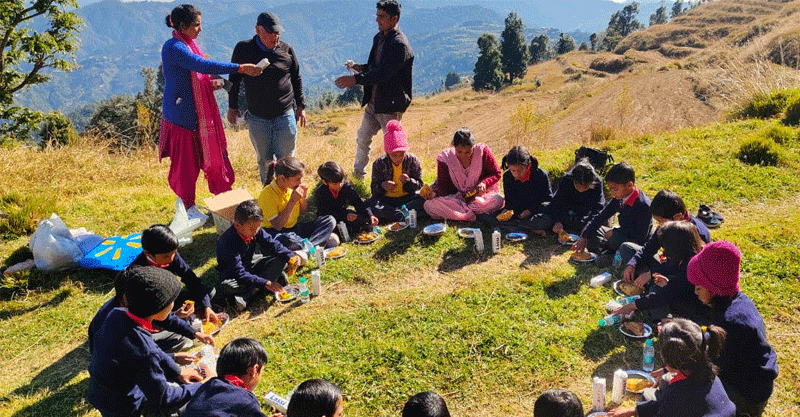
Narinder Kumar, a member of the foundation’s board of directors, describes the work he has been doing with children in the Kumaon Himalayas in India, supporting education and meals for schoolchildren and planning activities that expand what children can imagine for themselves.
He has been thinking about introducing bird watching and photography, while supporting yoga and cooking classes, and taking children on day hikes where he provides food, drinks, and transportation.
“I have noticed the elders in the village do not have access to any eye care. They have a primary health center which provides very basic medicines, and I thought of providing reading glasses,” he says. “Let’s see how this idea can be implemented.”
Kumar’s message illustrates how the foundation’s values can translate into tangible support: the “inner” work of awareness and integrity expressed as practical care—food, education, mentorship, and connection to nature. “Any help to increase their income is in my mind,” he says.
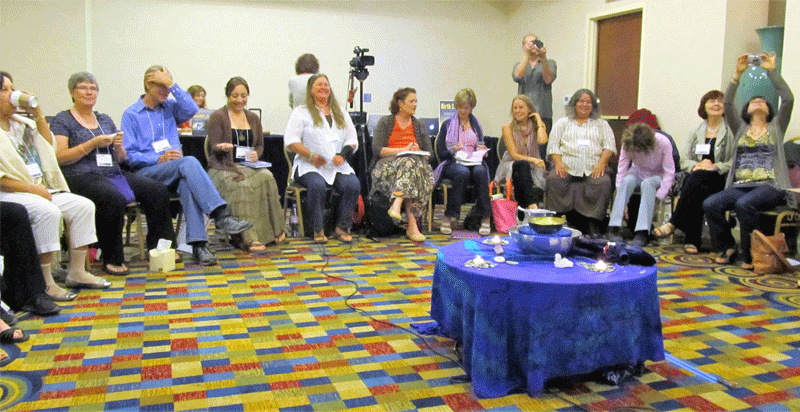
One of the more tangible examples of the foundation’s approach is embedded in Dr. Warfield’s description of a group exercise using a card deck she developed using photographs she has taken during her travels around the world. She describes a circle of about 26 people at an event where cards were passed out face down so participants could not see the image until everyone had one.
She then instructed them to turn the cards over and look at the image silently for two minutes, watching what thoughts flowed through their minds as they looked, what the image brought up, what story their brain generated, and what reactions surfaced.
It is framed as a kind of awareness practice in which you are “watching your mind,” and it is connected to a Buddhist witness-oriented meditation approach. Importantly, the exercise is not presented as a test with a correct answer. The “content” is the mind itself—what interpretation gets formed, and what a person can learn by noticing the process.
Similar themes appear in board member Constance d’Angelis’ book “The Seven Laws of Inner Peace,” which outlines a framework built around principles such as “The Law of Perception,” summarized as “Your perception creates your reality.” In the introduction, d’Angelis writes that “inner peace is the basis for optimum, balanced action and accomplishment,” reinforcing the Foundation’s emphasis on awareness as a precursor to external change. Some of the other laws she writes about include those dealing with unity, cause and effect, alignment, mental attention, giving, and redemption.
Part of the foundation’s funding model is tied to Dr. Warfield’s creative output. Revenue from the sale of her books, reflection card decks, and other materials flows directly into the foundation rather than to her personally.
She describes ordering a minimum run of card decks and giving many away, noting that some recipients made donations to the foundation in gratitude for what they received. The foundation’s financial system, in that sense, is tied to community response: people encounter a tool, find it meaningful, and choose to support the work.
If the foundation’s method is internal awareness, its strategy is connection, bringing together people who might otherwise never collaborate and letting relationships generate new directions for the work.
Dr. Warfield describes an example from a long drive north from Florida, when she stayed overnight near the Florida–Georgia line and struck up a conversation with a hotel front desk worker, after asking where he was from.
What could have remained a brief exchange at the front desk became something more sustained. As they talked, he shared details of his life: he had been earning $9 an hour under the table after his visa sponsorship fell through, despite holding a master’s degree in artificial intelligence.
The interaction did not end when she checked out the next morning. Dr. Warfield exchanged contact information with him, and the two continued talking.
“What has evolved out of this is that now, using AI, he has created a couple of structures that our foundation might be able to use,” she says.
“I have noticed the elders in the village do not have access to any eye care. They have a primary health center which provides very basic medicines, and I thought of providing reading glasses. Let’s see how this idea can be implemented.”
Eventually, she connected him with McClintock, who has decades of experience as an IT specialist. “The two of them have something in common that is like reading Greek to me,” she says. However, this is how the foundation moves forward; curiosity leads to a relationship, and a relationship leads to collaboration.
Beyond workshops and conversations, the foundation’s leadership has discussed a longer-term goal of acquiring a large tract of land—space intended for retreat and embodied education.
Dr. Warfield remembers discussing the possibility with board member McClintock, asking him whether, if the foundation were to acquire “substantial acreage” with a structure on it, he would move there and educate people about walking in the woods. His response was immediate: “Yes, I absolutely would.”
That vision does not override economic reality, and she recognizes constraint as part of the work. Translating philosophy into physical infrastructure is difficult, and transformation rarely follows a straight line. But the land vision clarifies the foundation’s vision for its next chapter: a place where the values of conscious conversation and relational awareness can be practiced in an immersive setting.
Prosperity refers to gratitude, abundance, and “having enough.” A retreat property is framed less as an asset and more as a container—a place for sustained practice, where conversation and reflection are not squeezed between the obligations of daily life.
For many nonprofits, “impact” is reported through measurable outputs such as people served, dollars distributed, meals delivered, or services performed. The Planetary Peace, Power, and Prosperity Legacy Foundation is harder to describe that way because it focuses on interior shifts—how people relate to themselves and others through language.
The foundation’s answer is not to reject accountability, but to define impact differently as the cultivation of awareness and choice, expressed through how people speak and listen. Word Sculptures are designed to move people from conditioned reaction into conscious action and to change how a moment is experienced by everyone involved.
A reader might reasonably ask, “What does that look like beyond the workshop room?”
The foundation’s community model suggests its tools are meant to travel. A reflective practice used at a retreat can become a way to handle conflict in a family, or to approach leadership in a workplace, or to return dignity to an exchange that might otherwise become adversarial. A person who learns to pause and notice their interpretive reflex may become less reactive in public life and more capable of responding in alignment with their values.
Board members’ work provides another answer. When someone like Narinder Kumar supports children’s education and meals in the Himalayas, or considers bringing reading glasses to elders who cannot access basic eye care, that effort reflects the foundation’s emphasis on dignity, awareness, and human connection expressed as concrete care. The foundation’s impact, then, is not a single program “delivered” from the top down. It is a network effect of a set of values and tools carried outward through people who apply them locally.
Human life is in constant motion, and relationships form and dissolve, often in patterns that repeat. The foundation is designed to function inside that reality rather than pretend it can out-organize it.
“It’s dynamic,” Dr. Warfield says. “It’s not static.” The point is not to control every variable, but to cultivate the internal and relational skills that help people stay grounded, especially when the world shifts.
The Planetary Peace, Power, and Prosperity Legacy Foundation is ultimately asking a simple question in a complicated era—what changes if people treat language not as a weapon or reflex, but as a practice to be handled with care?
And if the foundation is right, the results are not just philosophical. They are practical, with fewer ruptures, greater clarity, and more moments when people can choose to respond from integrity rather than impulse.
To listen to Dr. Janet Smith Warfield’s episodes of our “Their Journey: A Sit Down With The National Digest” Podcast, click the links below!
Series 1:
Ep.1 https://www.youtube.com/watch?v=j_m85BzZJMY&t=4s
Ep.2 https://www.youtube.com/watch?v=0kFaS4YANm0&t=1s
Ep. 3 https://www.youtube.com/watch?v=5VYgznEpjOw
Series 2:
Ep. 4 https://www.youtube.com/watch?v=yMDWD7AiLQU&t=1s
Ep. 5 https://www.youtube.com/watch?v=j8K-JHiOK6A
Ep. 6 https://www.youtube.com/watch?v=GU1L6irsvAY
Ep. 7 https://www.youtube.com/watch?v=affoa99umYs
Series 3:
Moumita Basuroychowdhury is a Contributing Reporter at The National Digest. After earning an economics degree at Cornell University, she moved to NYC to pursue her MFA in creative writing. She enjoys reporting on science, business and culture news. You can reach her at moumita.b@thenationaldigest.com.

