
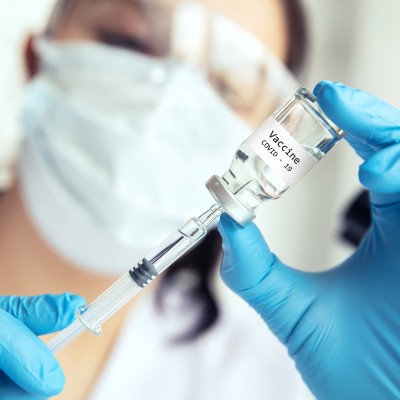
FDA Considering Authorization Rules That Would Delay Vaccine
The US Food and Drug Administration (FDA) has placed new rules for authorization for a Covid-19 vaccine under consideration. Such a change would likely push the authorization date past Election Day, despite President Trump’s wishes for a vaccine release by November 3.
CNN have reported that three FDA sources have claimed that the federal agency is currently in the process of deciding on the scenarios required for a pharmaceutical company to be given emergency use authorization for its vaccine.
“Either way, it’s going to be Thanksgiving at the earliest before a company gets an EUA,” one of the sources said.
“They [the FDA] are strongly considering this move. They haven’t said the ‘thou shalt,’ but they are giving signals that this is important to them and they are moving in this direction,” they continued.
It is expected that the FDA will inform the vaccine manufacturers that they will have to wait for two months after administering second doses of the vaccine to study participants until they can successfully apply for an Emergency Use Authorization.
Two pharmaceutical giants that began their Phase 3 clinical trials for the vaccines in July, Moderna and Pfizer, have so far given their second doses to less than half of their participants.
“Given these trials we’re expecting that we’re going to have about a median — that is about 50% of people will have more, 50% of people will have less — than about two months of follow-up on people. That’s what we’re hoping for. It turns out that most of the adverse events that will occur after vaccination will occur in a timeframe of about a month and a half after vaccination,” Dr Peter Marks, the director of the FDA’s Center for Biologics Evaluation and Research said, having previously claimed that the standard for a coronavirus vaccine authorization would likely be an ‘emergency use authorization-plus.’
“At the time of an emergency use authorization there will be efficacy data that’s met an interim analysis end point and we have safety data that would be sufficient on a large number of people. We’re talking something on 15-to-20,000 people that will make us feel reasonably confident that we understand the safety profile of the vaccine,” he said.
Another option for the agency would be to require companies to wait 60 days after giving only half of their trial participants their second dose before being able to receive authorization. This would allow the FDA to more effectively monitor the safety of the released vaccine after the trials have revealed how effective it is.
This method would still mean that Pfizer and Moderna would not be able to receive an Emergency Use Authorization in time for Election day, as they have not given second doses to half of the participants.
“We encourage Americans to enroll in the vaccine trial. It’s not only interesting, it’ll be a terrific thing for our country. We encourage everybody to enroll, as many people as we can. Today, my administration announced that we are awarding $200 million of CARES Act funding to all 50 states to prepare to distribute the vaccine to high-risk residents. And we want to do that the instant it is approved, not the following day, but the following moment,” President Donald Trump said during a White House briefing.
“So we’re going to be doing that, and we’ll be getting it ready because we have some great vaccines going to be coming out through Operation Warp Speed. We also continue to accelerate life-saving therapies.
“Today, Johnson & Johnson announced that their vaccine candidate has reached the final stage of clinical trials. This is record time. This is the fourth vaccine candidate in the United States to reach the final stage of trial,” Trump continued.
“So we have four candidates already at a very late date, late being a very positive word in this case. Earlier this year, Johnson & Johnson anticipated that they would reach phase one trials by September, but due to our support under Operation Warp Speed and to some of the incredible scientists involved, they’ve reached phase three trials by September, far ahead of schedule.
“We’re seeing promising results that are monoclonal antibody treatments, which help the immune system fight the virus and help very significantly, we’re finding, can reduce hospitalizations now by more than 70%. By cutting red tape and unleashing America’s medical genius, we’ve reduced the fatality rate 85% since April,” the president added.
“For individuals under 50, they have a 99.98% rate of survival from the China virus. That’s a number that’s been really increasing substantially with time. As children go back to school, we’re encouraged that early research shows only a small degree of spread,” he said.
“Brown University conducted a study of more than 550 schools across 46 states and found that only 0.076% of students had confirmed cases of the virus. That’s a tiny percentage. And only 0.15% of teachers had confirmed cases.”

Harrison Discombe is a Contributing Editor at The National Digest based in the United Kingdom. You can reach him at inquiries@thenationaldigest.com.

