
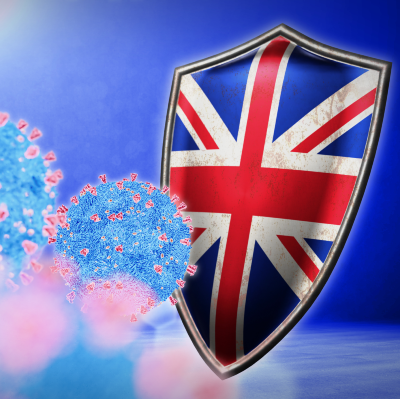
New Covid-19 Variant Found in UK
Mr Hancock told the House of Commons this week that over 1,000 cases of the new variant had been found, with most of those cases occurring in the south of England. It was also revealed that the new variant spreads faster and was responsible for the ‘very sharp, exponential rises’ in cases across the south east of England.
“We’ve currently identified over 1,000 cases with this variant predominantly in the South of England although cases have been identified in nearly 60 different local authority areas,” Hancock said.
“We do not know the extent to which this is because of the new variant but no matter its cause, we have to take swift and decisive action which unfortunately is absolutely essential to control this deadly disease while the vaccine is rolled out.”
Professor Chris Whitty, England’s Chief Medical Officer, has said that current coronavirus swab tests would detect the new variant that has been discovered in the south of the country in recent weeks.
The mutations involve the spike protein of the virus, the target that vaccines are designed around and the part that helps it infect spells. A combination of further monitoring and lab studies will be used to look at the effects of the particular mutations present in this variant to find out if it is indeed more infectious or will cause any problems with the vaccines.
So far, no mutation has been definitively shown to make any SARS-COV-2 lineage more dangerous or more transmissible.
“Let’s not be hysterical. It doesn’t mean it’s more transmissible or infectious or dangerous,” Professor Alan McNally, an expert at the University of Birmingham told the BBC.
“It is something to keep an eye on. Huge efforts are ongoing at characterising the variant and understanding its emergence. It is important to keep a calm and rational perspective on the strain as this is normal virus evolution and we expect new variants to come and go and emerge over time.”
Dr Jeremy Farrar, Director of Wellcome, said it was potentially serious. “The surveillance and research must continue and we must take the necessary steps to stay ahead of the virus.”
Although there is no evidence that the new variant could evade the protection conferred by vaccines, it cannot yet be ruled out. Two of the vaccines that have proved most effective in trials are of the type that can be easily tweaked if changes in the virus are found that help it evade the immune response to the vaccine.
Prof Jonathan Ball, Professor of Molecular Virology at Nottingham University, said: “The genetic information in many viruses can change very rapidly and sometimes these changes can benefit the virus – by allowing it to transmit more efficiently or to escape from vaccines or treatments – but many changes have no effect at all.
“Even though a new genetic variant of the virus has emerged and is spreading in many parts of the UK and across the world, this can happen purely by chance.
“Therefore, it is important that we study any genetic changes as they occur, to work out if they are affecting how the virus behaves, and until we have done that important work it is premature to make any claims about the potential impacts of virus mutation.”
Not much is known about the new variant yet or the effects it may have. Genomic researchers are doing their job by highlighting the variant so researchers are able to investigate but many have asked whether it was suitable for the health minister to announce these preliminary findings so publicly in a way that led to widespread concern.
“There is a simple rule for understanding all “new strain” or “new variants”: Ask whether the behavior of the virus has changed,” health and science correspondent James Gallagher said. “This is crucial as viruses mutate all the time, it’s just what they do. And so far we’ve been given the “scare” but not the “answer”.
“Matt Hancock said the new variant of coronavirus “may be associated” with the faster spread in the south-east of England. This is not the same as saying it “is causing” the rise and Mr Hancock did not say this virus has evolved to spread from person-to-person more readily.
“New strains can become more common for reasons that have nothing to do with the virus. One explanation for the emergence of the “Spanish strain” over the summer was tourism.
“So at the moment there are scary headlines everywhere, but still no scientific detail to know how significant this is.”

Harrison Discombe is a Contributing Editor at The National Digest based in the United Kingdom. You can reach him at inquiries@thenationaldigest.com.

