
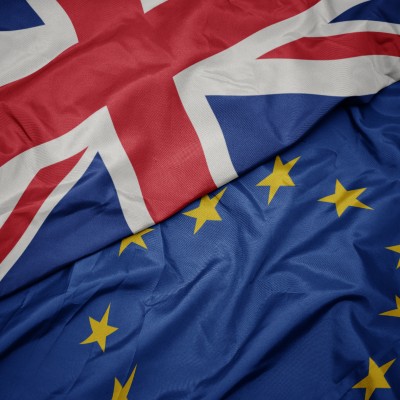
Boris Johnson Warns of ‘Strong Possibility’ Of No EU Trade Deal
As Brexit negotiations near their scheduled conclusion once again, UK Prime Minister Boris Johnson has warned his cabinet and the British public that there is a ‘strong possibility’ of no trade deal being reached. Johnson claimed that the latest EU offer was unacceptable but admitted that talks could continue beyond the current deadline.
The UK prime minister’s warning came after a dinner with the European commission president Ursula von der Leyen in Brussels on Wednesday, in which the pair failed to produce a breakthrough. Negotiators have since resumed talks, with von der Leyen setting out plans for emergency legal agreements in order to keep planes flying to the UK and lorries crossing Europe in the case of no-deal.
At a summit of EU leaders on Thursday von der Leyen called negotiations ‘difficult’, but both leaders were able to agree that a decision on the future of the negotiations would be made by the end of the weekend.
“We’re not stopping talks, we’ll continue to negotiate, but looking at where we are I do think it’s vital that everyone now gets ready for that Australian option,” Johnson said following discussions.
“At the moment, I have to tell you in all candor that the treaty is not there yet and that is the strong view of our Cabinet as well.”
Downing Street has been referring to the ‘Australia option’ since the beginning of 2020, rather than using the term no-deal. While the EU does not have a free-trade deal with Australia, they are currently in negotiations. The two countries mainly operate on World Trade Organization rules that include hefty tariffs on imports and exports.
The EU has agreements with Australia in place that it would not have with the UK if the two sides fail to agree on trade and security negotiations.
A video clip revealed Boris Johnson saying that he had told his cabinet members ‘the deal on the table is really not at the moment right for the UK’, and that they had agreed.
“What I’ve said to our negotiators is that we’ve got to keep going, and we’ll go the extra mile – and we will. And I will go to Brussels, I will go to Paris, I will go to Berlin, I will go to wherever to try and get this home and get a deal,” the prime minister said.
Johnson also claimed that in the last two weeks the EU had altered their negotiating position, making it difficult for the UK to diverge from new EU rules.
“They’ve brought back the idea of this equivalence between the UK and the EU which basically means that whatever new laws they brought in we would have to follow or else face punishment, sanctions, tariffs or whatever.”
“What I told the cabinet this evening is to get on and make those preparations. We’re not stopping talks, we’ll continue to negotiate but looking at where we are I do think it’s vital that everyone now gets ready for that Australian option.”
Ursula von der Leyen updated EU leaders on the negotiation landscape during the Brussels summit and the EU soon revealed that contingency proposals include Europe’s fishing boats retaining access to UK waters throughout next year.
“We would never accept arrangements and access to UK fishing waters which are incompatible with our status as an independent coastal state,” the prime minister’s official spokesman said in response, although he did reveal that the UK government intended to ‘look closely’ at the mini-deals that have been proposed by the EU if no overall agreement is reached.
“Throughout the negotiations, Britain’s team has misjudged the weakness of its position. All that was required was a continuation treaty for the UK to trade freely with its 27 neighbours, as it had done for 40 years,” Guardian columnist Simon Jenkins wrote.
“At stake was 43% of the UK’s total export trade; by contrast, according to 2016 figures, the UK accounts for only 16% of the EU’s exports market. It was never conceivable that the UK could dictate the terms of a treaty. The issue had nothing to do with democracy or sovereignty, only with the terms on which each side wished to do business.
“If no deal is reached by this Sunday, the cost to jobs and economic growth will be immense. Police will lose access to vital EU data. British farmers could be crippled with tariffs,” he said.
“Scientific cooperation will be impeded. Britons will find travel with the continent complicated and expensive. Healthcare abroad will no longer be free. According to one 2018 estimate, no deal would deliver the British economy a savage 7.7% loss of income over the next 10 years – now in addition to the costs of the pandemic. The clock of half a century of pan-European cooperation would be turned back decades.”

Harrison Discombe is a Contributing Editor at The National Digest based in the United Kingdom. You can reach him at inquiries@thenationaldigest.com.

