
Art has always been humanity’s key to looking at the past and gaining a greater understanding of historical moments that shaped our world. Mallory O’Connor is an art historian, retired educator, and distinguished novelist who is passionate about using her writing as a means of better understanding the world and providing her readers with the inspiration to educate themselves on real world issues.
Sponsored Content


Art and literature have long been used as a roadmap of human history, and is one of the main reasons we have such a large understanding of the past. These mediums have also been used as a means of providing social commentary to viewers and readers, giving them an insight into the discussions and decisions humans have made in the past that shaped the way our world is today.
Literature in its entirety is one of our greatest tools when it comes to discussing real-world issues of the past, present, or future. Even fictional works of the past can tell us a lot when it comes to the major movements and shifts in our society, which is one of the reasons why a majority of us have read the same novels growing up in school.
Famous novels like The Scarlet Letter or War and Peace are revolutionary not only for being phenomenal pieces of literature, but because of the social and political commentary they carried throughout each story.
Mallory O’Connor has been writing since the first moment she was able to hold a pen. She’s always viewed writing as a way to connect with people and the world around her. Her uniqueness shines through her historical/paranormal fictional novels that tell original fantastical stories, as well as discuss environmental and societal issues that humanity has, and is, coping with.
“I’ve always loved writing. The novels that I’ve written always have some sort of larger message, which I think is a sign of great literature in general. When an author has a passion, or is insightful about something either in their personal life or going on in the real world, they take the time to incorporate it into their work in a way that all readers can relate to, or at least begin to understand.”
O’Connor initially studied art at the University of California in 1961 before moving to Ohio in 1965, where she would go on to receive three degrees in American Cultural and Intellectual History, and Art History. She began her journey as an art history educator shortly after. While working as an educator, O’Connor recalled how rewarding it was to have discussions with her students every day and hear the multitude of perspectives and discussions that certain art pieces would inspire based on their historical or social context.
“Throughout my academic career as an art historian, I always loved telling my students stories. I never liked handing out papers and just giving students a list of important facts and dates in relation to what I was teaching. Telling stories about these historic pieces of art that I was teaching about made the classroom environment a lot more engaging.
I always wanted my students to try to put themselves in the place of the artist. This encouraged them to think about the historical context surrounding a given piece of art, as well as the personal journey of the artist that could’ve led them to make their creation. I found that telling my students stories, along with forcing them into the perspective of the artist, was one of the most effective teaching tools I had as an educator, so when I retired I knew it was something I wanted to carry with me in whatever I did next; writing and publishing novels.
I want readers to be able to place themselves in the story and see for themselves the conflicts that the characters deal with, and find some relatability in it in terms of what’s going on in the real world and the subjects being discussed in the novels themselves.”
When she would eventually retire from education, she knew she needed to fill the void of public discourse inspired by art, so she dedicated her time to writing and self-publishing novels.
“After I retired from academia, I began writing fiction and self-publishing my stories. I currently have six novels published and am working on the seventh, so in terms of writing I’ve kept very busy. I’m also working on a cookbook memoir with my husband as one of my first collaborative projects which I’m very excited about.”
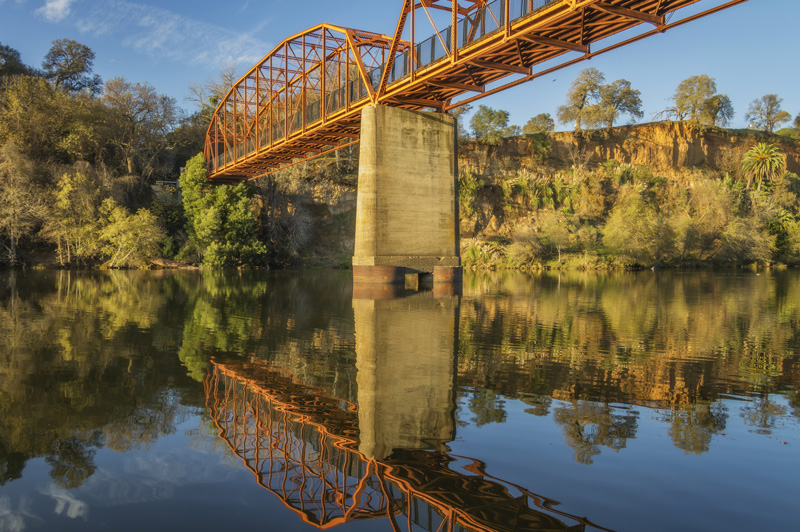
Her original trilogy is known as the American River trilogy, which tells the story of three immigrant families in Northern California on the American River. One family is Japanese, one is Mexican, and the other is Irish, and they all settle on the American River during the Gold Rush and find their paths crossing in unexpected ways.
“A majority of the story takes place in the 1960’s, which I think is important when discussing issues of racism and prejudice in general, which are topics that I’m passionate about discussing.”
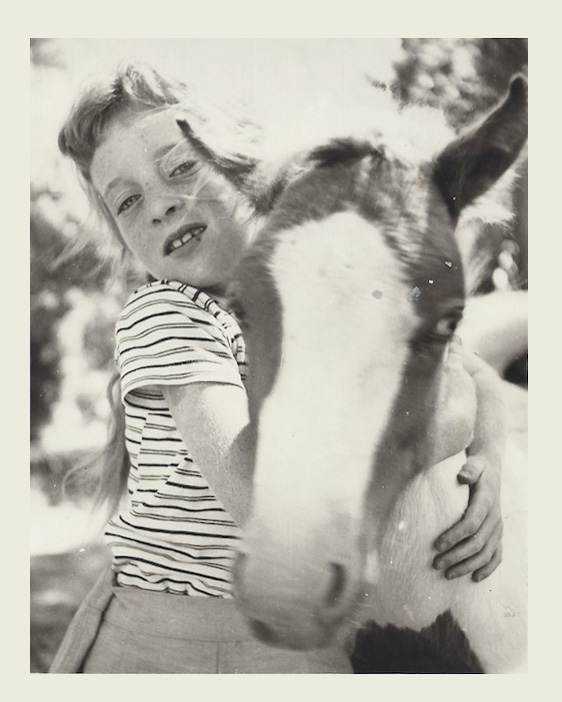
O’Connor grew up riding horses along the American River in California, and recalled how diverse and cultural the area was at the time, which worked as major inspiration for the trilogy.
“I’ve always wanted to use my writing as a means of education, and sending a message about things that I view as important, which like I mentioned before is the sign of a great piece of literature. My goal is to stimulate the reader’s interest, and ideally create a passion for what’s being discussed throughout each novel.”
One of O’Connor’s biggest passions lies in her activism for issues she faces, whether personally or in the world. When she transitioned out of California to Ohio, and eventually Florida where she currently resides, she was faced with entering into a setting that lacked the diversity she was used to growing up. She also found herself facing the ignorance of individuals who made their prejudices known.
“When I wrote the American River trilogy, some of it was autobiographical in the sense that some of the settings are based on things I’ve seen. California is so multicultural, so growing up there I was exposed early on to so many different ways of life and cultures, and I didn’t realize how special that was until I left the state and realized not every place was like that.
It also led me to a lot of questioning in terms of prejudice. Transitioning from a place of diversity to a place where individuals have strong and ignorant opinions on a certain group of people just based on their own prejudice, was staggering, and I wanted answers as to why it was like this.
I found a majority of my answers in my own writing. I’ve written stories from multiple perspectives as a means of trying to understand the different ways of thinking of different groups. Since I was a little kid I always wanted to know everyone’s story, and that’s always been one of my greatest sources of inspiration when it comes to my writing. Hearing the experiences of others from different backgrounds, races, ethnicities, sexual orientation’s, etc. gave me a greater understanding of the world itself, but also gave me the inspiration to write and tell these stories so more people could hear them, and hopefully grow from them.”
Beyond societal issues, O’Connor is extremely passionate about environmental conservation, so she created another trilogy which can only be categorized as paranormal historical science-fiction.
“I started writing a series of paranormal, historical, psychic, science fiction novels. The Epiphany Psychic series opens up with a major art crime, because as an art historian that’s something I’m very passionate about, and comments on the damage that’s been done to the art world over time due to stealing, war, looting, and private art trading that takes historical art out of the public eye.
Overall I wanted to emphasize the difficulties that we experience as humans when it comes to learning about the past, and our history, when artifacts and cultural art pieces are hidden away from us.
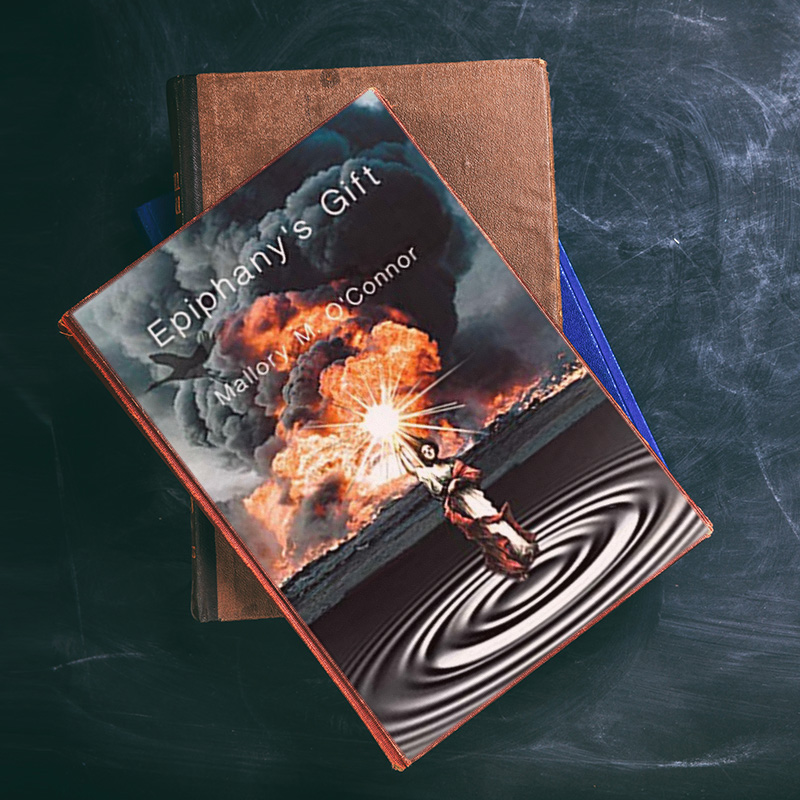
That’s one component of the series, the other is that each novel has some sort of environmental focus as well. In Epiphany’s Gift, the first novel in the series, I focus on fracking and why it’s so damaging to the planet. The second book, Key To Eternity, looks at extinction and what we’re destroying as humans, and why it could potentially be beneficial to us. The third novel which I just published, Xanadu’s Cavern, commentates on water resources, particularly Florida’s water resources; which as an activist is something I’m very passionate about protecting on a personal level.”
“I hope that readers can sense the passion that goes into each of my works, and hopefully they get inspired to get involved in larger world issues that they feel passionately about.”
The subject matter of my novels also allows me to be the advocate I’ve always wanted to be. For example, my most recent novel in the Epiphany series, Xanadu’s Cavern, is set where I live in north-central Florida where we’re currently experiencing an enormous controversy over water resources and the degradation of our springs. So, when I’m presenting at a book club or book discussion group locally, I can use the content of the novel to discuss the actual issue at hand, and use it as a means to further educate the residents who may not fully understand the severity of this resource problem.
As an individual, I’ve always been very curious. My favorite question as a child was ‘why?’ because I always wanted answers to even the simplest questions. I grew up drawing the world around me as well, and this gave me an outlet to not only create my own story, but find some clarity within all the curiosity. So when I see the conversations readers have regarding my novels and the commentary within them, it just brings me back to the joyous curiosity I experienced as a kid.
When I released American River I remember being contacted about a book club that was reading it and I went to discuss the novel with them when they were done. I love talking to my readers. It reminds me of my work in education because I get to see certain light bulbs go off when they make a connection between the content and the real world. I’ll never forget how gratifying it was to hear that some of the readers in the room had never heard of fracking before reading my novel, and it inspired them to do their own research on it. Seeing that passion from someone who read one of my books, because of what they read in my books, is one of the main reasons I love what I do.
That’s always been one of my biggest goals with my writing, to inspire and create discourse over things that most of us may not think about in our everyday lives.”
All of O’Connor’s novels are currently available to purchase online, but for her next published work she wants to try something new.
“For the future, within the next year ideally, I’m hoping to release my first collaborative project with my husband. My husband and I have been married for 58 years now, and one of our biggest passions as a couple has always been good food and good wine. Our first date I went over to his house and he cooked a meal for me and I just remember thinking to myself, ‘yup this is it he’s the one.’
Like all of my novels, I wanted to translate this joint passion into something that the world could read and learn from. We decided that a cookbook memoir would be the best way to encompass what our love is made up of while sharing some delicious recipes as well.
I always kept a journal of every major event that we would go to or host; birthday parties, weddings, dinner parties, anniversaries, etc. and I kept a record of the menu and the wine along with the guest list. For nearly 60 years I’ve been unintentionally creating the outline for a cookbook memoir that we are now working on together. We put together a book of recipes that also shows off our love story, my husband’s artwork (he’s painting an individual still life to go with each recipe), and the good food/experiences that strengthened our bond. While subject wise this is a definite shift from my previously published works, the goal remains the same. Share something that will connect to readers and teach them something new that they can also become passionate about.”
Mallory O’Connor’s passion and extensive knowledge has helped her create amazing pieces of literature for readers to not only enjoy, but learn from. To learn more about her story, her writing, and other projects, check out her website here!
Eric Mastrota is a Contributing Editor at The National Digest based in New York. A graduate of SUNY New Paltz, he reports on world news, culture, and lifestyle. You can reach him at eric.mastrota@thenationaldigest.com.

