Southwest Airlines Ditches Open Seating After 50+ Years, Assigned Seats Coming in January
Southwest Airlines is turning a major page in its history. Starting January 27, the beloved (or dreaded, depending on who you ask) open-seating policy will be a thing of the past. For the first time, passengers will board with pre-assigned seats, the company confirmed to CNBC. Tickets for the new seating model go on sale July 29.
The change marks the end of a defining feature of Southwest’s brand, one that has set it apart from other U.S. carriers for decades. Since its early days, Southwest has allowed passengers to board in groups and pick any available seat.
That policy, along with its generous perk of two free checked bags, has long been a draw for budget-conscious travelers. Still, both offerings are being reevaluated as the airline strives to remain competitive and boost profitability.
Southwest’s shift is part of a sweeping business overhaul aimed at driving new revenue. In March, the carrier also announced it would begin charging for checked bags for most customers and introduced new fare categories. Premium ticket buyers will be spared from some of the added fees and limitations.
The company insists these changes won’t slow down operations. Stephanie Shafer Modi, Southwest’s managing director of fares and ancillary products, told CNBC that by using live trials and computer simulations, Southwest has tested the efficiency of its new system, focusing on minimizing turnaround time and protecting its reputation for rapid boarding.
“We wanted to make sure that, as we designed a boarding construct that sort of paired well with assigned seating, that we were optimizing for efficiency, but also the second priority: balancing that with making sure that we’re taking care of our most loyal customers, so tier members, cardholders and customers who buy our most premium products.”
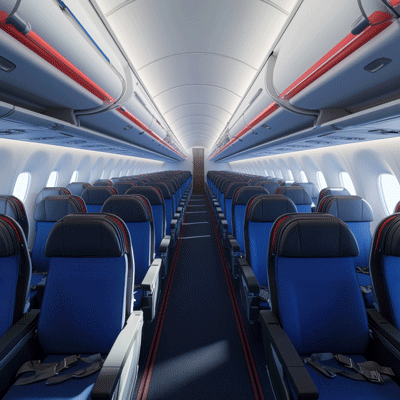
With the rollout, the familiar sights of A-B-C boarding groups, early-bird alarm clocks, and the aisle dash for favorite seats will soon be history. In their place will be a more structured system with eight boarding groups based on fare class, loyalty status, and seat selection.
Groups 1 & 2 will include elite frequent flyers and holders of premium fares. Groups 3 through 8 will be assigned based on ticket class (like “Choice” and “Basic”) and seat location. Members of the Rapid Rewards credit card program will be guaranteed boarding by Group 5 at the latest. Passengers will line up in two queues under the new system.
The airline hasn’t revealed how much it will charge for seat selection, a fee that varies widely on other airlines depending on the flight and demand. Fare class will also determine access to certain seats, with three options: Standard, Preferred, and Extra-Legroom.
According to Modi, customer feedback made it clear that sitting together is a top priority, especially for families.
“I think that if families want that sense of control, they have the option to pick their seats through our existing products that we’re selling. We will try to do our best to make sure that families are seated together no matter how they buy a ticket.”
To prepare for this shift, Southwest has been busy reworking its fleet. Around 200 of its Boeing aircraft, or roughly a quarter of its total fleet, have already been retrofitted with extra-legroom seating, a spokesperson said. While these upgraded seats aren’t officially on sale yet, the airline has been offering early boarding passes to improve customers’ chances of snagging one.
The airline states that its broader transformation plan is expected to generate an additional $800 million in earnings before interest and taxes this year, increasing to $1.7 billion by 2026. It first teased the end of open seating last year, but didn’t reveal a timeline until now.
With this dramatic shake-up, Southwest is betting that structured seating will generate revenue without compromising speed and that loyal customers will remain with the airline, even as it trades spontaneity for structure.

Moumita Basuroychowdhury is a Contributing Reporter at The National Digest. After earning an economics degree at Cornell University, she moved to NYC to pursue her MFA in creative writing. She enjoys reporting on science, business and culture news. You can reach her at moumita.b@thenationaldigest.com.