Posts

Six Flags

Six Flags Closes World-Famous Roller Coaster After Brain Injury Lawsuits 

Six Flags announced this week that it will be permanently closing its X2 roller coaster, one of its most famous, after an investigation performed by CNN exposed a long history of life-altering injuries, and even deaths linked to the ride. 

Embed from Getty Images

Six Flags Magic Mountain President Brian Oerding published a blog post this week stating that while the “X2 roller coaster has consistently passed a multitude of safety tests, we have decided to close the ride because we believe it’s the right thing to do.”

“Ride safety is a cornerstone of our business, and when we see guest confidence affected, we take it seriously.”

CNN’s investigation took place last month and found allegations that the roller coaster has been injuring riders for over a decade but has been “kept under wraps.” 

There have been a dozen reports of serious injuries and hospitalizations linked to the ride including at least two deaths. The most recent finding was two women who ended up in the same Santa Clarita emergency room with brain injuries after riding X2 only six days apart this summer. 

The ride itself was temporarily closed after the second woman’s injury. Just last week, attorneys held a news conference reporting that there were over 100 new victims who came forward regarding brain injuries they sustained from allegedly riding X2. 

Those new victims were from the last two years alone. 

Embed from Getty Images

Three lawsuits were filed last week from three riders who suffered life-threatening injuries this year. The three lawsuits all allege that Six Flags officials had plenty of notice of the alleged dangers of the ride and should never have kept it running. 

One of the riders from the three recent suits is 26-year-old Naomi Greer-Wilkinson who is currently in a coma. She boarded the ride just six days after another individual, Pamela Guillen, lost consciousness when she got off the roller coaster and had to get emergency brain surgery. 

“This is long overdue,” Greer-Wilkinson’s parents told CNN. 

“Six Flags knew years ago that X2 was putting people at grave risk and chose to continue gambling with their lives anyway.”

“This should have happened long before Naomi’s brain injury but we’re happy to hear that now finally no one else’s daughter or sister will ever be hurt on this ride again.”

Guillen is luckily out of the hospital, but had to learn how to walk and talk again and still battles awful headaches, brain fog, and needs medication to prevent seizures. 

“I’m relieved that X2 is closing for good. I never should have been hurt, and neither should the others who were. … I also hope Six Flags will put better safety and inspection measures in place across all of its parks and rides,” she told the publication. 

beach

New Study Reveals Americans’ Worst Beach Habits 

A new 2025 survey from Beach.com set out to monitor the habits of the millions of Americans who flock to the sand and sea on their downtime every year. 

Embed from Getty Images

The survey showed that 93% of beachgoers claim “to practice good beach etiquette, yet almost everyone (92%) also admits to at least one bad beach habit.”

Travel + Leisure reported on the study which surveyed 1,000 people. Each participant was analyzed for how they think they behave at the beach and how they actually do. 

According to the results, the “three most shameless beach behaviors” that Americans engage in are taking sand or shells, peeing in the water, and drinking alcohol. 

70.1% of people admitted to peeing in the water, 48.6% said they consume alcohol, and 38.6% admit to taking shells home. It’s important to note that these percentages also represent what those surveyed were willing to admit, so the actual numbers could be higher. 

Of all of these behaviors, taking away shells has actually been found to be the most detrimental. 

According to a 2014 study, “tourists removing shells from popular beaches have led to habitat changes such as increased beach erosion, changes in calcium carbonate recycling, and declines in diversity and abundance of organisms, which are dependent on shell availability.” 

Embed from Getty Images

“Molluscan shells are of prime importance to hermit crabs, and although sand beaches are not good places for such crabs, dead snail shells on mud-flats and rocky shores do form a primary resource for abundant hermit crabs,” said Geerat Vermeij, a mollusk expert and distinguished professor of geology, in response to the study. 

“More subtly, many small organisms settle on dead shells, and so removing such shells will eliminate habitats for these colonists.”

The survey also pointed out other forms of bad beach etiquette that is common such as taking too long in the facilities, not cleaning up after their pets, playing their music too loud, feeding wild animals, and sitting too close to other beach guests. 

The website also polled people on what behaviors annoy them the most when they go to the beach. The company also shared that there was a lot of hypocrisy among those surveyed, based on how common the answers were, it’s only logical that they all participated in some bad behavior themselves. 

“Americans quietly admit to their bad beach etiquette, but they’re much more vocal about the bad etiquette of others. We also appear to be a bit hypocritical,” the company shared.

“Even though 93 percent of the country thinks they have good beach etiquette, 92 percent also admit to at least one bad beach behavior. Here is the hypocrisy—a whopping 70 percent also say poor etiquette negatively impacts their time at the beach.” 

Tony Hawk

Skateboarding Around The World With Tony Hawk 

“You really should experience different areas, lifestyles, people, and language. If you’re stuck in a bubble, you have no context. There’s so much culture, and it really opens your mind to how big our world is, which is hugely important.”

google

Google Is Buying Spirit Airlines’ Data for $10 Million to Train AI

Spirit Airlines’ planes may be grounded for good, but years of data generated by the bankrupt carrier could soon have a second life inside Google’s artificial intelligence models.

Google has agreed to pay $10 million for a trove of Spirit’s corporate data, according to a deal disclosed in bankruptcy court late Monday. Judge Sean Lane is expected to rule on the proposed sale at a hearing Wednesday.

The purchase covers a wide range of information accumulated through the airline’s operations, including emails and other internal communications, spreadsheets, customer transactions, booking and frequent flyer records, and human resources information involving employees.

Spirit’s bankruptcy filing says the material has been stripped of information that could identify individuals.

A Google spokesperson said in a statement to CNN that it will not receive any personal information as part of the purchase.

“We acquired part of an enterprise dataset from Spirit Airlines, which can be helpful in improving our products and AI models.”

Embed from Getty Images

That means anyone who flew Spirit, worked for the airline or communicated with people there could have contributed in some form to the enormous collection of business information Google is buying, though the company is also claiming personally identifying details will not be included.

The data drew interest from more than one artificial intelligence company. Mercor.io, an AI company, submitted the second-highest bid at $7.5 million before Google prevailed with its $10 million offer.

The competition for Spirit’s records comes as artificial intelligence plays a growing role in the airline industry. Numerous carriers have said they are increasingly using AI to set fares, improve scheduling and make other parts of their operations more efficient.

Spirit’s data became available under circumstances that are relatively rare in the airline business.

The discount carrier halted all operations in May and has spent the months since selling what remains of the company through the bankruptcy process. Much of what is being liquidated is what might be expected from a defunct airline — planes, equipment and real estate — but its years of accumulated information also proved valuable enough to attract multimillion-dollar bids from technology companies.

Embed from Getty Images

Usually, a major airline’s bankruptcy ends differently.

Failing carriers are often acquired by another airline, with their aircraft, operations and corporate records absorbed into the buyer’s existing business. Their data consequently changes hands as part of the larger acquisition rather than being auctioned off as a standalone asset.

Spirit did not find such a buyer.

Instead, it became the first significant U.S. airline in about 25 years to be forced to stop flying altogether rather than being purchased and folded into another carrier.

That unusual collapse has allowed pieces of the former airline to be sold separately to buyers with little connection to commercial aviation—including, in Google’s case, a company interested in using Spirit’s anonymized business records to help improve AI.

tsa

TSA Warns Travelers They Could Face Massive Fines If They Pack Certain Banned Items 

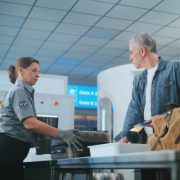
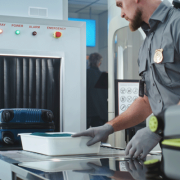
The Transportation Security Administration (TSA) has recently been emphasizing that travelers need to double check what they’re packing to ensure they can avoid potentially major fines. The easiest way to make sure your luggage is protected is to check the TSA’s website for a complete list of the banned items for carry-on and checked luggage. 

Embed from Getty Images

Besides the risk of having some of your items confiscated or thrown away, when an item is flagged, even if it’s technically permitted, your luggage may have to go through additional screenings. 

One of the worst case scenarios for travelers who try to bring a prohibited item through is a fine up to  $17,062 in civil penalties per violation, per person. 

This month, the TSA tweeted at travelers with children specifically that toys that are filled with more than 3.4 ounces of gel or dough are not allowed in carry-ons, in alignment with the TSA policy for liquids, gels, and aerosols. 

Squishy toys, slimes, and fidgets have grown greatly in popularity in recent years, leading to an uptick in confiscations at US airports. 

USA Today reported that many travelers also don’t realize a lot of household tools that seem fine are also banned, such as cordless curling irons and sporting equipment. 

Travel items like power banks for electronics and other lithium-ion battery devices must be kept in carry-ons as well. 

Embed from Getty Images

“To avoid delays, always check TSA and airline rules before packing, keep your luggage organized, pack liquids and electronics separately for easy access, and make sure any items that could need extra screening are on top or in an easily accessible pocket,” Paul Stewart, travel expert and founder of My Baggage, told USA Today.

The publication listed out some of the items that are often confiscated by TSA that travelers may be surprised by: 

  1. Cordless curling irons – banned in checked baggage
  2. Bowling balls – banned in carry-ons
  3. Cast iron cookware – banned in carry-ons
  4. Corkscrews with a blade – banned in carry-ons
  5. Electronic cigarettes and vaping devices – banned in checked luggage
  6. Foam toy sword – banned in carry-ons
  7. Gel-type candles – banned in carry-ons
  8. Samsung Galaxy Note 7 phones – banned in carry-ons and checked luggage
  9. Screwdrivers longer than seven inches – banned in carry-ons
  10. Snow globes – banned in carry-ons if containing over 3.4 ounces of liquid

One exception to the 3.4-ounce rule is baby formula, breast milk, toddler drinks, and baby/toddler food, all of which are allowed in carry-ons. TSA has this rule in place because these items are medically necessary for babies and toddlers. 

Additionally, to make getting through the line easier, travelers should inform the TSA officer of the specific liquids they have, remove them from their carry-on, and store it in clear bottles. 

For a full list of banned items, be sure to thoroughly go through the TSA’s website while they’re packing their carry-ons and luggage. 

tsa

Five Civil War-Era Cannonballs Discovered in Luggage at Alabama Airport

A routine luggage scan at Gulf Shores International Airport in Alabama prompted a security alert this month after a Transportation Security Administration officer discovered five Civil War-era cannonballs packed inside a passenger’s checked bag.

travel warning

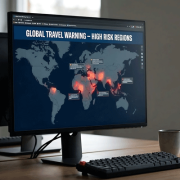
US Issues Worldwide Travel Warning For Americans Traveling Abroad 

The US State Department has issued a rare worldwide travel warning for Americans that are planning to travel abroad. 

Embed from Getty Images

On July 18th the State Department gave a new travel advisory that warned of “unforeseen escalation” worldwide  due to the tensions between the US and Iran. 

Within the warning, the State Department shared that US diplomatic facilities within, and outside of, the Middle East have been targeted. Due to this, overseas locations that are associated with the US or Americans could be vulnerable to attacks. Places like embassies, consulates, or US-owned hotel brands or businesses, might be more vulnerable to attacks, according to the warnings. 

Reports indicate that the warning was released for worldwide travel, and any location associated with the US or American people around the world are an easy target for Iran-supporting groups. 

Additionally, the agency warned that international travel could also be disrupted due to airspace closures and flight cancellations. 

The travel advisory from the State Department stated: 

“The Department of State advises Americans worldwide, and especially in the Middle East, the exercise increased caution. Americans abroad should follow the guidance in security alerts issued by the nearest US embassy or consulate.”

One day after the worldwide travel alert was released, July 19th, the US State Department also stated that they have learned Iran planned to target locations in central Manama, the capital of Bahrain, an island nation just south of Iran. 

Embed from Getty Images

On the same day, Iran fired drones and missiles at Bahrain, Kuwait, and Jordan after the US went through eight consecutive nights of attacks on Iran. 

“We urge all Americans to remain vigilant, follow local authorities’ instructions, and review the latest guidance from the US Embassy,” the warning wrote. 

The alert itself also gave the suggestion of seeking cover in the lowest level of a home or building, away from doors or windows, if travelers hear a loud explosion or warning sirens. 

The State Department recommends that Americans who are currently traveling, living abroad, or planning to travel to one of the locations they’ve warned about, should enroll at step.state.gov to receive updates and the latest security alerts, as well as monitor breaking news. 

The Department also recommends following the “U.S. Department of State – Security Updates for U.S. Citizens” channel on WhatsApp or following @TravelGov on X, (formally Twitter). 

Additionally, US travelers who are preparing to take a trip can look up their destination on travel.ttate.gov to see if there are any active travel advisories or alerts. There are currently 23 nations with a Level 4, Do Not Travel advisory from the US.

bread

Terry Crews On His Love Of Travel, And The One Dish He’d Fly Across The Ocean For 

Terry Crews is an actor, host, sports enthusiast, and lover of learning about new cultures and cuisines. His long and illustrious career has given him the opportunity to see the world and experience the wonders of travel. Now, he’s revealing some of his favorite destinations, and the one dish he would fly across the ocean for.

united

Passengers Sue United Airlines After Paying Extra For Window Seats Without Windows

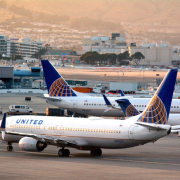
Passengers who say they paid extra for window seats but ended up beside solid cabin walls can continue pursuing their lawsuit against United Airlines, after a federal judge refused to throw out the case on Monday.

The proposed class action, filed in August against United, centers on passengers who said they selected seats marketed as window seats on Boeing 737 and Boeing 757 aircraft, only to find that the seats had no actual windows. Similar claims were also brought against Delta Air Lines over windowless seats on Airbus A321 planes.

According to the plaintiffs, travelers often choose window seats for reasons beyond preference, including to help with fear of flying or motion sickness, keep children occupied, get more light during a flight, or simply look outside. They allege that United and Delta failed to clearly disclose during the booking process that some seats positioned along the aircraft wall did not actually offer a window view,” attorney Casey Olbrantz said in an email to NBC when the proposed lawsuits were being prepared.

“We’re seeking to hold United and Delta accountable for an unfair and misleading business practice they could fix overnight.”

Embed from Getty Images

The lawsuits seek millions of dollars in damages and could cover more than 1 million passengers for each airline. Carter Greenbaum, an attorney representing passengers in the United and Delta cases, previously said United’s position ran “contrary to the reasonable expectations of countless passengers who unknowingly paid extra money for windowless window seats.”

“Consumers deserve better than empty promises and United’s word games.”

US district judge James Donato in San Francisco rejected United’s bid to dismiss the lawsuit, including the airline’s argument that “window” described the seat’s placement in the cabin — next to the wall and away from the aisle — rather than a promise that the seat would include an actual window or outside view.

In addressing that argument, Donato wrote that “the points are not well taken.”

Donato also rejected United’s contention that passengers’ claims were blocked by federal law. In allowing the breach-of-contract claims to proceed, the judge pointed to United’s ticketing terms, boarding passes and reservation screens, which he said expressly stated that the airline “would provide window seats to passengers who paid for them.”

Embed from Getty Images

“No more is needed at this stage for the breach claims to go forward.”

The lawsuit notes that some aircraft seats are placed beside walls because of the location of operating components inside the plane, including air conditioning ducts, which can prevent windows from being installed in certain rows.

Those windowless rows can also result from customized seating layouts or fixed fuselage design requirements that leave a row misaligned with a physical window. Other possible obstructions include electrical wiring, emergency equipment, load-bearing framework, and emergency-exit placements, including over-wing exit areas, which can shift how rows line up with the aircraft’s windows.

United, which is based in Chicago, declined to comment on the lawsuit itself. However, the airline said it has “added more detail to our seat selection process, so customers can have more information about what to expect when they choose a seat.”

Greenbaum also framed the dispute around the rise of paid add-ons, saying: “As airlines have begun charging for services that were once free, passengers should at least expect upfront disclosure of the fees and that if they pay an extra fee, they will get the product they paid for.”

Delta, meanwhile, is seeking dismissal of the separate lawsuit against it in federal court in Brooklyn, New York.

plane

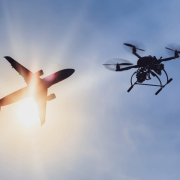
JetBlue Pilot Reports Drone Strike Near Kennedy Airport Days After Newark Drone Sighting

A JetBlue flight approaching Kennedy International Airport on Monday morning landed safely after its pilot reported that a drone had struck the plane, according to the Federal Aviation Administration.

The flight, a red-eye from Las Vegas, was several miles from landing at around 7:15 a.m. when the reported collision occurred. The aircraft was flying at about 3,000 feet at the time, according to the pilot’s account. No injuries were reported.

JetBlue said the plane landed without incident and that passengers left the aircraft normally after arrival. The airline later removed the plane from service for inspection but said it found no damage or evidence of a collision.

The F.A.A. and the F.B.I. are investigating the reported drone strike. In a statement, the F.B.I. asked anyone with information about unsafe drone flights to report it by calling 1-800-CALL-FBI.

Later Monday, a helicopter pilot reported a separate close call near Kennedy Airport, telling air traffic controllers that a large remote-controlled plane had nearly struck his aircraft near Floyd Bennett Field.

“Just almost ran into a gigantic RC airplane right over there at Floyd Bennett,” the pilot said, according to the report. “A big one, at 500 feet.”

The F.A.A. said it was aware of the helicopter pilot’s report and had notified local authorities, though the agency said it was not investigating that matter at the time.

Embed from Getty Images

The reports came less than three days after a United Airlines crew spotted a drone while descending into Newark Liberty International Airport, another recent close call involving unmanned aircraft in the New York area.

That encounter happened Friday evening, when a United flight arriving from Key West International Airport in Florida was approaching Newark Liberty around 5:20 p.m., F.A.A. officials said. The Boeing 737 was carrying more than 100 passengers and five crew members.

The crew landed safely, and passengers disembarked without issue, the airline said. The F.A.A. had also said it would investigate that encounter.

Drone activity near airports is a recurring concern for federal aviation officials. The F.A.A. receives more than 100 reports each month of drones seen near airports and warns that flying drones near planes, helicopters, and airports is both dangerous and illegal.

The agency also launched a public safety campaign this month to inform drone operators about the risks of flying unmanned aircraft in restricted or unsafe airspace.

“Drone operators should avoid flying near airports because it is difficult for manned aircraft to see and avoid a drone while flying. Remember that drone operators must avoid manned aircraft and are responsible for any safety hazard their drone creates in an airport environment.”

Embed from Getty Images

ABC News contributor and aviation expert John Nance said the danger is not limited to a direct collision. Because drones are generally not equipped with transponders, he said, pilots and controllers cannot reliably track them unless they are spotted visually.

“The fact is that people are still not following the rules and all it takes is one to end up wrecking an engine or impacting a cockpit,” Nance said.

Nance said the lack of onboard detection equipment makes it especially important for drone operators to avoid airports and flight paths.

“Drones simply do not carry transponders. It has to do with the weight and the amount of equipment that you put on board. But the fact is, that makes it even more important that nobody operates one in the wrong place, close to an airport, especially at 3,000 feet.”

Interfering with the operation of an aircraft is a federal crime, and penalties can reach up to $100,000. The F.A.A. encourages people who witness unsafe drone activity near airports to report it.

Drones are generally permitted to fly up to 400 feet above ground level outside restricted airspace, far below the altitude reported in the JetBlue incident.