Posts

united

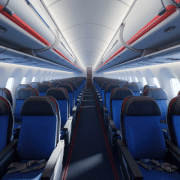
Passengers Sue United Airlines After Paying Extra For Window Seats Without Windows

Passengers who say they paid extra for window seats but ended up beside solid cabin walls can continue pursuing their lawsuit against United Airlines, after a federal judge refused to throw out the case on Monday.

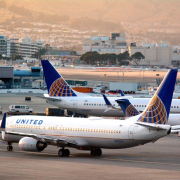
The proposed class action, filed in August against United, centers on passengers who said they selected seats marketed as window seats on Boeing 737 and Boeing 757 aircraft, only to find that the seats had no actual windows. Similar claims were also brought against Delta Air Lines over windowless seats on Airbus A321 planes.

According to the plaintiffs, travelers often choose window seats for reasons beyond preference, including to help with fear of flying or motion sickness, keep children occupied, get more light during a flight, or simply look outside. They allege that United and Delta failed to clearly disclose during the booking process that some seats positioned along the aircraft wall did not actually offer a window view,” attorney Casey Olbrantz said in an email to NBC when the proposed lawsuits were being prepared.

“We’re seeking to hold United and Delta accountable for an unfair and misleading business practice they could fix overnight.”

Embed from Getty Images

The lawsuits seek millions of dollars in damages and could cover more than 1 million passengers for each airline. Carter Greenbaum, an attorney representing passengers in the United and Delta cases, previously said United’s position ran “contrary to the reasonable expectations of countless passengers who unknowingly paid extra money for windowless window seats.”

“Consumers deserve better than empty promises and United’s word games.”

US district judge James Donato in San Francisco rejected United’s bid to dismiss the lawsuit, including the airline’s argument that “window” described the seat’s placement in the cabin — next to the wall and away from the aisle — rather than a promise that the seat would include an actual window or outside view.

In addressing that argument, Donato wrote that “the points are not well taken.”

Donato also rejected United’s contention that passengers’ claims were blocked by federal law. In allowing the breach-of-contract claims to proceed, the judge pointed to United’s ticketing terms, boarding passes and reservation screens, which he said expressly stated that the airline “would provide window seats to passengers who paid for them.”

Embed from Getty Images

“No more is needed at this stage for the breach claims to go forward.”

The lawsuit notes that some aircraft seats are placed beside walls because of the location of operating components inside the plane, including air conditioning ducts, which can prevent windows from being installed in certain rows.

Those windowless rows can also result from customized seating layouts or fixed fuselage design requirements that leave a row misaligned with a physical window. Other possible obstructions include electrical wiring, emergency equipment, load-bearing framework, and emergency-exit placements, including over-wing exit areas, which can shift how rows line up with the aircraft’s windows.

United, which is based in Chicago, declined to comment on the lawsuit itself. However, the airline said it has “added more detail to our seat selection process, so customers can have more information about what to expect when they choose a seat.”

Greenbaum also framed the dispute around the rise of paid add-ons, saying: “As airlines have begun charging for services that were once free, passengers should at least expect upfront disclosure of the fees and that if they pay an extra fee, they will get the product they paid for.”

Delta, meanwhile, is seeking dismissal of the separate lawsuit against it in federal court in Brooklyn, New York.

plane

JetBlue Pilot Reports Drone Strike Near Kennedy Airport Days After Newark Drone Sighting

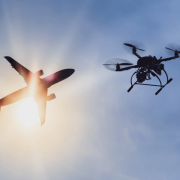
A JetBlue flight approaching Kennedy International Airport on Monday morning landed safely after its pilot reported that a drone had struck the plane, according to the Federal Aviation Administration.

The flight, a red-eye from Las Vegas, was several miles from landing at around 7:15 a.m. when the reported collision occurred. The aircraft was flying at about 3,000 feet at the time, according to the pilot’s account. No injuries were reported.

JetBlue said the plane landed without incident and that passengers left the aircraft normally after arrival. The airline later removed the plane from service for inspection but said it found no damage or evidence of a collision.

The F.A.A. and the F.B.I. are investigating the reported drone strike. In a statement, the F.B.I. asked anyone with information about unsafe drone flights to report it by calling 1-800-CALL-FBI.

Later Monday, a helicopter pilot reported a separate close call near Kennedy Airport, telling air traffic controllers that a large remote-controlled plane had nearly struck his aircraft near Floyd Bennett Field.

“Just almost ran into a gigantic RC airplane right over there at Floyd Bennett,” the pilot said, according to the report. “A big one, at 500 feet.”

The F.A.A. said it was aware of the helicopter pilot’s report and had notified local authorities, though the agency said it was not investigating that matter at the time.

Embed from Getty Images

The reports came less than three days after a United Airlines crew spotted a drone while descending into Newark Liberty International Airport, another recent close call involving unmanned aircraft in the New York area.

That encounter happened Friday evening, when a United flight arriving from Key West International Airport in Florida was approaching Newark Liberty around 5:20 p.m., F.A.A. officials said. The Boeing 737 was carrying more than 100 passengers and five crew members.

The crew landed safely, and passengers disembarked without issue, the airline said. The F.A.A. had also said it would investigate that encounter.

Drone activity near airports is a recurring concern for federal aviation officials. The F.A.A. receives more than 100 reports each month of drones seen near airports and warns that flying drones near planes, helicopters, and airports is both dangerous and illegal.

The agency also launched a public safety campaign this month to inform drone operators about the risks of flying unmanned aircraft in restricted or unsafe airspace.

“Drone operators should avoid flying near airports because it is difficult for manned aircraft to see and avoid a drone while flying. Remember that drone operators must avoid manned aircraft and are responsible for any safety hazard their drone creates in an airport environment.”

Embed from Getty Images

ABC News contributor and aviation expert John Nance said the danger is not limited to a direct collision. Because drones are generally not equipped with transponders, he said, pilots and controllers cannot reliably track them unless they are spotted visually.

“The fact is that people are still not following the rules and all it takes is one to end up wrecking an engine or impacting a cockpit,” Nance said.

Nance said the lack of onboard detection equipment makes it especially important for drone operators to avoid airports and flight paths.

“Drones simply do not carry transponders. It has to do with the weight and the amount of equipment that you put on board. But the fact is, that makes it even more important that nobody operates one in the wrong place, close to an airport, especially at 3,000 feet.”

Interfering with the operation of an aircraft is a federal crime, and penalties can reach up to $100,000. The F.A.A. encourages people who witness unsafe drone activity near airports to report it.

Drones are generally permitted to fly up to 400 feet above ground level outside restricted airspace, far below the altitude reported in the JetBlue incident.

air canada

Canadian Pilot Accused of Captaining 900 Flights Without Required Airline License

A former Air Canada pilot who authorities say flew Boeing passenger jets for nearly 17 years without the required captain’s license is now facing criminal charges, Canadian police announced Tuesday.

Geoffrey Wall, a 59-year-old resident of Barrie, Ontario, was arrested June 1 following an investigation into what police described as years of falsified credentials. Investigators allege Wall captained more than 900 domestic and international flights between 2009 and 2025, carrying tens of thousands of passengers, despite never obtaining the proper Airline Transport Pilot License for Aeroplanes, or ATPL-A, required for the role.

“This investigation and the details surrounding it read like a movie script,” Peel Regional Police Deputy Chief Milinovich said during a news conference in Ontario. “(Wall) rose to the position of pilot in command where for almost 17 years they flew Boeing 767s, 777, and 787s,” while earning nearly $3 million Canadian dollars, or more than $2 million U.S. dollars, in salary.

The case has drawn comparisons to the 2002 film “Catch Me If You Can,” in which a teenager successfully talks his way into flying for Pan Am. But police said Wall’s situation was not a matter of having no aviation background at all.

He was licensed to fly commercial planes during his 27-year career with Air Canada, investigators said. According to authorities, the issue was that he did not have the additional ATPL-A credential required after he was promoted to captain in 2009.

Embed from Getty Images

“This is very similar to a doctor that is licensed to practice family medicine but is doing brain surgery in their office. There’s additional requirements and regulations to professional designations that exist for a reason. We believe the accused misrepresented his qualifications to both his employer and the regulator.”

Authorities said the alleged scheme came to light in 2025, when a routine review of Wall’s credentials uncovered “anomalies… within the pilot license documentation.” Air Canada then notified regulators, investigators said.

Wall retired in 2025 before the regulatory and criminal probe began. The investigation, dubbed “Project Icarus,” was launched in January.

Police said investigators later executed a search warrant and obtained additional judicial authorizations, which they allege uncovered evidence that Wall had deceived both Air Canada and Transport Canada regarding his qualifications.

Authorities also allege that Wall filed a false police report, claiming that pilot licensing documents had been stolen.

Peel Regional Police Chief Nishan Duraiappah described the case as an extraordinarily rare occurrence, telling local media that he believed the situation was unprecedented in its scope.

Embed from Getty Images

Air Canada said Wall was a licensed commercial pilot and stressed that he had repeatedly demonstrated the ability to operate large aircraft safely.

The pilot was removed from active duty after the licensing issue was discovered and is no longer employed by Air Canada. The carrier also said in a statement on Monday that it conducted a review of its pilot roster and found no other comparable licensing concerns.

“Safety was not compromised by this incident because all pilots at Air Canada undergo mandatory recurrent training every six months to validate their flying competency, including a flight check with a certified Transport Canada check-pilot every 12 months. However, appropriate licensing is an essential layer of the airline industry’s multi-layered approach to safety, so Air Canada takes this matter with utmost seriousness.”

Wall was fined by Transport Canada and is facing seven criminal charges, including fraud over $5,000, two counts of uttering forged documents and three counts of possession of a counterfeit mark. He is expected to appear in court on June 29, 2026.

Canadian Transport Minister Steve MacKinnon said federal officials would review the circumstances surrounding the case and determine whether any changes to oversight procedures are needed, while arguing the discovery of the issue demonstrated that existing safeguards ultimately worked.

ice

ICE Agents to Assist at U.S. Airports as Shutdown Strains TSA Staffing

As long security lines continue to frustrate travelers during a busy spring travel period, federal officials are preparing to deploy Immigration and Customs Enforcement agents to major airports across the country.

Tom Homan, the White House border czar, said Sunday that ICE personnel would begin assisting at airports as early as Monday. The move comes as the Transportation Security Administration faces staffing shortages amid a partial government shutdown, leaving many agents working without pay.

“It’s a work in progress, but we will be at airports tomorrow, helping T.S.A. move those lines along,” Homan said during an appearance on CNN’s “State of the Union.”

According to The New York Times, ICE agents, including those from Homeland Security Investigations, are expected at 14 airports nationwide. These include major hubs such as Kennedy and LaGuardia in New York, Newark, Philadelphia, Chicago, Atlanta, New Orleans, Houston and Phoenix.

The Department of Homeland Security said the deployment is intended to reduce wait times by allowing T.S.A. agents to focus on passenger screening. ICE agents are expected to handle other roles, such as monitoring exits and assisting in areas that do not require specialized screening expertise.

“This is about helping T.S.A. do their mission, and get the American public through that airport as quick as they can, while adhering to all the security guidelines and the protocols. We’re simply there to help T.S.A. do their job in areas that don’t need their specialized expertise.”

Embed from Getty Images

The decision follows a weekend announcement by President Trump, who framed the move as both a response to long lines and leverage in negotiations with congressional Democrats over funding the Department of Homeland Security.

On social media, he wrote that agents would “do security like no one has ever seen before,” adding that the effort would include “the immediate arrest of all illegal immigrants who have come into our Country.”

In a statement Sunday night, the department blamed Democrats for the disruptions.

“Because of the Democrat shutdown, President Trump is using every tool available to help American travelers who are facing hours-long lines at airports across the country — especially during this spring break and holiday season that is very important for many American families,” the statement said. “This will help bolster T.S.A. efforts to keep our skies safe and minimize air travel disruptions.”

Still, details of the plan remain unclear. Officials have yet to finalize how many agents will be deployed or precisely where they will be stationed. Homan said airports with the longest wait times, particularly those exceeding three hours, would likely be prioritized. “When we deploy them more, we’ll have a well-thought-out plan to execute,” he said.

The announcement has drawn criticism from lawmakers and union representatives, who argue that the move does little to address the root problem—unpaid T.S.A. workers.

Representative Hakeem Jeffries of New York condemned the plan, saying, “The last thing the American people need is for untrained ICE agents to be deployed at airports across the country, potentially to brutalize or to kill them.”

New Jersey Senator Cory Booker told reporters that ICE agents are “striking fear” in passengers. Booker also claimed that many airlines told him they want agents out of airports and called on President Trump to fund the T.S.A.

Embed from Getty Images

“They have brought this reckless and out-of-control ICE into our airports, and have even told the American people what they’re specifically doing, and all we see them doing today is roaming around.”

T.S.A. employees and union leaders have also raised concerns about both effectiveness and optics. Mike Gayzagian, a T.S.A. officer at Boston Logan International Airport and the president of the American Federation of Government Employees Local 2617, questioned whether ICE agents would provide meaningful support, particularly if assigned to less critical roles.

“None of this would be happening if Congress had just simply decided to pay us,” he said.

Johnny Jones, a T.S.A. officer at Dallas Fort Worth International Airport, echoed that frustration. “All we want is a paycheck,” Jones said. “We don’t need all these optics.”

He also warned that the presence of immigration agents could create tension and distractions, potentially making airports less safe.

Travelers themselves expressed mixed reactions. At LaGuardia Airport on Sunday, where wait times stretched up to three hours, some passengers welcomed additional help but remained wary of ICE involvement.

Sarah Estes, a nurse from Dallas visiting New York, said she had expected a short wait based on airport estimates but was instead told it could take over two hours.

“I don’t trust those people,” she said. “So how can I trust them to help out at the airport? But the airports do need help.”

Homan emphasized that ICE agents already operate in airport environments, handling immigration enforcement and investigating crimes such as smuggling. He added that agents are “well trained” in identification and security procedures and are continuing to receive pay during the shutdown, unlike many T.S.A. workers.

Even so, with implementation imminent, the plan remains fluid, leaving questions about how effectively the additional personnel will ease delays during one of the year’s busiest travel periods.

air traffic

Air Traffic Staffing Shortages Worsen Amid Government Shutdown, Leaving Travelers Uncertain

Air traffic controller staffing shortages throughout the US have worsened over the past couple of weeks as the nation’s government shutdown officially hits one month. These shortages have led to a multitude of delays, cancellations, and traveler tension/anxiety. Experts are warning that air travel throughout the US will not improve until air traffic controllers get their proper payments.  

Embed from Getty Images

Since Friday morning, more than 50 staffing shortages have been reported. This has caused delays in major cities such as Los Angeles and Washington DC. Controllers are considered to be essential workers, which means they have to work during the shutdown regardless of not getting paid. 

In LA specifically, flights were temporarily halted on Sunday due to staffing shortages. Since the beginning of October there have been at least 264 instances of staffing problems reported at FAA facilities, according to CNN. These rates are four times the 60 shortages reported this time last year. 

Transportation Secretary Sean Duffy said: “Just yesterday … We had 22 staffing triggers. That’s one of the highest that we have seen in the system since the shutdown began.”

Chad Mourning, assistant professor of computer science at Ohio University who specializes in aviation safety, told CNN he: “expects the shortage to continue and get worse as the shutdown goes on, because people can only work so much over time before they burn out.”

Air traffic controllers can route flights to airspace where more people are working, however, flights need to be slowed down regardless so that the controllers that do show up can maintain optimal levels of safety. 

This Sunday, the US experienced more than 6,000 flight delays due to the shortages and weather, according to FlightAware. American Airlines reported 27% of their flights were delayed. 

Since the beginning of the shutdown, on the worst days more than 50% of flight delays due to staffing shortages have occurred.       

Embed from Getty Images

“The role of air traffic controllers is crucial because of how many flights take off every day in the United States,” Mourning said.

“There’s just too many airplanes, so we need someone else to sort of keep an eye out for if two planes are trying to land on the same runway. It is a heightened, hyper-vigilant job.” 

Controllers are required to retire in their 50s.

“We have a lot of pent-up grievances on the part of air traffic controllers, and now you’re adding to the mix the fact that they’re not getting paid and that there’s no real end in sight for the shutdown,” said Jake Rosenfeld, a professor who studies labor organizing. 

“[Calling in sick is a workaround] that we do see when there’s friction between employees and employers,” Rosenfeld said.

“Air traffic controllers are a real linchpin in the economy and actions, even by a really small number of them, can cause real pain,” he said.

The National Air Traffic Controllers Association said in a statement: “[We do] not endorse, support, or condone any federal employees participating in or endorsing a coordinated activity that negatively affects the capacity of the NAS, or any other activities that undermine the professional image and reputation of the people we represent. Participating in a job action could result in removal from federal service.”

passport

U.S. Passport Falls Out of Global Top 10 for the First Time in 20 Years

For the first time in two decades, the U.S. passport no longer ranks among the world’s ten most powerful, according to the Henley Passport Index, which measures how freely citizens can travel without a visa.

The 2025 ranking crowns Singapore, South Korea, and Japan as the most travel-friendly passports, offering their holders visa-free entry to 193, 190, and 189 destinations, respectively. The United States, by contrast, has fallen to 12th place, tied with Malaysia, granting visa-free access to 180 of the 227 destinations tracked by Henley & Partners.

The London-based firm compiles the index using data from the International Air Transport Association, and because countries with equal scores share a single rank, the U.S. passport technically trails 36 other nations this year.

Back in 2014, the U.S. topped the chart. Even as recently as mid-2025, it managed to cling to the top 10. But a series of shifting visa policies worldwide has changed the landscape dramatically.

Brazil’s decision in April to revoke visa-free access for Americans, Canadians, and Australians, citing a lack of reciprocity, dealt an early blow. Meanwhile, China has been opening its doors wider, granting visa exemptions to European nations like Germany and France, but not to the United States. Papua New Guinea and Myanmar have also made entry rule changes that improved their own standings while pushing the U.S. further down.

According to Henley’s report, the latest setback came when Somalia launched a new eVisa system and Vietnam excluded the U.S. from its latest batch of visa-free additions.

“The declining strength of the US passport over the past decade is more than just a reshuffle in rankings — it signals a fundamental shift in global mobility and soft power dynamics,” said Christian H. Kaelin, chair of Henley & Partners.

Embed from Getty Images

“Nations that embrace openness and cooperation are surging ahead, while those resting on past privilege are being left behind.”

The United Kingdom, which topped the index in 2015, has also reached its lowest-ever position, falling from 6th to 8th since July. In contrast, several countries have made rapid climbs. China has jumped from 94th place in 2015 to 64th today, gaining visa-free access to 37 new destinations.

Henley attributes that rise to Beijing’s expanding diplomatic outreach, including visa-free deals with Russia, Gulf states, South America, and Europe. The United Arab Emirates is another success story, soaring 34 spots over the last decade—from No. 42 to No. 8—thanks to a slew of reciprocal agreements.

At the other end of the spectrum sits Afghanistan, holding last place at No. 106, with visa-free access to just 24 destinations, down two since the start of the year. Syria (26) and Iraq (29) follow just above it. That leaves a 169-country gap between the most and least mobile passports on earth.

Henley’s current top 12 are as follows:

  1. Singapore (193 destinations)
  2. South Korea (190)
  3. Japan (189)
  4. Germany, Italy, Luxembourg, Spain, Switzerland (188)
  5. Austria, Belgium, Denmark, Finland, France, Ireland, Netherlands (187)
  6. Greece, Hungary, New Zealand, Norway, Portugal, Sweden (186)
  7. Australia, Czech Republic, Malta, Poland (185)
  8. Croatia, Estonia, Slovakia, Slovenia, UAE, UK (184)
  9. Canada (183)
  10. Latvia, Liechtenstein (182)
  11. Iceland, Lithuania (181)
  12. United States, Malaysia (180)

Embed from Getty Images

Back in July, CNN Business editor-at-large Richard Quest noted that new entry requirements, such as ESTAs in the European Union and the UK, were further limiting Americans’ mobility.

“Can we make a linkage, if you will, to immigration policies of the Trump administration? Yes, you probably can, at some level, say there is a direct relation between one and the other.”

Still, he said, elite passports remain coveted assets. “There are certainly citizenships that give greater access and availability to travel,” Quest explained. Wealthy individuals often pursue such documents through investment schemes—like the $5 million “gold card” program once floated by Donald Trump.

“But for the average person, it’s not a jot of difference. You’ve got your passport, you’ve got where you are. Learn and live with it.”

The Henley Passport Index isn’t the only global mobility scoreboard. Financial consultancy Arton Capital publishes its own Global Passport Power Rank, updated in real time by tracking government portals. Arton’s 2025 ranking currently puts the United Arab Emirates in first place, with a visa-free/visa-on-arrival score of 179, followed by Singapore and Spain (each at 175).

seats

Southwest Airlines Ditches Open Seating After 50+ Years, Assigned Seats Coming in January

Southwest Airlines is turning a major page in its history. Starting January 27, the beloved (or dreaded, depending on who you ask) open-seating policy will be a thing of the past. For the first time, passengers will board with pre-assigned seats, the company confirmed to CNBC. Tickets for the new seating model go on sale July 29.

The change marks the end of a defining feature of Southwest’s brand, one that has set it apart from other U.S. carriers for decades. Since its early days, Southwest has allowed passengers to board in groups and pick any available seat.

That policy, along with its generous perk of two free checked bags, has long been a draw for budget-conscious travelers. Still, both offerings are being reevaluated as the airline strives to remain competitive and boost profitability.

Southwest’s shift is part of a sweeping business overhaul aimed at driving new revenue. In March, the carrier also announced it would begin charging for checked bags for most customers and introduced new fare categories. Premium ticket buyers will be spared from some of the added fees and limitations.

The company insists these changes won’t slow down operations. Stephanie Shafer Modi, Southwest’s managing director of fares and ancillary products, told CNBC that by using live trials and computer simulations, Southwest has tested the efficiency of its new system, focusing on minimizing turnaround time and protecting its reputation for rapid boarding.

Embed from Getty Images

“We wanted to make sure that, as we designed a boarding construct that sort of paired well with assigned seating, that we were optimizing for efficiency, but also the second priority: balancing that with making sure that we’re taking care of our most loyal customers, so tier members, cardholders and customers who buy our most premium products.”

With the rollout, the familiar sights of A-B-C boarding groups, early-bird alarm clocks, and the aisle dash for favorite seats will soon be history. In their place will be a more structured system with eight boarding groups based on fare class, loyalty status, and seat selection.

Groups 1 & 2 will include elite frequent flyers and holders of premium fares. Groups 3 through 8 will be assigned based on ticket class (like “Choice” and “Basic”) and seat location. Members of the Rapid Rewards credit card program will be guaranteed boarding by Group 5 at the latest. Passengers will line up in two queues under the new system.

The airline hasn’t revealed how much it will charge for seat selection, a fee that varies widely on other airlines depending on the flight and demand. Fare class will also determine access to certain seats, with three options: Standard, Preferred, and Extra-Legroom.

Embed from Getty Images

According to Modi, customer feedback made it clear that sitting together is a top priority, especially for families.

“I think that if families want that sense of control, they have the option to pick their seats through our existing products that we’re selling. We will try to do our best to make sure that families are seated together no matter how they buy a ticket.”

To prepare for this shift, Southwest has been busy reworking its fleet. Around 200 of its Boeing aircraft, or roughly a quarter of its total fleet, have already been retrofitted with extra-legroom seating, a spokesperson said. While these upgraded seats aren’t officially on sale yet, the airline has been offering early boarding passes to improve customers’ chances of snagging one.

The airline states that its broader transformation plan is expected to generate an additional $800 million in earnings before interest and taxes this year, increasing to $1.7 billion by 2026. It first teased the end of open seating last year, but didn’t reveal a timeline until now.

With this dramatic shake-up, Southwest is betting that structured seating will generate revenue without compromising speed and that loyal customers will remain with the airline, even as it trades spontaneity for structure.

Department Of Transportation Implements New Refund Rule To Protect Air Travelers 

“Our new rule sets a new standard to require airlines to promptly provide cash refunds to their passengers.”

airport

American Airlines Is Suing Company Skiplagged Over Viral Travel Hack

American Airlines is heading to court over travelers using a viral “travel hack” to save some money. The hack and company is known as Skiplagged or skiplagging, and refers to when passengers book flights that have a layover in their desired final destination, so instead of staying on the flight for the entire trip, they leave during the layover. 

For example, last year American Airlines accused a teenager who was flying from Gainesville, Florida, to New York City with a layover in Charlotte of skiplagging and intending to depart the trip once the flight reached its layover in Charlotte. 

Embed from Getty Images

A few weeks after American Airlines filed a lawsuit against the company Skiplagged, which has been the main power promoting the trendy “hack.”

According to Andrea Guzmán, a Texas Brands Reporter for Chron, “American Airlines is accusing Skiplagged of consumer fraud, breaching American’s use agreement, infringing on the company’s use of logos and marks, and ultimately costing consumers more than if they booked through American. The accusations are part of a multimillion-dollar trademark violation lawsuit.

American Airlines is not the first major airline to go up against Skiplagged. United Airlines and Orbitz both sued Skiplagged 10 years ago. Skiplagged CEO Aktarer Zaman settled with Orbitz while a Chicago judge dismissed United’s case. 

Zaman told CNN, “I’m just providing people with information and making them more informed. I never saw that as a bad thing, making people more skilled travelers.”

Embed from Getty Images

“Our flights are so cheap, United sued us… but we won,” Skiplagged writes on its website. 

“The company maintains that the practice is perfectly legal, but leaves a few notes to interested passengers, noting that they’ll only want to take a backpack or bag that won’t get checked and sent to the final destination and to not associate an airline’s frequent flier account with the flight so the airline doesn’t invalidate accrued miles.” Guzmán wrote

Skiplagged does warn its users not to take on the practice too often as airlines will likely get upset. For example, the teen with the layover in Charlotte was banned from American Airlines for three years and then made him buy a direct ticket.

Airline ticket pricing has jumped upwards of 25% last year. Many travelers in the US are upset with the pricing styles airlines use and increasing prices. 

Dallas Morning News reported, “Zaman took the stand on Monday and said he believes the company’s use of American’s logos is fine. Still, Skiplagged noticeably no longer has American’s blue and red flight symbol on its search page, displaying only a gray wing instead.”

vineyard

New Airport Terminal In Florence Will Have A Vineyard On Its Roof, Aiding New Sustainability Efforts

New York-based firm Rafael Viñoly Architects announced back in January that it will be adding a new international terminal at the Aeroporto Amerigo Vespucci in Florence that will have a functioning vineyard on its roof as a “new landmark for the city’s sustainable future.”