Webb Telescope Confirms The Universe Is Expanding At An Unexpected Rapid Rate
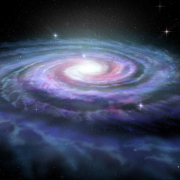
Two years worth of data from NASA’s James Webb Space Telescope have confirmed a suspicion scientists have had for a while regarding the size and growth of the universe. The telescope’s data found that the rate of the universe’s expansion is faster than what would be expected based on the cosmos evolution throughout billions of years.
The data showed the universe is expanding by about 8% faster than expected based on what astrophysicists know of the initial conditions of the universe.
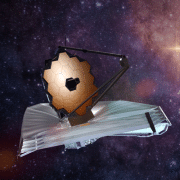
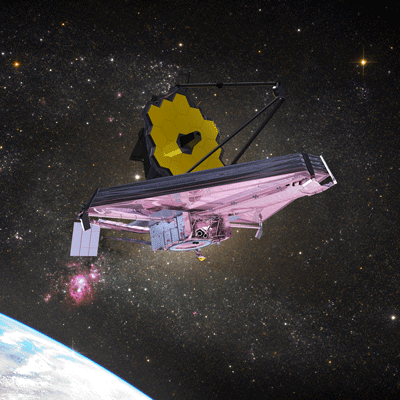
Webb is the most capable space telescope ever developed.
“This is the largest sample of Webb Telescope data – its first two years in space – and it confirms the puzzling finding from the Hubble Space Telescope that we have been wrestling with for a decade – the universe is now expanding faster than our best theories can explain,” said astrophysicist Adam Riess of Johns Hopkins University in Maryland, lead author of the study published on Monday in the Astrophysical Journal.
“Yes, it appears there is something missing in our understanding of the universe,” Riess said.
“Our understanding of the universe contains a lot of ignorance about two elements – dark matter and dark energy – and these make up 96% of the universe, so this is no small matter.”
“The Webb results can be interpreted to suggest there may be a need to revise our model of the universe, although it is very difficult to pinpoint what this is at the moment,” said Siyang Li, a Johns Hopkins doctoral student in astronomy and astrophysics and a study co-author.
Dark matter is thought to make up around 27% of the universe. Dark matter is a hypothesized form of matter that is not visible but would exist instead based on its gravitational effects on ordinary matter such as stars, moons, and planets.
“There are many hypotheses that involve dark matter, dark energy, dark radiation – for example, neutrinos (a type of ghostly subatomic particle) – or gravity itself having some exotic properties as possible explanations,” Riess said.

Eric Mastrota is a Contributing Editor at The National Digest based in New York. A graduate of SUNY New Paltz, he reports on world news, culture, and lifestyle. You can reach him at eric.mastrota@thenationaldigest.com.