Icelandic Volcano Erupts For Seventh Time In One Year
This week, a volcano located near Iceland’s capital erupted for the seventh time in a one-year span, according to the nation’s meteorological office.
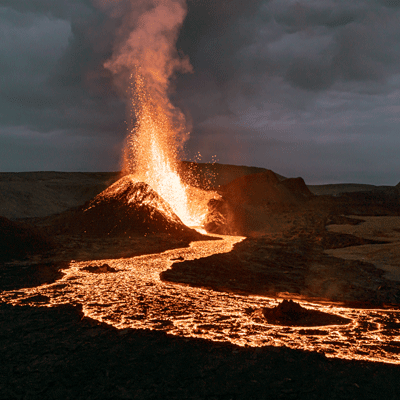
The eruption began sporadically at 11:14 p.m. Wednesday and created a fissure about two miles long, spewing lava and smoke, according to reports from NBC News. The activity is shown to be considerably smaller than the last eruption that took place in August.
Iceland’s meteorological office that monitors seismic activity stated that the first signs of an eruption were recorded about 45 minutes before a massive ground fissure opened up with magma coming through the earth’s crust.
The office also said that authorities did previously warn of volcanic activity with magma accumulating 20 miles southwest of the capital Reykjavik beneath the Reykjavik peninsula. The same location just experienced an eruption that ended on September 6th.
“In the big picture, this is a bit smaller than the last eruption, and the eruption that occurred in May,” said Magnús Tumi Guðmundsson, a professor of geophysics, who traveled to the site of the eruption along with the Civil Protection agency.
These specific outbreaks on the peninsula are called fissure eruptions, and they haven’t directly impacted the city or caused any traffic disruptions.
Flights through Reykjavik’s Keflavik Airport were also unaffected and no crucial infrastructure is in danger, however, luxury spa Blue Lagoon had to shut down and evacuate their guests due to their proximity to the eruption, according to RUV.
Grindavík, a fishing town, is typically the home to about 4,000 residents, however, it’s remained mostly deserted since December of last year due to consistent eruption threats.
“There was no indication that lava was flowing towards the town, but some 50 houses occupied by people who have returned were evacuated,” the civil protection agency said in a statement according to NBC.
“Grindavík is not in danger as it looks and it is unlikely that this crack will get any longer, although nothing can be ruled out,” Magnús Tumi said.
Experts in the area have now warned that Reykjanes will likely experience repeated volcanic eruptions for decades to come.

Eric Mastrota is a Contributing Editor at The National Digest based in New York. A graduate of SUNY New Paltz, he reports on world news, culture, and lifestyle. You can reach him at eric.mastrota@thenationaldigest.com.