Posts

Impeachment Trial

Impeachment Trial Begins in Earnest as Senators Clash Over Rules

Although the president’s impeachment trial technically began last Thursday, when House impeachment managers delivered articles of impeachment to the Senate and senators swore an oath of impartiality, the actual substance of the trial did not begin until today at one o’clock, as Majority Leader Mitch McConnell and Minority Leader Chuck Schumer delivered opening statements and began debating the rules of the trial. McConnell’s resolution, released late last night, infuriated Democrats as they perceived the proposed rules to be tremendously unfair, as they only give the prosecution and the defense 24 hours to present their arguments over the course of 2 days, do not allow for the production of documents and witnesses, and call for the proceedings to run late into the night, at a time when Americans are likely not to watch the trial.

Embed from Getty Images

Despite these restrictions, McConnell argued that the trial would be fair, raising objections from TV pundits as well as Democratic politicians. In response, Schumer decried the rules, pointing out McConnell’s hypocrisy as he previously said that he wanted the rules of the trial to resemble the ones that governed the 1999 Clinton impeachment trial. Additionally, reporters are complaining about the strict rules that limit journalistic access to the proceedings; while reporters are allowed to sit in the Senate gallery and observe the trial, they are not allowed to bring any electronic devices, including cameras, into the room. Instead, the camera that will film the trial is controlled by the government, and will only record the person who is speaking at the moment. What’s more, reporters are not allowed to ask questions of the senators as they walk through the halls of the Senate, which is a time-honored tradition on Capitol Hill. As such, cable networks are limited in their capacity to broadcast the event, and journalists have expressed fears that such rules prevent reporters from doing the job of recording momentous political occasions for the historical record.

Though McConnell characterized his proposed rules as “fair,” they break with Senate tradition and precedent as they seem to be engineered to prevent the discovery of new information and to limit the American people’s exposure to evidence in the case against Trump. Unfortunately for Democrats, McConnell’s resolution is likely to pass, as Republican senators are known for falling in line under McConnell’s direction. A simple majority of 51 votes is required to pass trial resolutions in the Senate, and as there are 53 Republican US Senators, it’s likely that the resolution will pass with few, if any, amendments. While Chief Justice John Roberts will preside over the trial, if he chooses to keep with precedent, he will do virtually nothing. In the Clinton trial, Chief Justice Rehnquist made almost no contributions to the trial, later commenting that he did very little and did it very well. However, the situation in the Clinton trial was very different, as senators agreed in a 100-0 vote on the rules that would govern the trial.

Embed from Getty Images

American public sentiment does not match the proposed rules in the trial. According to a poll conducted by the Washington Post, more than 70% of Americans want the impeachment trial to include witnesses, and a slim majority, 51%, believe the evidence that has been unearthed in advance of the trial is sufficient to warrant the president’s removal from office. Republican senators have already signalled that they will vote to acquit the president, and virtually nobody believes that Trump will be removed from office via the impeachment process; however, many are disappointed by the restrictive and precedent-shattering nature of the rules that will likely govern the trial.

Notably, some of the senators who will act as jurors in the trial are also running for president, meaning that they are unable to campaign during the duration of the trial. These senators include two of the Democratic frontrunners, including Senators Bernie Sanders and Elizabeth Warren, as well as Senators Amy Klobuchar and Michael Bennett. According to the rules of the trial, senators are not allowed to speak at all throughout the duration of the proceedings, which may prove difficult for some. Additionally, senators will not be allowed to leave the room to use the bathroom or eat, which may prove difficult for some as the proceedings are expected to start at one PM and continue well past one o’clock in the morning.

Update: After this article was written, Republican senators changed their proposed rules to allow arguments to be held over three days, not two, reducing the logistical challenge for participants in the trial.

Washington DC

McConnell Says He Has Votes to Start Impeachment Trial Without Witnesses

Although Speaker of the House Nancy Pelosi continues to withhold the articles of impeachment from the Senate with no indication of when she plans to transfer them to the Republican-controlled half of Congress, the outlines of how the trial will proceed are beginning to take shape as Senate Majority Leader Mitch McConnell has told Republican colleagues that he has the votes to begin the trial with no guarantee that witnesses will be called. Democrats believe that their case against the president is already ironclad, but that calling additional witnesses like former national security advisor John Bolton and White House Chief of Staff Mick Mulvaney will further bolster their case and convince the American public of the president’s wrongdoing.

Republicans, on the other hand, have not presented a defense of the president’s conduct on the merits of the case but instead have tried to shift attention to the president’s political rival Joe Biden and his son Hunter, alleging that the younger Biden’s conduct in Ukraine as a member of the board of an oil company constituted impropriety as his father was Vice President at the time. Accordingly, McConnell and Senate Republicans have announced their intention to work with the White House to ensure that the political damage the trial inflicts on Trump’s presidency is minimized. As such, Republicans are pushing for a rapid trial involving no witnesses and documents, consisting only of a presentation from the impeachment managers selected by the House and a defense from the president’s legal team followed by a vote which is all but certain to result in an acquittal, giving the president ammunition in his claim that he is being unfairly prosecuted by Democrats.

Embed from Getty Images

McConnell has argued that the Senate trial should begin in accordance with the rules that governed the 1999 impeachment trial of Bill Clinton, which did not guarantee the presence of documents or witnesses but allowed senators to vote to call witnesses, who appeared virtually via videotape, as the trial proceeded. As Republicans hold a majority in the Senate and are fairly united in their opposition to the impeachment of Donald Trump, it is unlikely that they will decide during the trial to call witnesses like Bolton and Mulvaney who have firsthand knowledge of the scandal that led to the president’s impeachment, though they may push to call witnesses like Joe and Hunter Biden to testify about the unrelated, manufactured conspiracy theory that alleges without evidence misconduct on the part of Democrats.

If history is any indication, it’s only a matter of time before the full details of the administration’s conduct in connection with the scandal about Ukraine are revealed to all

Senate Minority Leader Chuck Schumer has accused McConnell and the Republicans of engaging in a cover-up by refusing to hear from Bolton and Mulvaney, among others, particularly given the magnitude of the evidence that has already been uncovered by House investigators despite the White House’s near-total obstruction, which has understandably raised additional questions about the administration’s response to the president’s request of Ukrainian President Zelensky for assistance in his domestic political campaign.

Embed from Getty Images

Though the likelihood of the presence of witnesses at the president’s trial decreases by the day, John Bolton has complicated the process by saying he’d be willing to testify if he receives a subpoena from the Senate, despite his prior refusal to comply with a House subpoena on the basis of his claim that that his conflicting orders from Congress and the executive branch constituted a critical separation-of-powers issue that had to be resolved by the courts.

Political observers believe that Bolton’s announcement is not sincere, but instead strategic, as the former White House national security advisor is well within his rights to discuss what he knows about the president’s conduct in a public forum, and in fact may do so in a book that he is planning to sell. That being said, pundits disagree over the end-game of Bolton’s political strategy, which remains unclear to everyone except him and his legal team. In any event, if history is any indication, it’s only a matter of time before the full details of the administration’s conduct in connection with the scandal about Ukraine are revealed to all, whether or not witnesses are called during the forthcoming trial. 

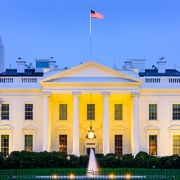
The White House

Majority of Americans Believe Evidence Supports Removing Trump from Office, Poll Finds

A poll conducted by Ipsos and FiveThirtyEight, an organization that aggregates and analyzes opinion poll data, has found that 52% of Americans believe enough evidence exists with respect to Trump’s conduct with Ukraine and his refusal to cooperate with Congress to warrant his removal from office. An aggregate of polls conducted to determine whether Americans support impeaching Trump has found that roughly half of Americans have supported the impeachment inquiry since Pelosi announced it, whereas the other half oppose impeachment. Though the impeachment inquiry lasted several weeks and produced devastating evidence directly implicating the president in withholding aid money to Ukraine in exchange for campaign assistance, these revelations have not changed Americans’ minds about impeachment, as poll results have remained remarkably consistent throughout the process. However, this most recent poll suggests that some Americans are slowly beginning to realize the extent of the president’s misconduct, though Trump’s remarkably steady approval rating indicates that it is unlikely that an overwhelming majority of Americans will ever support removing the president while he remains in office.

Although a majority of Americans (57%) believe Trump engaged in impeachable conduct, just 47% of Americans favor removing him from office, apparently believing that the question of whether Trump should remain the president should be determined by American voters this November. This means that roughly 15 percent of Americans believe that Trump committed impeachable conduct that warrants his removal from office but do not support removing the president before the election. Predictably, public opinion is split along party lines; 82% of Democrats support removing Trump from office, whereas only 9.7% of Republicans hold the same opinion.

Embed from Getty Images

One thing that both Democrats and Republicans seem to agree on, however, is that the upcoming Senate trial should feature witnesses who were not present during the phase of the process controlled by the House in order to expand on the evidence unearthed over the past few months. 57% of Americans want to see a Senate trial with new witnesses, whereas 39% believe the focus should be kept on the evidence presented by the House. That being said, Democrats and Republicans largely disagree on who should be called as witnesses—Democrats think that officials like John Bolton and Mick Mulvaney, who have direct knowledge of the conduct for which the president was impeached, should participate in the trial, whereas Republicans want senators to question people like Hunter Biden, who is the subject of Trump’s allegation of his opponent’s political corruption. 

When it comes to how lawmakers are handling the impeachment process, which is currently in a stalemate as Nancy Pelosi continues to withhold the articles of impeachment from the Senate as leverage to negotiate the terms of the trial, Americans are almost evenly split on their approval of this tactic as well. Pelosi’s tactic may end up backfiring on Democrats, depending on how long she continues to withhold the articles, as withholding them for too long could give credibility to allegations that the impeachment process was motivated by political concerns instead of by constitutional obligation as the Democrats claim. 

Embed from Getty Images

The poll also found that Americans are becoming increasingly unlikely to change their mind on the question of impeachment as time goes on. In mid-November, roughly 75% of respondents who believed Trump’s conduct was impeachable felt “absolutely” or “pretty” sure that they were right, whereas now 81 percent of respondents profess this degree of certainty. However, when it comes to Americans who think Trump’s conduct was not impeachable, this degree of certainty has not seen a similar increase, as 71% of this group reported being “absolutely” or “pretty” certain of their view in mid-November and 72% of this group reported being this certain in this latest poll.

Though the holiday season is officially over, the parameters of the Senate trial remain unclear, as lawmakers have made little progress in their negotiations over the rules of the trial. As such, at this unprecedented moment in history, it’s difficult to predict what, if any, effect the trial will have on public opinion, though trends over the past several years suggest any change will be minimal. 

Impeachment Trial

Should Senators Vote Secretly in Impeachment Trial?

To say there exists little historical precedent for presidential impeachment trials would be an understatement. Before Trump, only two presidents, Andrew Johnson and Bill Clinton, have ever faced an impeachment trial in the Senate, and the circumstances in each trial were very different. During Johnson’s trial, for instance, 41 witnesses testified, whereas Clinton’s trial only featured a handful of witnesses. If Senate Republicans get their way, however, Trump’s trial will feature neither witnesses nor subpoenas for documents, and it will end quickly with an acquittal. The Constitution gives Congress the freedom to determine its own rules for how to handle impeachment trials; this fact, combined with the relative lack of historical precedent, makes it difficult for anyone to predict how the trial will proceed. That being said, the trial will likely be shaped in large part by partisan allegiance to the president, as several Republican senators have already said they’re not interested in acting as impartial jurors and Mitch McConnell has predicted a “largely partisan outcome.” Because hyperpartisanship threatens jurors’ impartiality, and thus the integrity of the trial, some political strategists have suggested that the senators should cast their ballot in secret, protecting them from the political ramifications of their vote and encouraging an independent decision.

Embed from Getty Images

According to Juleanna Glover, a Republican strategist, it would be fairly easy for the Senate to ensure a secret ballot. Creating rules for the trial requires only a simple majority vote in the Senate; assuming Democrats vote in lockstep in favor of a secret ballot, only three Republicans would have to defect to reach the 51 votes necessary to effectuate the rule. Though they don’t publicly admit it for fear of the political repercussions, many Republican senators strongly oppose the president in private, according to various reports. In fact, former Republican senator Jeff Flake has said that he believes that there are at least 35 GOP senators who would vote to remove Trump if the votes were private; such a result would make Trump the first president in US history to be removed by the impeachment process. A secret ballot, however, would break with Senate tradition and expectations of transparency surrounding Senate proceedings, particularly in the extreme case of deciding whether to remove a sitting president from office. That being said, the atmosphere of hyperpartisanship, combined with an overall dislike of the president among lawmakers, may be enough to convince more than half of the Senate to institute such an unusual rule.

Few people predict that Trump will be removed from the White House before the 2020 election, but we live in an era in which unprecedented and unpredicted political events are borderline commonplace. 

While American politics has long been characterized by partisanship, the current political environment is arguably more partisan than ever before, with the vote in the House to impeach Trump passing almost entirely along party lines. The Senate is often considered to be a more impartial chamber than the House, but by most accounts it is still more partisan than it’s ever been. In Clinton’s trial, Republicans and Democrats collaborated to determine the rules, resulting in unanimous consent among all 100 senators—such an outcome is nearly inconceivable in today’s Senate. This very partisanship, though, is precisely what may motivate some senators to support a secret ballot. And while there exists a certain demand for transparency for actions taken by the Senate, grand jury proceedings, which the Senate trial will essentially function as, allow jurors to deliberate and vote in secret. 

Embed from Getty Images

Already, cracks are starting to form in the Republicans’ solidarity in their support of Trump; Republican senator Lisa Murkowski, for instance, has said that she is “disturbed” by McConnell’s pledge to coordinate with the White House in defining the rules of the trial, and Mitt Romney has characterized the president’s conduct for which he was impeached as “troubling in the extreme.” A secret ballot, though admittedly unlikely, may be enough for these cracks to cause Republican senators’ defense of Trump to collapse, leading to his potential removal from office. Few people predict that Trump will be removed from the White House before the 2020 election, but we live in an era in which unprecedented and unpredicted political events are borderline commonplace. 

Capitol Building

US Senators Clash Over Impeachment Trial Procedures

Right after the U.S. House of Representatives voted to impeach Donald Trump, Speaker of the House Nancy Pelosi surprised pundits everywhere by making a strategic move no one saw coming: instead of immediately deciding upon impeachment managers to send the articles of impeachment to the Senate, she decided to withhold the transmission of articles as leverage to coerce Senate Republicans to vote for what she considers to be a fair trial, which includes the calling of witnesses and the production of documents. Currently, Congress is in recess for the holidays, but negotiations surrounding the trial proceed nevertheless, even as lawmakers visit their families and constituents at their homes. 

Embed from Getty Images

Senate Minority Leader Chuck Schumer has called upon four Republicans to vote in favor of allowing documents and witnesses during the trial, which Senate Majority Leader Mitch McConnell starkly opposes. As the procedures for the trial will be determined by 51 votes, and Schumer already has all 47 Democratic Senators onboard, only four Republicans would have to defy McConnell to ensure a trial with witnesses and documents. Given the fact that the president himself has said that he’d like to see witnesses during the trial, and almost 2 in 3 Republicans also want top Trump aides to testify at the Senate trial, Schumer and the Democrats hope that pressure from constituents will be enough to convince the necessary four Republican senators to side with Democrats on this matter.

Given the dramatic and historic nature of this impeachment, people around the world are paying very close attention to the U.S. Congress during these critical next few weeks, as the rules of the trial will have to be determined soon for it to begin early next year as intended. Accordingly, U.S. senators, who ultimately will shortly decide whether the president is fit to remain in office for the rest of his first term, are using the media to amplify their message either for or against a fair trial as they try to build their cases. Today, The New York Times published an opinion piece written by Patrick Leahy, a Democratic senator from Vermont, who wrote of the historic implications of the Senate’s upcoming decision, as this impeachment trial, no matter how it ends up proceeding, will set precedent for future impeachments and forever define Congress’s role in checking the misconduct of a duly elected president.

The actions the Senate takes over the next several weeks will at least in part outline the shape of future impeachments and more clearly define the nature of Congress’s power to check the executive branch.

In the piece, Leahy argues that the outcome of the upcoming trial will determine the validity of the Senate itself, and more broadly the importance of truth in our government. Leahy, who has served as a juror on six impeachment trials of five judges and one president, notes that senators must swear an oath to carry out “impartial justice according to the Constitution and laws,” and fears that the Senate will shortly abandon the idea of taking this oath seriously. This is because several Republican senators, including Mitch McConnell and Lindsey Graham, have already said they’ve made up their minds and that they don’t expect to act as fair jurors during the trial.

Embed from Getty Images

Impeachment trials are wholly separate from other types of trials, as they are conducted in the Senate, which briefly operates as a court of law during the proceedings. The Senate has the sole responsibility of setting the rules of its trial, and as the Senate is characterized by the presence of partisan politicians who are unflinchingly loyal to the president, Democrats fear that the trial will end up being fundamentally corrupt. Already, McConnell, who will act as one of 100 jurors, has pledged that “there will be no difference between the president’s position and our position as to how to handle this,” creating a rare case of a trial in which the jurors collaborate with the defendant to ensure the outcome favored by the defendant. Presidential impeachments are rare in American history, and as such there exists little precedent for how they should be carried out; as such, the actions the Senate takes over the next several weeks will at least in part outline the shape of future impeachments and more clearly define the nature of Congress’s power to check the executive branch.

American Flag

President Trump Will Be Impeached Tonight

Currently, members of the House of Representatives are debating the articles of impeachment that were approved by the House Judiciary Committee last week. All Republicans are expected to vote against impeachment, and nearly all Democrats will vote to impeach. Former Republican representative Justin Amash, who changed his party to Independent after criticizing the president’s conduct with Ukraine, will also vote to impeach. Members of the House of Representatives will have the opportunity to speak today as they list their reasons for or against impeachment before they vote. The arguments they are presenting, often in a raised voice, are repetitive and predictable; Democrats stress the urgency of removing Trump from office due to the national security risk he imposes, whereas Republicans criticize the process and partisan nature of the proceedings, defend the president’s behavior, and accuse Joe Biden and others of misconduct. As Democrats control more than half of the seats in the House of Representatives, it’s virtually certain that the president will be impeached after a vote which is scheduled to take place tonight.

Embed from Getty Images

Though impeachment is now a virtual certainty, the timeline for when it will occur may change. That is because Republicans have done nearly everything in their power to delay the proceedings, forcing a vote to dismiss them, which of course failed, and engaging in other tactics to delay the inevitable. Depending on how long today’s proceedings run, the vote may be rescheduled for tomorrow morning. This happened last week, when Jerry Nadler moved to wait until the following morning to vote on whether to approve articles of impeachment and send them to the full house after the proceedings ran late into the night. Nadler wanted to avoid criticism that the vote took place late at night, and thus at a time when most people would not be paying attention, so he instead called the vote at 9 AM the next day. Depending on how much time the debate before the vote takes, Democrats may choose to do so again, given the importance and level of controversy surrounding impeachment.

Pelosi reiterated her stance that she desperately wanted to avoid impeachment, fearing the damage it would do to the country, but the president’s conduct left her no choice

As usual, the president gave his opinion on today’s impeachment on Twitter, tweeting a common refrain that the investigation is a witch hunt and his behavior was perfect. In all capital letters, and using several exclamation points, Trump urged his followers to pray for him, an apparent response to Nancy Pelosi’s claim that she prays for the president “all the time.” Trump expressed offense at this remark, accusing Pelosi of lying and claiming she hates him; in response, Pelosi reiterated her claim, and when asked whether she hated the president, she angrily rebuked the charge, offended by the use of the word “hate.” When asked why she thought Trump accused her of lying about praying for him, she said that Trump constantly projects the truth about himself by accusing others of the same wrongdoing he is in fact engaged in, so because Trump does not pray for Pelosi, he believes she must be lying about  praying for him. The conflict escalated when Trump sent Pelosi an angry six-page letter, written very much in the style of his tweets, full of capital letters, exclamation points, and baseless accusations. Pelosi stated that she didn’t read the full letter as she is too busy, but that she got the gist of it, and described it as “sick.”

Embed from Getty Images

In keeping with her commitment to solemnity and prayerfulness during this process, Pelosi and other female Democrats dressed in black clothing to set a somber tone for the day. In her remarks, Pelosi reiterated her stance that she desperately wanted to avoid impeachment, fearing the damage it would do to the country, but the president’s conduct left her no choice as she and other Democrats feel they would be derelict in their duties if they did not vote to impeach. Tonight’s vote will officially ensure that a trial of some sort will take place in the Senate, which is expected to happen in January, though the details of the trial are as-of-yet unknown.

Impeachment Trial

Impeachment Trial Plans Begin as Schumer Requests Witnesses

The president will be impeached this week, as the House Judiciary Committee voted to approve  two articles of impeachment for a full vote on the House floor. Because Democrats hold the majority in the House right now and this impeachment is a hyper-partisan affair, it is virtually certain that the House of Representatives will vote to send both articles to the Senate, where a trial of some sort will be held. The Senate is currently controlled by Republicans, who have 53 seats whereas the Democrats have 45. As a two-thirds majority vote in the Senate is required to remove a president from office via impeachment, this outcome is unlikely, particularly because not a single Republican senator has indicated that they’d entertain voting with the Democrats. That being said, the upcoming Senate trial is nonetheless sure to have a significant and difficult-to-predict impact on the political world, particularly in consideration of the fact that the next presidential election is less than a year away.

Embed from Getty Images

Now that impeachment in the House is all but certain, Senate lawmakers have begun publicly discussing the outline and the structure of the trial. Unsurprisingly, Senate Majority Leader Mitch McConnell has all but confirmed that the outcome of the trial is a foregone conclusion, saying, “there will be no difference between the president’s position and our position as to how to handle this to the extent that we can.” Mitch McConnell wants the trial to move quickly and with little fanfare, even suggesting that witnesses may not be called at all, in the hopes that news about the facts pertaining to the trial will fly under the radar to the greatest extent possible, whereas the president wants the trial to be a bombastic, theatrical affair, believing that such an event would bolster his poll numbers. 

Despite this difference in opinion, though, Democrats were infuriated by McConnell’s suggestion that the trial should be orchestrated in coordination with the defendant in the trial, with Senate Minority Leader Chuck Schumer calling it “totally out of line.” During impeachment, senators are assigned the role of juror, and as such are required to swear an oath which reads: “I solemnly swear that in all things appertaining to the trial of the impeachment of Donald J. Trump, now pending, I will do impartial justice according to the Constitution and laws: So help me God.” The Republicans’ coordination with the White House, then, would seem to be a clear and direct violation of this oath, as jurors who have already made up their minds before the trial takes place plainly impede justice.

The decisions senators will make throughout the process are hard to predict and will shed light on these their characters and indeed on the health of the republic generally.

Nevertheless, Democrats are doing everything in their power to negotiate with the Senate majority to make the trial process as fair as they can. Accordingly, Senate Minority Leader Chuck Schumer today wrote a letter to McConnell outlining the witnesses he wishes to call during the trial, which will likely not be held until next year. Given the president’s love of drama and theatrics, it is likely that some witnesses will be called for the trial, though it’s unclear exactly who would be compelled to testify: Schumer specifically requested the appearance of Chief of Staff Mick Mulvaney and former Security Advisor John Bolton, both of whom refused to cooperate with congressionally approved subpoenas during the inquiry at the direction of the White House and may simply continue to ignore further calls to testify; and Republicans likely will seek testimonies of the unnamed whistleblower and House Intelligence Committee Chairman Adam Schiff, the former of whom is protected by anonymity statutes and the latter of whom is not a fact or expert witness in this case and thus would have little legal justification for being compelled to act as a witness. 

Embed from Getty Images

Though Schumer knows that he likely cannot change McConnell’s mind, or the minds of Trump’s most ardent defenders in the Senate, he believes he may convince enough Republican senators that at the very least relevant witnesses should be called to testify to secure the 51 votes necessary to pass an agreed-upon set of rules designed to enable a fair trial. When it comes to impeachment trials, there exists very little historical precedent for how they should be arranged and conducted, and impeachment has never before occurred in a political environment as hyper-partisan and polarized as today’s; as such, the decisions senators will make throughout the process are hard to predict and will shed light on these their characters and indeed on the health of the republic generally.

Vaccine

An HIV Vaccine Could Be Available As Soon As 2021

HIV is a devastating illness that affects millions of people worldwide and in many cases leads to AIDS, which is often deadly. HIV attacks the immune system, making it more difficult for the body to fight other infections, and as the immune system deteriorates, infections that would ordinarily lead to temporary, minor illnesses can kill. Currently, no cure for HIV exists. In recent years, however, medicines have been developed to fight HIV infection and reduce the risk of infecting others, allowing people with the disease to live long and fulfilling lives. In the past, many devastating illnesses such as smallpox have been all but eradicated thanks to the development of vaccines, which work by stimulating the body’s immune system to create antibodies to kill viruses. Now, scientists have made tremendous progress in developing a vaccine for HIV, according to reports from Forbes and The Sun.

It should be noted, however, that this is not the first time that claims of the imminent development of an HIV vaccine have been reported. As early as 1984, government officials have predicted that a vaccine would be developed within a few years. This prediction turned out to be far from accurate, as many speculated that exposure to the experimental vaccine in question actually increased patients’ chances of being infected with HIV. Because HIV is a disease that works by attacking the immune system, attempts to develop a vaccine have failed as the virus effectively prevents the body from developing antibodies, which are necessary for fighting viral infections. This fact has made research on the development of an HIV vaccine both slow and dangerous, as researchers have had to grapple with the possibility that their experimental treatments were doing more harm than good.

Embed from Getty Images

As such, an atmosphere of pessimism has clouded research on the development of an HIV vaccine for more than thirty years. But recent developments have provided hope that a safe, effective vaccine for HIV is possible, inspiring belief that the disease could be essentially eradicated like the many devastating viruses that have preceded it. Currently, there are three different late-stage human clinical trials underway for HIV vaccine candidates, and any one of these experimental treatments has the potential to one day be deployed on a massive scale, reducing incidences of infection by a substantial margin.

The first trial, called the HVTN 702 Trial, began in October 2016 and involves two intramuscular injections. These injections contain a genetically-modified variant of the canarypox vaccine which contains pieces of HIV that, while unable to cause infection on their own, could allow the immune system to develop antibodies to fight against the real virus. The trial, which is being conducted in South Africa, an area of the world strongly impacted by the AIDS epidemic, is scheduled to conclude in July 2021.

The second trial, called the HPX2008/ HVTN 705 or Imbokodo Study, uses a similar approach as the previous method, as treatment consists of two injections. However, the ingredients are different; this experimental vaccine includes a re-engineered form of the common cold with inert pieces of HIV attached. Like the previous trial, this trial is being conducted in southern Africa, and includes thousands of participants, all of whom are women. It’s expected to conclude in February of 2022.

Embed from Getty Images

The third trial is the HPX3002/HVTN 706 or Mosaico Trial, and is being conducted in various countries around the world, including locations in North America, South America, and Europe. This trial just began in July of this year and is hoped to enroll 3,800 participants. The Mosaico Trial uses the same experimental vaccine as the Imbokodo Study, but aims to include a more diverse range of participants, including men between 18 and 60 years old as well as transgender people.

Perhaps the trial that shows the most promise is the HVTN 702 trial, as it is based on a vaccine that has shown moderate success in reducing HIV infection in the past. In 2009, a study featuring a similar vaccine reduced infections by roughly 30%, marking substantial progress but not a protection level high enough for general use. As the vaccine developed for the HVTN 702 trial seeks to address the shortcomings of the previous vaccine, many are hopeful that this updated version will offer a protection level great enough to warrant widespread deployment.

Developing a vaccine for HIV has proven to be enormously challenging, and while research on the illness has progressed significantly, the virus has proven to be extraordinarily resilient. As such, while optimism is warranted by the multiple ongoing trials, expectations that a vaccine will be available by 2021 should be tempered, despite the prevalence of such predictions throughout the news media. That being said, the development of an HIV vaccine would surely revolutionize the state of global health, and as such, these trials are surely worth paying attention to as they progress and eventually conclude. 

Impeachment Trial

Public Impeachment Hearings Conclude as Trump Implicated in Quid Pro Quo

During what will likely become known as the most consequential week of Donald Trump’s presidency, public impeachment hearings produced damning testimony that strongly suggests the President engaged in a quid-pro-quo scheme with the President of Ukraine, asking for information politically useful for his reelection campaign in exchange for military assistance and a meeting at the White House. The witnesses, many of whom have long and decorated careers as non-partisan high-level administration officials, provided testimony recounting virtually all aspects of the alleged quid-pro-quo scheme, including the development of a second, irregular channel for engaging with Ukraine to circumvent the normal, diplomatic channel, and a phone call between President Trump and Ambassador Gordon Sondland during which details of the arrangement were discussed. While Republicans, most notably Representatives Devin Nunes and Jim Jordan, spent the duration of the hearings attacking Democrats and the process of holding impeachment hearings, they failed to produce any evidence contradicting the Democrats’ theory of the case, instead shifting attention towards Joe Biden and his son Hunter Biden and promulgating a debunked conspiracy theory suggesting the Ukrainians interfered in the 2016 election to help Hillary Clinton.

Embed from Getty Images

Of this historically consequential week, perhaps the most significant testimony came on Wednesday, when Ambassador Gordon Sondland confirmed the existence of a quid pro quo and implicated several high-level administration officials in the scheme, including Chief of Staff Mick Mulvaney and Vice President Pence, asserting that “everyone was in the loop.” Although some key witnesses, including Rudolph Giuliani, Mick Mulvaney, and John Bolton declined to testify, other witnesses corroborated Sondland’s retelling of events, as members of Bill Taylor’s staff reported overhearing a phone call between Sondland and Trump in a restaurant in Kiev, Ukraine. Russia expert Dr. Fiona Hill, the last witness in the two-week series of hearings, went a step further to try to discredit the Republican narrative, claiming that it was a “fictional” conspiracy theory promulgated by the Russians as part of a disinformation campaign to interfere with domestic American politics. Undeterred, Republicans continued to push this narrative, and Senator Linsdey Graham, who will be a juror in the upcoming impeachment trial, launched an investigation into the Bidens, Burisma, and Ukraine, despite criticisms that doing so would have a destructive effect on the integrity of American elections.

One of the lessons of the Trump era is that in modern American politics, even the most confident of predictions can turn out to be completely wrong.

Despite the presence of clear and direct evidence implicating the President in a bribery scheme with Ukraine, Republicans have a number of defenses at their disposal, which are sure to be repeated throughout the next several weeks as the trial begins in the Senate. Reportedly, Republicans in the Senate don’t have the 51 votes necessary to rapidly dismisses charges in the trial, suggesting the event will be a protracted affair, though no one can say for sure exactly what the Senate will do at this point. This morning, after meeting with several Republican senators who will serve as jurors in his trial, the President asserted via phone interview on Fox and Friends that he welcomes a Senate trial, pointing out that a trial would give him the opportunity to call witnesses that could defend his case. During this interview, Trump made comments that appeared to make the hosts of Fox and Friends visibly uncomfortable, such as the claim that officials had to be “nice” to Marie Yovanovitch because “she’s a woman.”

Embed from Getty Images

As of yet, Republicans have not shown any dissent from Trump and none have called for his removal from office, despite near-unanimous consent among Democrats of the severity of his crimes and the danger he poses to American democracy. As such, it’s hard to imagine that a requisite twenty Republican senators would vote to remove Trump from office. That being said, one of the lessons of the Trump era is that in modern American politics, even the most confident of predictions can turn out to be completely wrong. As such, the upcoming trial is sure to draw a tremendous amount of attention from around the world, and the outcome of the trial, unpredictable as it may be, is likely to have dramatic and historic consequences on American politics.

Impeachment Trial

Public Impeachment Hearings Begin

The next stage of the impeachment inquiry has begun, as witness testimony has moved from being conducted in closed-door rooms to being conducted in public, with both Democratic and Republican lawmakers asking questions of witnesses Bill Taylor and George Kent. The hearing, which started at 10 AM and lasted until the mid-afternoon, represented a forum for Democrats to make their case that the president engaged in what amounts to extortion by threatening to withdraw aid to Ukraine unless that country’s president went on CNN and announced an investigation into Burisma, the company for which Hunter Biden worked while his father was the US vice president. Simultaneously, the hearing was a chance for Republicans to offer their defense of the president, using their allotted time to attack the witnesses’ credibility by asserting that they had never met the president nor listened to the call in question, pointing out that the Trump administration provided military aid to Ukraine when the Obama administration only provided economic and political aid, and expressed outrage at the fact that the whistleblower’s identity has not been disclosed and that he or she has not been called to testify, among other lines of reasoning.

Embed from Getty Images

The hearing began with Adam Schiff, who described the rules for the hearing and introduced the witnesses, and then presented the Democrat’s theory of the case, outlining a summary of events involving Trump’s phone call with President Zelensky. He defended the impeachment inquiry, saying that “if foreign interference is not impeachable, what is?” and worried that if the president gets away with inviting foreign interference, other presidents would feel emboldened to do the same, threatening principles fundamental to the core of the country. Devin Nunes then delivered his opening statement, beginning by attacking Democrats and the “corrupt media” and asserting that the impeachment inquiry is nothing more than a partisan attack on the president, comparing it to what he called the “Russian hoax” which culminated in Robert Mueller’s underwhelming testimony before congress, calling the inquiry a “low-rent Ulkranian sequel.” Nunes described the closed-door testimonies as a “cult-like” atmosphere during which witnesses “auditioned” for a “televised, theatrical performance.” 

Overall, most pundits thought the hearing was a win for Democrats and a loss for Republicans, and as the hearings proceed over the coming days and weeks, this trend is likely to continue.

The witnesses then delivered their opening statements. George Kent spoke first, detailing Rudy Giuliani’s activities abroad, including a “campaign to smear” the ambassador to Ukraine, Marie Yovanovitch, in order to set up a shadow foreign policy apparatus to allow the president to circumvent official channels in his conduct with Ukraine. Then Bill Taylor gave his opening remarks, reitering testimony he gave earlier behind closed doors and describing the series of events he witnessed and had knowledge of. Taylor also broke news by revealing that a member of his staff had overheard a cell phone conversation between Trump and Gordon Sondland, during which Trump asked about the investigations into Biden, and Sondland responded that “the Ukrainians were ready to move forward.” Also, Taylor testified that Sondland claimed that President Trump cares more about the investigations into Biden than he does about Ukraine. Both witnesses said they thought the president was not genuinely interested in corruption in Ukraine and expressed alarm at his attempt to extort the foreign country.

Embed from Getty Images

While Republicans complained that neither of the witnesses had direct knowledge of the call, another witness who listened in on the call, Alexander Vindman, is scheduled to testify next week. Notably, witnesses who would be able to provide more first hand evidence, including John Bolton, have ignored lawful congressional subpoenas and refused to appear in Congress under orders from the White House. Previously, Republicans complained that the witness depositions were held behind closed doors, though they voted against moving forward with public hearings and complained about the theatrical nature of the event. Republicans spent considerable energy focusing on the whistleblower, asserting that it wasn’t fair that Adam Schiff knows who the whistleblower was and they don’t. (Schiff denies knowledge of the whistleblower’s identity.) Republicans forced a vote to subpoena the whistleblower, which is not expected to pass. 

Many GOP senators have stated that they wouldn’t be watching the hearing. The president’s staff said Trump wouldn’t be watching the hearing, but he offered his commentary on Twitter throughout the event. Overall, most pundits thought the hearing was a win for Democrats and a loss for Republicans, and as the hearings proceed over the coming days and weeks, this trend is likely to continue.