Posts

jobs

US Added Only 29,000 Jobs In September While Unemployment Rate Increases 

Only 29,000 jobs were added by US employers in the month of September, marking a sharp decline from the previous month’s gains with unemployment also increasing. 

America’s unemployment rate specifically increased to 4.2%, according to the most recent data from the US Bureau of Labor Statistics. This decline shows just a fraction of what economists were expecting with just under 70,000 new jobs, according to reports.

Initial reports from July and August were also revised down to 60,000. The labor market contracted by 10,000 jobs in July after revisions while August saw 133,000 jobs added. 

While job growth may have “slumped” over the summer, the labor market unexpectedly contracted in July, and figures made in June and May were revised down from their initial reports with 162,000 jobs being added in August, marking the highest amount since March.

The unemployment rate has also remained at its lowest levels since 2025 when it hit 4.5% in November. US jobless claims also remained lower for the fourth week in a row, according to the labor department. 

Embed from Getty Images

Job openings and the number of new hires have remained relatively stagnant since August, data from the labor department shows, citing the “slow-hire, slow-fire” job market continuing. 

The labor market has also remained pretty strong this year, despite concerns over the US-Israel war on Iran increasing inflation and energy prices. In fact, the Federal Reserve raised interest rates last month for the first time in three years, citing higher prices. 

Federal chair Kevin Warsh emphasized the “strength of the US labor market, which is basically running consistent with full employment, but inflation is too high and has been for too long.”

Investors are “hopeful” that the Fed won’t increase rates again later this month after a commerce department report revealed a “softer-than-expected” reading on inflation. 

Higher prices are continuing to be the biggest issue economically for citizens of America. Mortgage rates specifically are rising rapidly and have hit their highest level in three years this week from 7% to 7.28%, the largest weekly jump since 2022. 

The 10-year treasury yield, which underpins mortgages and other loans, also reached a 24-year high as the recent global bond sell-off continued. 

Higher oil prices have also cost Americans an estimated $936 per household.

homes

Homeownership May Have Helped Drive the Baby Boom, Study Finds

A little-known consequence of one of the biggest housing programs in American history may offer a clue about why birthrates rose so dramatically after World War II and why they have become so difficult to lift today.

Economists Melissa S. Kearney of the University of Notre Dame and Lisa J. Dettling of the Federal Reserve Board examined the expansion of government-backed mortgages during the postwar years and found that gaining access to homeownership appeared to influence whether, and when, Americans had children.

Their research suggests that the effect was substantial. For every 1,000 additional mortgages issued through government programs, roughly 300 more babies were born the following year, Dr. Kearney told The New York Times.

“This mortgage program was not meant as a pronatalist policy, but it seems to have had that effect.”

The finding, published in its final version by the National Bureau of Economic Research in September, comes as policymakers worldwide struggle to understand historically low fertility rates. Governments have experimented with tax credits, paid maternity leave, subsidized childcare and other incentives intended to make parenthood more financially manageable. So far, none has produced a major or sustained turnaround.

Dr. Kearney and Dr. Dettling approached the question by looking back at one of the most dramatic fertility increases in modern American history.

The baby boom began in 1946 after World War II ended. Over the following decade, births climbed sharply. By 1957, the total fertility rate had reached about 3.7 children per woman, roughly 30 percent higher than at the beginning of the boom and a modern American high.

Scholars have spent decades trying to explain what drove that surge. Some theories focus on the economic optimism Americans felt after years of depression and war. Others have pointed to falling maternal health risks, shifting marriage patterns or broader improvements in living standards.

Notably, at the same time, another sweeping change was underway; Americans were becoming homeowners in far greater numbers.

The G.I. Bill and related federal programs gave millions of returning veterans access to mortgages with unusually favorable terms, including low or nonexistent down payments. The programs helped reshape American housing and played a major role in the growth of the postwar middle class.

Embed from Getty Images

Young adults were among the biggest beneficiaries. Among Americans of childbearing age, the homeownership rate rose from about 20 percent in 1940 to 50 percent by 1960.

Dr. Kearney and Dr. Dettling set out to determine whether the parallel rise in homeownership and fertility reflected more than coincidence. Answering that question required detailed information about where and when government-backed mortgages had actually been issued, rather than simply comparing national housing and birth trends.

The researchers eventually discovered that the Federal Reserve had preserved thousands of pages of historical mortgage records.

Undergraduate research assistants spent two years digitizing the material. The researchers then matched those records with state-level demographic data to examine whether increases in federally backed lending were followed by changes in births.

“We kept cutting the data and looking at it,” Dr. Kearney said. “It kept lining up.”

The analysis found that places receiving more government-backed mortgages subsequently recorded additional births, suggesting that expanded access to homeownership contributed to the baby boom.

It was not, however, a complete explanation for the era’s fertility surge. Black women also experienced increases in childbearing during the baby-boom years, despite Black families being unfairly excluded from many of the housing benefits made available to white veterans and their families.

The findings may also help explain broader demographic changes at the time. Women married younger, began having children earlier and ultimately tended to have larger families than women in preceding generations.

According to Dr. Kearney, the apparent effect was not simply about making housing cheaper. Instead, the researchers argue that ownership itself may have mattered.

Having a deed in one’s name can provide both financial security and a sense of permanence, potentially making people more confident about starting or expanding a family. Younger adults today also frequently cite financial and housing stability as milestones they hope to reach before having children.

That interpretation complicates a longstanding argument about America’s declining birthrate.

Economists have often been skeptical that financial strain alone can explain the roughly two-decade decline in fertility. Household incomes have generally risen over that period, while lower-income women have historically tended to have more children than higher-income women.

The study suggests the economic connection may instead be tied to whether people feel settled enough to make long-term decisions about family life.

The median age of first-time home buyers reached 40 in 2025, a record high. Mortgage rates also jumped to 7 percent last week, their highest level since January 2025, creating another hurdle for prospective buyers already contending with elevated home prices.

Affordability has consequently become an increasingly prominent political issue during the midterm election cycle, with housing costs occupying a central place in broader debates over the cost of living.

Embed from Getty Images

Still, researchers caution against assuming that a housing policy associated with higher fertility several generations ago would produce an identical result under present-day conditions.

Phillip Levine, an economics professor at Wellesley College who has previously written papers with Dr. Kearney but was not involved in the new research, said the study’s methodology appeared convincing.

“The empirical work seems pretty strong, and they find a pretty good-sized effect,” he said.

But he noted that the social and economic conditions surrounding housing and family formation have changed substantially since the mid-20th century.

“Does that mean that we would get the same result today? We don’t know.”

Dr. Kearney similarly acknowledged that the modern housing market presents challenges that did not exist in the same form during the postwar period.

Making mortgages easier for young families to obtain could encourage some people to have children sooner or ultimately have more children. But the housing market itself is far different from the one that accompanied the baby boom.

The United States of the 1940s and 1950s was rapidly adding homes, particularly as suburbs expanded and large amounts of land around metropolitan areas were developed. Housing supply today is considerably more constrained in many parts of the country.

Expanding access to mortgage credit without also increasing the number of available homes could therefore worsen affordability by pushing prices even higher.

That tension, Dr. Kearney said, is one of the central problems policymakers would have to address if they tried to draw lessons from the postwar experience.

The research does not suggest that government-backed mortgages created the baby boom on their own. But it adds another dimension to the debate over why Americans are delaying or forgoing parenthood, suggesting that the stability associated with homeownership may have historically played a larger role in family formation than economists previously recognized.

grand jury

Grand Jury Finds No Evidence Of Criminal Conduct In Nolan Wells Death, Family Will Continue To Fight

This week, a Mississippi grand jury has decided not to bring indictments in the case of Nolan Wells, the teenager who was found dead off the Mississippi coast in early July.

Palenstine

Macklemore Pledges $1 Million to Palestinian Relief, Calls on Robert Kraft to Do the Same

Macklemore said Wednesday that he will donate $1 million — the entirety of his net earnings from Ed Sheeran’s tour — to organizations providing aid to Palestinians, while calling on New England Patriots owner Robert Kraft to make a contribution of his own. The rapper, whose real name is Ben Haggerty, said on Instagram that he wanted to “bring the conversation back where it belongs” following controversy over his removal from Sheeran’s tour after making Pro-Palestinian remarks onstage.

AI Company CEOs Calling To Slow The Development Of The Technology Over ‘End Of The World’ Warnings 

Anthropic’s CEO Dario Amodei issued a proposal to slow down the advancement of artificial intelligence after multiple warnings that the technology could lead to the end of humanity. Almost immediately after, the heads of some of the largest AI companies in the US agreed, in order to ensure the safety of the public.

tariffs

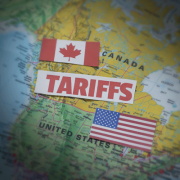
Canada Imposes New Tariffs on U.S. Imports Amid Deepening Trade War

The trade fight between the United States and Canada entered a new phase Tuesday, when Canadian retaliatory tariffs took effect on roughly $20 billion worth of American imports.

The measures arrived after weeks of increasingly hostile rhetoric between President Trump and Canadian Prime Minister Mark Carney, whose government has vowed to answer U.S. tariffs “dollar for dollar.” Carney has described Canada as “at war” as he seeks to cast himself as a defender of the country against Trump’s trade policies.

The broader trade fight began after Trump returned to office last year and threatened tariffs on Canada and Mexico, accusing both countries of failing to do enough to prevent drugs and migrants from crossing into the United States. Some Canadian provinces later responded by pulling American liquor from store shelves.

The two governments later eased some of their toughest measures, but other disputes continued to strain the relationship. Trump declined to extend the U.S.-Mexico-Canada Agreement beyond 2036, and officials from the two countries have also clashed over NATO and Trump’s repeated remarks about Canada becoming the 51st state.

Relations deteriorated sharply this summer, after Trump accused Canada of discriminating against American industries and threatened 50 percent tariffs on certain Canadian products unless the countries reached an agreement within 30 days.

Negotiations continued through much of August, and Trump at times suggested a deal was close. Instead, the talks broke down before the deadline, with officials from each country accusing the other of introducing unreasonable demands at the last minute.

Carney later said Washington had “asked too much and offered too little.” He also accused the administration of seeking influence over Canada’s trade agreements with other countries, which he portrayed as a threat to Canadian sovereignty. He said the U.S. “signature was written in pencil” on previous agreements.

Washington subsequently placed tariffs on hundreds of Canadian products, including cheese, wine, clothing and hockey sticks. Canadian officials responded by promising their own duties after Labor Day.

Embed from Getty Images

Those tariffs are now in effect. The Canadian duties range from 15 percent to 50 percent, with the rate on each product designed to match the corresponding U.S. tariff. Products facing the highest rate include certain American dairy products, perfume, video game consoles, golf equipment, fishing rods, steel, aluminum and some clothing. Cheese, carpeting and some household appliances face 25 percent duties, while some industrial equipment is taxed at 15 percent. The measures extend the pattern of retaliation that has come to define the dispute.

Canada initially planned to include some U.S. seafood among the products facing tariffs but later removed those goods following pushback from the lobster industry.

For the moment, the direct economic damage may be relatively contained. The affected products represent only a fraction of the enormous volume of goods traded between the neighboring countries each year.

Economists have warned, however, that the Canadian tariffs could hit manufacturers in states such as Michigan and Indiana, as well as dairy producers in Wisconsin and Vermont, especially hard.

But the greater risk is that each round of retaliation produces another, expanding the number of products subject to tariffs and increasing costs for companies and consumers on both sides of the border.

“This tit-for-tat retaliation is bad for Canadian businesses and consumers, and bad for American businesses and consumers,” said Brad Wood, the senior director for trade and innovation at the National Foreign Trade Council, whose board includes companies such as Caterpillar, Exxon Mobil, Ford Motor and Walmart.

“Every escalation is one more layer of barriers that ultimately Canada and the United States need to resolve.”

The uncertainty now, he said, is whether Trump will act on his latest threats.

Those threats have continued to multiply. U.S. officials have derided Canada’s economy and military, while Trump has announced 50 percent tariffs on Canadian automotive and steel imports beginning in January and suggested Friday that he could attempt to stop trade between the two countries altogether.

He has also escalated his attacks beyond tariffs. Trump signed an executive order seeking to rename Lake Ontario as Lake America and, on Sunday, criticized Canada’s currency.

Embed from Getty Images

“Canada’s (currency) Dollar imbalance with the U.S. is unacceptable,” he wrote on social media. “It has been that way for years — but no longer!”

Hours before the Canadian tariffs went into effect, Trump turned his attention to Bombardier, the Canadian aircraft manufacturer, declaring on social media that there would be “NO MORE SELLING BOMBARDIER IN THE UNITED STATES!”

Trump also accused Canada of blocking “our GREAT American Banks, and Companies,” and urged Americans to avoid Canadian products.

“BUY AMERICAN. FLY ON AMERICAN AIRLINERS. ENJOY AMERICAN LIQUOR AND BEVERAGES. SAIL ON LAKE AMERICA,” Trump wrote.

Bombardier responded by emphasizing the company’s extensive ties to the American aerospace industry. It produces important aircraft components, including wings, in California and Texas and relies on a broad U.S. supply chain.

“Bombardier is a strong contributor to the sector, creating tens of thousands of jobs across the United States.”

The confrontation with Canada is only one front in Trump’s broader effort to reshape U.S. trade through tariffs, which have remained a centerpiece of his economic agenda despite court setbacks, disputes with foreign governments and growing concerns about their domestic effects.

His administration is preparing another slate of tariffs aimed at dozens of countries it has accused of unfair trade practices. Officials are expected to argue that some countries produce excessive quantities of certain goods—a phenomenon the administration calls “excess capacity”—contributing to persistent U.S. trade deficits.

The new duties, which could be announced as soon as this week, are intended to replace some tariffs the Supreme Court struck down in February.

Trump has gone further still, threatening to stop trade with countries that sell more goods and services to the United States than they buy from it. The United States runs trade deficits with dozens of countries, including major partners in Europe and Asia, meaning such a policy could have sweeping economic consequences if carried out.

The administration’s continuing reliance on tariffs also comes as policymakers remain concerned about inflation. Because tariffs are taxes imposed on imported products, businesses and consumers can pass their costs along through higher prices.

For Canada and the United States, meanwhile, there is little indication that the cycle of retaliation is nearing an end. Canada’s new tariffs have now answered the U.S. measures imposed in August, while Trump continues to threaten still more penalties — leaving two longtime allies increasingly entrenched in a trade confrontation that only months ago both governments were trying to negotiate away.

vote

Trump Launches Midterm Push as GOP Faces Unexpectedly Tight Races

President Donald Trump is preparing to spend the final stretch before the November midterms campaigning across some of the country’s most competitive races, including in states Republicans once had little reason to worry about. One of those places is Alaska, where Trump says he will campaign for Republican Sen. Dan Sullivan as Democrats seek an upset in a state the president won comfortably just two years ago.

Kalshi

George Santos Gets Kalshi’s First Permanent Ban Over Insider Trading

George Santos has become the first person to be permanently barred from the prediction market Kalshi, which said Monday that it had also imposed a $71,356 penalty on the former New York congressman after determining that he engaged in insider trading.

The disciplinary action adds to growing scrutiny surrounding prediction markets, which have surged in popularity over the past year as users wager billions of dollars on the outcomes of political races, entertainment events and other real-world developments. Kalshi, for example, offers markets ranging from election results to questions about who will marry on “Love Is Blind.”

That rapid growth has also raised new questions about how prediction markets should be regulated, whether some offerings run afoul of state gambling laws, and how platforms can prevent people with access to nonpublic information—or control over an outcome themselves—from trading on it.

In April, three political candidates were found trying to place bets on their own races. And last week, the Commodity Futures Trading Commission, which regulates prediction markets at the federal level, fined a White House teleprompter operator $172,000 for betting on what President Trump would say during his speeches.

Another case announced Monday involved Laurie Buckhout, the Republican nominee in North Carolina’s closely watched 1st Congressional District, who acknowledged betting on her own campaign. Buckhout said she had made a “dumb mistake” and cooperated with Kalshi’s investigation. The company said she traded less than $1,000 and suspended her from the platform for three years.

The case marked the first publicly known instance of a current congressional nominee being caught wagering on their own race. Buckhout, a retired Army colonel endorsed by Trump, is challenging Democratic Rep. Don Davis in a district considered one of the GOP’s stronger opportunities to pick up a House seat in the midterm elections. She lost to Davis by fewer than 2 percentage points in 2024 before Republican state lawmakers redrew the district.

Embed from Getty Images

Santos had already faced federal penalties for his own trading before Kalshi announced its punishment. Last month, the Commodity Futures Trading Commission ordered him to pay roughly $35,000, including a $17,500 civil penalty and more than $17,500 in surrendered profits, over wagers tied to whether he would attend Trump’s State of the Union address in February. The agency concluded that Santos had engaged in manipulative trading in a market whose underlying outcome he could personally influence. The settlement also imposed a three-year trading ban and brought the CFTC’s investigation into the trades to a close.

In the days before the address, Santos publicly indicated that he intended to be there.

“I’m gonna be in the gallery,” Santos said in a video he posted on X.

Behind the scenes, however, Santos was also trading on the possibility that he would not attend. Around the time of the State of the Union, Kalshi detected that he had placed wagers against his own attendance, The New York Times previously reported.

Santos ultimately did not appear at the speech.

Kalshi subsequently referred the matter to both the Justice Department and the Commodity Futures Trading Commission. The CFTC later found that Santos had engaged in manipulative activity “designed to affect the price of the swap.”

The federal regulator said Santos traded contracts concerning his attendance between Feb. 12 and Feb. 25 while also posting publicly about whether he planned to go. According to the agency, those statements moved prices in directions that benefited his positions, allowing him to earn more than $17,500 from the trades.

Kalshi also pursued its own investigation and eventually reached a similar conclusion about his conduct.

“The Kalshi compliance department has established reasonable cause to believe that George Santos engaged in trading activity in certain markets related to his attendance at the State of the Union address.”

The platform announced disciplinary actions against several other people on Monday related to insider trading. Those cases resulted in temporary three-year bans, according to an emailed statement from the company.

Embed from Getty Images

Santos received the far more severe punishment of a permanent ban because, Kalshi said, he was the only person among those disciplined who did not cooperate with its investigation.

Santos declined to comment when asked about the company’s findings.

He nevertheless responded publicly to Kalshi after news of the punishment emerged.

“Hey @Kalshi thanks for the lifetime ban from your gambling platform. Let’s see how much longer you guys are around for.”

The remark came as Kalshi and other prediction-market companies face an ongoing legal fight over whether their products should remain federally regulated as financial markets or fall under state gambling laws.

Santos also accused Kalshi of failing to abide by what he described as a 30-day notice period, saying the company had given him that notice on Aug. 7 before permanently barring him from trading.

It was not his first public attack on the company. Santos had previously denied wrongdoing in connection with his trades, calling the allegations “preposterous,” and later described Kalshi as “a predatory app” on social media.

The episode represents another legal and ethical controversy for Santos, whose brief congressional career unraveled amid revelations about false claims he had made about his personal and professional history.

Santos was charged with fraud in 2023 after The New York Times and other news organizations reported that he had extensively fabricated parts of his biography. Later that year, the House voted to expel him, making him one of only a small number of members in American history to be removed by their colleagues.

He was subsequently sentenced to seven years in federal prison. Santos served only a portion of that sentence before Trump commuted it last fall, leading to his release.

lake ontario

Trump Signs Order Seeking to Rename Lake Ontario As ‘Lake America’

President Donald Trump has signed an executive order directing the US government to refer to Lake Ontario as “Lake America,” escalating tensions with Canada just days after trade negotiations between the two countries broke down.

Trump signed the order in the Oval Office on Thursday. Asked whether the move was intended as a message to Canada, the president said it was not, though he added that the country’s northern neighbor “has been ripping us off for a long time on trade.”

“We notified all of the various people that we have to notify. So we’ve done everything that you have to do, and this is official, effective immediately.”

The announcement comes during one of the most strained periods in recent US-Canada relations. Trade talks collapsed last week, after which Washington imposed new 50% tariffs on $20bn (C$28bn) worth of Canadian goods. Canada has said it will answer with “dollar for dollar” counter-tariffs beginning next month.

Trump also accused Canada of seeking the benefits of being part of the United States without actually being one, saying: “They don’t pay for anything, and they want to be treated like a state, but they’re not a state.”

Canadian leaders quickly rejected Trump’s attempt to rename the lake.

Prime Minister Mark Carney pointed to the name’s centuries-old history, saying Lake Ontario had been known by that name for more than 400 years—long before either the Canadian Confederation or the US Declaration of Independence.

Carney also highlighted the Indigenous roots of the name, writing that “Ontario” derives from the Wendat word “Ontari’io,” which he said means “the lake is beautiful, the lake is big.”

“We know that the United States is changing — their trade relations, their foreign policy, their national monuments, their hydronyms. Canadian women and men also know that things must be called by their name, and this lake is called Lake Ontario — today and forever.”

Ontario Premier Doug Ford delivered a similar response, writing: “It’s Lake Ontario to Canadians and the rest of the world. Now and forever.” Other Canadian ministers and provincial premiers also dismissed the new designation.

Canadian Industry Minister Mélanie Joly had already brushed aside Trump’s threats to rename the lake earlier in the week. “We’ll always call it Lake Ontario. Period,” she said. “We’re proud of our Great Lakes.”

Embed from Getty Images

Lake Ontario is the smallest of the five Great Lakes and forms part of the international boundary between the Canadian province of Ontario and New York state. Four of the Great Lakes — Ontario, Huron, Michigan and Erie — have names derived from indigenous words, while Lake Superior’s name comes from an anglicized French term.

The lake also gave its name to Ontario, Canada’s most populous province, which includes both Toronto and the national capital, Ottawa.

Although Trump has significant authority over the names the US federal government uses for geographic features, his executive order cannot compel Canada or other countries to adopt the new name.

No single internationally recognized organization is responsible for naming shared international waters.

The executive order supports the new designation by emphasizing the lake’s physical and historical connections to the United States. It says the deepest portions of Lake Ontario lie within US territory and asserts that the United States contains most of the lake’s water by volume. The order also describes the lake as having played a longstanding role in American “exploration, settlement, commerce, and defense.”

Under Trump’s order, the US Department of the Interior has 30 days to update the Geographic Names Information Service, the federal government’s official database for domestic geographic names.

Interior Secretary Doug Burgum welcomed the announcement and quickly signaled that his department would carry it out. “We’re on it, Mr. President!” Burgum wrote.

“The places and waters that border our nation and support our economy should reflect the greatness of the United States,” he said, adding that the US Geological Survey “maps our country for the world to see, and we are PROUD to implement your Executive Order to rename LAKE AMERICA.”

Reaction among US politicians, however, was sharply divided.

Democratic lawmaker Debbie Dingell of Michigan — which borders four of the five Great Lakes — called Trump’s order “idiotic” and said she planned to introduce legislation in Congress that would reverse the change.

“The Great Lakes are a shared treasure that generations of Americans and Canadians have worked together to protect,” Dingell wrote.

New York Governor Kathy Hochul, also a Democrat, said her state would continue referring to the body of water as Lake Ontario. New York is the only US state bordering the lake.

Marc Isaacs, a Canadian maritime attorney, told NBC News before Trump signed the order that neither the US nor the Canadian government controls the naming rights to the lake, meaning Washington’s decision would impose no obligation on Canada or other countries. “The Americans can call it whatever they want to call it,” Isaacs said. “It is Lake Ontario.”

Embed from Getty Images

The move echoes one of Trump’s earliest geographic-renaming efforts after returning to the White House in 2025, when he signed an order directing the federal government to call the Gulf of Mexico the Gulf of America.

Mexico rejected that change, arguing that one country cannot unilaterally rename an international body of water shared with other nations. The dispute also spilled into the technology industry after Google changed how the gulf appeared in its Maps service.

Apple also adopted “Gulf of America” in its Maps service following Trump’s directive, even as the new terminology failed to gain widespread acceptance internationally.

Google Maps users in the United States see “Gulf of America”, while users in Mexico continue to see “Gulf of Mexico”. People accessing the service elsewhere see “Gulf of Mexico (Gulf of America)”.

That name change also triggered a dispute between the Trump administration and the Associated Press.

The White House barred AP journalists from some presidential events after the news organization declined to use “Gulf of America” as its standard terminology. The AP later sued the administration, and the resulting legal fight remains unresolved.

And Trump suggested Lake Ontario may not be the end of his renaming campaign. Pointing to the Gulf of America and his new designation for the lake, he mused Thursday about doing something similar with an ocean.

“Now, all we need is an ocean. So, maybe we’ll have to change the name of the Atlantic and/or the Pacific. Maybe we’ll change them both.”

US and Canadian officials have traded accusations in recent days over which side was responsible for the collapse of trade negotiations. Both governments have said the other introduced last-minute demands that made an agreement impossible.

Nevertheless, there were indications Thursday that negotiations could eventually resume.

Canadian US trade minister Dominic LeBlanc said Washington had withdrawn some demands concerning French-language labeling requirements, which Canada had identified as one of the sticking points in the talks.

The US has maintained that it never made demands involving language requirements.

For now, however, the fight over trade has been joined by a fight over geography — with Trump saying he has completed the necessary US paperwork to call the shared lake Lake America, and Canadian leaders making clear they have no intention of following him.

cellphones

US Teenagers Advocating For Their Digital Wellbeing As Schools Across The Nation Ban Phones 

While educators and parents are looking forward to this upcoming school year without having to worry about screens, many students are advocating for their own digital wellbeing, and are trying to ensure they’re a part of the important conversations surrounding the internet’s impact on growing minds.