Europe’s Wildfire Weather Is Being Fueled By The Climate Crisis
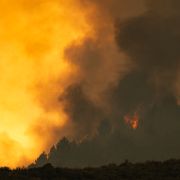
Major wildfires have been spreading throughout Europe, specifically in Spain and France. According to a scientific analysis, the extreme heat and drought that is fueling these fires is only being exacerbated by the climate crisis.
Experts from the World Weather Attribution (WWA) consortium calculated that global heating has made hot, dry, and windy weather 20 times more likely in Spain and twice as likely in France. Constant and increased burning of oil, gas, and coal has warmed the planet making extreme weather events such as wildfires much more common in recent years.
The end of June saw a major heatwave spread throughout Europe, and has caused an estimated 20,000 deaths. This heat, according to another WWA study, could not have accumulated without the extra heat that has been trapped in the atmosphere from climate change.
Another study from the group also found that the climate crisis is causing soils to become extremely dry, leading to major drought throughout the continent as well.
Between the heatwaves and dry lands, a perfect storm was created for wildfires. Studies performed last year also showed that the 2025 wildfires were fuelled by the climate crisis.
Europe also experienced a wet winter and spring, which allowed extra vegetation to grow, and eventually dry out from the summer’s intense heat, and further allowing wildfires to spark and spread.
Dr Clair Barnes, a research associate at Imperial College London and part of the WWA study team, said:
“We’ve seen repeatedly how climate change increases hot, dry, flammable conditions that are extremely conducive to wildfires.”
“What’s unique about [the July fires in Spain and France] is that it’s still early in the season – and with another heatwave looming, these findings are extremely scary. What we’re seeing is a clear sign of the escalating impacts of [human-caused] warming.”
“What we are seeing now in Spain and France goes well beyond what we would expect from past events,” said the director of programs at Red Cross Red Crescent Climate Center, Julie Arrighi.
Dr. Augustin Colette at the French National Institute for Industrial Environment and Risks stated:
“The smoke increased particulate [pollution] peak levels up to 20 times above what is considered ‘fair air quality’, and extremely poor air quality was felt up to 400 km away from the fires.”
Since early July, severe wildfires have been burning across Spain and France. More than 300,000 people were forced to leave their homes with thousands being destroyed. The WWA specifically analyzed the seven-day period in which the highest daily severity ratings for each country was recorded.
They used weather records to establish statistical methods to estimate how much more likely a week of extremely high DSR is in today’s world when compared to the world before mass fossil-fuel burning raised the global temperature, according to the Guardian.
The UN’s climate chief, Simon Stiell, said:
“These European mega-fires show how fast climate-driven extreme heat and dry landscapes can turn wildfires into devastating national disasters.”
“Humanity continuing to burn colossal amounts of coal, oil and gas is making these conditions more dangerous, and these megafires more deadly and destructive. But the solutions are equally clear: all countries must move faster from fossil fuels to renewables and protect people from worsening climate impacts, from wildfires, to megastorms and floods, to droughts hitting food production.”

Eric Mastrota is a Contributing Editor at The National Digest based in New York. A graduate of SUNY New Paltz, he reports on world news, culture, and lifestyle. You can reach him at eric.mastrota@thenationaldigest.com.